2026 Skoda Octavia: The First Address for Those Seeking a Family Sedan
Share This Page
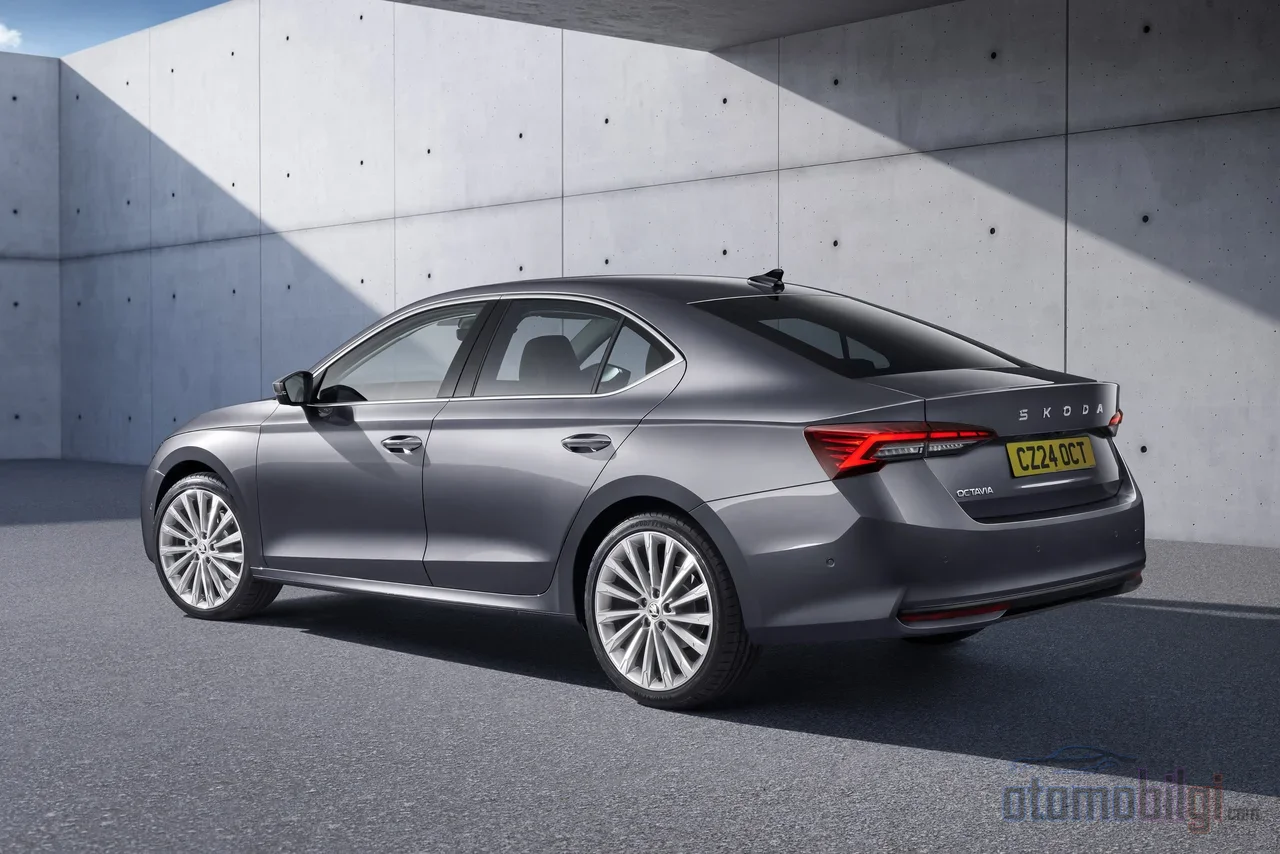
Skoda Octavia is a family sedan that puts spaciousness and practicality at the center of the D+ segment: a trunk capacity exceeding 600 liters, its roomy interior and the petrol engine + DSG gearbox duo make it one of the most practical choices in its class, especially for families who need trunk and interior space.
Highlights
- In the sedan body 600 L, in the Combi body 640 L trunk capacity
- 1.5 TSI mHEV: 150 PS of power, 250 Nm of torque
- 2.0 TSI: 265 PS of power, 370 Nm of torque
- With the 1.5 TSI DSG in 8.5 seconds 0-100 km/h
- 5 stars from the Euro NCAP tests
Which Segment Does the Octavia Belong To, and Which Needs Does It Answer?
In Türkiye, the Volkswagen Passat sits at the center of the D-segment perception: cars more spacious than the C segment and more accessible than the E segment. Length in this class typically ranges between 4.6 and 4.9 meters, and typical sedan/liftback trunk capacity falls in the 500-650 liter range. The Octavia's 600 liters sits right at the upper end of this framework. In segment debates, some lists place the car in the D segment, while some users count it as C segment; in practice, this label debate does not change the car's identity.
What matters are the dimensions and the way the car is used. The Octavia combines the scaled interior of a C-segment hatchback (the Golf's trunk capacity is 380 L) with the carrying capacity of a D-segment sedan. It is true that family space needs shifted largely toward SUVs (such as the Kodiaq) in 2026; however, for those who want a four-door, low, energy-efficient body, the D+ sedan is still a valid formula. And that is exactly the question of this page: is the Octavia worth buying as a family car, and what does its identity promise?
The 600-Liter Trunk and Liftback Body: Practicality That Makes a Difference
The Octavia's main trump card can be summarized with a single number: in the sedan body 600 L, in the Combi body 640 L of trunk capacity. This figure corresponds to nearly twice that of C-segment hatchbacks like the Golf, and it matches or exceeds many rivals, including the Passat. Moreover, this must be added: the brand's larger model, the Superb, with a volume of up to 690 liters surpasses even the Octavia in the D segment. So the Octavia is not absolutely the car with the largest trunk in the lineup; it is a solution that stands out seriously among sedans in its own class and wears the crown of practicality.
As important as the volume is how it is used. The Octavia is not a classic sedan but a liftback: the tailgate opens as a single unit together with the rear window. This difference is felt when placing a large stroller, a camping bag, or a long suitcase - the opening is noticeably larger than that of a classic sedan and makes loading easier. Loading a four-person family's weekend luggage in a single motion is the kind of detail that changes your relationship with the car in the long run.
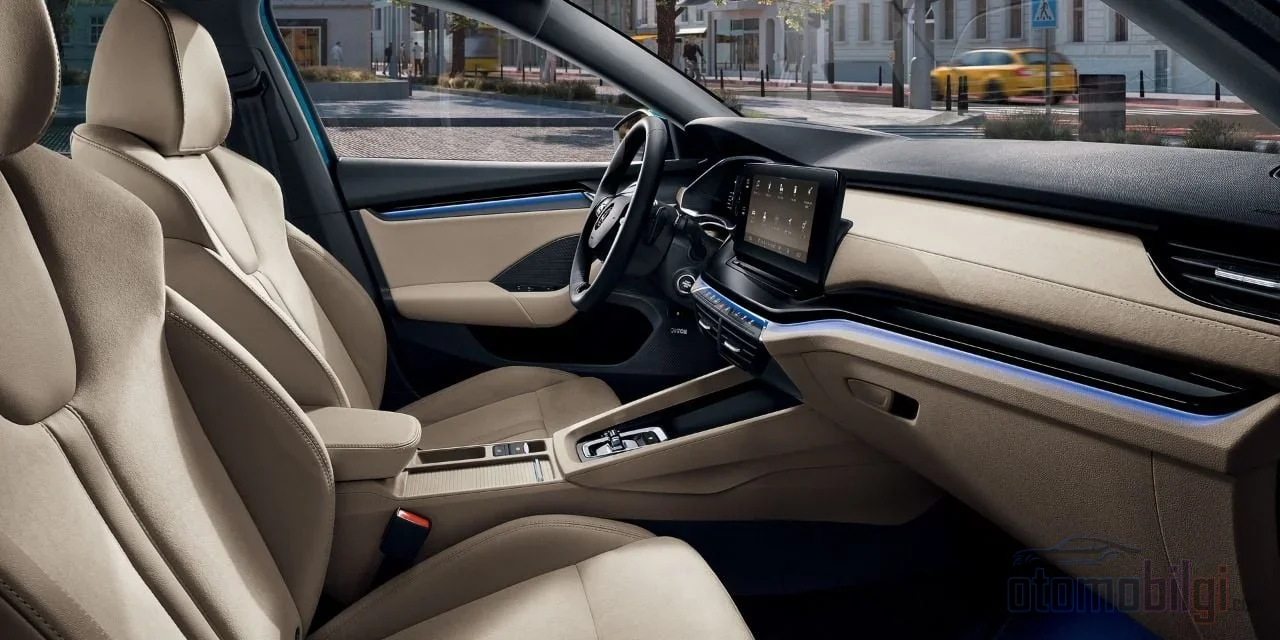
The interior is designed with the same logic: optimum dimensions, an emphasis on advanced driving assistance systems and long-journey comfort, supported by up-to-date equipment such as a high-resolution touchscreen and a head-up display. The refreshed body leaves the traditional gauges behind, adopting Shift-by-Wire transmission control and a two-spoke multifunction leather steering wheel with DSG controls.
Engine and Transmission Options: The Petrol + DSG Identity
The new Octavia launched in Türkiye with no diesel and no manual option; the current lineup offers only two petrol options and a DSG transmission. The most preferred combination in Türkiye is the 1.5 TSI mHEV + 7-speed DSG duo.
| Specification | 1.5 TSI mHEV | 2.0 TSI |
|---|---|---|
| Engine displacement | 1,498 cc | 1,984 cc |
| Maximum power | 150 PS / 5,000 rpm | 265 PS / 5,250 rpm |
| Maximum torque | 250 Nm / 1,500-3,500 rpm | 370 Nm / 1,600-4,500 rpm |
| 0-100 km/h | 8.5 s | - |
| Character | Sufficient for daily use, efficient | Performance-focused |
The 1.5 TSI mHEV's mild hybrid support can be described as a 48V-based assist system that lightens the engine's load in stop-and-go traffic: not a separate drive mode, but an assistant that helps use fuel efficiently. With 250 Nm of torque, merging onto the highway with a full trunk is no problem; 0-100 km/h in 8.5 seconds, with a top speed of 220 km/h, is a more than sufficient performance envelope for a family sedan. The 2.0 TSI, however, is an entirely different story: with 265 PS and 370 Nm, it places the Octavia in the sporty GT sedan class.
DSG Transmission: Advantages and Things to Know
DSG means a dual-clutch automatic transmission: one clutch is connected to a wheel, the other to the preparation of the next gear, and shifts are completed within milliseconds. Its advantage in efficiency and acceleration is clear. However, there are also known points in user experience: judder at cold starts and inconsistency in 1st-2nd gear shifts are documented issues on complaint platforms. This does not mean a structural defect to be feared; but for a user who keeps up with regular maintenance and knows the transmission's low-speed behavior, expectation management is essential. Those wanting a manual alternative fall into a gap in this lineup - the Octavia is now sold only with a dual-clutch automatic.
Skoda Octavia and Its Rivals: Where Does It Stand Against the Passat and Astra?
Against the Passat
In the current Passat lineup, the wagon (Variant) side is more prominent; the Octavia retains its spaciousness in sedan form. In terms of engines, the two are similar: in 1.5 TSI-based versions, both cars produce around 150 PS, with the Octavia standing out with an average consumption figure of 5.0 L/100 km . In design, the Octavia displays a more sporty and dynamic stance. This is also where the classic dilemma in Türkiye arises: a brand-new Octavia or a used Passat? A new car offers warranty, current equipment and a known history, while a used Passat brings a higher equipment level at a lower budget. If trunk and interior space are the priority, a new Octavia already wins this equation.
Against the Astra Sedan
In comparisons with the Astra, figures vary due to differences in model year and trim, but the table speaks in a clear direction: the Octavia is noticeably faster than the Astra Sedan (roughly a 2-second gap in 0-100 km/h), close in top speed, and more efficient in fuel consumption. There is an interesting balance in user discussions: while some find the Astra's handling superior, the view that "the Octavia wins in comfort, fuel economy, and solidity, but the Astra holds an advantage at resale" is also common. The Octavia's second-hand value depreciation is a recurring user theme and should be factored into the purchase decision.
Another example from photo-rich comparisons relates to volume: the sedan Octavia's 600 L trunk is nearly double the Golf's 380 L. For the reader saying "I'm moving up from a hatchback in a smaller segment" while shopping for rivals, this number is the most convincing argument.
Strengths and Weaknesses: A Balanced Reading
- One of the largest trunks in its class: 600 L (sedan), 640 L (Combi)
- From Euro NCAP 5 stars; a high safety score (8.9 in reviews)
- Spacious, comfortable interior; up-to-date equipment such as LED headlights, maneuver assistant, and front cross-braking assist
- Efficient 1.5 TSI mHEV + 7-speed DSG combination
- Liftback tailgate: easier loading of bulky items than a classic sedan
- Known user complaints such as low-speed and cold-start shuddering in the DSG transmission
- Second-hand value depreciation can be higher compared to rivals
- No diesel or manual option; no alternative offered to users who do not want an automatic
Independent reviews point to the same picture: the assessment that "a mid-size sedan bought for the price of a compact; one of the most balanced packages in its class for families" aligns with the highest scores being earned in safety and comfort. In user forums, the Premium package is cited as the recommended equipment level for family use, while the Elite trim stands out with features such as Bi-LED headlights and a Shift-by-Wire transmission.
Who Should Buy It, and Who Should Steer Clear?
The statement that best summarizes the Octavia's identity is this: this vehicle is essentially a family sedan designed for those who need trunk and interior space. A stroller, a pet carrier, sports equipment, luggage for long holidays - if these are regular parts of your life, the 600-liter liftback body alone may guide your decision. Long-distance comfort and Euro NCAP 5-star safety equipment form the second layer for family use.
There are also situations where you may need to steer clear: if you want a manual transmission, are seeking the long-distance economy of a diesel, or are sensitive to the automatic's behavior at low speeds, there is no Octavia in this lineup that meets your needs. Also, if you plan to sell after three years of ownership, you should add the second-hand value depreciation issue to your budget. If firm handling and sporty dynamics are your priority, it may make sense to look at other names on the rivals list.
Conclusion: The Answer for Those Seeking Space and Practicality
What sets the Octavia apart from its rivals is not a feature list but a design philosophy: putting volume and practicality at the center of the design. The 600-liter trunk, the single-piece liftback tailgate, the spacious interior, and the efficient 1.5 TSI mHEV + DSG combination are the concrete expressions of this philosophy. In return, you accept the DSG's known behavior patterns and its second-hand value loss. If change is part of your life: there are few D+ segment sedans that offer the balance of volume, comfort, and safety at such a high level. To understand why it is one of the first addresses for those seeking a family sedan, it is enough to look at these three numbers: 600 L, 150 PS, 5 stars.
Sources
- New Škoda Octavia: Design, Equipment, Technical Specifications
- Skoda Octavia (Škoda official PDF)
- What Is the D Segment? Detailed Review and Standout Models
- D Segment Cars: Features and Example Models
- What Is the D Segment? 2026 Executive Sedan Models
- Škoda's Refreshed Octavia Sedan and Combi Models Launched for Sale
- Which Skoda Models Have a DSG Transmission?
- Skoda Octavia 1.5 TSI DSG
- New Skoda Octavia goes on sale
- Skoda Octavia Interior, Cargo Capacity and Practicality
- Skoda & Volkswagen: key features and model comparison
- 2026 Skoda Octavia review
- New Skoda Octavia or Used Passat?
- Octavia 1.5 TSI vs Passat 1.5 TSI comparison
- Astra Sedan vs Octavia comparison
- Skoda DSG Transmission Complaints
- Skoda Octavia DSG Jerking and Shift Control
- Skoda Octavia: Who Should Buy It, Who Should Avoid It?
- Is the Skoda Octavia Worth Buying? An Ideal Sedan for Families and Professionals