2026 Toyota Corolla: The Reliable Classic of the C Segment
Share This Page
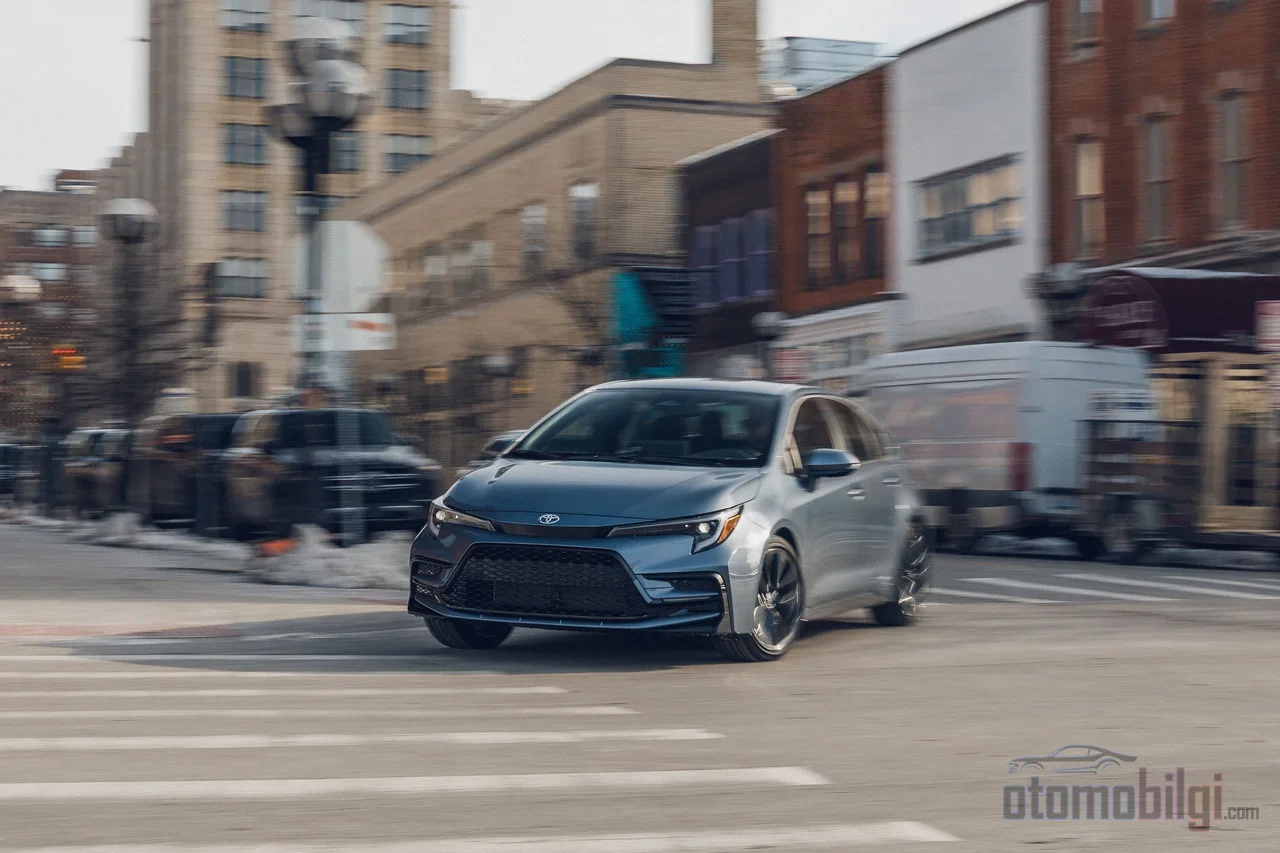
The Toyota Corolla is a petrol and hybrid car sold in the C-segment sedan class in Türkiye, with a four-door body measuring 4630 mm in length, focused on family use. With its 125-horsepower 1.5-liter petrol engine and CVT transmission, it offers predictable ownership with low running costs that holds its value on the used car market rather than sporty performance; and it is precisely for this reason that it has the most loyal customer base in its segment.
Highlights
- Sedan body: 4630×1780×1435 mm, wheelbase 2700 mm
- Petrol engine: 1.5L, 125 HP, 153 Nm, Multidrive S (CVT)
- WLTP combined consumption: 6.1-6.3 l/100 km; 0-100 km/h 11.5 seconds
- Trunk capacity: 471 liters, 60:40 foldable rear seats
- The average five-year depreciation in the sedan segment generally falls within the 35-42% range
Who is the Corolla designed for? Its segment and target audience
The Corolla Sedan, with its technical specifications, is a car that continues the classic four-door formula of the C-segment: 4630 mm in length, 1780 mm in width, 1435 mm in height and 2700 mm wheelbase. These dimensions are close to the upper limit of the compact class; in other words, the Corolla is one of the largest sedans in its segment. The fact that the wheelbase is long relative to the width is reflected in the rear-seat legroom, and combined with the 471-liter trunk, it results in a package large enough for a four-person family to cover weekday city and weekend road use with a single vehicle.
The target audience of this car is clear: users who prefer a reliable sedan, are mindful of fuel and maintenance costs, and plan to keep their vehicle for many years. For those expecting performance and sporty driving, there are more suitable alternatives within the segment; the Corolla's engineering priority has been built around durability and predictability from the start. This is not a shortcoming of the design but a deliberate choice - and for drivers who share this preference, the Corolla faces few rivals in the segment.
1.5-liter petrol engine and CVT transmission: what is its character?
At the heart of the petrol Corolla sold in Türkiye is a three-cylinder unit of Dynamic Force family with 1490 cc displacement. Equipped with DOHC architecture, Dual VVT-iw variable valve timing and Valvematic, this engine produces 125 HP at 6600 rpm and 153 Nm of torque in the 4800-5000 rpm band . The unit is a modern design with a D-4S structure that uses direct and indirect injection together; this downsizing move, which replaced the old 1.6-liter engine, is an engineering decision made in line with consumption and emissions targets.
On the performance side, the picture is honest: 0-100 km/h in 11.5 seconds, top speed 190 km/h, WLTP combined consumption 6.1-6.3 l/100 km and CO₂ emissions of 137-143 g/km. Curb weight is 1295 kg, fuel tank capacity 50 liters. These figures define the Corolla as an economy-focused rather than performance-focused package. Although it has been announced that the same engine can also be paired with a 10-speed automatic or 6-speed manual transmission, the only option offered in the official technical datasheet for the Türkiye market is Multidrive S.
Multidrive S's different operating logic
Multidrive S is a continuously variable - that is, CVT - transmission. Instead of fixed gear shifts like in a conventional automatic, it has an operating logic that keeps engine speed proportional to vehicle speed. This delivers a comfortable, quiet and economical result in city driving; however, the sound character during acceleration can feel different from a conventional automatic, and the non-linear relationship between revs and speed creates an adjustment period for drivers using a CVT for the first time. In user discussions, the point most frequently raised about this transmission's character is exactly this: a drivetrain calibrated not for performance but for efficiency and comfort. When you evaluate the engine and transmission pair in this framework, the Corolla's 6.1 lt/100 km official combined consumption is the result of a deliberate optimization balanced against 11.5-second acceleration.
For those curious about the hybrid, the comparison framework is as follows: the 1.8 hybrid, with 1798 cc displacement and 140 HP system power, completes 0-100 km/h acceleration in 9.3 seconds ; consumption is 4.5-4.7 lt/100 km, with CO2 102 g/km or so. It is also important to know that the 2026 gasoline Corolla is sold in the US market with a 2.0-liter 169 HP engine - that engine is not offered in the Türkiye version, so the two markets' versions should not be confused.
Interior and trunk practicality: is one vehicle enough?
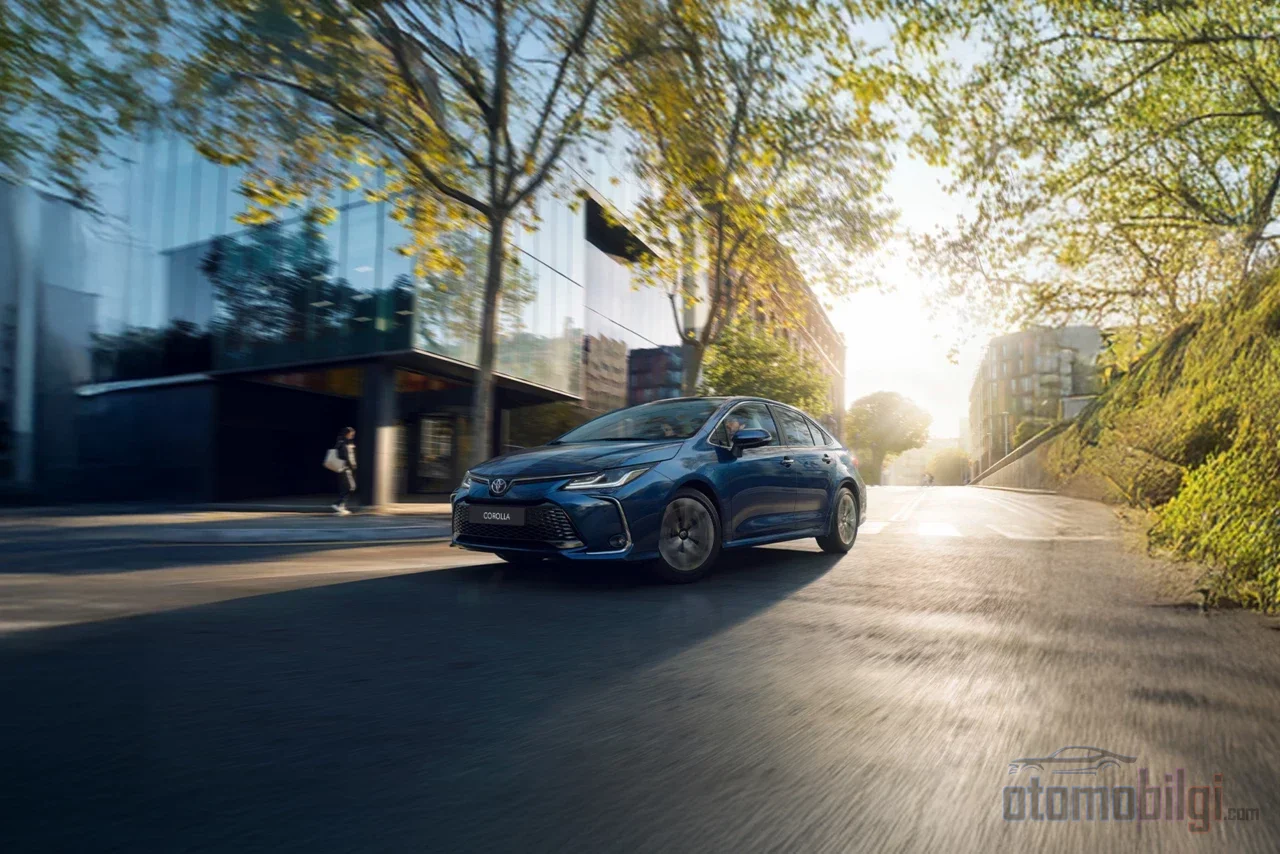
The sedan body's trunk volume is 471 liters according to the official datasheet; a flat loading area, trunk lighting and trunk pool are offered as standard. The rear seats folding in a 60:40 ratio provides flexibility for carrying long items. These figures are the basic data that make the Corolla practical for family use; 471 liters is a volume clearly above hatchback bodies of the same size.
On the equipment side, the lineup is simple and consistent: the Toyota Safety Sense 3 safety package is standard on all trim levels. Wireless Apple CarPlay and Android Auto are also standard; on the Vision Plus trim, a 9-inch Toyota Touch multimedia screen, and on the top packages, items such as a 10.5-inch multimedia and 12.3-inch digital display, electric sunroof and LED headlights come into play. Dual-zone automatic climate control and a wireless charging unit are standard on all trims except Vision Plus; hybrid packages additionally add blind spot warning and safe exit assist. This structure shows that the Corolla is sold with a philosophy that does not lock technology behind premium trims but offers basic safety and connectivity in every package.
How does it differ from its rivals? Egea, Astra and Civic comparison
What sets the Corolla apart from its rivals isn't written directly in the spec sheet; it emerges in the ownership experience. In reliability rankings, the Corolla consistently places near the top, and it is frequently noted that the majority of owners visit only for periodic maintenance. It is possible to tie this perception to measurable data: in five-year average value loss, the Corolla is among the best performers in the sedan segment and generally %35-42 falls within that range; single-year measurements reveal much lower value losses. It is also regularly mentioned in lists of models that stand out in resale value in Türkiye. These two points - few breakdowns and high resale value - are the main variables determining the total cost of ownership, and they explain the loyal audience that stands above the Corolla's price tag.
The competitor framework can be summarized as follows:
- Honda Civic: Its interior and trunk are considered slightly more spacious; both models have a high reliability perception and are LPG-compatible. Where the Corolla stands out is interior quality and second-hand liquidity.
- Fiat Egea: Advantageous in price and widespread; among the reasons cited by those who choose the Corolla, the 5-star Euro NCAP result and the rear independent suspension stand out.
- Opel Astra: Criticism that the sedan version's interior roominess results from converting a hatchback is frequent; since the Corolla was designed as a sedan from the start, it does not share this weakness.
| Comparison | Where the Corolla stands out | Where the rival is relatively stronger |
|---|---|---|
| Honda Civic | Interior quality, resale value | Interior volume and trunk space |
| Fiat Egea | 5-star NCAP, rear independent suspension | Price positioning |
| Opel Astra | Body designed as a sedan from the start, width | Equipment/price balance preference |
On the LPG front, the picture is flexible: there are user accounts of having LPG installed on the 1.5-liter engine and driving long distances, and the model's LPG compatibility is also emphasized in rival comparisons. Even so, the availability of the factory hybrid alternative offers a path free of installation risk for those who want to reduce consumption.
Strengths and weaknesses: what do owners say?
The strengths most frequently repeated in user satisfaction data are these: robustness and trouble-free use, low fuel consumption, high driving comfort, quiet and balanced road holding, and low running costs. This entire list is in the same direction as the engineering choices explained in the earlier sections of this page - the Corolla delivers what it promises.
Weaknesses should also be discussed openly. There are three issues that most frequently stand out in complaint headings and user discussions: insulation (feedback about unwanted sounds and wind noise), the 125 HP gasoline engine's acceleration performance failing to meet expectations and some users' complaints about the service experience. In terms of handling, there is also the view that it may fall behind some of its class rivals - such as the Focus. None of these weaknesses are about expectations, but about character: someone looking for sporty driving won't find it in this package, whereas for the majority seeking a predictable and economical car, the price of these weaknesses is worth paying.
Can the Corolla be a household's only car? Frequently asked questions
This is one of the most frequently asked questions, and the answer is largely yes. The 471-liter trunk, spacious rear seats, and low consumption trio tick the essential boxes required for a single-car household. The only condition is expectation management: a driver with a habit of continuously driving fast on long journeys, or expecting a classic gear feel from the automatic transmission on every shift, may go through an adjustment period with the CVT's character. Likewise, the question from those comparing it with the previous 1.6-liter engine is familiar: although the 1.5-liter unit is smaller in displacement, it is a design developed with a modern injection architecture and torque character to take over the daily-use duties of the previous engine.
The question of gasoline or hybrid is a question of budget and mileage profile. While the gasoline version is more accessible with its entry price, the hybrid, especially in heavy city use, brings consumption down to 4.5 lt/100 km and is an option that significantly shrinks the fuel expense in the long run. If your mileage is high and you mostly drive in stop-and-go traffic, the hybrid's math quickly becomes clear; if you mostly do long-distance driving, the gasoline version's consistent and simple structure is still a strong argument.
One final market note: since the sedans sold in Türkiye are domestically produced, stock availability is steady, while the hatchback body is offered only with the 1.8 hybrid engine. In other words, the choice of body type effectively determines the engine choice as well.
Conclusion: why is the Corolla still the name of the reliable classic?
The Corolla does not aim to be the brightest C-segment sedan in every respect; it aims to be the most predictable and least surprising product. With its 125 HP engine, CVT transmission and 471-liter trunk, it offers a vehicle with known dimensions, predictable costs, and depreciation figures in the 35-42% range on the used market that add up. It directs those seeking a sporty drive to other models; to those who want to use their home's only car trouble-free for many years, it offers one of the strongest candidates in the segment. When low depreciation and a consistent perception of reliability combine, it is clear that the Corolla can compete with rivals that appear more expensive than its starting price in the total cost of ownership calculation.
Sources
- Corolla Sedan Features
- Corolla Technical and Equipment Features
- Toyota Corolla Model and Price List 2026
- New engine option in the Toyota Corolla Sedan
- Bold and Compact: The 2026 Toyota Corolla
- Should You Buy the Toyota Corolla? Review Guide
- Toyota Corolla vs Honda Civic Used Car Comparison 2026
- Toyota Corolla Sedan Interior, Volume and Practicality
- How Much Is the Toyota Corolla Worth?
- Toyota Corolla Complaints
- Toyota Corolla Chronic Problems
- Toyota Corolla user reviews
- Fiat Egea Sedan vs Toyota Corolla Sedan