2026 VW Golf: The Favorite of Hatchback Lovers
Share This Page
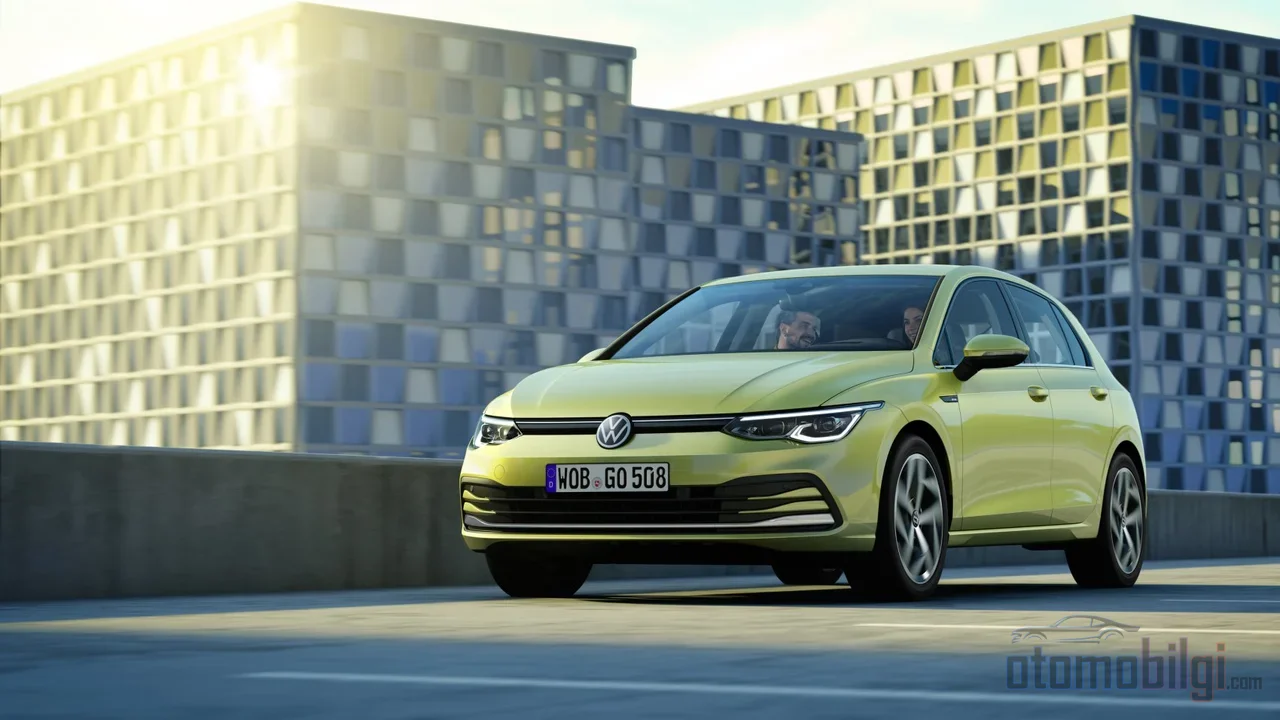
The Volkswagen Golf, in production since 1974 and the benchmark car of the family hatchback class, is offered in Türkiye in 2026 with 1.5 TSI and 1.5 eTSI engines at the 116 HP level and with a DSG transmission for its petrol versions. The ordinary petrol Golf, not the GTI, is not a performance monster; it is a C-segment hatchback designed for daily use with its quality interior, balanced ride and low consumption. In this guide, we examine its identity, technical character and position against its rivals without diving into the price list.
Highlights
- Golf, 1974 has been in production since; 8th generation 4,284 mm in length
- Petrol line-up in Türkiye: 1.5 TSI 116 HP and 1.5 eTSI hybrid 116 HP
- Average consumption: TSI at 5.4 l/100 km, eTSI at 5.3 l/100 km
- Boot capacity in all trims: 381 litres, exceeding 1,200 litres when folded
- 0-100 km/h: in the 150 HP TSI version 8.5 seconds
Why Is the Petrol Golf Still the Reference Model?
The Golf has to be one of the first names that come to mind when C-segment hatchbacks are mentioned; because almost every rival in this class has positioned itself by being compared to the Golf in some way throughout history. Even at the end of 51 years without ever leaving the production line, the car's formula is the same: 5-door body, 5 seats, front-wheel drive and a cabin of reasonable size but quality feel. The 8th generation Volkswagen Golf, 4,284 mm in length and 1,789 mm in width, sits at the typical dimensions of its class; the car, with a curb weight of 1,265 kg , goes up to 1,840 kg at maximum load.
However, the subject of this article is not the GTI. The GTI and the 333 HP Golf R are the model's performance peaks; what the ordinary petrol buyer faces in Türkiye is a much more modest and functional picture. The line-up includes 1.5 TSI 116 HP and mild-hybrid-supported 1.5 eTSI 116 HP options. In other words, the Golf's petrol identity in Türkiye is that of a family hatchback. Understanding this identity correctly is the first step towards making the right decision.
Let's make one thing clear from the start: the Golf is no longer at the top of the list of best-selling cars in Türkiye; in the first half of 2026 it appears to have slipped in the sales lists. This does not diminish the model's value as a car; it is a situation related to pricing and market dynamics. For the buyer, it is still a tidy, predictable package.
1.5 TSI and 1.5 eTSI: Two Engines, One Character
Both engines in the Türkiye line-up are 1.5-litre, i.e. 1,498 cm³ 4-cylinder turbo petrol units, and both produce 116 HP . The difference is that the eTSI carries 48V mild-hybrid support: it assists the engine with electric support in stop-and-go traffic and during deceleration, bringing average consumption down to 5.3 l/100 km. The pure TSI, with an average of 5.4 l/100 km , trails by only 0.1 litres. In practice, the difference between the two options is at a level close to measurement tolerance.
The question of whether 116 HP is enough for this class is often asked. The answer depends on the usage profile. For a family hatchback with light load and daily use as its goal, 116 HP a reasonable level; for reference, the technical specs of the 150 HP 1.5 TSI version sold abroad summarize the subject well: 250 Nm of torque, 8.5 seconds for 0-100 km/h and a 224 km/s top speed, combined with 4.8-5.0 lt/100 km consumption. In other words, the engine family can serve performance and economy on the same plate; on the 116 HP version the upper limit is a bit more modest, but the character is built on the same logic: a unit that is not worn out in the city, whose turbo kicks in early and delivers its torque at low revs.
DSG: Seamless Shifting Thanks to Mechatronics
There is only one transmission option in the Golf's petrol versions in Türkiye: DSG, i.e. the dual-clutch automatic. Its difference from classic torque-converter automatics is that two separate clutches work in turn, and while one gear is engaged, the next is already standing ready. The result is gear changes in the millisecond range; the jolt felt in a classic automatic, the interruption in acceleration and loss of power do not occur here. Throttle responses are noticeably sharper compared to a torque-converter rival.
Two warnings must be made as a matter of engineering discipline. First, dual-clutch transmissions may by nature have a slight feeling of interruption during gear changes; this is not a fault, it is the character of the architecture. Second, and more importantly: the DSG maintenance history means everything. Replacing the clutch and flywheel set means a serious cost; user forums mention that this job can reach tens of thousands of liras at minimum. If you are considering buying second-hand, aim for a vehicle that has received authorized service maintenance; that is exactly why a well-maintained DSG commands a premium on the market.
Interior and Luggage: Measurable Practicality
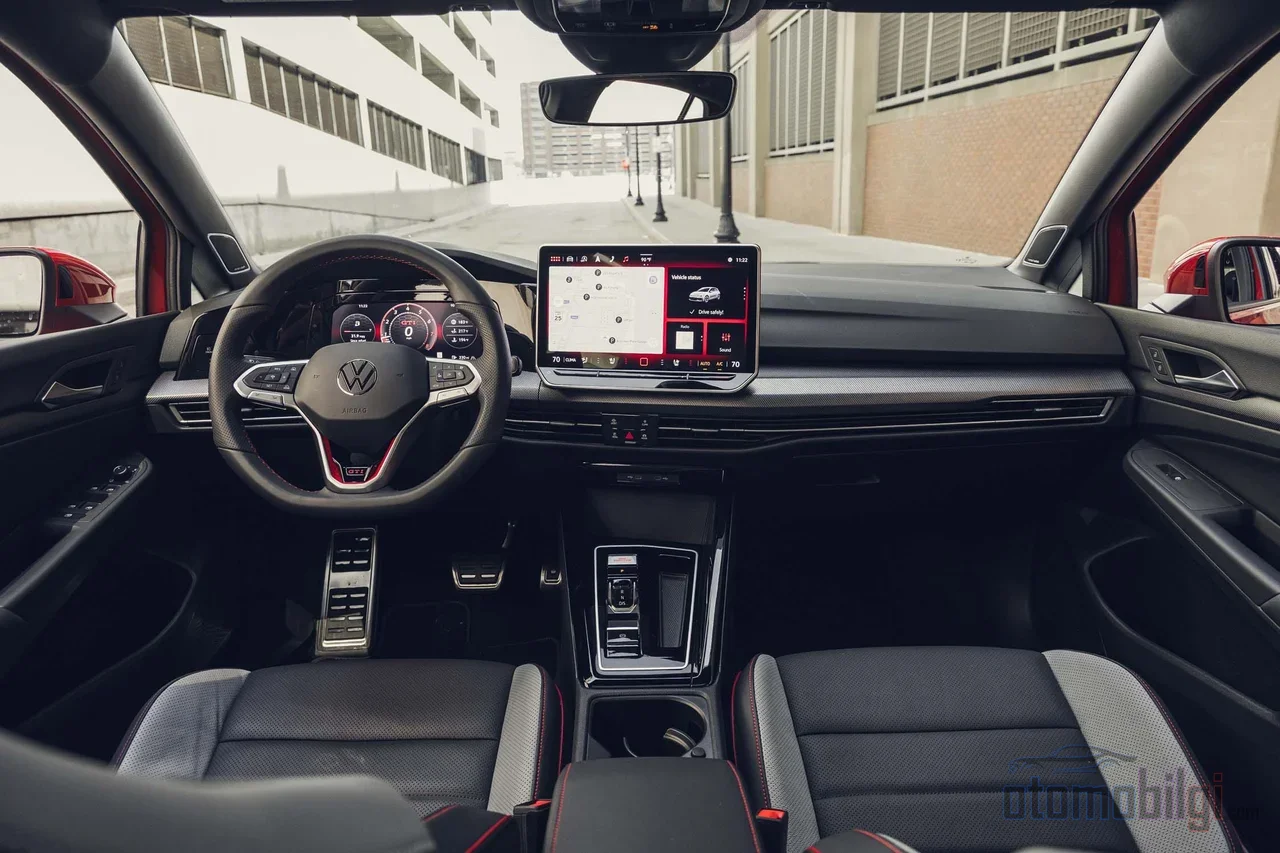
The Golf's luggage volume is 381 liters across all equipment levels. Publications using different measurement standards give figures in the 374-380 liter range; the difference stems from the choice of measurement method, not from the vehicle. 381 liters is not the largest volume in the class; but since the loading sill is kept low, we are talking about a trunk that feels bigger than its volume in daily use. The rear seats fold in a 60/40 ratio, and when folded the loading area expands to up to 1,230 liters ; a flat loading surface can also be obtained by moving the floor to the upper position.
On the cabin side, the 8th generation paints a higher-quality picture than its predecessor: the door and tailgate feel and seat quality are praised by users; wind noise does not reach a disturbing level up to 130 km/s
The facelifted 8.5 generation has also largely reversed some control layout decisions that made the 8th generation less user-friendly when it first launched. In short, despite its compact dimensions, the cabin is spacious enough to meet the requirements of daily family use.
Golf's strengths are repeated quite consistently among users. It would be appropriate to list them item by item:
- Road holding: The chassis balance is the model's most praised feature; a reassuring character in corners that never surprises the driver.
- Second-hand liquidity: Golf sellers finding buyers quickly is one of the factors that positively affects the total cost of ownership.
- Spacious and high-quality interior: The main reason for those seeking a premium feel in a hatchback.
- Economy: In the petrol version, 5.3-5.4 lt/100 km average consumption, a respectable figure for the class.
There are weaknesses too, and an honest guide should not hide them. Engine performance, especially in the 116 HP version, may fall short for speed-enthusiast drivers; some users find the boot space behind its rivals. Complaints about unwanted noise in insulation have also been recorded. These are less about irremediable flaws and more signals that, within the general dynamics of the class, the Golf makes some compromises.
eTSI or pure TSI?
The decision between the two options is a matter of technical calculation. The eTSI, with its mild-hybrid system, makes stop-start operation smoother and offers a small but real efficiency contribution in urban use; in return, its equipment level is tied to upper packages like Style in the lists. The pure TSI comes with more accessible equipment and a somewhat simpler maintenance chain. If your use is city-heavy, the smoothness the eTSI brings is meaningful; if you mostly do long journeys, the difference only becomes a matter of calculation tied to your mileage log in the long run.
Golf Against Civic and Astra: Where Does It Make a Difference?
The other two sides of the C-segment hatchback triangle are the Honda Civic and Opel Astra. The Civic stands out with its sporty driving character and turbo performance; the Golf differentiates itself with interior quality and the smooth automatic experience offered by the DSG transmission. Both are two established legends of the class, and the choice is really a matter of driver profile: driving excitement, or cabin quality and ease of use?
The debate on the Astra front, however, is based more on market reality. Among car enthusiasts, it has long been debated that the Golf offers a technically more mature package, while in Türkiye the experiences with the brand's service and warranty process make the Astra more logical for some buyers. In the second-hand market, the Golf trades at a more accessible level than the Civic; the Civic's average value runs above the Golf's. Read together with the Golf's liquidity advantage, this picture offers the buyer measurable flexibility: a car that is more reasonable to enter and sells quickly on exit.
| Feature | Golf Petrol | Civic | Astra |
|---|---|---|---|
| Standout aspect | Interior quality, DSG | Sporty driving, turbo performance | Price/equipment balance |
| Consumption (Golf) | 5.3-5.4 lt/100 km | - | - |
| Transmission (Golf) | DSG dual-clutch | - | - |
| Second-hand position | More accessible than the Civic | Above-average value | At rival level |
In this comparison, there is no single absolute winner; what exists are three well-defined, distinct identities. If we had to sum up the Golf's identity in one sentence: a family hatchback centered on ease of use that is neither the flashiest, the fastest, nor the cheapest, yet has no serious weakness in any area.
Should You Buy a Model That Will Be Replaced by a New Generation? Final Assessment
There is a critical fact to know: it has been confirmed that the 8th generation will be the Golf's last internal combustion generation, and the electric ID.3 is expected to fill the gap on the family hatchback side. This means that whoever buys a Golf is getting the last generation of pure gasoline Golfs in history. On one hand, the model's future collector value is a matter of speculation; but the real meaning is this: the formula will change from now on through electrification.
The target audience table summarized by Otomerkezi-style buying guides aligns with the conclusion of this article. The gasoline Golf is the right car for this buyer: someone seeking a quality interior and a mature driving experience, using the highway and the city in balance, wanting an automatic transmission but avoiding the rubber-band feel of a CVT, and valuing a premium stance in a hatchback body. Those who enjoy what is written for the sake of speed may lean toward the Civic, while those prioritizing budget optimization may turn to the Astra.
Ultimately, the question is not "Golf or something else?"; it is the question of "what do I want?". The non-GTI gasoline Golf is a product whose ambition never gets inflated at any point, with a clear engineering account and known dimensions. And in car choice, measurability is often worth more than the most expensive equipment.
Sources
- Volkswagen Golf Price and Features 2026 | VW - Passenger Car
- Volkswagen Golf VIII 1.5 TSI (150 hp) | Technical specifications
- Volkswagen Golf 1.5 eTSI 116 HP Style DSG 2026
- New Volkswagen Golf Price List 2026 - Arabam
- Volkswagen Golf Features, New Model Prices - Dogus Oto
- Volkswagen Golf review - Auto Express
- Volkswagen Golf Mk8.5 review - evo
- Should You Buy a Volkswagen Golf? 2026 Detailed Review - Otomerkezi
- Honda Civic vs Volkswagen Golf - Otomerkezi Comparison
- Honda Civic vs Volkswagen Golf - Trinkoto
- Volkswagen Golf Interior, Volume and Practicality - Arabazzi
- Volkswagen Golf Complaints and User Reviews - Sikayetvar
- Golf 1.5 TSI DSG information - Golftutkusu