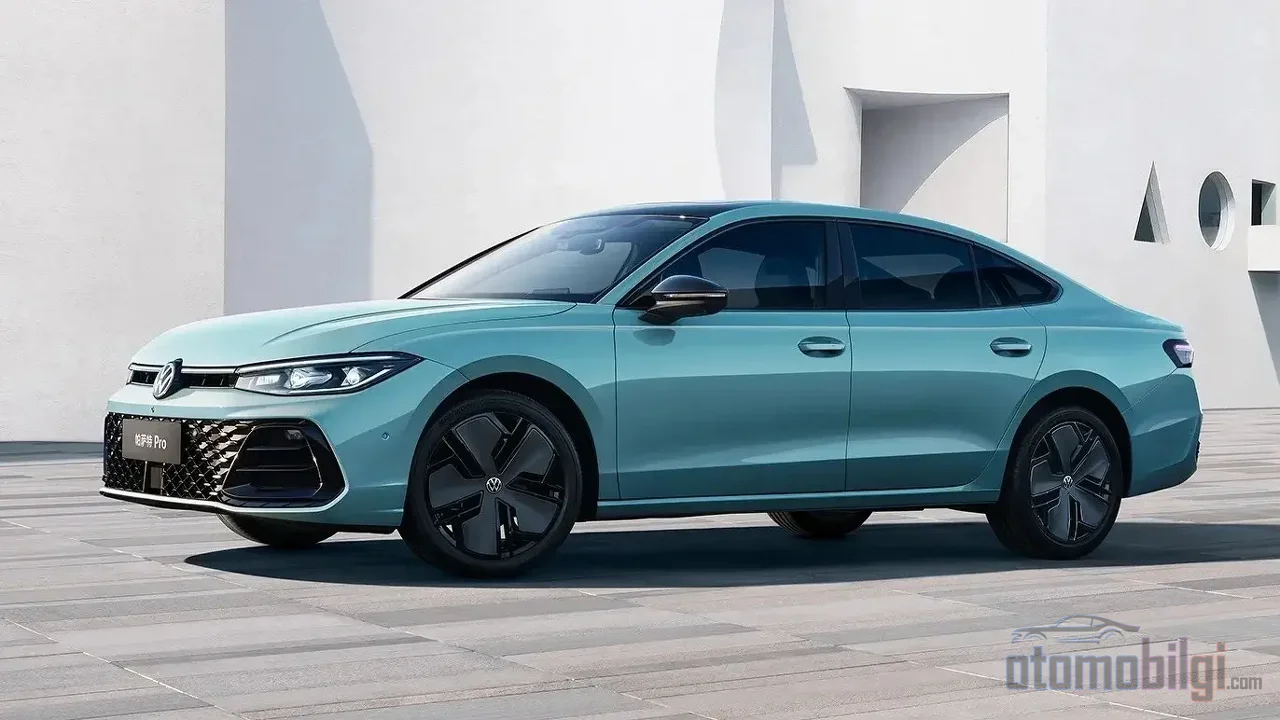
2026 Volkswagen Passat: The Balanced Sedan of the D Segment
Share This Page
The Volkswagen Passat, sold in the D segment with over 30 million units produced, is the world's best-selling mid-size model; in Türkiye it is the common choice of both family sedan and corporate fleet users. The 1.5 TSI engine and 7-speed DSG combination answers those seeking interior space, luggage capacity and long-distance comfort that go a step beyond what C-segment sedans offer. This guide examines the model's identity, its engine-transmission character, and its strengths and weaknesses alongside its rivals.
Highlights
- The Passat is officially over 30 million units produced, the world's best-selling D-segment model.
- 1.5 TSI: 150 hp of power, 250 Nm of torque, 0-100 km/h in 8.7 seconds.
- Catalog average consumption is 5.3 lt/100 km; real urban use can rise to the 6.5-9 lt band.
- In the DSG gearbox, dry clutch life with good use is around 90,000-100,000 km .
- The new generation is sold in Türkiye only in the Variant body style; the sedan option is a matter of debate.
The Passat's Place in the D Segment: Which Needs Does It Answer?
Most sedan guides in Türkiye navigate the crowded field of the C segment: Corolla, Civic, Astra, Egea. The Passat sits one notch above. The D segment is the category positioned above the mid-class, defined by a larger body, a longer wheelbase and a more mature driving character. Volkswagen's own driving guide also describes the Passat as a D-segment model that "stands out with its spacious interior and high comfort."
The model's audience falls into two main groups. The first is families who drive long distances weekly and are unwilling to live with a child seat in the back. The second is corporate fleet users; throughout its production life, the Passat has been one of the rare models preferred simultaneously by individual and fleet buyers. This dual demand has made it the most heavily traded D-segment body on the Turkish used-car market; the B8 generation, produced between 2015 and 2023, is today the most common option on the used market.
Who is it the right choice for? We can summarize the long-distance profile as follows:
- Drivers covering 400 km or more per week who prioritize comfort over performance
- Families who prioritize a premium-feeling cabin and a large trunk
- Fleet buyers seeking a sedan that is standard in corporate use and has a wide spare parts network
1.5 TSI Engine and DSG Gearbox: What Is Its Character?
At the heart of the petrol Passat sold in Türkiye is the 1.5 TSI : 150 horsepower of power and 250 Nm of torque. These figures are not modest for the D segment; they are sufficient to carry the car comfortably in urban use and at highway speeds. Paired with the 7-speed DSG , the engine completes the 0-100 km/h run in 8.7 seconds . User feedback praises this acceleration performance; gear shifts are fast and, thanks to early shifts into taller gears, highway revs stay low.
Does ACT Technology Really Save Fuel?
The ACT technology written on the 1.5 TSI's catalog spec sheet aims to reduce fuel consumption by deactivating two cylinders under low load. According to user experience, the engine 100 km/h it can switch to two-cylinder mode. However, the logic chain breaks here: cylinder deactivation works under constant, low load; in the continuous throttle-brake cycle of stop-and-go traffic it never gets a chance to engage. This is why the view that ACT's city fuel-saving promise is limited is widespread among users. The technology is not faulty, but its operating conditions are narrow.
How Many Liters Is Real Fuel Consumption?
The gap between catalog data and reality, as with every gasoline car, stems from the measurement method in the Passat as well. According to the WLTP cycle, average consumption is 5.3 lt/100 km; in highway use it drops to as low as 4.3 liters . In real-world use the picture widens: with gentle driving, city consumption measures 6.5-7 lt, and at a constant 120 km/h on the motorway about 5.6 lt. In heavy traffic, however, the figure can climb to 9-10 liters. From an engineering standpoint this distribution is normal; the question should not be "how many liters does it burn," but "in which profile do you use it."
| Usage Profile | Consumption (lt/100 km) |
|---|---|
| Catalog (WLTP) average | 5.3 |
| Highway, flowing traffic | 4.3-4.8 |
| 80-120 km/h mixed use | 4.8 |
| City, normal traffic | 6.5-7 |
| Heavy stop-and-go traffic | 7-10 |
Fuel tank capacity 59 liters; calculated with the catalog average, this means a range that barely exceeds one thousand kilometers on a single tank. In real-world use the range settles in the 700-850 km band, which is still a generous figure for the long-distance user.
Interior and Trunk Practicality: Where Is the Volume Won?
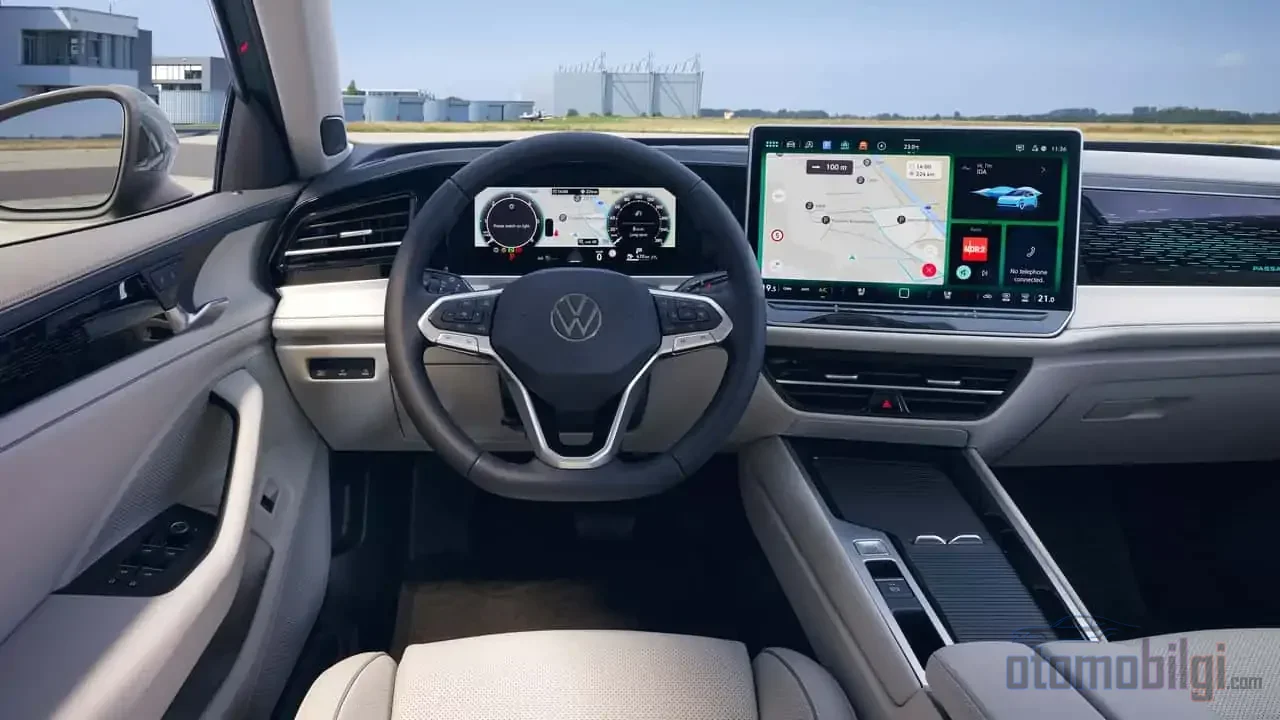
The Passat's main sales argument is not the engine, but volume. The extra length gained by moving into the D segment is transferred directly to the interior: it is considered to have one of the widest interior volumes in its class, and its highway comfort and noise insulation are described as segment-leading. These two sentences are the technical explanation of why the model is so established on the fleet and family side: a long axle reduces road noise; a wide cabin reduces fatigue at the end of 500 kilometers.
On the trunk side, the body type is decisive. The sedan form, historically with volumes exceeding 565 liters , was the generous mid-class of its era; in new-generation reviews the sedan trunk is measured at 586 lt . The Variant (station wagon), on the other hand, takes the job to another league: in the previous generation, the trunk was 650 lt , rising to 1,780 liters when the rear seats were folded. In the new generation, the floor volume reached 690 liters with a 40-liter increase, while the folded volume reached 1,731 liters ; rear knee room has increased by 5 cm and shoulder width by 2 cm. For families with children and those carrying large items, the Variant is technically the more correct answer.
Strengths and Risks to Be Aware Of
The Aspects That Make the Passat a Passat
The point where international tests and user experiences converge is clear: the 2020 model R-Line in the test the car was found to be "direct, impressive and comfortable", with the statement that it met almost everything expected of a German sedan. On the user side, the performance character of the 1.5 TSI wins praise, and the DSG's gear work and road insulation are appreciated. Add one of the largest trunks in its class, and the model's formula is internally consistent.
Two Critical Maintenance Risks: DSG Clutch and Water Pump
The 7-speed DSG in 1.5 TSI Passats is a DQ200 type dry-clutch transmission. This design has a cost advantage, but its lifespan is limited: with good use, the clutch set wears out at around 90,000-100,000 km and replacing it is a costly job. Constantly waiting in a half-clutch position in traffic shortens this lifespan; the common advice from experts is to use N instead of the brake where stops are long.
The second risk lies in the cooling system: in the 1.5 TSI, at around 100,000 km the water pump can start to leak. The annoying aspect of the problem is that the water pump, thermostat and control unit come as a single integral part; meaning that if one component fails, a complete replacement is required. The part price is shown at around 9,000 TL in user shares, but this price is from an old date and far from current. When buying second-hand, on examples near the 100,000 km mark, questioning these two items is a must.
Users coming from diesel also need to set their expectations correctly: 7-9 liters of city consumption in the D segment is technically normal; someone looking at a gasoline Passat with a 1.6 diesel habit may find this figure high. Some users have therefore expressed their regret, saying "I preferred the 1.5 TSI instead of a diesel, I wish I hadn't". The gasoline-diesel choice is no longer a theoretical debate: the diesel engine option has ended in sales programs.
Where Does the Passat Stand Apart Against the Mazda 6 and Skoda Superb?
In the D segment, the two names that challenge the Passat most are the Mazda 6 and Skoda Superb. The Mazda 6's situation is shaped by tax mathematics: the Passat is evaluated in the 60% SCT bracket while the Mazda6 falls under 110% SCT coverage; so the price difference between the two is not as wide as you might think. In terms of character, the Mazda 6 is considered a more equipped, more stylish car with high driving pleasure; the perception that Mazda builds "stable and solid" cars is also widespread. In contrast, the Passat is a more predictable choice in terms of running costs and tax perception.
The Skoda Superb, however, is a technically heavier rival. Views in favor of the Superb are strong in terms of volume and insulation: in terms of interior volume, the Passat is positioned second in the D segment after the Superb. But when it comes to brand perception and the sedan identity debate, the balance turns toward the Passat. The two cars are products of the same group; so the question is not "which brand is better" but "which one is the true character": the Superb for those prioritizing volume and insulation, the Passat for those prioritizing brand value and classic sedan identity.
Passat in 2026: Why Is There No Sedan in the New Generation?
The current table brings an important change: the new-generation Passat is sold in Türkiye only in the Variant body type. Official technical data lists the 2.0 TDI SCR Elegance 4Motion DSG version with 1,968 cc displacement, 193 hp of power and 4,917 mm of length. The removal of the sedan option sparked serious debate among the model's most loyal audience; the question "will sales drop without a sedan" is actively discussed among users, and the possibility of a shift to a liftback form is being raised.
This change also affects the purchasing decision. The buyer who wants a Passat in classic sedan form now turns to the second-hand B8 generation, which is a sensible path in its own right: this generation, produced between 2015 and 2023, is widely available on the used market, the maintenance is thoroughly understood, and the 1.5 TSI combination described in this guide belongs exactly to this generation. Those buying new, on the other hand, must either accept the Variant or look for an alternative along the lines of the Superb or Mazda 6.
Conclusion: The Answer for Those Seeking a Balanced Sedan
The Passat is not a car that excels in a single area; it is a product of balance that sits in the top quarter in many areas. Its comfort is at segment-leading level, its volume is the second strongest after the Superb, and its engine is an adequate but unremarkable 150 horsepower. However, the dry-clutch DSG and coolant circulation risk must absolutely be factored into the post-purchase budget calculation, especially for examples around 100,000 km. If sedan form and brand value are decisive for you, the Passat remains one of the most rational answers in the D segment; if you want absolute volume, the Superb takes the top spot on your list, and if driving pleasure and equipment are your priority, the Mazda 6 moves to the top of your list.
Sources
- Volkswagen Passat, officially the world's best-selling D-segment model
- D-Segment Cars and Features - Volkswagen Passenger Cars
- 2022 Volkswagen Passat 1.5 TSI ACT 150 PS DSG Business technical specifications
- 2021 Volkswagen Passat 1.5 TSI Impression Review
- Passat 1.5 TSI fuel test in Istanbul
- Volkswagen Passat 1.5 TSI real-world consumption data
- Passat 1.5 TSI Fuel Consumption guide
- Volkswagen Passat Variant (B8) 1.5 TSI technical specifications
- Should You Buy a Volkswagen Passat? 2026 Detailed Review
- Should You Buy a Volkswagen Passat B8?
- Passat Sedan or Variant?
- Passat Variant cargo capacity 690/1,731 lt overview
- Passat 2.0 TDI SCR Elegance 4Motion DSG 2026 technical specifications
- Should you buy a 2020 1.5 TSI Business Passat?
- Volkswagen Passat 1.5 TSI 150 HP user experiences
- Volkswagen Passat vs Skoda Superb discussion
- Mazda6 vs Volkswagen Passat comparison discussion
- Superb - Mazda6 comparison discussion
- Mazda 6 vs Skoda Superb user review
- 2020 Volkswagen Passat R-Line Test
- New-generation Passat sedan discussion
- Volkswagen Passat TSI user reviews