2026 Kia Sportage Petrol: What Does It Offer to Family SUV Seekers?
Share This Page
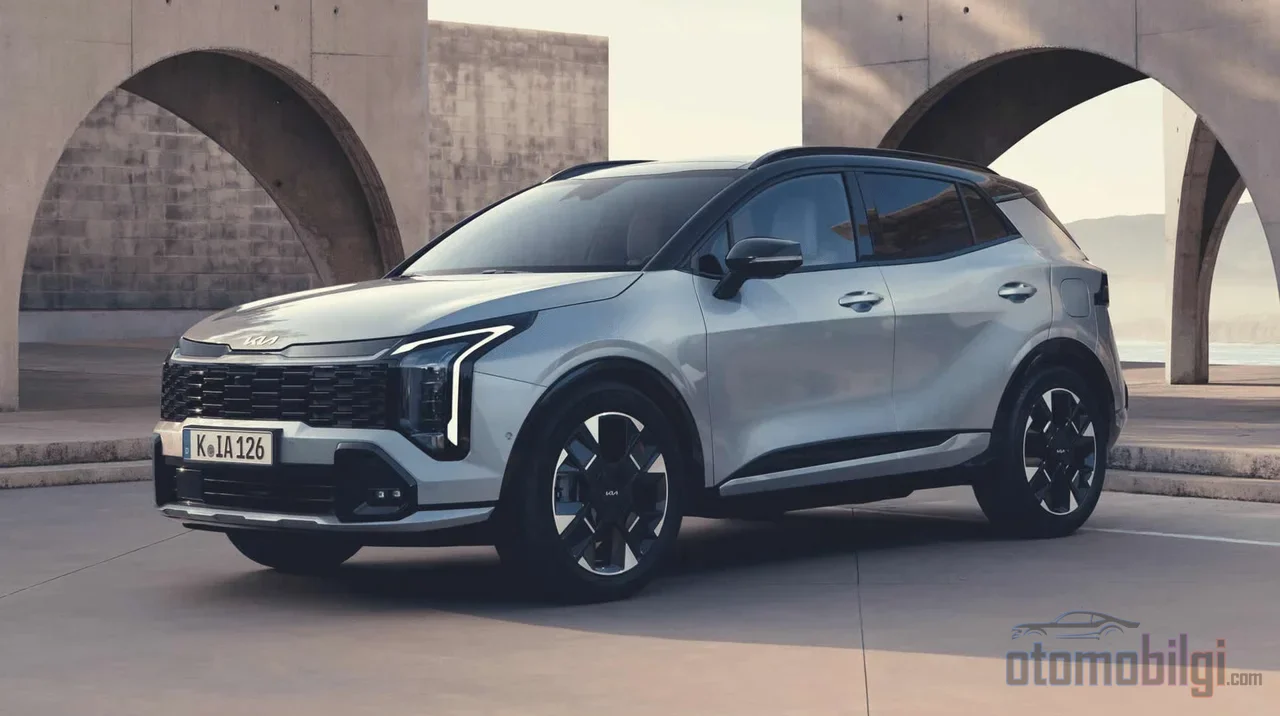
Kia Sportage petrol, fifth generation in Türkiye NQ5 body, and the only non-hybrid engine option sold with 1.6 T-GDI turbo petrol C-SUV; with 150 PS (4x2) or 180 PS (4x4) power, a 7-speed dual-clutch transmission and 591-liter cargo volume, practicality and equipment richness stand out in family use. Fuel consumption compared to its hybrid rivals is its most noticeable weakness.
Highlights
- 1,598 cc 1.6 T-GDI turbo petrol engine; 150 PS (4x2) or 180 PS (GT-Line, 4x4)
- 7-speed DCT dual-clutch transmission, 0-100 km/h in 9.4 seconds (2WD)
- Cargo volume 591 L (1,780 L with seats folded)
- Euro NCAP 5 stars, 5 years / 150,000 km warranty
- Real urban consumption in the 8.5-10 L/100 km range; the hybrid version is not available in Türkiye
Which Segment Is It In, Which Needs Does It Answer?
The Sportage is positioned in the compact SUV, i.e. C-SUV class. In Türkiye, this segment is the first stop for those looking for a family car: it combines the cargo and seating practicality of sedans with a high driving position and tolerance of rough surfaces. In this class, the Sportage sits on the same shelf as the Hyundai Tucson, Nissan Qashqai, Toyota Corolla Cross and Volkswagen Tiguan.
At 4,540 mm in length, 1,865 mm in width and a 2,680 mm wheelbase, it shows that it is one of the roomier members of its class. Add the 170 mm ground clearance and 5.5 m turning radius, and you are faced with a technical package that strikes a reasonable balance between urban maneuverability and weekend trips. The five-seat layout is not a vehicle designed for families with three children or those who frequently carry passengers; it has a volume distribution that works most efficiently with four occupants.
Engine and Transmission: How Do the 1.6 T-GDI and 7-Speed DCT Work?
The only engine on the Turkish market is the 1.6 T-GDI turbo petrol unit from the Smartstream family, displacing 1,598 cc. Power and torque are offered at two different levels depending on the transmission:
| Specification | 1.6 T-GDI 2WD | 1.6 T-GDI 4WD |
|---|---|---|
| Power | 150 PS / 4,500-6,000 rpm | 180 PS / 6,000 rpm |
| Torque | 250 Nm / 1,500-4,000 rpm | 265 Nm / 1,500-4,500 rpm |
| 0-100 km/h | 9.4 s | 9.8 s |
| Top speed | 195 km/h | 203 km/h |
| WLTP combined consumption | 6.9-7.8 L/100 km (depending on trim) | |
| Fuel tank | 54 L | |
The transmission is the same in both versions: a 7-speed DCT, i.e. a dry dual-clutch automatic. The logic is simple: one clutch handles the odd-numbered gears, the other the even-numbered gears; during a gear change, one clutch disengages while the other is already ready for the next gear. This structure means a more direct connection compared to a classic torque-converter automatic and lower mechanical loss at constant speeds; this low loss is also the key to economical operation on long journeys.
The character has two sides. Gear shifts are quick and decisive; the sense of direct connection when you lift off and accelerate again puts drivers used to a manual gearbox at ease. At launch and in the low-speed range, the well-known behavior of dry-clutch DCTs emerges: a slight shudder or jerk can be felt especially when shifting from 1st to 2nd. While this is at a level that can be described as the design's normal character, some users report the problem recurring even after software updates, and in more severe cases, clutch replacement being carried out.
What should you pay attention to in stop-and-go traffic?
If a dry clutch operates for long periods in the half-clutch zone in heavy stop-and-go traffic, it heats up and shortens clutch life. The correct usage from an engineering standpoint is simple: instead of holding the car on a hill with the throttle, stop it with the brake or Auto Hold; in slow-moving flow, apply throttle early and consistently, and don't linger in half-clutch in short bursts. When inspecting a used Sportage, launch shudder, vibration in reverse gear, and a transmission overheating warning should be treated as clear risk signs.
Interior and Trunk Practicality: Is It Enough for Family Use?
The Sportage's strongest card is here. Trunk volume with the seats up is 591 liters; with the seats folded, this figure rises to 1,780 liters. In class comparison it is ahead of the Corolla Cross (525 L) and the Qashqai (436 L), while the Tucson (620 L) is still roomier. For typical family loads such as a stroller, shopping, and weekend luggage, this volume leaves a comfortable buffer. The power and memory tailgate opens and closes with a single button on top trim levels; a small but real convenience for users approaching the car with their hands full.
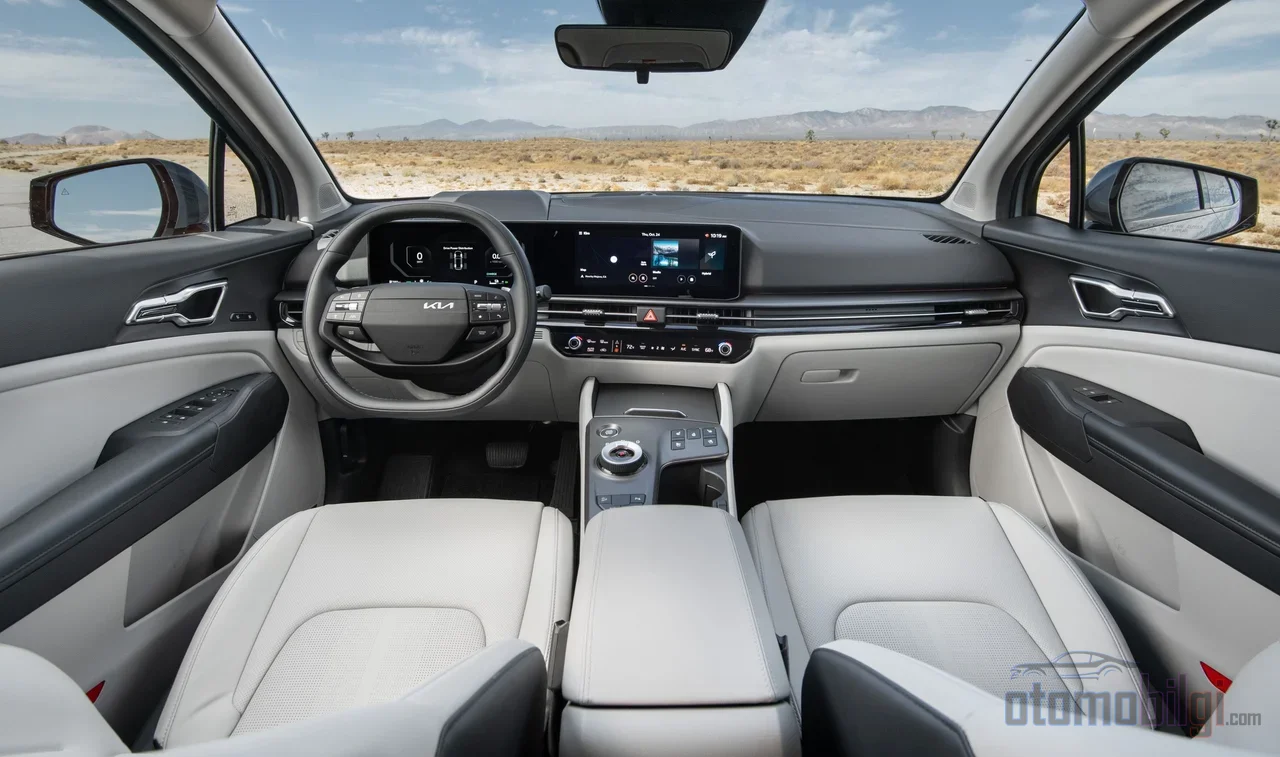
In the cabin, the 12.3-inch curved dual screen is standard on top trims, and the infotainment side is among the segment's good examples. Wireless CarPlay and Android Auto are available from the lowest trim. There is also a point of criticism: hard plastic surfaces are found in the upper area of the dashboard, and the storage spaces, especially the door pockets, could have been more generous considering the car's exterior dimensions. The rear suspension's independent multi-link structure contributes to comfort being maintained over long distances with a full load.
How Should You Choose a Trim Level?
Sold in 2026 with the facelifted body, the Sportage is offered in six trim levels ranging from Live to GT-Line. On the safety side, the differences between trims are relatively small: even at entry level, LED headlights, wireless smartphone connectivity, and driver assistants (adaptive cruise, lane keeping, emergency braking support) are standard. The criterion that makes the choice easier is this:
- Vision: A sensible first step for those who want the curved dual screen.
- Elegance: The panoramic roof, 19-inch wheels, Matrix LED, and power-memory tailgate start at this level.
- Prestige: Leather seats, Harman Kardon sound system, head-up display (HUD), 360° camera, and advanced collision avoidance packages.
- GT-Line: Sporty trim sold with a single engine-transmission combination; the 180 PS power and 4x4 drivetrain are found only here.
Is 4x4 really necessary?
Not necessary in normal use. 170 mm ground clearance, which covers most of the surfaces you will encounter on snowy, gravel and dirt roads; and since the 2WD version's 250 Nm of torque is accessible from 1,500 rpm, you will have no trouble with loaded starts. Think of 4x4 more as extra traction safety in bad weather conditions and as a natural part of the sporty trim that comes with the GT-Line.
Strengths and Weaknesses: Where Is the Balance Struck?
Strengths
- One of the largest cargo volumes in its class (591 L) and generous interior space.
- Equipment richness and price/equipment balance; safety packages standard even on lower trims.
- A 5-star safety rating from Euro NCAP and a 5-year / 150,000 km warranty; some rivals make do with 3 years / 100,000 km.
- Long-distance comfort thanks to independent rear suspension.
Weaknesses
- Real-world city consumption of 8.5-10 L/100 km; it can exceed 10 liters with aggressive driving. The official combined figures (6.9-7.8 L WLTP) reflect the optimum profile measured by the test cycle; the gap in real city traffic, combined with the hybrid version not being sold in Türkiye, becomes the most debated issue.
- The DCT's judder at low speeds; in some users, cases escalated all the way to clutch replacement.
- Hard plastics on the upper dashboard and storage spaces smaller than expected.
- A character requiring high revs for performance; in the 150 PS version, you need to press the throttle for overtaking acceleration.
The summary balance is this: on the good side of the class in comfort, volume and equipment; behind the class in energy efficiency. The answer to the question of which family the car suits also lies in this balance: a balanced choice for families whose driving mostly happens outside the city and whose daily distances are reasonable; for users living entirely in stop-and-go traffic and making the fuel bill their first priority, hybrid-focused rivals are a better match.
Where the Kia Sportage Petrol Stands Against the Corolla Cross and Tucson
The Toyota Corolla Cross has an identity that is the exact opposite of the Sportage: its 1.8 hybrid system runs at around 5.0 L/100 km in WLTP and is clearly ahead in fuel economy; Toyota's reliability perception and low second-hand depreciation are a bonus. In return, its cargo volume is 66 liters smaller, while the Sportage leaves it behind in equipment density and price/performance. The fact that the Corolla Cross's entry price corresponds to the Sportage's top trims is also a factor influencing the choice.
The Hyundai Tucson, meanwhile, is technically a sibling: it shares the same platform and, unlike the Sportage, is also offered with a hybrid option in Türkiye. Its starting price is noticeably higher; its design is more polarizing and its climate controls draw criticism. The Sportage's interior layout is more conventional and user-friendly; in user reviews, the Sportage is described as more sporty and technology-focused, while the Tucson is seen as having a more classic and familiar character. As for the Nissan Qashqai: its 1.3 DIG-T engine with 158 PS and CVT transmission is good on fuel consumption, but its 436-liter trunk is a clear numerical disadvantage against the Sportage.
LPG and the Second-Hand Market: What Long-Term Owners Need to Know
The LPG question comes up often. Technically, it is possible to install an LPG system with sequential injection on the 1.6 T-GDI; however, on a turbocharged gasoline engine this job should be done by an experienced and specialized company. The more critical issue is the warranty: before installation, get written information from the authorized service center and clarify how the system affects warranty coverage.
On the second-hand market, the Sportage has a relatively stable value-retention profile; the 5-year warranty plays no small part in this. When inspecting a DCT-equipped example, focus on launch behavior, shifting into reverse, and transmission overheating warnings; just as important as the mileage is how those kilometers were accumulated. On the engine side, the Smartstream 1.6 T-GDI is generally found to be reliable; most problems appear to stem from the transmission and interior trim.
In conclusion, the Kia Sportage gasoline is one of the C-SUVs that chooses to stay with internal combustion in the hybrid era, and it clearly carries all the pros and cons of that choice: a spacious trunk, rich equipment, a 5-year warranty, and balanced road handling; in return, city fuel consumption and the DCT's low-speed character. If your needs fit this balance, especially the Vision and Elegance trims are the most rational candidates for family use.
Sources
- All Technical Specifications and Details of the Kia Sportage
- All Features and Details of the Kia Sportage
- Kia Sportage October 2026 Price List
- Kia Sportage 1.6 T-GDI Review: Should You Buy It in Türkiye?
- Should You Buy the Kia Sportage DCT? Chronic Problems
- 2022 Kia Sportage 1.6 T-GDI Detailed Review
- Standout Details of the 2022 Kia Sportage SUV