Where Does the 2026 Suzuki S-Cross Stand as a Family SUV After the Vitara?
Share This Page
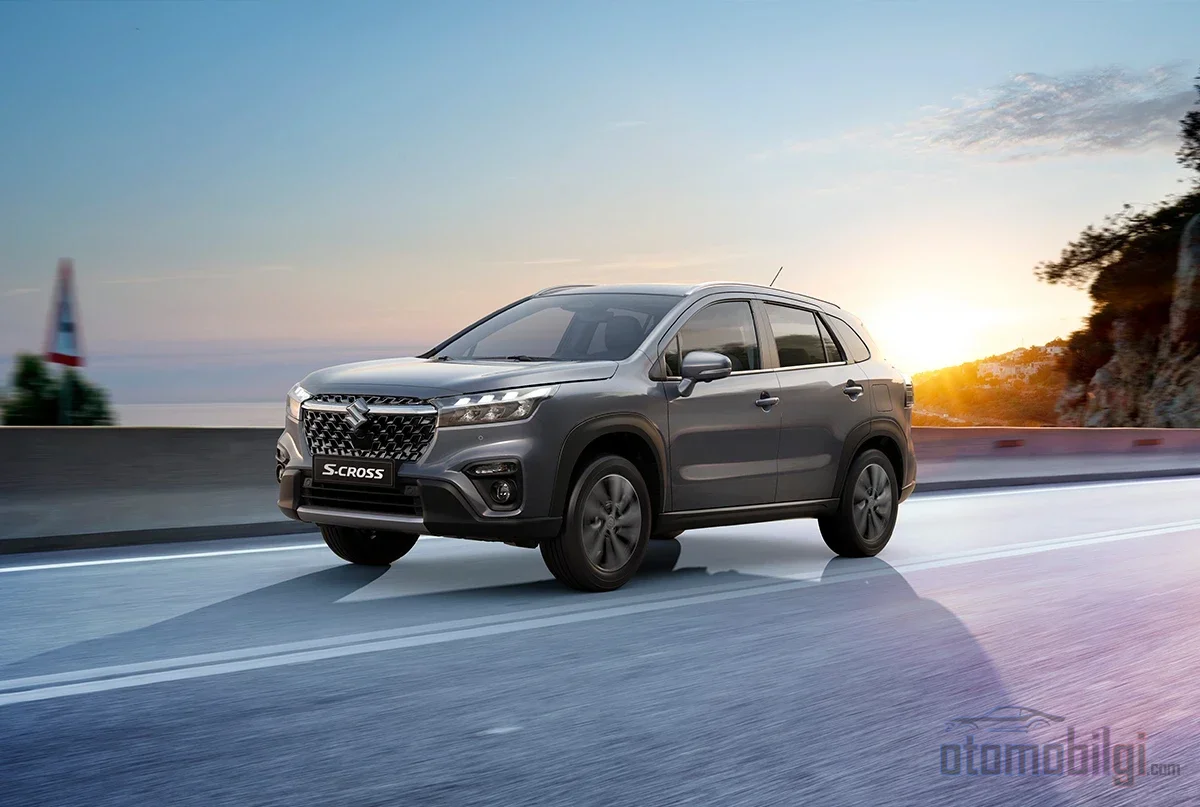
The Suzuki S-Cross is Suzuki's compact SUV model positioned a notch above the Vitara: with its 1.4 Boosterjet mild hybrid petrol engine, optional ALLGRIP 4x4 system and luggage capacity of up to 430 liters, it is a practical family car that tries to solve both city use and weekend getaways in a single body. In this guide, we examine one by one the model's place in its segment, its engine-transmission character, interior and luggage practicality, its strengths and weaknesses, and the aspects that set it apart from its rivals, starting with the Vitara.
Highlights
- 1.4 Boosterjet 48V mild hybrid petrol engine, 235 Nm of torque and 6-speed automatic transmission
- Optional ALLGRIP SELECT 4x4 and four drive modes: Auto, Sport, Snow, Lock
- Luggage capacity: 430 liters (upright seats), maximum 1,230 liters
- 0-100 km/h 10.1 seconds (4x2), combined consumption 5.9 lt/100 km
- Brand-new sales continue in Türkiye; the Black Edition package will also be on the roads in 2026
Which Segment Does the S-Cross Belong To and What Needs Does It Address?
The S-Cross's segment label can be confusing. While some assessments count it in the B-SUV class, its dimensions actually speak at the border of the compact C-SUV: over in length, 1,785 mm in width and 2,600 mm wheelbase. In practice, this means the car is a formula that tries to combine B-SUV agility with C-SUV interior volume. Suzuki's official positioning is also in this direction: the "Safer, Stronger, More 4x4" slogan puts forward the family-friendly spacious luggage compartment, the ALLGRIP traction system, and the Smart Hybrid technology as its three main pillars.
The need the vehicle addresses is clear: a higher seating position than a standard hatchback, a traction system that inspires confidence on rough terrain and in winter conditions, but reasonable consumption for its class. In the Türkiye market, there are few models that can still offer this profile with an internal combustion engine and as brand-new; the S-Cross is one of them. A piece of data shared by the brand's distributor is also part of this story: of vehicles sold being the smart hybrid version shows that buyers actually prefer the hybrid and 4x4 combination.
We position the brand assertively in the B SUV segment with 4x4 vehicles.
What Kind of Character Does the 1.4 Boosterjet Mild Hybrid Engine and Transmission Offer?
There is a single option in the S-Cross's engine bay: 1.4 Boosterjet (code K14D), a 1,373 cc, four-cylinder, 16-valve, turbocharged, direct-injection petrol engine. Alongside it sits the 48V SHVS mild hybrid system. The logic here can be explained with a simple chain: in normal driving, the hybrid system supports the engine to reduce consumption, while in sudden power demand, it provides extra torque to liven up throttle response. In other words, this is not a full hybrid; the electric motor does not move the vehicle on its own, but it covers the petrol engine's weak points.
In power figures, you may encounter two different numbers in technical tables: according to the data on Suzuki's official page, the engine produces 109 PS @ 4,500 rpm while some authorized dealer pages list the value 129 PS @ 5,500 rpm . This difference most likely stems from variations in measurement standards and equipment configuration; what both sources agree on is that the torque is 235 Nm in the 2000-2500 rpm band . From an engineering standpoint, this is the truly telling figure: 235 Nm reached at low revs means a margin you can feel in city traffic and on hills for a 1.4-liter displacement.
On the performance side, the official figures are as follows: top speed 180 km/h, 0-100 km/h acceleration 10.1 seconds (4x2) and 11 seconds (4x4). Combined consumption figures are 5.9 l/100 km for the 4x2 and 6.1 l/100 km for the 4x4. Combined with the 47-liter fuel tank, these figures point to a profile offering a comfortable single-tank range on long journeys. The transmission is a 6-speed fully automatic; a single, clear solution for buyers seeking a two-pedal driving experience.
| Feature | 4x2 (Front-Wheel Drive) | ALLGRIP 4x4 |
|---|---|---|
| 0-100 km/h | 10.1 s | 11 s |
| Top speed | 180 km/h | 180 km/h |
| Combined consumption | 5.9 l/100 km | 6.1 l/100 km |
| Transmission | 6-speed automatic | 6-speed automatic |
| Torque | 235 Nm @ 2000-2500 rpm | |
ALLGRIP SELECT: Traction Management with Four Modes
A feature rarely seen in the C-SUV side of its class is the optional ALLGRIP SELECT 4x4 system. The system manages torque between the two axles and offers the driver four modes: Auto distributes torque primarily to the front for daily use, Sport offers liveliness with later gear shifts and a more aggressive throttle map. Snow mode softens throttle response on low-traction surfaces to prevent wheelspin; Lock (Lock) mode, on the other hand, up to 60 km/h and automatically returns to Auto mode after passing the muddy or snowy road section. This is a system designed in a language that mechanically aware drivers will understand, without unnecessary overcomplication.
Interior and Cargo Practicality: How Adequate for Family Use?
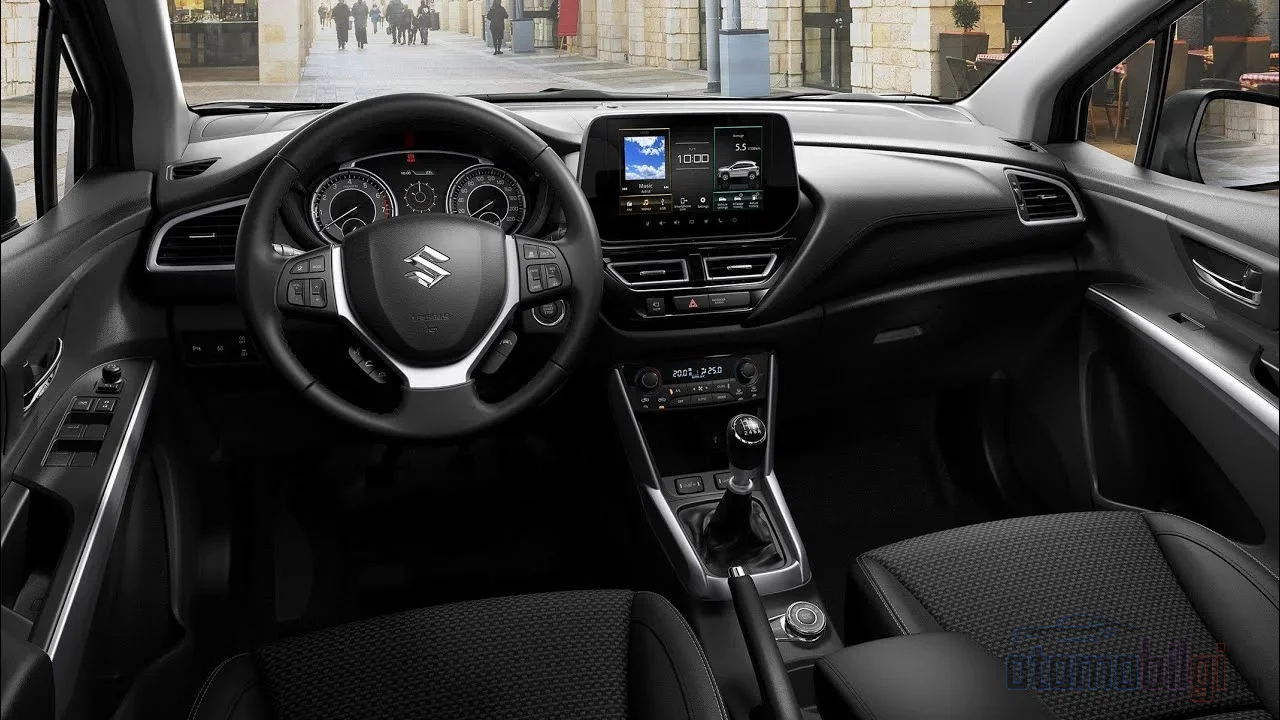
In terms of dimensions, the S-Cross meets most expectations for a family car. Ground clearance is 175 mm, height is 1,580 mm (1,585 mm on versions with roof rails); compared to the Vitara, this is a geometry that leaves users with a "one notch bigger" and roomier interior impression. The cockpit is driver-focused; the top-of-the-line GLX equipment package features a 9-inch HD touchscreen, wireless Apple CarPlay and Android Auto, dual-zone automatic climate control, a 360° camera, and keyless entry. In the GL Elegance package, the multimedia screen starts at 7 inches .
Cargo capacity is perhaps the vehicle's most debated dimension: 430 liters with the seats upright, 665 liters when the seats are folded, and 1,230 liters. The point to note is this: 430 liters is not a generous upper limit for the C-SUV segment in general; it actually falls below the segment average, and users voice this criticism as well. However, Suzuki tries to compensate for it with clever solutions: dual loading floor, 60:40 folding rear seats and a two-step adjustable backrest allow you to organize things across different load scenarios. In other words, the raw volume figure is low, but the usability of that volume is better than expected. It should also be honestly noted that tall users measuring 1.87 m can experience headroom issues in the rear seat.
Equipment and Safety: GL Elegance or GLX Black Edition?
The S-Cross is sold in Türkiye under two main equipment tiers: GL Elegance and GLX. The Black Edition, the top configuration of the GLX, is a package that emphasizes looks and comfort: black alloy wheels, black roof rails, a sunroof, heated front seats and orange stitching details. The launch of Black Edition sales in Türkiye in 2026 together with the Vitara is also an indication that the model remains current.
On the safety side, the Suzuki Safety Support package is the technical heart of the matter. The Dual Sensor Brake Support (DSBS) uses a monocular camera and a laser sensor together; adaptive cruise control with stop-and-go function, lane keep and departure warning, blind spot monitoring active above 15 km/h , RCTA operating above 8 km/h in reverse, traffic sign recognition and an emergency call system (eCall) are parts of the package. On the passive side, 7 airbags
including a driver knee airbag, ESP and ISOFIX anchor points are standard. This level of equipment is remarkable in that it moves to the standard list features that remain optional in many brands in its class.
Vitara or S-Cross: What Sets the Two Models Apart? This is the question Suzuki users ask most often on forums and social media. Let's look at it with concrete data. In terms of dimensions, the S-Cross is slightly longer than the Vitara, with greater roof and ground clearance; this translates directly into the perception of interior space and cargo area. In user experience, the S-Cross offers a more comfortable and lower seating position, while the Vitara is drawn as agile and easy to use. Both models offer an all-wheel-drive option. In terms of engine-transmission combinations, the two models effectively share the same 1.4 Boosterjet mild hybrid + 6-speed automatic setup; in these tests it was found to be "capable of meeting expectations." To draw a practical conclusion:
if interior space and family practicality are the priority, the S-Cross emerges as the natural choice; if agility and compactness are the priority, the Vitara is.
The Nissan Qashqai, Citroen C3 Aircross and Toyota Corolla Cross are frequently included in comparison lists. S-Cross's differentiating card against this trio is clear: it is one of the rare models in the C-SUV class to offer the combination of optional 4x4 with mild hybrid in the same body. The advantages that stand out from user experiences are the flawlessly operating engine-transmission duo, good fuel consumption, and the fact that safety equipment that is optional on many rivals comes as standard; the disadvantages are the 430-liter trunk volume we discussed above, the simplicity of the interior design failing to elevate the perception of quality, and complaints of steering wheel peeling seen in some examples at around 25,000 km. There are also criticisms regarding small usage details, such as the windows not closing with a single press when the engine is turned off.
Conclusion: Who Is the S-Cross the Right Choice For?
Let's talk with data. With 235 Nm of torque, 5.9-6.1 lt/100 km combined consumption, 430-1,230 lt flexible trunk, 7 airbags, and optional ALLGRIP 4x4 values, the S-Cross offers a consistent package for the family user who wants 4x4 with an internal combustion engine. Trunk volume and the simple interior design are acceptable compromises; in return, you get a traction and equipment equation that is not easily found in this segment. A clear recommendation can be made for those caught between it and the Vitara: if you are looking for cabin spaciousness and load practicality, the S-Cross; if you are looking for a more compact and agile body, the Vitara. Since it is one of the rare models continuing to be sold new in Türkiye with hybrid petrol and 4x4 options, maintaining this equation is also the S-Cross's strongest asset.
Sources
- Suzuki S-Cross Hybrid | Suzuki Türkiye
- The New Suzuki S-CROSS Hits Türkiye's Roads! | Suzuki Türkiye
- Suzuki S-Cross Hybrid SUV | Suzuki Tuğmaner Automotive
- Suzuki S-Cross Prices and Trim Package Ranking
- 2021 Suzuki SX4 S-Cross 1.4 Boosterjet Hybrid Detailed Driving Impressions
- TEST / REVIEW: Suzuki S-Cross Hybrid
- A bond of tradition: 2022 Suzuki S-Cross preview
- Suzuki S-Cross 1.4 Hybrid Review 2026
- Suzuki SX4 S-Cross | Ekşi Sözlük
- Suzuki S-Cross | Donanımsal Forum
- Suzuki S-Cross Reviews and Complaints
- Vitara or S-Cross? | Reddit r/Suzuki