2026 Peugeot Rifter Diesel: A Practical Choice for Families and Taxi Drivers?
Share This Page
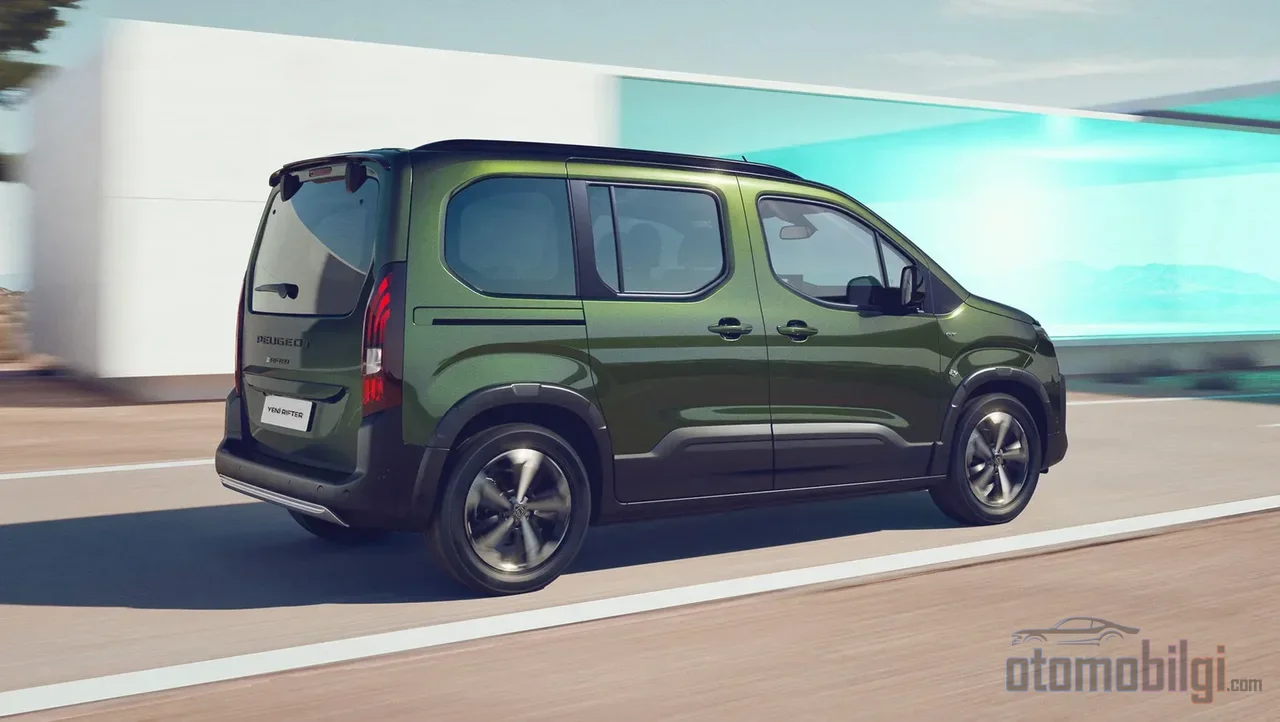
The Peugeot Rifter diesel is a family and commercial vehicle in the compact MPV segment, sold in Türkiye since 2018; With its 130 HP 1.5 BlueHDi engine, modular seating arrangement, and cargo capacity reaching 775 liters, it offers a practical alternative for large families and taxi users. On this page, we examine the model's identity, engine and transmission character, interior capabilities, and strengths and weaknesses in comparison with its rivals.
Highlights
- 1.5 BlueHDi: 1,499 cc turbo diesel producing 130 HP and 300 Nm of torque
- Transmission: 6-speed manual or 8-speed EAT8 automatic
- Cargo: 775 L in the 5-seat version, up to 4,000 L in the 7-seater with seats folded
- WLTP combined consumption: approximately 6.0-6.1 L/100 km
- Facelifted in 2024: new logo, updated i-Cockpit, advanced driver assistance systems
What Needs Does the Rifter Address: Family Vehicle or Commercial?
The Peugeot Rifter categorically sits in the compact MPV segment, but its position in the Turkish market is a bit more nuanced than that. Designed as the successor to the Partner and built on PSA's EMP2 platform, the model combines SUV height with MPV modularity in a single body. The practical result of this blend is as follows: entry and exit height is as easy as a minivan, seating position is SUV-like high, and ride behavior is close to a passenger car.
In Türkiye, the vehicle can be sold with both a truck (commercial) and a passenger car registration. Although a commercial registration brings a 5% SCT advantage, in return there are financial disadvantages such as the annual inspection obligation, a 90 km/h speed limit on highways, and high bridge-highway toll fees. If you are considering daily family use, the passenger car registered versions - that is, the Allure and GT trims - appear more expensive on paper, but are generally a more sensible choice in terms of usage costs.
The model is one of Stellantis's five siblings in the light commercial class: it is technically based on the same foundation as the Citroën Berlingo, Opel Combo, Toyota Proace City, and Fiat Doblo. With the 2024 facelift, it gained the new Peugeot logo, an updated i-Cockpit, and improved driver assistance systems; LED headlights, the 3-claw light signature, and roof bars carry the model's SUV codes.
How Are the 1.5 BlueHDi Engine and Transmission Options?
There is a single diesel configuration sold in Türkiye: the 1.5 BlueHDi engine with 1,499 cc displacement, inline 4-cylinder, 16-valve, turbocharged. It produces 130 HP (96 kW) of power and 300 Nm of torque; the torque figure is critical in this class for a heavily loaded family vehicle because it determines low-end pulling power with cargo or a full passenger load. This engine makes good use of low-end torque; its operating noise is also found to be quieter and smoother than the diesels in this class.
On the transmission side, there are two options: a 6-speed manual in the Allure trim, and for those preferring automatic, the Aisin-sourced torque converter 8-speed EAT8. GT trim is sold only with the EAT8, and the automatic version is by far the most preferred configuration in Türkiye. There is a technical reason for this: Compared to dual-clutch DSG-type gearboxes, the EAT8 operates more smoothly at low speeds, and thanks to its torque-converter design, it carries no concern about clutch judder in city traffic. There are also few reports of serious gearbox failures.
On the performance side, the 0-100 km/h time is 10.8 seconds; top speed is listed at around 181-184 km/h. Drive is front-wheel, the emissions standard is Euro 6e-bis with AdBlue, and the fuel tank is 50 liters. The 1,499 cc displacement falls into the 1301-1600 cc band for the motor vehicle tax (MTV).
| Feature | Value |
|---|---|
| Engine | 1.5 BlueHDi, 1,499 cc, inline 4-cylinder turbo diesel |
| Power / Torque | 130 HP (96 kW) / 300 Nm |
| Transmission | 6-speed manual or 8-speed EAT8 automatic |
| 0-100 km/h | 10.8 seconds |
| Fuel tank | 50 liters |
| WLTP combined consumption | 6.0-6.1 L/100 km |
| Emissions | Euro 6e-bis, AdBlue |
| Length / Wheelbase | 4,403 mm / 2,785 mm |
Is the Interior Modularity and Luggage Practicality Really Enough?
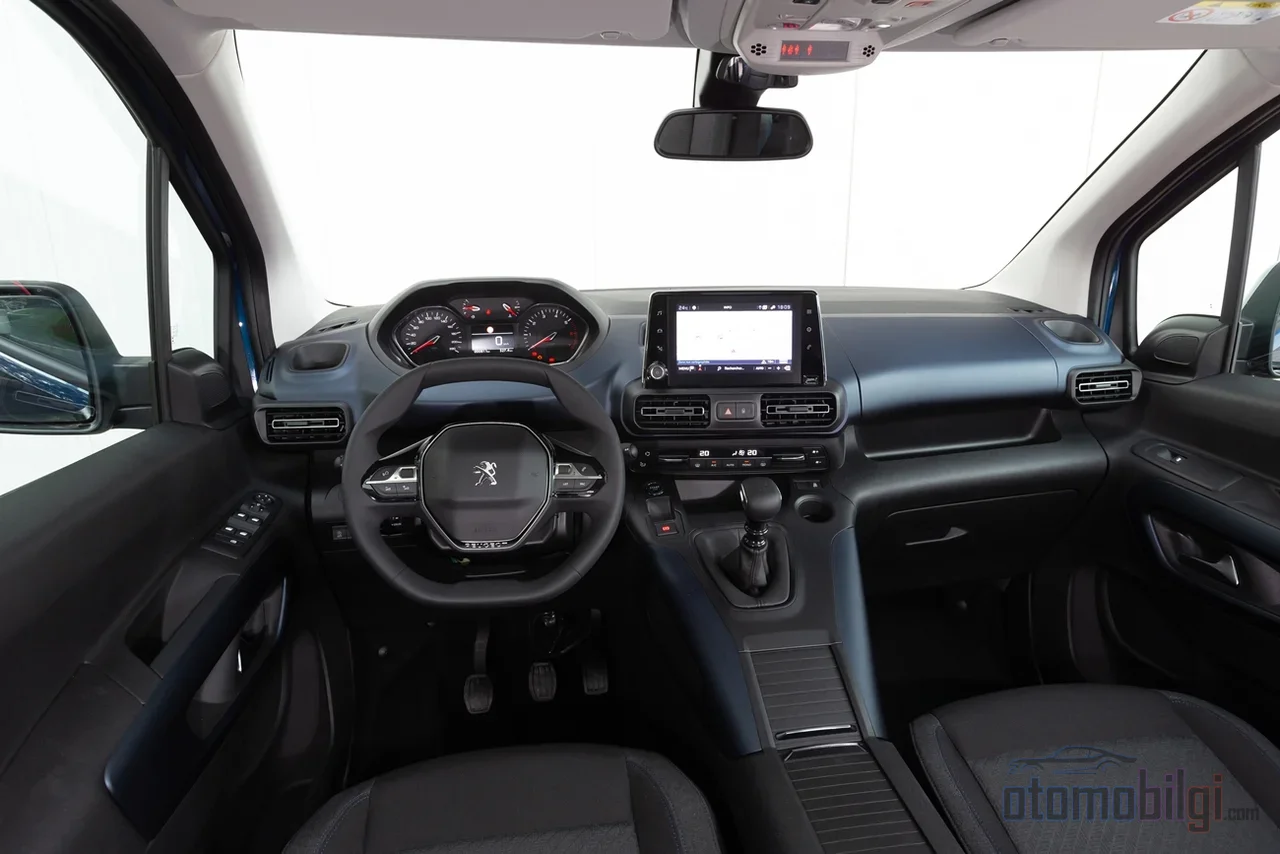
The Rifter's main selling point starts here. In the 5-seat version, the luggage volume is 775 liters below the luggage cover; measured up to the roof, it rises to 1,355 liters. The 7-seat long-wheelbase (L2) version is 4,753 mm long, an increase of 35 cm, and offers a massive loading area when the rear seats are folded. Beyond the figures on paper, luggage volume and practicality rank as the highest-rated criterion for this vehicle in user reviews.
Modularity details have also been thought through: 1. there is a foldable front passenger seat (for carrying long items), individually folding rear seats, and 27 storage compartments spread across a total of 186 liters of storage space. Interior width dimensions also support family use: 2. in the second row, knee room is 240 mm, and in the first row, shoulder width is 1,508 mm.
In terms of equipment, Allure comes with a 10-inch digital instrument cluster, a 10-inch multimedia screen, LED headlights and active lane keeping; a rear-view camera is standard on automatic transmission versions. GT, on the other hand, adds adaptive cruise control, lane positioning assist, blind spot warning, curtain airbags, a panoramic glass roof, Grip Control and 17-inch wheels, focusing particularly on long-distance safety. The i-Cockpit layout is found to be simple but useful.
Fuel Consumption: What the Catalog Says vs. What Happens on the Road?
The WLTP combined consumption figure is around 6.0-6.1 L/100 km for the EAT8. However, real user data is above this official figure: there are reports ranging from 7.0-9.5 L in the city, 5.5-6.5 L on the highway, and 6.5-7.5 L/100 km in mixed use. Other user data is more optimistic - there are those reporting 4.5-5 L on the highway and 6-6.5 L in the city. The difference between the official figure and the real average stems from the difference between the standard cycle in which WLTP is measured and traffic conditions and driving style in Türkiye; also, the consumption of a fully loaded 7-seat Rifter naturally won't be the same as one driven empty.
Highway-focused use is a serious advantage for this engine: With a 50-liter tank and a highway average of around 5.5 L, long range on a single tank is possible. Conversely, with predominantly city use, it would be right for budget planning to factor in that consumption could climb into the 8-9 L range.
Known Issues: What Are the Rifter's Weak Points?
No model is perfect, and the Rifter's chronic issues fall under a few main headings. Knowing these before buying is important for expectation management:
- AdBlue and emissions system faults: A problem seen especially in 2020-2022 models, which in some cases extends as far as catalytic converter replacement.
- Camshaft chain noise: This noise heard during cold starts is a chronic issue acknowledged by the manufacturer; there is even a free replacement campaign for vehicles whose warranty has expired.
- Steering box fault and vibration: Plus, spare part supply times can extend up to 45 days.
- Multimedia screen freezing: Complaints about the 10-inch screen freezing or shutting down have also been seen in 2024-2025 models.
- Other records: There are sliding door squeaks, turbo control unit replacement cases even in the 2025 model, and recurring overheating complaints in the 2024 diesel.
What this list means is not that the vehicle is bad; it is a model with known weak points that still does its fundamental job. On the user satisfaction side, a spacious interior, practical usability and reasonable fuel consumption are the standout positives; many users consider the vehicle a sensible choice for the family in terms of benefit/cost.
Rifter, Berlingo, or Caddy: What Sets It Apart from Its Rivals?
The comparison in this segment should be built along three lines. The Citroën Berlingo uses the same EMP2 platform, the same 1.5 BlueHDi 130 HP engine and the EAT8 transmission; the differences concentrate on design, interior layout and equipment naming. While the Rifter's i-Cockpit and SUV-style body are considered more modern, the Berlingo can sometimes be priced lower with similar equipment.
The Volkswagen Caddy, meanwhile, paints a different picture: On the MQB Evo platform, it offers a 2.0 TDI 122 HP engine, a 7-speed DSG and 320 Nm of torque, with WLTP consumption values of 5.4-6.0 L. Although driving feel and interior quality are generally rated better, its price is noticeably higher than the Rifter's. If you can find a clean, low-mileage Caddy on the used market, it is a strong alternative; but when buying new, the price difference becomes the main factor in the decision.
The Opel Combo shares the same PSA platform and engine as the Rifter; the practical difference here is that Peugeot's service network in Türkiye is wider than Opel's. On hardware forums, the trio - Rifter, Berlingo, Proace City - is described as technically almost the same vehicle, and that is a correct reading. The choice should therefore be made less on technical specifications and more on price, equipment matching, service network, and design preference.
Allure or GT: Which Trim Suits Whom?
The price hierarchy is clear: Allure 6MT sits at the bottom, followed by Allure EAT8, with GT EAT8 at the top. For predominantly urban use, the Allure trim is sufficient; the 10-inch dual-screen layout, LED headlights, and basic safety equipment such as lane keeping are already included. For users who regularly drive long distances and value driver assistance systems, however, GT's adaptive cruise control, lane positioning assist, and blind spot warning make a meaningful difference.
We will not provide current list prices in this guide; since prices fluctuate significantly within months, it is essential to check the current dealer list before purchasing. The structural takeaway is this: the trim should match the needs list of a large family vehicle; if you need a 7-seater long body, options are limited, and an automatic transmission pays for its comfort difference in city use on its own.
Conclusion: Is the 2026 Rifter Diesel a Practical Choice?
From an engineering standpoint, the Rifter's equation is simple: it combines the volume, seating position, and durability required by large family or taxi use with a mature 130 HP/300 Nm diesel and an automatic gearbox considered reliable. In terms of cargo and modularity, it is among the best in its class; the EAT8 transmission has an advantage over DSGs in low-speed comfort. On the other hand, known problem areas such as the AdBlue system, camshaft chain, and multimedia, plus the fact that real-world consumption will exceed WLTP figures, must be factored into the budget plan. For those who want the driving quality offered by the Caddy at a lower price, or nearly the same technical package as the Berlingo in a more characterful body, the Rifter remains a measurably sensible choice in this segment.