2026 Renault Clio Is a Good Choice for Those Looking for a City Car
Share This Page
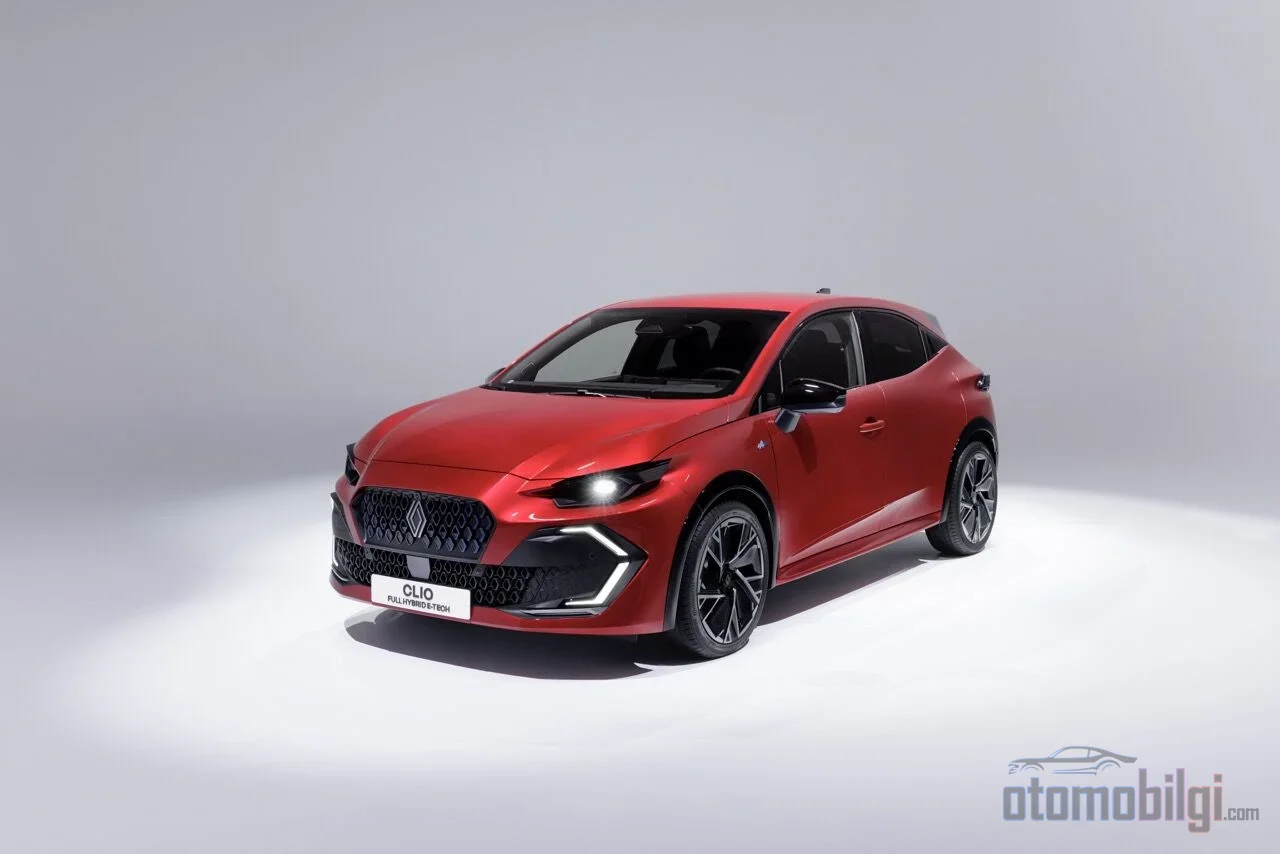
The first model to enter the shortlist of a buyer looking for a city car in Türkiye is a name that hasn't changed for years: Renault Clio. Positioned in the B-Hatchback segment, this gasoline hatchback became Türkiye's best-selling car in 2025 with 51,717 units in sales. Launched on the road in 1991 and exceeding 17 million units across five generations, the model was largely produced at the Oyak Renault Factory in Bursa; its total sales in Türkiye exceeded 600,000 units . The sixth generation, arriving in February 2026, carried this heritage into a longer (4116 mm), more aerodynamic (0.30 Cd) and more efficient body. In this guide, we examine the Clio's engine-transmission character, interior practicality, and the aspects that set it apart from its rivals, without getting into the current price list.
Highlights
- Türkiye's best-selling car in 2025 with 51,717 units in sales
- Sixth-generation 1.2 TCe: 115 HP of power, 190 Nm of torque, 6-speed dual-clutch EDC
- WLTP combined consumption 5.0-5.1 lt/100 km
- 391-liter cargo volume, the largest loading area in the segment
- The only engine-transmission combination that is faster and more fuel-efficient than its rival, the i20
Why Is the Renault Clio Gasoline the First Choice for Those Looking for a City Car?
The answer to this question comes down to three measurable data points. First, size: 4116 mm in length and 10.4 meters turning radius are a real advantage on narrow streets and parking lots. Second, efficiency: WLTP combined consumption of 5.0-5.1 lt/100 km, meaning a long range per tank in mostly extra-urban use. Third, practicality: 391 liters of cargo volume, a five-door five-seat layout, and the abundance of parts and service that comes from being produced in Bursa.
The model's recognition should also be added to these. Over 35 years, the Clio has been sold in 120 countries and is one of Europe's best-selling B-segment cars. The breadth of the second-hand market, the cheapness of spare parts, and model year options for every budget feed the cycle that brings buyers back to the same name. Its sales leadership is not a temporary trend; it is the result of a localization story, with five million units produced in Türkiye since the third generation.
Sixth-Generation Clio 6: Dimensions and Equipment Structure
Renewed in February 2026, the Clio 6 uses the CMF-B platform and has grown in every axis compared to the previous generation. This growth is not random; each measurement has a direct contribution to the interior or aerodynamics:
- Length +66 mm → 4116 mm
- Width +39 mm → 1768 mm
- Height +11 mm → 1451 mm
- Wheelbase +8 mm → 2591 mm
The drag coefficient was reduced from 0.32 to 0.30 Cd; this is an improvement that works both for high-speed stability and consumption. In Türkiye, the model is sold in two trim levels: Evolution Plus and Esprit Alpine. On the Evolution side, a 10.1-inch multimedia screen and 7-inch digital gauge are standard; on the Esprit Alpine, the OpenR Link Google built-in system, wireless charging, sport seats with Alcantara details, and 205/40 R18 the tires kick in. Both levels include electric parking brake, adaptive cruise control, lane keeping and e-call; a total of up to 25 driver assistance systems are offered.
1.2 TCe 115 HP: How Sufficient Is the Engine's Character?
The new generation's only engine in Türkiye right now is the 1.2 TCe: 1199 cc, three cylinders, turbocharged, 115 HP of power and 190 Nm of torque. From an engineering standpoint, the critical figure is the band over which torque is spread: full torque is available between 1750-4000 rpm, while power is produced the full torque is available, while power between 4350-5000 rpm . In other words, even when you keep the revs low in city traffic, the engine pulls without strain. The factory figure for 0-100 km/h is 10 seconds; the two-way average measured with a testing device is 9.5 seconds. Top speed is 180 km/h.
The most important achievement of this engine is that it pulls measurably ahead of the 999 cc unit in the previous generation: more powerful, less consuming and smoother running. While the WLTP combined figure of the 1.0 TCe 90 X-Tronic in the old Clio 5 was 6.3 liters, in the new 1.2 TCe EDC it dropped to 5.3 liters. The real consumption measured under test conditions is around 6.0 lt/100 km . In stop-and-go traffic, a 0.1-0.2 second delay is felt in throttle response; this is expected behavior in turbocharged small-displacement engines. The adaptive driving mode in the Esprit Alpine trim automatically selects sport, normal and economy programs based on throttle pressure intensity, softening this feeling. The fuel tank, meanwhile, was reduced to 39 liters - 3 liters less than before - but the loss in total range remains limited thanks to the lower consumption.
How Does the EDC Transmission Work, and What Should You Pay Attention To?
The 6-speed dual-clutch EDC is an automatic that pre-selects the next gear; shifts are quick and jolt-free. With regular maintenance, its life is said to extend into the 400,000-450,000 km range. However, there is a rule that comes with its operating principle: the most common problem in heavy traffic is clutch wear, and the way to protect the transmission is to fully press the brake when stopped. Holding the car on a half-clutch - that is, lightly pressing the accelerator and brake together on a hill - wears the clutch out prematurely. Most failures cluster around the transmission control unit overheating, clutch wear and, less frequently, the actuator line; conscious driving habits can eliminate most of these items.
Interior and Trunk Practicality: Is 391 Liters Enough?
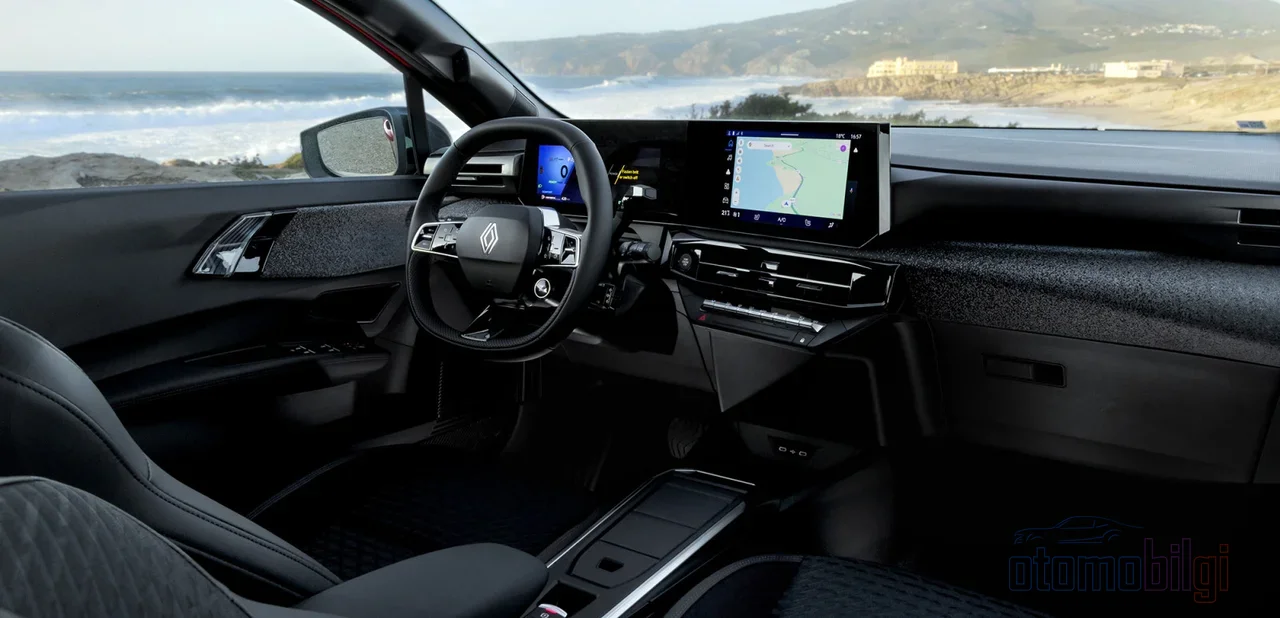
The Clio's 391-liter trunk volume is the largest offered in the B-Hatchback segment. Rivals fall behind in this figure: the Hyundai i20 offers 352 liters, the Opel Corsa 309 liters. When the rear seats are folded, the load area opens up to 1176 liters , and since the loading sill was lowered by 40 mm, loading heavy items became easier. Empty weight including the driver is 1227 kg.
The interior side of the picture isn't equally bright. Cons standing out in test reviews: the absence of a rear roof grab handle, headroom slightly reduced compared to the previous generation, the small rear window and restricted rear visibility. Road and wind noise can also be heard on the highway. In short, the Clio is at the top of its segment in terms of luggage and front-row comfort, but an average B-segment hatchback in terms of rear visibility and detail craftsmanship. For those valuing it as a city car, the practical implication is this: the cargo volume is the best in its class, and the reversing camera in this car isn't an option but a necessity.
What Sets It Apart from Its Rivals: i20, Corsa and Polo Comparison
| Model | Power | 0-100 km/h | WLTP consumption | Trunk |
|---|---|---|---|---|
| Renault Clio 1.2 TCe EDC | 115 HP / 190 Nm | 10.0 sec | 5.0-5.1 l | 391 l |
| Hyundai i20 1.0 T-GDI 7DCT | 90 HP | 12.8 sec | 6.3 l | 352 l |
| Opel Corsa 1.2 Hybrid 110 eDCT6 | 110 HP / 205 Nm | 9.9 sec | 4.5-4.6 l | 309 l |
The table clearly shows the Clio's position. Against its most formidable rival, the i20, it offers a combination that is more powerful, faster and more fuel-efficient; while the i20 has only one engine option in Türkiye in 2026, the Clio's portfolio expands throughout the year: in the second half of 2026, the 160 HP Full Hybrid E-Tech and the petrol+LPG ECO-G 120 HP EDC versions are expected to be added. The Opel Corsa hybrid version achieves a better WLTP consumption figure, but its trunk volume is 82 liters behind the Clio's.
The Volkswagen Polo, meanwhile, is no longer part of this comparison: its internal combustion production has ended in Europe, and as of April 2026 it is no longer on Türkiye's price lists. In the past, the Polo 1.0 TSI stood out with its low consumption and better acceleration figures, while the Clio was more accessible in terms of price and model year variety; today, on the internal combustion side of the segment, the picture has simplified in the Clio's favor. The Dacia Sandero also stands as an alternative sharing the same technical foundation: it offers a similar engine-transmission architecture with more basic equipment and a more accessible price tag.
Strengths and Weaknesses: A Balanced Assessment
Test drives and user feedback are quite consistent on the pros and cons. Strengths:
- Design, technology package and road holding
- Extensive standard equipment: 10.1-inch screen, electric parking brake, up to 25 driver assistance systems
- Measurably improved performance and consumption compared to the previous generation
- Urban agility, maneuverability and parking ease
- Abundant parts availability and a widespread service network thanks to Bursa production
The weaknesses are fewer but significant enough to affect the purchase decision: the price is slightly above the segment average, rear visibility is limited, and there is no rear roof grab handle. User complaints also include quality details such as the fading of the alcantara covering on the 2026 model steering wheel. The value-loss negotiations experienced by users waiting for the hybrid version during trade-in processes serve as a warning that bargaining room narrows during model transition periods.
Also, the previous-generation Clio 5's 1.0 TCe options are a serious alternative on the used market. Producing between 90-110 HP and 160-200 Nm of torque, these three-cylinder engines offer a lively character despite the 90 HP figure; on the other hand, their slightly rough operation at first start-up and during the first few kilometers in cold weather is a known trait. Urban consumption is in the 6.0-7.0 lt band; in heavy Istanbul traffic, users report figures rising up to 8-9 liters. If the budget is tight, a well-maintained Clio 5 EDC is still a rational city car.
Conclusion: Who Is the Petrol Clio the Right Choice For?
There is a technical explanation for why the Clio never leaves the top of city car lists: compact exterior dimensions, a 10.4-meter turning radius, the widest cargo area in the segment, and an engine that delivers plenty of torque at low revs meet the four fundamental needs of urban use in a single package. The sixth generation, with its 1.2 TCe 115 HP EDC combination, has moved the performance-consumption balance ahead of its most formidable rival; although Corsa's hybrid version leads on consumption, it sacrifices cargo volume.
On the other hand, rear-seat comfort, rear visibility, and a price tag that has climbed above the segment are pushing buyers to consciously choose their equipment level. Starting in 2026 with a single engine, the option range will broaden with the arrival of hybrid and LPG versions; the petrol 1.2 TCe is the most balanced link in that range today. If you are looking for a package that behaves consistently in narrow city streets during the week and on the highway at the weekend, the table clearly shows why the Clio has remained at the summit for so long.
Sources
- Technical Specifications - New Renault Clio
- New Renault Clio
- New Renault Clio Test Drive: Fuel Consumption and Performance
- Renault Clio 2026 Review: The New Clio
- Renault Clio 1.0 TCe Review: How Much Fuel Does It Use? Is It Worth Buying?
- Renault Clio 5 Fuel Consumption
- What Is the EDC Transmission? What Are Its Problems?
- Renault Clio 2026 Complaints