2026 Dacia Sandero: The Affordable Silent Leader
Share This Page
The Dacia Sandero is a family car in the B-segment hatchback class that has been sold in Türkiye since 2008, standing out with its affordable purchase price, low running costs, and spacious interior. With its simple engineering approach, equipment philosophy that meets basic needs, and wide service network, it ranks at the top of the shortlist for users looking for their first car or a practical second vehicle. In this guide, we examine the model's identity, engine-transmission combinations, and strengths and weaknesses with measurable data.
Highlights
- Europe's best-selling retail car since 2017; over 110,000 units sold in Türkiye
- 999 cc, 3-cylinder turbocharged petrol: 100 HP of power, 200 Nm of torque
- 0-100 km/h in 9.7 seconds; factory fuel consumption of 5.1-5.5 lt/100 km
- In the new generation, 410 liters of trunk space; expanding to 1,455 liters with the rear seats folded
- A 10" multimedia screen, wireless CarPlay and Android Auto available in current equipment
What is the Sandero, and what need does it answer?
The Sandero's formula is simple but consistent: without giving up anything essential, never spend money on anything unnecessary. This approach positions it in the B-segment hatchback class as a product designed mostly for families with one or two children, primarily for urban use but also capable of the occasional long trip. The dimensions also support this goal: 4,102 mm in length, 1,852 mm in width, and 2,604 mm wheelbase, offering one of the most spacious interiors in its class; it promises a genuinely usable living space for five adults.
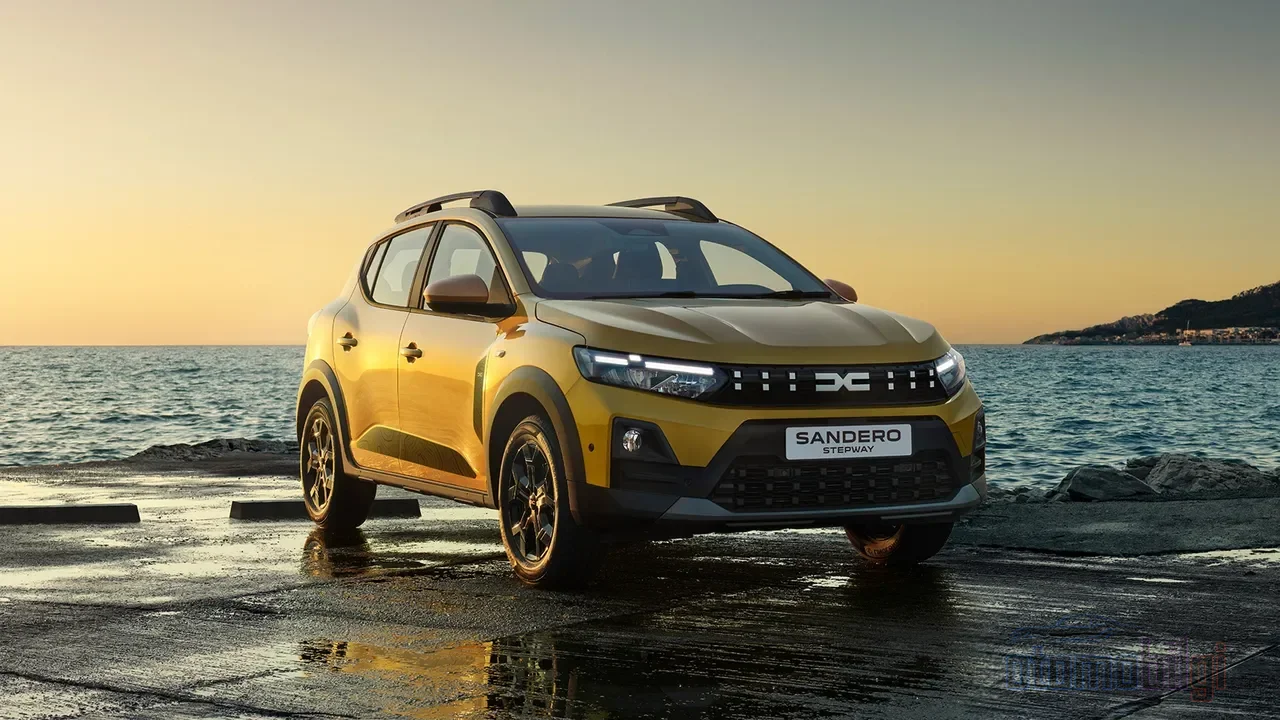
The commercial result proves the formula right. Since 2008, the model has sold more than 110,000 units in the Turkish market and has held the title of Europe's best-selling retail car since 2017. As of October 2026, the cheapest new car sold in Türkiye is also the Sandero Essential TCe 100 version. The Stepway derivative, meanwhile, carries cross/B-SUV characteristics with its modular roof bars and high-riding design, and is one of Türkiye's best-selling B-SUV models.
Engine and transmission: simple but measurable performance
At the heart of the current Sandero is a 1.0-liter, 999 cc three-cylinder turbocharged petrol engine. The figures of the 1.0 TCe unit are balanced for its class: 100 HP of maximum power, 200 Nm of torque, 0-100 km/h acceleration in 9.7 seconds and a top speed of 180 km/h. The role of turbocharging here is clear: to maintain fuel economy with a small displacement while providing an adequate response in urban driving bursts thanks to the 200 Nm torque reserve at mid-range revs. According to factory figures, consumption is in the 5.1-5.5 lt/100 km
band; but it should be noted that this value comes from the homologation cycle and may rise in real-world use depending on traffic density and driving style. 120 HP of power and 197 Nm of torque, this unit promises a range of up to 1,500 km and 10 percent lower CO2 emissions according to the manufacturer's data. While Eco-G consumption figures hover around 6.2 lt/100 km over short distances, values close to the 7-liter band are seen on the highway at approximately 110 km/h; since LPG's energy density is lower than gasoline's, taking this into account when calculating range per liter is an engineering necessity.
Interior and trunk: practicality in numbers
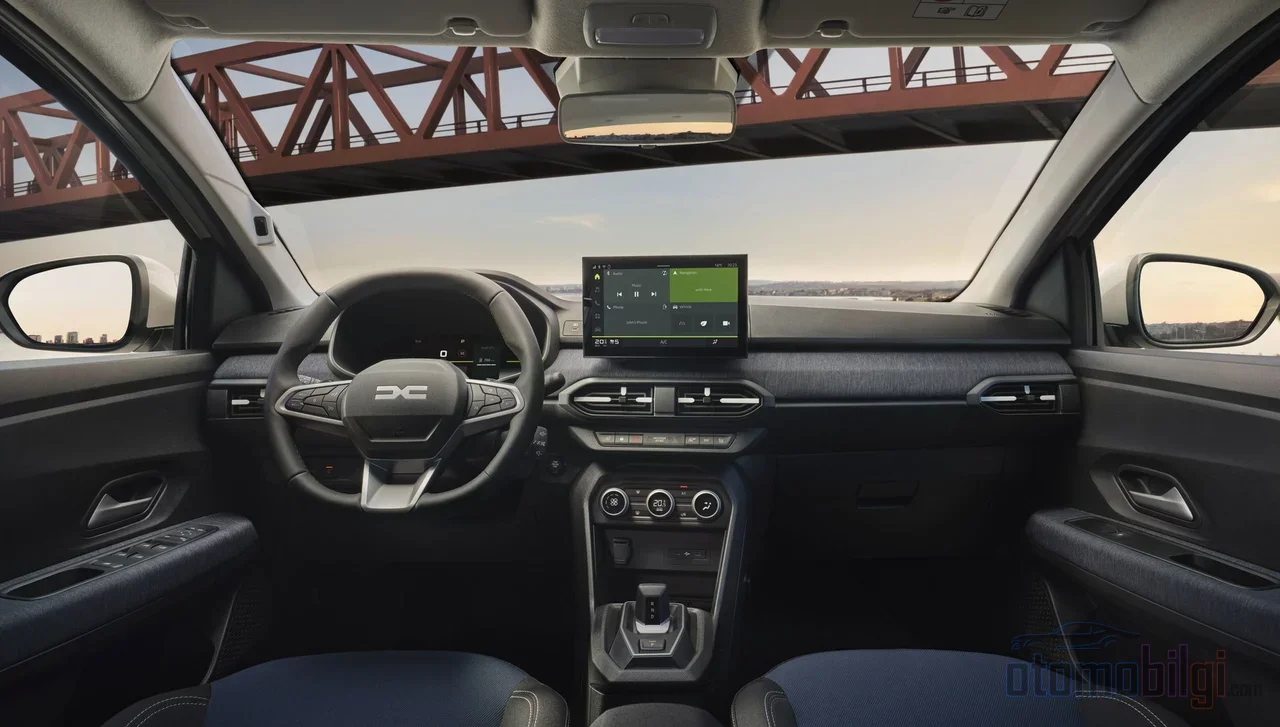
The invisible hero of the Sandero's sales success is its interior efficiency. In the new-generation Sandero, the trunk capacity is 410 liters; when the rear seats are folded down, this figure reaches 1,455 liters . In previous-generation hatchback bodies and the Stepway, the figures are in the 320-328 liter band: the fact that two different figures are mentioned together stems from model year and body type differences, and this distinction must be preserved when making comparisons. There is also a notable criticism: the 320-liter trunk capacity is nearly as spacious as that of vehicles almost twice as expensive, but the floor height cannot be adjusted and usability details are limited.
In terms of equipment, current versions are noticeably richer than before. The official equipment list includes a 10-inch multimedia screen (wireless Apple CarPlay and Android Auto, My Dacia connectivity), a rear-view camera, side and curtain airbags, the Hands-Free Dacia Card, and the YouClip accessory mounting system (3 standard + 2 optional points). In the Extreme trim, the 7-inch digital display and wireless charging are standard; on the Stepway, modular roof bars come as standard. The entry-level list is shorter, but essentials like LED headlights, automatic climate control, and a rear-view camera are offered.
Equipment levels: which package makes sense for whom?
In the Türkiye market, the known package structure is built around the Essential, Comfort, and Extreme/Extreme+ axis; in past years, the Prestige and Expression packages were also mentioned. The logic is simple: Essential provides the essentials, Comfort completes daily comfort, and Extreme buys the visual and practical difference.
- Essential: The most affordable entry; includes basics such as LED headlights, automatic climate control, and a rear-view camera.
- Comfort: The mid-tier that balances everyday comfort.
- Extreme / Extreme+: Extended Grip and rugged design details; digital display and wireless charging as standard.
A practical engineering note on package selection: since items that directly increase usable value, such as rear parking sensors and folding rear seats, are usually found in upper packages, a user who will drive the car in heavy city traffic would do well to evaluate the price difference based on these headings.
What are its strengths and weaknesses?
Why does it sell?
- Purchase price and low running costs: the model's defining trait.
- Spacious interior and trunk capacity of up to 410 liters.
- Proven product maturity, on the market since 2008.
- Practical and comfortable everyday use for families with children.
What should you not expect?
The two most common complaints are gathered around insulation and suspension character. Road, wind, and engine noise being felt in the cabin ranks first; the firm suspension setup and the bouncing feel on broken surfaces come second. These two issues are engineering choices directly tied to the Sandero's cost targets: insulation material and softer but more complex suspension geometries increase cost.
There can be a noticeable gap between factory figures and real-world user experience. While the factory claims 5.1-5.5 lt/100 km, some user complaints reported values close to 9 lt/100 km, especially with the automatic transmission and city-heavy use. Users also criticize the fact that Eco mode severely restricts the engine and that performance expectations need to be lowered. The anatomy of this gap can be explained with data: short trips, a cold engine, LPG use, and the automatic transmission's shift map are the main variables that push consumption above the homologation cycle. Set your expectations according to your real-world usage scenario.
Rarer but worth recording complaints: a water ingress problem from the rear seat carpet in rainy weather on a 2023 model Stepway, weak battery warnings, and complaints stemming from delivery/damaged vehicles. In older-generation 1.2 engines, misfiring in a single cylinder and idle vibration are reported as chronic issues; these are a matter of older models, not this current engine, and matter when evaluating second-hand examples.
How does it stand apart from its rivals?
In the B hatchback class, the Sandero's natural rivals are the Hyundai i20 and Opel Corsa; on the Stepway side, it is listed alongside names such as the Suzuki Vitara, MG ZS, and Honda WR-V. The differentiation comes down to five parameters:
| Criterion | Sandero's position |
|---|---|
| Price | The lowest entry point in the class (the cheapest new car as of October 2026) |
| Interior space | One of the roomiest interiors in the B segment |
| Trunk | 410 liters in the new generation, above the class average |
| Fuel / fuel variety | Petrol 1.0 TCe; the LPG Eco-G and EDC combination |
| Insulation / ride comfort | Below the class average; a known weak point |
Product maturity is also a differentiating factor: a model that has been on the market since 2008, developed over three generations, and has held Europe's retail sales leadership for years has, from an engineering standpoint, resolved most of its contentious issues across generations. Some of its rivals lack this accumulated experience.
Service network and maintenance costs
Dacia's strength on the maintenance side parallels Renault's extensive authorized service network in Türkiye, along with clearly defined maintenance packages. Despite the transparency claim, there are user complaints that authorized service periodic maintenance prices are very high; in contrast, independent service and mobile service options are considerably more affordable. Going by sample part prices: engine oil (5W40, 4 liters) is 2,200 TL, oil filter 500 TL, air and pollen filters around 600 TL. Periodic maintenance at mobile services starts from 4,850 TL. When the purchase decision needs to be based not only on the sticker price but on annual operating costs, these figures are the invisible yet decisive part of the equation.
Conclusion: For whom is the Sandero the right choice?
The Sandero is a vehicle written into the budget of shoppers with budget discipline. Considering the affordable entry price, spacious interior and cargo volume, proven model history, and extensive service network together, it forms a strong package for families buying their first car or looking for a second practical vehicle. On the other hand, it would not be right to approach it with class-leading expectations for insulation quality and suspension comfort; competitors that are ambitious in these two areas fall behind on the price board. While referencing factory consumption values, leaving a margin according to your own usage profile and calculating the differences in equipment choices that will genuinely affect your daily use are the two engineering decisions that determine the value you will get from this model.
Sources
- New Sandero Stepway - Dacia official site
- Technical Specifications & Dimensions Sandero Stepway - Dacia official
- Dacia Service and Maintenance Packages - Dacia official
- Sandero is back on top - Arabalar.com.tr
- The 5 most complained-about features of the Stepway - Arabalar.com.tr
- How much does the Sandero Stepway consume with LPG - Arabalar.com.tr
- Sandero & Stepway buying guide 2026 - Araclo
- Dacia Sandero Interior, Capacity and Practicality - Arabazzi
- Dacia B-segment reviews - Tomotiv
- Sandero complaints - Şikayetvar
- Sandero 2007-2024 maintenance prices - Kuzen Oto Klinik
- Dacia periodic maintenance prices - Mobil Oto Servis