Is the 2026 Citroën C3 Aircross Suitable for Turkish Families?
Share This Page
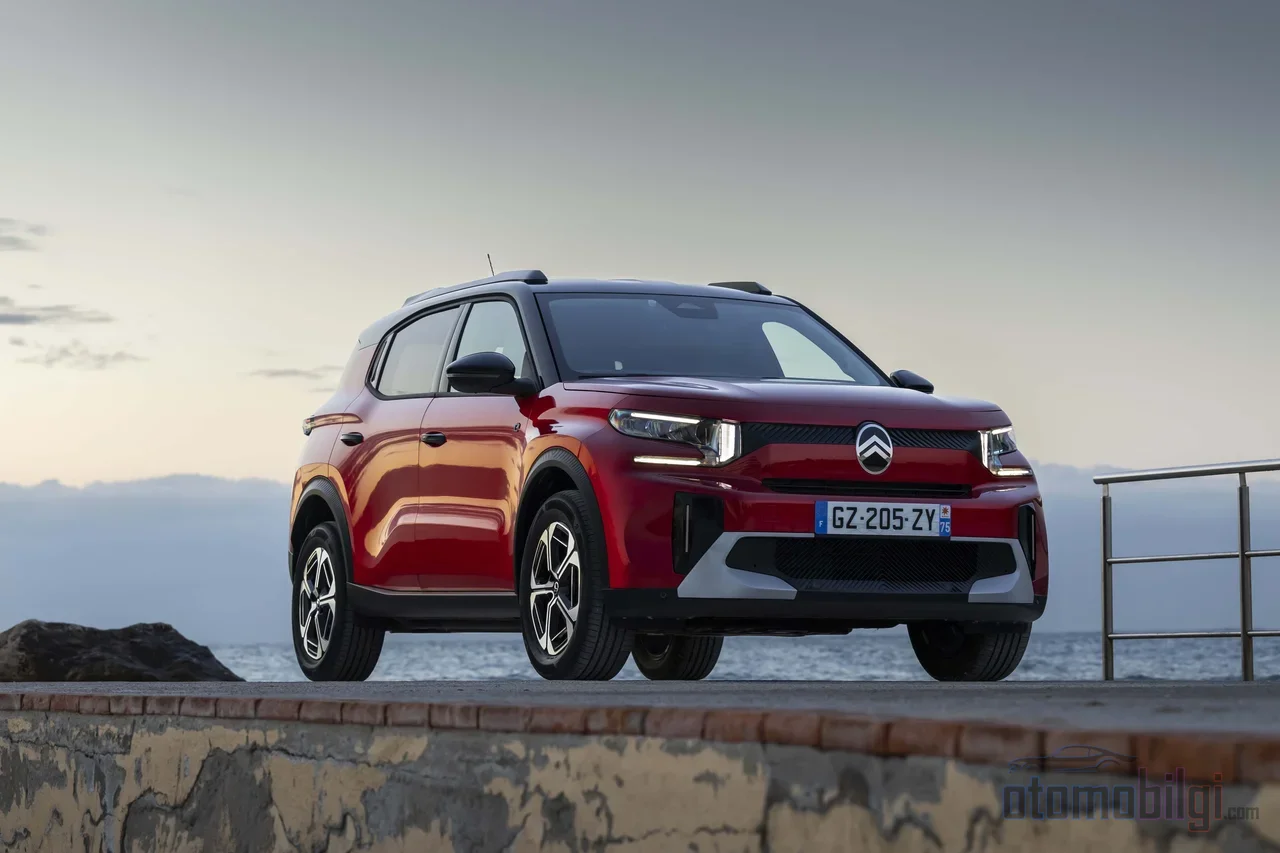
Yes, the Citroën C3 Aircross can be a sensible choice for a Turkish family: A B-SUV that fits three rows of seats and a 7-seat configuration into its 4.39 m body, offers a 460-liter trunk in 5-seat use, and promises low consumption in city driving with its 145 HP 48V hybrid gasoline engine. The right question is not "is it enough," but how much it meets which family's which need. This guide examines the model's identity through measurable data.
Highlights
- Length 4.39 m; wheelbase of 2,670 mm and, for the first time in the new generation, a 7-seat option
- Hybrid 145: 1.2L turbo gasoline 136 HP + 48V e-motor 21 HP, combined 145 HP
- WLTP combined consumption of 5.3 l/100 km; a target of being able to complete 50% of city journeys electrically
- 460-liter trunk in 5-seat configuration; 3 in 7-seat configuration. when folding the seats 330 liters
- Named "Europe's Most User-Friendly Car" at the AutoBest Conquest 2026
A B-SUV Filling Which Gap?
The new-generation C3 Aircross, currently sold new in the Türkiye market, positions itself on the functionality side of the B-SUV class. The emphasis in its official launch language is on "functionality and user friendliness": maintaining compact exterior dimensions and maneuverability while offering more flexibility inside than expected. The 4.39 m length summarizes this balance; longer than most typical B-SUVs in the class, but below C-segment SUVs. Some readers in Türkiye may also come across comparison pages classifying the model as C-segment; however, the commonly used B-SUV designation is more consistent with the body type and dimensions.
The practical consequence of this positioning is this: The C3 Aircross tries to respond to family use one notch beyond what a standard B-SUV offers. The long wheelbase (2,670 mm) and 1,660 mm height mean genuine seating depth and headroom in the back. Ground clearance is 193 mm - not an off-road claim, but a measurable comfort for a driver climbing curbs on rough city roads and near schools.
Engine and Transmission: What Character Does the 1.2 Hybrid 145 Have?
The current model has a single internal combustion option: Hybrid 145. At its heart is a 3-cylinder turbo gasoline unit displacing 1,199 cc; it produces 136 HP at 5,500 rpm. Alongside it is an e-motor running at 48V: 21 HP of support. The combined output of the two systems is 145 HP. Its difference from classic hybrid systems is that it does not plug in - electric support is available without any charging restriction. The manufacturer claims that 50% of city journeys can be completed electrically; the e-motor kicks in at low speeds and during maneuvers, taking over the least efficient operating zones of the gasoline unit.
The WLTP combined consumption figure is 5.3 l/100 km. For a 3-cylinder, 1.2-liter unit, this figure is ambitious but not surprising; the real difference emerges with the support the e-motor provides in the stop-and-go rhythm of traffic. Tire size 215/60 R17: a high-profile choice that should be read together with a relatively soft suspension character - an engineeringly coherent whole.
Equipment and Safety Package
In Türkiye, the model is sold in equipment levels such as PLUS, MAX and Collection; hybrid and electric motor options match these levels. The list of safety equipment is extensive: active lane keeping, active braking system, speed limit recognition, fatigue warning, rear-view camera, front and rear parking sensors, blind spot warning and Isofix mounts are offered as standard or widely available. For a family car, having active braking support alongside Isofix on the list is a picture above the minimum now expected in the category.
On the technology side, the 10.25-inch touchscreen multimedia display, wireless Android Auto and Apple CarPlay, wireless phone charging and four USB-C connections (2 front, 2 rear) stand out. The USB-C ports in the rear row are one of the most practical details that end long-journey forum debates in a family car. The Head-Up Display replaces the traditional instrument panel; the driver's eyes stay closer to the road.
Interior: Is Modularity and the 7-Seat Option Realistic?
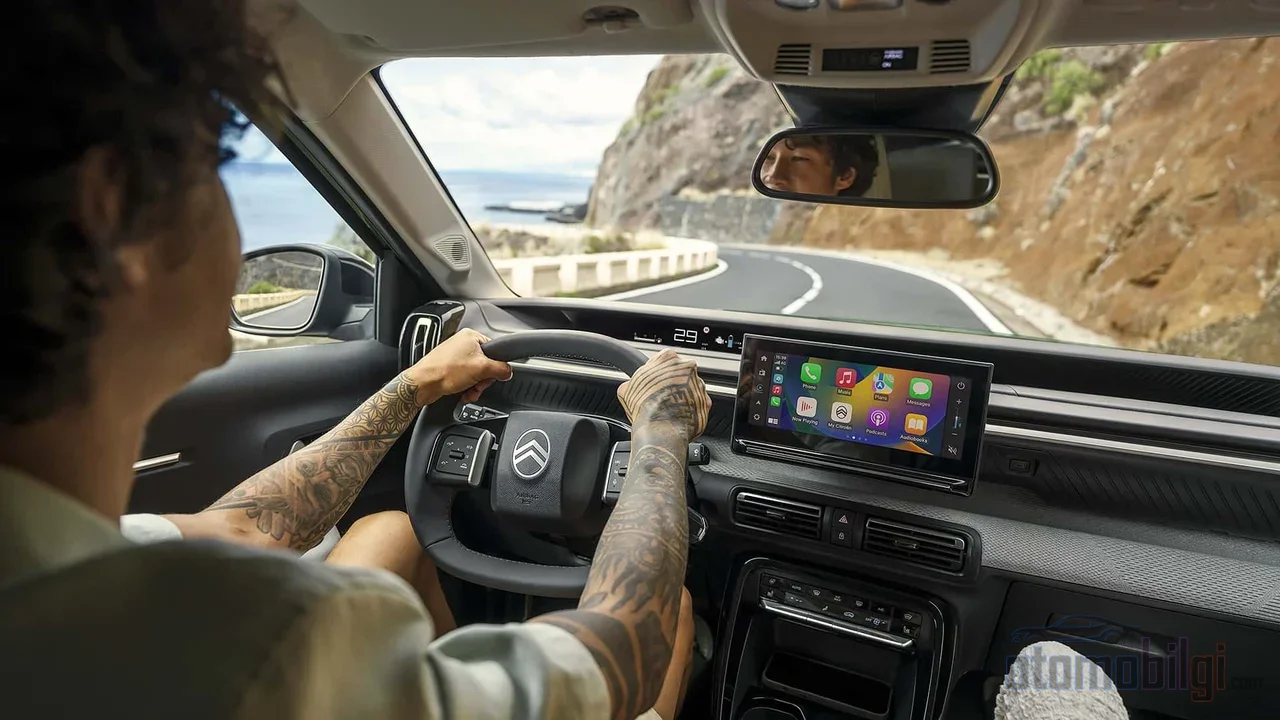
The most important leap of the new generation is the third-row option brought by the long wheelbase. Seven seats are hardly ever seen in this class; in practice, this third row is not for adults, but for children and short-distance passengers. But that is exactly a family's daily equation: three children going to and from the school bus, a grandmother leaving the house, or a two adults + two children + child seat arrangement. While most 5-seat B-SUVs fall outside this equation, the C3 Aircross offers an optional way out.
The second-row seats fold in a 60/40 split and can recline by 65 mm; in other words, a graduated balance can be struck between load and passengers. On the comfort side, Citroën Advanced Comfort seats come into play: extra 10-15 mm padding foam on the seating surface and a high-density foam structure. This is a detail that looks like decoration in the catalog but makes its difference felt after 200 kilometers; in a family car, the squeezed feeling in the front seat is the main source of complaints from children in the back seat.
Trunk: Family Practicality in Numbers
Trunk volume is this model's strongest card in a family evaluation. In the 5-seat configuration, 460 liters are offered, and there is a remarkable engineering detail: the rear seat's 65 mm recline does not reduce this volume. This figure, above the class average, carries the C3 Aircross ahead of its rivals for volume-focused families. A trunk that takes the monthly grocery shopping, baby stroller and sports bag trio all at once is what everyday life actually needs.
In the 7-seat version, the equation naturally changes: with the third row open, only 40 liters remain, and 330 liters when folded. So the 7-seat option should be read not as a car that "carries 7 people every day," but as a car that "flexes to 7 people when needed." The second point to note: communication materials may sometimes mention values such as 520 liters belonging to a different generation or measurement method; the current official value is 460 liters, and this figure should be used as the basis in comparisons.
| Dimension | Value |
|---|---|
| Length | 4.39 m |
| Wheelbase | 2,670 mm |
| Height | 1,660 mm |
| Ground clearance | 193 mm |
| Trunk (5 seats) | 460 liters |
| Trunk (7 seats, 3rd row folded) | 330 liters |
| Trunk (7 seats, 3rd row upright) | 40 liters |
| Tires | 215/60 R17 |
Strengths and Weaknesses: A Balanced Assessment
Strengths
- 7-seat flexibility rarely seen in its class and a 7-seat layout with 460 liters of trunk space
- 5.3 l/100 km WLTP consumption and electrically assisted driving in the city
- Measurable extra padding and high seating comfort in the Advanced Comfort seats
- Wireless smartphone integration and USB-C connections in the rear row
- The title of "Europe's Most User-Friendly Car" at AutoBest Conquest 2026
Weaknesses and Points to Watch
To be transparent, there are also debatable aspects. There are user complaints about the EAT6 automatic transmission in the previous generation; however, these units are not offered in the current model, and there is not yet a mature set of used-car data on the long-term reliability of the new 48V hybrid drivetrain. In other words, there is not enough data today to give a definitive answer to the question "is the transmission problematic?"; the previous generation experience should be read only as historical context. As a note for the first generation: the 2020 tests measured a 410-liter trunk and a 40-liter tank; the new generation has surpassed these values.
The second weakness is the practicality of the third row: with a 40-liter cargo area and the 7 seats in use, journeys become short and heavily loaded. The third weakness concerns performance expectations: 145 HP is a sufficient value for family use, and user reviews also highlight assessments like "performance above 130 HP is enough"; however, readers looking for a sporty character should be aware of the nature of the 3-cylinder unit.
How Does It Differ From Its Rivals? The Clio, the Sandero, and the Body Type Debate
The C3 Aircross is most often compared with hatchback alternatives in a similar budget range. Comparisons with the Renault Clio show that the two cars actually answer different needs: the Clio is a B-segment hatchback; the C3 Aircross is an SUV body offering a longer body, a higher seating position, and 7-seat flexibility. The question of hatchback or B-SUV at a similar budget essentially turns into the question "am I carrying 5 people every week, or sometimes 7?" In terms of trunk volume and rear-row flexibility, the SUV body retains a mathematical advantage.
The Dacia Sandero Stepway, meanwhile, is the classic rival on the price front; While the Stepway stands out with comparatively more affordable starting prices, the C3 Aircross positions itself higher in terms of space, equipment and hybrid technology. It is known that a difference in starting prices also exists in the European market. The Renault Duster comparison, on the other hand, points to a segment above; the Duster is larger and terrain-focused, while the C3 Aircross remains compact and city-oriented. This three-way separation clarifies the model's identity: not the cheapest SUV, but the most flexible compact family car.
What Does the AutoBest Conquest 2026 Award Mean?
The C3 Aircross, which reached the final in February 2026, was named "Europe's Most User-Friendly Car" under AutoBest Conquest 2026 in July 2026; it was the organization's first year. Knowing an award's criteria determines its value: the "user-friendly" title rewards accessibility, practicality and an ordinary user's ownership experience, not performance or dynamic superiority. For a reader looking for a family car, this is precisely a signal aimed at the right target audience - a well-aimed acknowledgment rather than segment-leader hype.
So Does the C3 Aircross Meet the Needs of a Turkish Family?
Putting the measurements together, the picture becomes clear: for a Turkish family with two children, adding grandma on weekends, expecting comfort on long journeys and facing limited maneuvering space in the city, the C3 Aircross delivers the most flexibility the B-SUV class can offer today. Three rows fitting into a 4.39-meter body, a 460-liter trunk and 5.3 l/100 km consumption provide measurable advantages in the three main headings of family use.
The decision criterion is this: if you need to carry 7 people every day, this is not a minibus; the third row only comes into play when needed. Also, long-term transmission reliability is still in the data-gathering stage; if you are making the purchase decision with first-model-year concerns, risk management through the service's expertise and the brand's Türkiye network is a sensible approach. If the goal is to meet the daily and weekly needs of a five-person family with comfort, efficiency and minimal fatigue, the C3 Aircross is a model that should be considered among the top three in its class.
Sources
- Citroën C3 Aircross Official Product Page
- CITROËN C3 Aircross Hybrid 145 Digital Catalog
- NEW CITROËN C3 AIRCROSS IN TÜRKIYE - Stellantis Press
- NEW GENERATION CITROËN C3 AIRCROSS IN TÜRKIYE IN MAY - Stellantis Press
- Citroën C3 Aircross AutoBest Conquest 2026 - Citroën Türkiye
- CITROËN New C3 Aircross Equipment Features
- CITROËN e-C3 Aircross Technical Specifications
- Renault Clio vs Citroen C3 Aircross Comparison
- C3 Aircross vs Dacia Sandero Stepway Comparison
- Citroën C3 Aircross 1.2 Hybrid Review
- 2020 Citroen C3 Aircross 1.2 PureTech EAT6 Test Drive
- C3 Aircross Transmission Complaints