2026 Opel Astra: The Elegant Player of the C Segment
Share This Page
The Opel Astra is one of the most established names in the C-segment in Türkiye: since 1991, it has changed generations as a family car positioned in the middle of the compact hatchback class, combining practicality with a German-origin driving character. To answer this question clearly today, the Astra is a compact that prioritizes comfort and efficiency while deliberately distinguishing itself from rivals like the Golf and Focus with its design. In this guide, we cover the model's identity, engine and transmission character, interior and trunk practicality, its strengths and weaknesses, and a comparison with the Golf.
Highlights
- The facelifted Astra was launched for sale in Türkiye in May 2026.
- Current engine in the Türkiye market: 1.5-liter 130 HP diesel, 8-speed EAT8 automatic.
- Hatchback trunk capacity: 352 L (with folded seats 1,268 L).
- 0-100 km/h: 10.6 seconds; combined consumption 5.0-5.3 L/100 km.
- The model, which has produced six generations since 1991, counts the Golf, Focus, Megane, 308, and i30 among its rivals.
An Important Note: The Situation for the Gasoline Version Has Changed in Türkiye
The gasoline Astra forms the main framework of this guide; however, the current picture must be clearly laid out. In the previous model year, the Astra K sold in Türkiye was offered with a 1.2-liter turbocharged gasoline engine producing 130 HP and 230 Nm ; this engine was paired with a 6-speed manual or 8-speed automatic transmission. The facelifted model, however, went on sale in Türkiye with a single engine and a single trim level: 1.5-liter 130 HP diesel with EAT8 automatic. So the gasoline Astra is not a version that can be bought new today; but since it is the engine that everyone considering the Astra is most curious about and it is widely available on the second-hand market, it continues to be covered in detail in this guide.
This situation is actually consistent with the Astra's positioning. While the model spans a wide range in Europe with gasoline, hybrid, and electric versions, its arrival in the Türkiye market with the diesel-automatic combination preferred by long-distance and high-mileage users is a decision focused on fleet and intensive users. The timeline is also clear: the facelifted Astra entered Türkiye in April, with sales and pricing announced in May.
Which Segment Does the Astra Belong to, and Which Needs Does It Address?
The Astra, in the classic definition, sits in the C-segment, that is, the compact hatchback class. In Türkiye, this segment is the first class that comes to mind when you say family car: adequate interior space, a reasonable trunk, manageable dimensions in the city, and a character that does not tire you on long journeys. The Astra's main rivals are Volkswagen Golf, Ford Focus, Renault Megane, Peugeot 308 and Hyundai i30 .
The model's target audience is users who want to solve city driving and weekend and holiday routes with the same car. Astra's answer to this need comes together under three headings: seat ergonomics focused on long-distance comfort, an efficient engine-transmission pair, and the serious cargo volume preserved across every body generation. Produced since 1991 in F, G, H, J, K and L body styles, this continuity of the model also means a wide range of alternatives on the used car market.
The Design Identity of the Facelifted Astra: The Lightning Logo and the Vizor Face
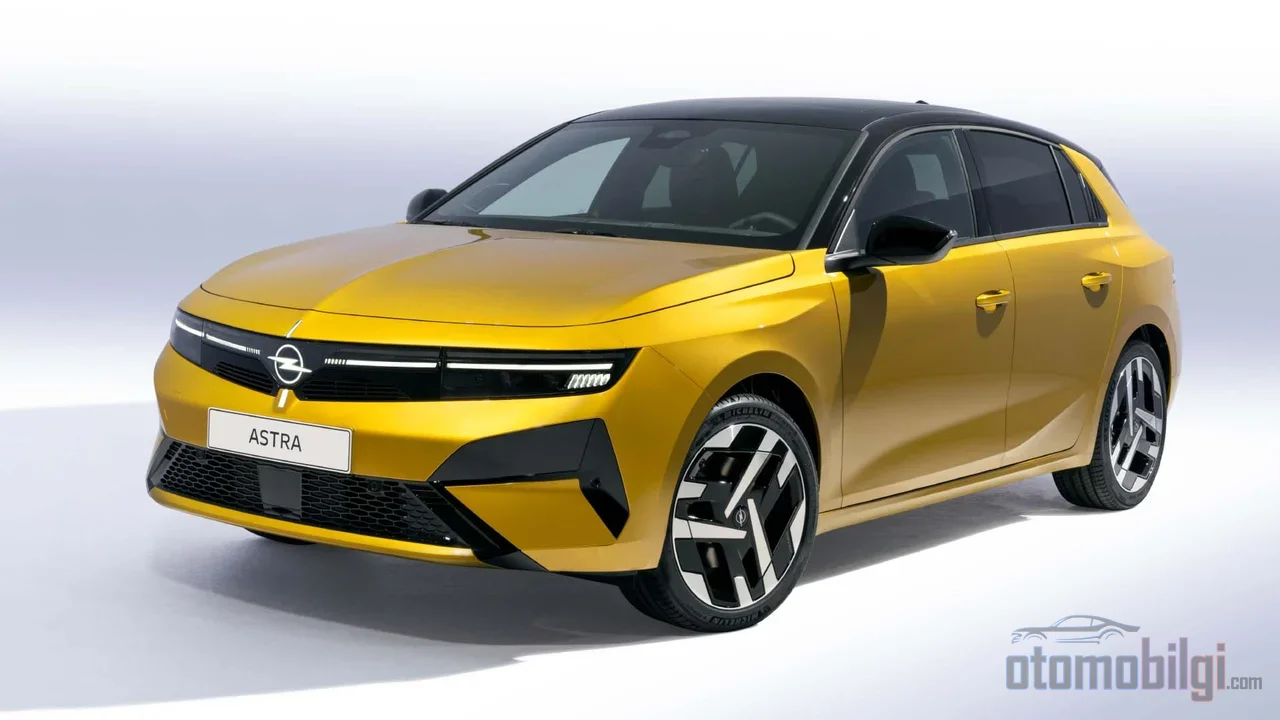
The most striking innovation brought by the facelift is the use of an illuminated logo for the first time in Opel's history. This "Lightning" logo, at the center of the front-face concept called the Vizor design, is the model's most distinctive detail. The new wheels, the two-tone body created with the optional black roof, and the tinted rear windows give the Astra a noticeably more aggressive and sharper stance compared to the Golf. The manufacturer's emphasis is also bold: the car was designed, developed and produced in Germany.
This design boldness is the most fundamental identity element that distinguishes the Astra from the Golf. The same observation stands out in user forums as well: there is a strong consensus that the Astra is "more eye-catching" with its yellow body color and GS look. For those who love the sporty appearance, the GSE Line package now being opened to all engines expands the boundaries of this identity.
Engine and Transmission: Current Options and the Previous Generation's Gasoline Version
Version Sold in Türkiye: 1.5 Diesel and EAT8
The facelifted Astra uses Stellantis's EMP2 platform and is sold in Türkiye with a single combination: 1.5-liter 130 HP diesel engine, 8-speed EAT8 automatic transmission. The performance figures are satisfying for the segment: 0-100 km/h in 10.6 seconds, top speed 209 km/h. In combined use, the 5.0-5.3 l/100 km consumption figure is one of the strongest arguments of this class, especially on long journeys.
| Feature | Value | |
|---|---|---|
| Engine | 1.5-liter diesel | |
| Power | 130 HP | |
| Transmission | 8-speed EAT8 automatic | |
| 0-100 km/h | 10.6 s | |
| Top speed | 209 km/h | |
| Combined consumption | 5.0-5.3 l/100 km | |
| Platform | Stellantis EMP2 |
The Previous Generation's Gasoline Version: 1.2 Turbo
Gasoline 1.2 Turbo is the main reference point for those who prefer the Astra with a gasoline engine. Producing 130 HP and 230 Nm this turbocharged engine was measured with a realistic consumption value of 5.6 l/100 km . On the transmission side, some users see the 1.2 PureTech with the EAT8 automatic as one of the most balanced pairs in the mid-segment; the fact that this transmission is made by Japan's Aisin and is also used in Volvo models feeds the sense of trust.
On the other hand, this engine has an undisputed weakness: the timing belt problems seen in low-displacement turbocharged gasoline engines. A 2020 Astra K owner's complaint that the engine ran rough after a timing belt replacement at 75,000 km is a concrete example of this issue. Therefore, when considering a gasoline Astra, especially second-hand, questioning the timing maintenance history is a must. Meanwhile, some users find the older 1.6 gasoline engines "sluggish," which shows how decisive the engine choice is in the Astra. The general user perception is summed up in this sentence: the Astra is one of the models worth buying when the right engine, transmission, and body style are chosen.
Interior, Equipment, and Trunk Practicality
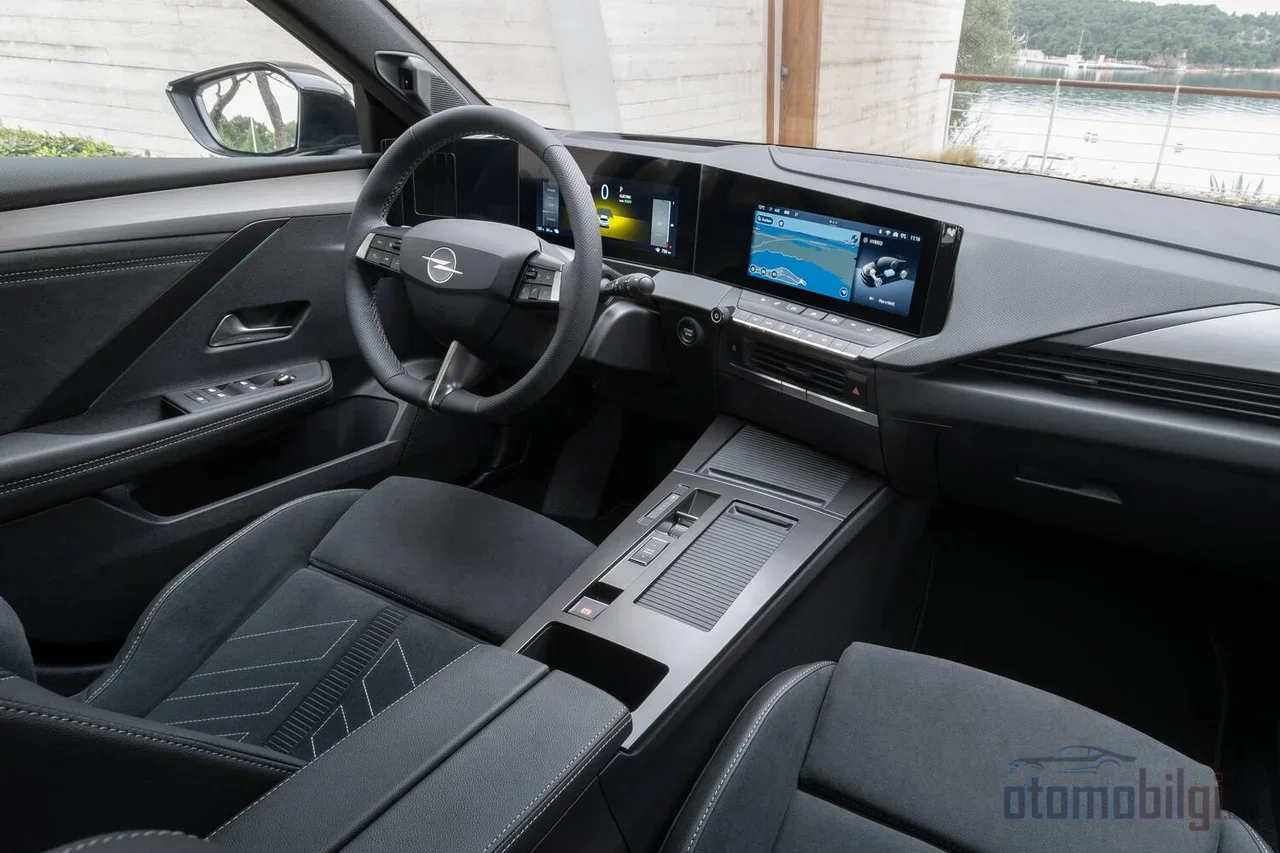
The facelifted Astra is sold in Türkiye with a single trim level, and this level (GS) is quite well equipped: 17-inch diamond-cut wheels, LED lighting, dual-zone climate control, 10-inch digital instrument cluster and 10-inch multimedia display, wireless CarPlay and Android Auto, adaptive cruise control with stop-and-go support, active lane keeping, front collision warning, and a 180-degree rearview camera. The star of driving comfort is the Intelli-Seat seats: the ergonomic cutout in the tailbone area was designed to reduce long-journey fatigue and makes a real difference in user experience as well.
On the trunk side, the figures vary by version, and making this distinction correctly is important. In the hatchback body, with the rear seats up, 352 liters, and with the seats folded, 1,268 liters of volume is obtained. In the Sports Tourer body and in some reviews, 422 liters is cited as the standard volume; with 60/40 folding seats, this value can rise to 1,339 liters. The FlexFloor stepped trunk floor, offered as standard on some trims, is a practical detail that makes it easier to organize luggage. In short, comparing trunk figures without clarifying the body type would be misleading.
Opel Astra or VW Golf?
The most common comparison heading when making a compact purchase decision in Türkiye is the choice between the Astra and the Golf. On paper, the picture is interesting: while the Astra's gasoline GS version reaches 100 km/h in 9.7 seconds with 130 HP and 230 Nm, the Golf's 1.5 eTSI version does the same job in 9.9 seconds with 116 HP and 220 Nm. In the diesel-automatic comparison, the two are very close to each other: the Golf is ahead in top speed, the 0-100 difference is at the level of tenths of a second, and in fuel consumption the Golf is slightly more frugal.
The real differentiation is in the perceived quality. In user evaluations there is a common view that the Golf's insulation and interior material quality are one notch better; but whether it is worth switching to the Golf is debatable. The strongest arguments on the Astra side are the perception of price advantage, a bolder design, and the richness of upper trim levels. It is also frequently stated that the two models' interior concepts differ less than expected, while the Astra's upper trim levels stand out. To summarize: if insulation and material feel are the priority, the Golf; if budget-equipment balance and a distinctive look are the priority, the Astra.
Strengths and Weaknesses: What You Need to Know Before Buying
- Strong road holding: The feature most frequently highlighted in user comments; the Astra offers a chassis character that inspires confidence in corners.
- Fuel efficiency: Both the 1.2 Turbo petrol (5.6 l/100 km average) and diesel (5.0-5.3 l/100 km combined) figures are good for the class.
- Long-distance comfort: The Intelli-Seat seat ergonomics and automatic transmission duo are the fundamental elements that make the Astra a highway car.
- Design identity: With its illuminated logo and two-tone body options, a more eye-catching exterior look compared to the Golf.
- Weak point - electronics: In previous generations, small-scale electronic failures and steering noise complaints have been reported.
- Weak point - engine selection: The timing belt controversy on the 1.2 Turbo and the timing chain noise issues on the older 1.6 CDTI are topics second-hand buyers should question.
For those considering the second-hand market, this picture offers a practical takeaway: thanks to its wide range of generations, the Astra appeals to every budget, but chronic issue headings need to be known by generation and engine. When the right combination is chosen, the model remains one of the most rational choices in its segment.
Conclusion: What Does the Astra's Identity Say?
The Opel Astra is the balanced player of the compact class. A model that counters the Golf's perception of solidity with design, equipment richness, and price positioning, while also proving itself with tangible comfort details like the Intelli-Seat. The fact that it is currently sold in Türkiye only as a diesel automatic may disappoint those looking for a petrol version; but for someone who drives long distances a lot, the current combination is actually the most sensible one. For those who will prefer petrol, the road to success lies in reading the 1.2 Turbo's maintenance history well.
Sources
- Opel Astra | Diesel
- The Renewed Opel Astra Arrives in Türkiye in April! – Stellantis Media Türkiye
- Opel Astra Electric Goes on Sale in Türkiye!
- 2026 Opel Astra Diesel Automatic in Türkiye: Here's the Price
- The New Opel Astra in Türkiye
- Opel Astra 2025 Review: Design, Price, and Trim Guide
- Opel Astra Prices and Trim Package Ranking
- New Opel Astra Features and Price
- Opel Astra User Reviews and Complaints
- Which Segment Does the Opel Astra Belong To?
- Should You Buy an Opel Astra?
- Opel Astra 1.2 Turbo GS vs VW Golf Comparison
- Volkswagen Golf vs Opel Astra HB Comparison
- Opel Astra or VW Golf?
- Should You Buy the Opel Astra 1.6 CDTI?