kWh and Volts: What Do Battery Terms Mean?

Share This Page
In an electric vehicle's spec sheet, three numbers sit side by side: battery capacity, charging power, and voltage. At first glance they all look similar; most listings write them in the same sentence, with the same precision. Yet these three measure completely different things, and when misread, they throw off every estimate you make, from charging time to range. The kWh value next to a battery tells you the size of its tank, while the kW value at a charging station describes the pump's flow rate; confusing the two is like equating fuel tank volume with liters per minute in a gasoline car. This page breaks down these fundamental units of the electric vehicle world one by one and enables you to read a vehicle's battery data on your own.
Volts and Amps: The Two Basic Measures of Electrical Flow
The simplest explanation uses the water analogy, the starting point of all engineering. Voltage corresponds to the water pressure in a hose: it is electrical potential, the pressure that pushes electrons. Amps, on the other hand, are the amount of water passing through the pipe per unit of time: the measure of the electron flow in a circuit, that is, the current. As voltage rises, more power can pass through a conductor of the same cross-section; amperage directly expresses the amount of charge entering or leaving the battery.
When these two values are multiplied, you get watts: watts = volts × amps. One kilowatt (kW) is 1,000 watts. The kW value shown at a charging station is actually the result of this multiplication; the station delivers a certain amperage at a certain voltage, and the combination of the two determines the power transferred to the battery. That is why two stations carrying the same kW label can operate with different voltage and current combinations - the result, that is, the delivered power, is the same.
The Difference Between kW and kWh: Why Power and Energy Are Not the Same Thing?
This is where most shoppers get stuck, and the distinction is actually resolved with a one-sentence chain of logic. kW is power, the rate at which energy flows; kWh is energy itself, the stored amount. As a formula, kWh = kW × hours. The power of a device, a motor, or a charging unit is measured in kilowatts; your electricity bill, meanwhile, charges you for the energy consumed in kilowatt-hours. What you pay at the register is not a rate per unit of time, but a total amount.
Let's make the example concrete: if you plug a 40 kWh battery into a 40 kW charging unit, theoretically it charges from zero to 100% in exactly one hour. The same logic works on the discharge side too. A 60 kWh battery can feed a 60 kW motor for one hour; if consumption drops to 15 kW, the time stretches to four hours, and if it rises to 120 kW, it falls to half an hour. In other words, the same tank offers completely different durations depending on the vehicle's power demand - this is also the mathematical basis for why range estimates are never precise.
Ampere-Hours and kWh: Why Do We Measure Capacity in Two Different Units?
Ampere-hours (Ah) are another measure of battery capacity, expressing the amount of amperage the battery can deliver for one hour. The problem is this: Ah alone does not complete the energy picture, because it does not take voltage into account. Two batteries bearing the same 100 Ah label can produce completely different power outputs when operating at different voltages. Multiplication is required to find the real energy: kWh ≈ volts × amp-hours ÷ 1,000.
This is exactly why the electric vehicle world measures batteries in kWh. Comparison between vehicles equates packs with different voltage architectures into a common unit of energy; kWh does this on its own, Ah cannot. At the cell and module level, however, Ah is still a valid internal measure - which is why it is normal to see both units side by side in manufacturers' technical documents.
Key Takeaways
- kW measures power, kWh energy: one kWh is equivalent to 1 kilowatt of power delivered for one hour.
- EV batteries on the market are largely in the 20-100 kWh range.
- Electric vehicles travel an average of about 2.5 miles per kWh; efficient models can do twice that.
- Data from more than 22,000 vehicles shows the average battery loss to be 2.3% per year.
- Most packs that complete the vehicle's life retain 70-80% capacity.
How Are Capacity, Range and Charging Time Calculated?
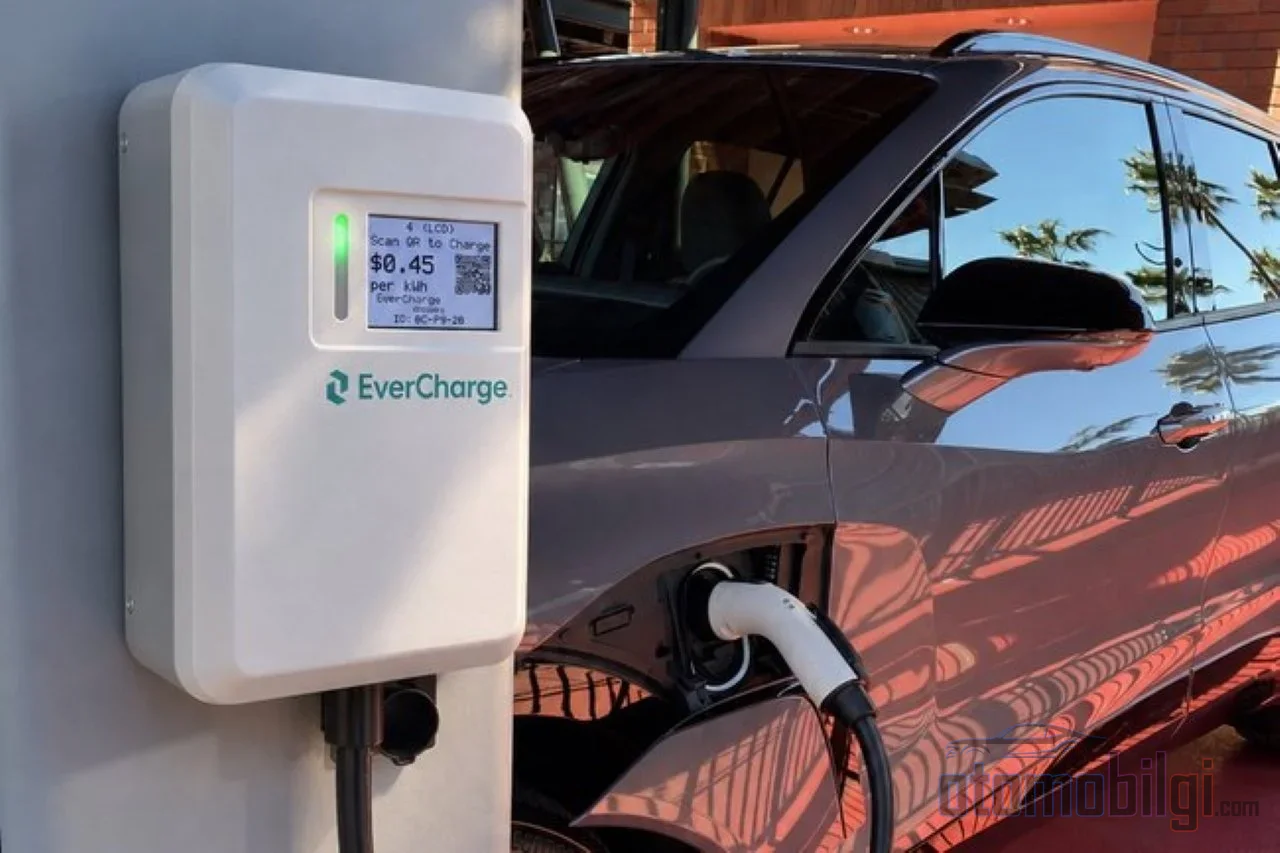
The relationship between these three values is established with two simple equations. On the range side, what is decisive is not just capacity but efficiency: a bigger battery goes farther on a single charge, but two vehicles with the same pack can achieve different distances due to differences in consumption. The basic formula for charging time is: time (hours) = capacity to be filled (kWh) ÷ charging power (kW). A 60 kWh pack that you will fill from 20% to 80% needs 48 kWh of energy; on a 7 kW wall unit this exceeds seven hours, on a 150 kW fast charger it drops to a quarter of an hour.
In the real world, several factors extend this theoretical time. The vehicle applies its own limits to charge the battery without overheating and in a balanced way; high-power charging stations generally charge faster, but the time is also limited by the maximum power the vehicle can accept. Reference values are as follows: Level 2 (AC) home and workplace charging brings an empty full battery electric vehicle to 80% in 4-10 hours; for plug-in hybrids (PHEVs), 1-2 hours is enough. Direct current (DC) fast charging reduces these rates to minutes. The system that estimates the times is the vehicle's own Battery Management System; the BMS produces the remaining energy, range and health estimates.
Why Do You Get Different Range Despite the Same kWh Value?
If two vehicles' brochures state the same 60 kWh, assuming both will travel the same distance is one of the most common mistakes. Energy storage and energy consumption are separate equations: weight, aerodynamics, wheel diameter, driving style and cabin heating determine consumption. While one vehicle travels an average of 2.5 miles per kilowatt-hour, another can do twice that. In winter this gap widens even further; in the cold, chemical reactions slow down and cabin heating draws extra energy, so range drops slightly and charging times lengthen. Cold alone doesn't shorten battery life; what really needs attention is the excessive heat that can damage the cells - losses accelerate at temperatures around 40 °C.
Another practical matter is reading capacity correctly. As the discharge current increases, the usable capacity decreases; this is stated as the C-rate in datasheets and reminds us that nominal values are measured under laboratory conditions. In daily use, the practice of keeping the battery in the 20-80% range is the best-known habit that reduces stress on the cells.
How Do Battery Chemistries Affect These Terms? LFP vs. NMC Comparison
The units stay the same, but the balance of capacity, lifespan and safety depends on the cell's chemistry. All lithium-ion cells work on the same principle: during charging and discharging, lithium ions travel back and forth between the graphite anode and the cathode. The difference lies in the cathode chemistry, and two main families share the market today: LFP (lithium iron phosphate) and NMC (nickel manganese cobalt). As an example application, an Tesla Model 3 Standard RWD uses LFP, while the Long Range and Performance versions use NMC cells.
| Feature | LFP | NMC |
|---|---|---|
| Energy density | Less per kilogram | More per kilogram |
| Cost | Cheaper | Around $130-150/kWh (pack) |
| Cycle life | Up to 10,000 cycles | Shorter, ideal at high power |
| Safety | More stable cathode | Can release oxygen at low temperatures |
| Range in cold weather | More loss | Less loss |
No definitive winner emerges from the table; the trade-off is between energy density and lifespan and safety. Applications requiring long life favor LFP, while those requiring high power favor NMC. NMC cathodes are less stable and can release oxygen when overheating, feeding the thermal runaway process; LFP has a wider safety margin at this threshold. The choice is made according to the vehicle's intended use case.
Battery Lifespan: Degradation and Thermal Management Facts
The energy we discussed in the capacity unit decreases over time - but more slowly than most people think. An analysis of data from more than 22,000 electric vehicles shows that the average degradation rate is 2.3% per year; modern EV batteries are typically expected to last 15-20 years. The loss doesn't progress linearly: a new pack may show an initial noticeable drop, after which the curve flattens. Frequent use of high-power DC fast charging stands out as the biggest risk factor. Thermal management also directly affects losses; optimizing the heat transfer paths within the pack can provide up to a 20% increase in lifespan.
The pack doesn't go to waste when the vehicle reaches the end of its life. Most batteries still retain 70-80% of their capacity at this point, and this value is sufficient for second-life applications such as stationary energy storage. The recycling side is also growing rapidly: between 2025 and 2035, the market will transition from fragmented pilot efforts to a mature sector; The EU's digital battery passport regulations are among the main factors accelerating this transition. Recycled material can cover up to 60% of global cobalt demand and 53% of lithium demand.
Further Reading: How Will Solid-State and Sodium-Ion Change These Units?
In the period ahead, two new chemistries may change the way we read kWh and kW figures. Sodium-ion batteries are approaching commercial maturity, and 2026 is seen as a critical year for scaling the technology; next-generation cell developments raise energy density, carrying the potential to surpass mature chemistries. Solid-state batteries, meanwhile, promise a breakthrough in safety and energy density; market projections point to a volume of 10 billion dollars by 2036. Both technologies will be measured with the same units - what will change is being able to fit the same kWh value into a smaller and safer package.
How to Read a Vehicle's Battery Data? One-Sentence Summary
Let's wrap up the question we asked at the beginning of the page. When reading an electric vehicle's data, follow this chain: kWh is the energy capacity of the tank; kW measures power, i.e. the flow rate; volts express voltage, amps express current, and amp-hours express capacity independent of voltage. It is not capacity but capacity divided by consumption that determines range; you find charging time by dividing the kWh to be filled by the charging power, and the result equals the smaller of the vehicle's own acceptance limit and the charging station's delivery limit. Once you have these four equations in hand, you become able to question every figure in an ad or on a charging column on your own - and this is the cheapest protection an electric vehicle buyer can acquire.
Sources
- What are amps, volts, watts, kilowatts and kilowatt-hours? - Pod Point
- What Is a Kilowatt-Hour? Understanding kWh in EV Batteries - Recurrent
- How EV Charging Works - AAA
- kW vs kWh: What It Means for Your EV - bp pulse
- kW vs kWh Explained - Power Sonic
- Understanding EV Charging Stations: Watts, Amps and Volts - Sona Energy
- Volt, Amps, Amp-hour, Watt and Watt-hour terminology - Rebel Cell
- Understanding Battery Capacity: Converting Ah to kWh - Afon Energy
- Clean Energy 101: EV Charging - RMI
- EV battery guide - RACV
- Charger Types and Speeds - U.S. Department of Transportation
- A Guide to Understanding Battery Specifications - MIT
- Understanding Battery Metrics - Tessie
- EV battery charging best practices: the 20-80 rule - FLO
- Lithium Battery Chemistry: LFP vs NMC - NX Tech
- LFP vs NMC: Cycle Life Comparison - BSLBATT
- LFP vs NMC vs Solid-State EV Battery Types - Electric Car Scheme
- LFP, NMC and Sodium-ion Compared - Battery MBA
- Comparative study of lithium battery chemistries - ScienceDirect
- Lithium-Ion Chemistries: LFP vs NMC Guide - Anern
- Sodium-ion battery momentum grows - IEA
- Sodium-ion batteries for grid-scale storage - GM Newsroom
- Solid-State Batteries - IDTechEx
- EV Battery Health - Geotab
- Thermal management and battery lifespan - ScienceDirect
- How Long Does an Electric Car Battery Last - EV Connect
- Extreme Temperatures Affect Range - AAA
- Hot & Cold Temperatures and EV Range - Mazda
- Extreme weather and EV battery performance - Electric Vehicle Council AU
- What Happens When EV Batteries Reach End of Life - ULSE
- Future of EV Battery Recycling - AZoCleantech
- Battery Recycling Regulation & Digital Passports - Battery Value Chain Exchange
- Deep Dive: How Can We Test an EV Battery? - Recurrent