What Is Battery Preconditioning and Why Is It Necessary Before Fast Charging?
Share This Page
Battery preheating (preconditioning) is when an electric vehicle's thermal management system brings the battery pack to an ideal temperature before fast charging - usually within the 20-30°C range. In cold cells, the movement of lithium ions slows down; a warmed-up battery, on the other hand, accepts the high power from the charging station without the risk of lithium plating. The result is a measurably shorter charging time and a preserved battery life.
Highlights
- The ideal battery operating temperature is within the 15-35°C range; preheating typically brings the pack to 20-30°C.
- Preheating usually takes 20-30 minutes; in extreme cold, the recommended duration can rise up to 60 minutes.
- Unplugged preheating consumes about 2-3 kWh; on the highway in winter, this equals a range of 6-12 km.
- While a preheated battery can accept 150 kW instantly, a cold battery may start at only 50 kW.
- In extreme cold, range can drop by up to 40%.
What Exactly Does Battery Preheating Do?
An electric vehicle's battery does not store electricity; it produces power through chemical reactions. The speed of these reactions depends directly on temperature: as the cells cool, the electrolyte turns into a less fluid, viscous medium, ions move more slowly between the electrodes, and internal resistance increases. Most manufacturers define the ideal battery operating range as 15-35°C. Preheating brings a pack that has fallen below this range - usually via a heating circuit circulated in the liquid thermal loop - back inside the window before charging.
Two separate functions are at work here, which should not be confused with cabin heating. Cabin preconditioning is for the comfort of the driver and passengers; battery preheating, on the other hand, serves the chemistry. Many vehicles offer both together, but one does not replace the other: even when the cabin is warm, the battery may still be cold.
Why Cold Fast Charging Is Risky: Lithium Plating
During charging, the embedding of lithium ions into the electrode structure - technically known as intercalation - occurs at a certain rate. When the cell is cold, this rate drops. If you apply high current to a cold battery, the ions cannot settle properly onto the anode surface; the anode potential drops and the ions accumulate on the surface as metallic lithium. This is called lithium plating and it is the most important limiting factor for fast charging.
Plating has two costs. The first is permanent capacity loss: ions locked in as metallic lithium on the anode surface no longer participate in the charge cycle. The second is a safety risk: over time, plating can form structures that may lead to internal short circuits between the electrodes. In cold weather, the plating risk becomes so pronounced that the safe charging rate the cell can accept drops significantly; it is known that low temperature, by triggering plating, limits fast charging capability and shortens battery life.
Preheating cuts this chain at its source. When the pack reaches the right temperature, the ions can keep up with the intercalation rate, and the vehicle can use the full power offered by the charger - or the highest value the cells can safely accept.
Automatic and Manual Preheating: Which One, When?
Navigation-triggered automatic mode
The most common and most accurate method is the navigation system. When you enter the fast-charging station as a stop on your route, the vehicle notices this and starts heating the battery throughout the journey - cooling it if necessary on some models. The system aims for the pack to be at the ideal temperature upon arrival. Many modern EVs do this detection entirely on their own: the only thing the driver needs to do is enter the fast-charging point into the navigation.
Planning through apps follows the same logic. Some vehicles allow pre-scheduled preheating based on the departure time; the system typically kicks in 30-60 minutes before departure. When the vehicle is plugged in, this is done using grid power and does not touch the range.
Manual mode and brand differences
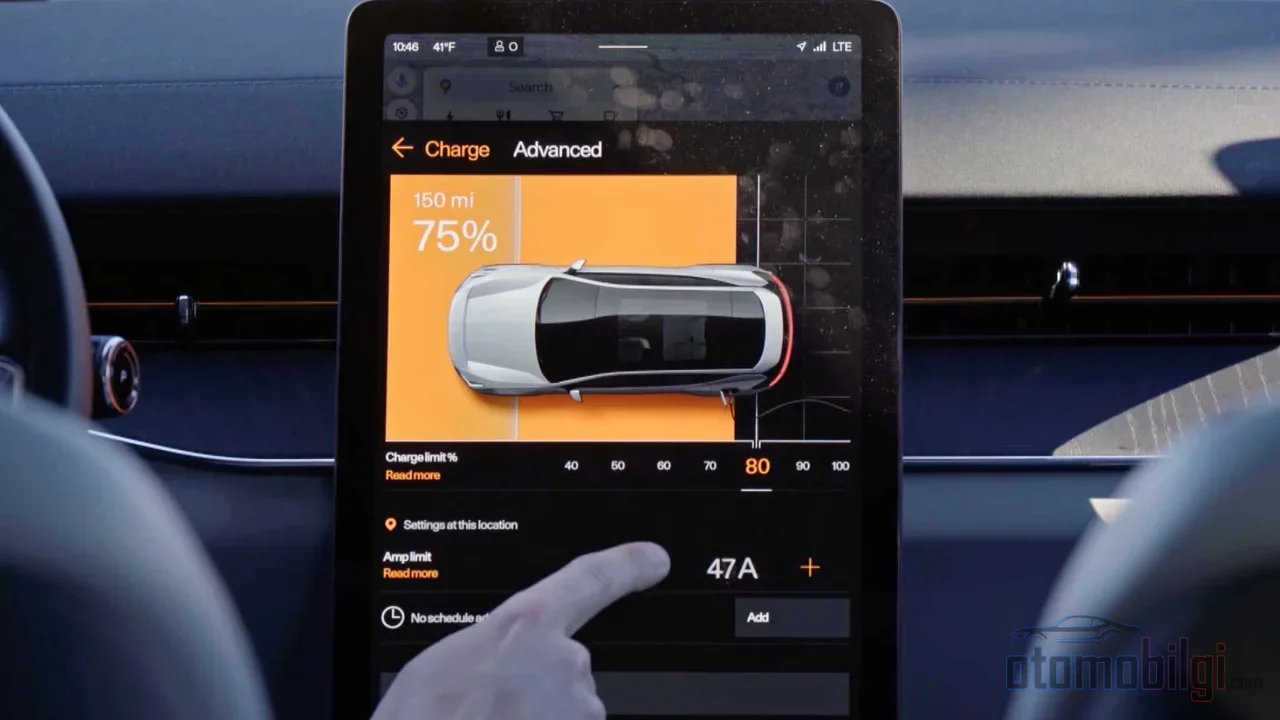
If you are going to charge without entering an address into the navigation, many models offer manual preheating via the infotainment screen or a connected phone app. There is one detail to watch out for here: in some manufacturers' vehicles, a charging point selected from the manual menu does not trigger preheating. For example, in one manufacturer's system, fast-charging preheating via the route only activates with a specific map integration; manually selecting the charger is not enough. Checking how this behavior works in your own vehicle's owner's manual is the only remedy for a wasted charging stop.
When Should Preheating Start?
Timing is critical so that energy is not wasted. Manufacturers' recommendations are quite similar to each other and are shaped according to the outside temperature:
- General rule: preheating takes about 20-30 minutes depending on battery size and outside temperature.
- In mild cold, on a journey longer than about 30 minutes to the charging station, enter the route into the navigation and let the system manage it itself.
- In extreme cold - -7°C and below - the recommended start time extends to 60 minutes.
- If the trip to the charging point is shorter than 30-45 minutes, it makes sense to activate preheating before starting to drive.
There is no benefit in extending these times: after the pack reaches the ideal temperature, the goal is to arrive just in time rather than for the system to spend excess energy.
Energy Trade-off: Lost Range or Gained Charging Time?
Preheating is not free, and the equation has two sides. While the vehicle is plugged in, preheating draws its energy from the grid; it has no effect on range and consumption remains minimal compared to the benefit it provides. However, when unplugged, heating is fed directly from the battery: practical calculations show a consumption of about 2-3 kWh for 30-40 minutes of preheating. Combined with winter highway consumption, this corresponds to 6-12 km of range. Non-plug-in heating can also strain the 12V auxiliary battery.
What is gained in return? For one thing, part of the lost winter range comes back: when the pack starts driving at ideal temperature, it is estimated that the 20-30% portion of the range loss can be recovered. For another, the charging break gets shorter: engineering studies examining predictive pre-heating strategies show a reduction in charging time of up to 8.9% or significant energy savings. In the overall equation, preventing permanent plating-related damage, in addition to the minutes saved at every charging stop, more than compensates for those few kilometers of range sacrificed.
What Happens If You Don't Pre-Heat?
A cold battery cannot accept high charging current without the risk of lithium plating. The vehicle knows this and limits power until the cell temperature is suitable; it uses part of the incoming energy to heat the battery. The net charging speed therefore drops significantly. A concrete comparison: a warmed-up battery can immediately accept 150 kW, while a cold battery may start at 50 kW and increase gradually as it warms up. In real-world use, field examples point in the same direction: in a vehicle that achieved 120-138 kW with pre-heating, there have been reports of scenarios where it got stuck at ~72 kW on a 150 kW unit without pre-heating.
Forgetting once is not a big problem; the real damage lies in a repeated habit. Regularly fast-charging a cold battery without pre-heating costs far more than the pre-heating's own energy consumption. Low-current home charging (Level 1) does not cause the problem even in the cold; a slow current does not trigger plating.
A measurement note to add: health tests on cold cells are also misleading. The same battery can show 80% health in the cold but 90% in mild conditions - the temperature must be known when evaluating the battery.
Does Battery Chemistry Matter: NMC and LFP in the Cold
The pack's cell chemistry affects cold behavior but does not change the fact that pre-heating is necessary. The general picture is as follows: high-nickel NMC cells are ahead of LFP (LiFePO4) in energy retention and discharge rate at low temperatures; LFP, on the other hand, stands out on the safety side. At -20°C, LFP cells retain about 55% of their capacity, while high-nickel NMC/NCA cells retain about 48%. On the other hand, NMC ages faster with fast charging in hot weather and is more prone to thermal runaway at around ~210°C; LFP's weakness, due to its chemistry slowing down in the cold, appears in both charging speed and range.
| Feature | NMC | LFP (LiFePO4) |
|---|---|---|
| Energy retention in the cold | Better than LFP | ~55% capacity at -20°C |
| Capacity at -20°C (high-nickel NMC/NCA) | ~48% | - |
| Safety | Prone to thermal runaway at ~210°C | Standout aspect |
| Aging behavior | Ages quickly with fast charging in hot weather | Charging speed and range drop in the cold |
Whichever chemistry you use, the result is the same: in cold weather, both cell types benefit from preheating; the only difference is the magnitude of the loss.
Frequently Asked Questions About Preheating
Is preheating mandatory before fast charging?
No, it is not mandatory; the vehicle will still charge. But in cold weather, charging time increases significantly, and the battery is exposed to the permanent plating-related effects of repeated cold fast charging. It is not a matter of obligation, but of measurable benefit and protection.
Does preheating reduce range?
Not while plugged in; the energy comes from the grid. When unplugged, it consumes about 2-3 kWh, which can reduce usable range by a few kilometers depending on conditions. In return, a journey that begins with a warmed-up pack can recover 20-30% of winter range loss; charging breaks are also shorter under the same conditions.
Is preheating also necessary for normal city driving?
It is not necessary. In normal driving, the vehicle itself limits discharge at low temperatures and regenerative braking; the main scenario for preheating is before DC fast charging. In mild weather, most systems do not consider preheating necessary either.
The Current State and Future of Preheating
Preheating has become the standard way of managing the battery's cold-weather limitations with a procedure under the driver's control. The next step is predictive systems: algorithms that combine driving habits, weather forecasts, and navigation data trigger heating at exactly the right moment and for exactly the right duration; scheduling the heating task into off-peak hours along with smart home energy management is also part of this picture. What the driver needs to do today is simple: when heading to a fast charge in cold weather, enter the destination into the navigation and let the system do its job.
Sources
- What is EV Battery Pre-Conditioning?
- How Battery Preconditioning Affects EV Testing
- Battery Preconditioning and Cold-Weather EV Performance
- Battery Preconditioning Quick Start Guide
- Cold Weather Best Practices - Owner's Manual
- How do I precondition my battery for DC Fast Charging?
- Lithium-ion batteries don't work well in the cold
- Guide to Lithium Plating in Lithium-Ion Batteries
- Preventing Lithium Plating in Electric Vehicle Batteries
- Predictive Battery Preconditioning Strategy (SAE 2026-01-0126)
- EV Preconditioning Helps You Charge Faster
- NMC vs LiFePO4 in the Cold
- How Temperature Affects Lithium-Ion Battery Capacity