Charging Habits to Make Your EV Battery Last Longer
Share This Page
The most effective way to extend the life of an electric vehicle battery is not to change the technology, but to change your daily charging habits. For NMC chemistry batteries, keeping the charge between 20% and 80% during the day, and for LFP batteries, regularly charging up to 100%, is a requirement of the cell chemistry; avoiding deep discharge, not leaving the battery at full charge, and leaving it at around 50% for long parking periods apply to both chemistries. These habits measurably slow down the battery's aging process.
Highlights
- Real-world data shows the average battery loss at 2.3% per year; charging habits can pull this rate down significantly.
- LFP batteries 3,000-6,000 withstand full cycles, while NMC is typically limited to 1,000-2,000 cycles.
- Charging in the 20-80% range also saves about 20-30% of time in fast charging compared to waiting up to 100%.
- For long-term parking, most manufacturers recommend a 50% charge level.
Why Does the 20-80% Rule Work?
Lithium-ion cells experience the most stress at the two ends of the voltage spectrum. When the battery is kept high, the cells remain under high voltage and wear accelerates; to make an analogy, it is like keeping a tire constantly stretched to its limit. At the lower end, the cells operate under strain. Although modern electric vehicles have a small protection buffer in every cell, frequently dropping to near zero puts a cumulative strain on the electrodes.
In the middle range, both decrease at once: voltage stress drops and degradation slows down. That is why the 20-80% range is not a hunger limit, but the region where the cell chemistry operates most comfortably. In practice, it also has no cost; on the contrary, most vehicles significantly reduce the charging speed after 80%. A vehicle that completes the 10-80% range in about 30 minutes may wait another 30 minutes or more for the last 20%. So the 20-80% rule protects both the battery and your schedule.
An important clarification: this is not a strict law, but a guideline. Occasionally exceeding the limits will not destroy the battery; the real problem is extreme values that have become permanent and turned into a habit. In any case, the manufacturer's recommendation in the vehicle's user manual should be taken as the basis first.
When Is Charging to 100% Safe and Necessary?
There is a time and place for a full charge. Occasionally charging to 100% is perfectly reasonable when you need maximum range before a long trip, when you need to compensate for range loss in cold weather conditions, or so that the battery management system (BMS) can refresh its capacity calculation. The common practice is as follows: 80% daily, 100% when needed or once a month.
The critical point is the behavior after a full charge. The battery should not be left at high voltage at 100%; setting off immediately after a full charge minimizes the time the cells spend at high voltage. Rather than leaving it at 100% overnight before a journey, it is a better choice to complete the charge close to departure time.
Why Does the Rule Work Differently for NMC and LFP?
This is where battery chemistry comes into play. NMC batteries offer high energy density but lower thermal stability, with a cycle life of around 1,000-2,000 full cycles. That's why a range of 20-80% is recommended for routine use in NMC-equipped vehicles, and daily charging to 100% is not advised. With LFP, the picture flips: because the cathode structure is stable, it is far more resistant to repeated cycling and 3,000-6,000 full cycles reaches several times the lifespan of NMC. So much so that some manufacturers explicitly recommend charging LFP batteries to 100% daily.
Another reason for regular full charging in LFP packs is cell balancing. LFP's voltage curve is quite flat; in other words, there is no significant difference between charge level and voltage, which makes it harder for the BMS to estimate the charge percentage accurately. Regular 100% charging is a practical solution for cell balancing and SOC gauge calibration. Some manufacturer recommendations consider a full charge once a week sufficient for vehicles used in high temperatures.
| Feature | NMC | LFP |
|---|---|---|
| Full cycle life | 1,000-2,000 cycles | 3,000-6,000 cycles |
| Energy density | Higher | Lower |
| Thermal stability | Lower | Higher |
| Daily charging recommendation | 20-80% range | Daily/weekly charging to 100% |
| SOC estimation | Relatively easy | Difficult due to flat voltage curve |
What Charge Level Should a Vehicle Parked Long-Term Keep?
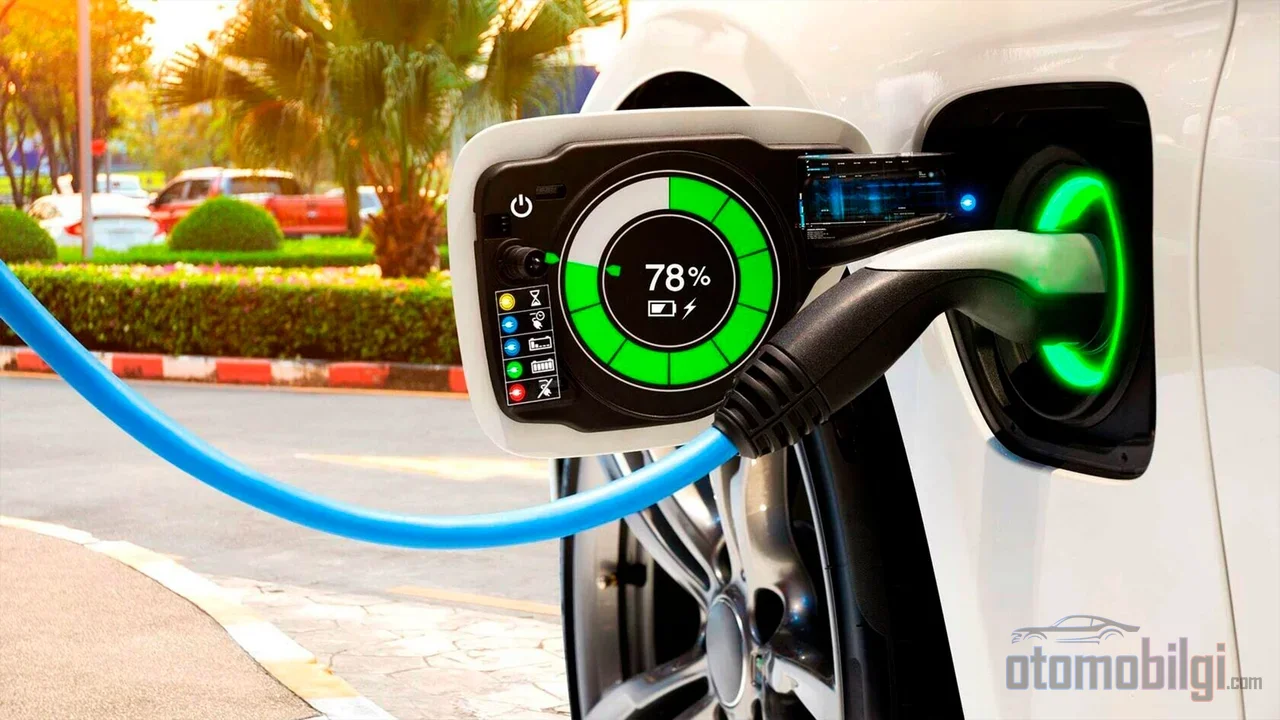
If the battery will be sitting in a warehouse or garage for months, the charge percentage should be kept at the midpoint, quite the opposite of the in-use target. Most manufacturers recommend around 50% charge for long-term storage; waiting at a level of 80% or above for months leaves the cells under constant high-voltage stress. Other recommendations point to the 50-60% or 50-70% range; the common ground is, if possible, not storing above 70% and not letting it drop below 30%. While 20% is still a tolerable lower limit, levels such as 10% and 5% approach the risk of deep discharge and should be avoided.
Cells resting in the mid-range experience the least physical stress. If the vehicle can be left plugged into a charger, some systems can automatically maintain the level with periodic controlled charging; setting the maximum charge limit to around 60% is a sensible profile for this scenario. The parking spot itself is also a factor: an enclosed garage protects the battery from extreme heat, extreme cold, and precipitation, reducing hidden wear during the idle period.
What Does Deep Discharge Do to a Battery?
Regularly discharging the battery to near zero is among the behaviors that directly shorten its lifespan. Deep discharge puts stress on the electrodes, increases internal resistance, and this stress accumulates over time. In the case of over-discharge, the situation is even more serious: capacity decline, loss of energy density, and structural changes in the electrodes can be observed; permanent damage mechanisms such as lithium plating and damage to the solid electrolyte interphase (SEI) may come into play. Accelerated degradation, cell imbalance, and the risk of thermal instability are also links in the same chain.
Keeping the depth of discharge low and charging more often is one of the simplest and most effective tricks that reduce total capacity loss over the battery's entire life. Cell chemistry also makes a difference here: LFP batteries can tolerate discharges of up to about 80% without serious wear; NMC is more delicate in this regard. In daily use, if consumption stays around 10-20%, there is no need to plug the vehicle in right away; but a usage pattern that regularly drops below 10% is a hidden cost paid by the battery.
Charging Timing and Fast Charging: Heat Is the Key Variable
When charging is done and at what power level determine the amount of heat the battery is exposed to. Normal (AC) charging in the 7-22 kW range does not harm the battery; high-power DC fast charging generates more heat, and its effect depends on the capacity of the thermal management system and the frequency of charging. Real-world data puts numbers on this distinction: in vehicles that spend most of their charging sessions on home charging, annual loss is approximately 1.5% whereas in vehicles that intensively use DC fast charging, this rate can rise to the 2.2-3.0% range. The big picture is this: measurements taken from more than 22,000 real vehicles determined average annual degradation at 2.3%, which means that after 8 years the battery still retains over 80% of its capacity.
If you will use fast charging on a trip, the strategy is simple: stop at 80%. Since the last 20% portion slows down in fast charging, switching to a separate charger after 80% is often faster overall. In hot weather, the combination of a vehicle parked in the heat and fast charging increases the risk; temperatures of about 40°C and above can cause accelerated degradation that may lead to cell damage. Parking in the shade and limiting fast charging in extreme heat are therefore practical protective measures. On the cold weather side, the picture is milder: exposure to extreme cold does not degrade the battery in the long term; it only reduces momentary performance and range.
As for the question of whether charging at night or during the day is better, the answer mostly depends on the grid. From the perspective of balancing electricity demand, it has been shown that daytime charging reduces the likelihood of grid overload; on the other hand, there is no strong evidence of a clear difference between daytime and nighttime charging in terms of battery health. In short, the time of day can be determined by your own tariff and charging infrastructure, and there is no need for concern on the battery side.
A Practical Set of Charging Rules
To reduce this whole picture into a list you can apply every day:
- For a vehicle with an NMC battery, fix the daily charging limit at 80% in the vehicle settings; most home and public chargers also support this feature.
- For a vehicle with an LFP battery, make charging to 100% part of your routine; a full charge at least once a week both maximizes range and helps with BMS calibration.
- If a full charge is needed, complete it close to departure time; do not leave the vehicle sitting at 100%.
- Do not regularly drop below 20%; as deep discharge accumulates, battery life shortens.
- For parking longer than a month, leave the charge at around 50% and, if possible, choose an enclosed, temperate space.
- Save DC fast charging for moments during travel; stop at 80% and continue; do daily charging with AC.
That is already the essence of the 20-80% rule: not crippling the battery to protect it, but fitting most of the usage into the voltage region where the cells are most comfortable. The 8-year warranty periods set by manufacturers do not enforce this discipline, but pulling down the predictable loss of around 8% at 100,000 km even further is entirely in the driver's hands. The difference of between 1.5% and 3% per year between two users of the same vehicle is a gap that can be closed with a few simple habits.
Sources
- How to Keep Your EV Battery Healthy: Why the 20-80% Rule Matters
- EV battery charging best practices: the 20-80 rule for batteries
- The 80% & 20% EV Charging Rule
- Should I Charge My EV to 80% or 100%? The 2026 Truth
- NMC vs LFP: safety and performance in operation
- Should I Charge My EV To 100% | How It Depends On Battery Type
- How to Store an Electric Car Long Term
- How To Prep Your Electric Car For Long-Term Parking Or Storage
- How DOD Affects EV Lithium Battery Lifespan
- One simple trick to increase EV battery life
- EV Battery Health Study
- EV Battery Degradation Statistics 2026
- Does Fast Charging Hurt Your EV Battery
- Chilly Charging: 5 Cold Weather Tips for EVs
- How does extreme weather affect EV battery performance
- Charging cars at home at night is not the way to go