Does Fast Charging Damage the Battery?
Share This Page
Fast charging wears modern lithium-ion batteries far less over their lifetime than commonly believed; the damage is not entirely absent, but it depends on conditions. In controlled tests, degradation in vehicles charged only via fast charging was measured to be in the order of tenths higher compared to slow charging, while a significant portion of field data shows no meaningful difference. The real determining factor is not the current itself, but heat and temperature management. In this article, we examine step by step what kind of load fast charging places on the battery, when it becomes risky, and how to strike the balance in everyday use.
Highlights
- When two pairs of electric vehicles were compared over a year, the pair using fast charging showed 16% higher degradation.
- The overall average capacity loss is about 2.3% per year; with intensive high-power fast charging, this rate can rise to 3.0% per year. can rise.
- The additional degradation in drivers who fast-charge more than 3 times a year was measured at only 0.1%. measured.
- The optimum operating range of lithium-ion cells is 25-45°C; the plating risk increases exponentially at low temperatures.
- Preconditioning can shorten charging time by up to 8.9%. shorten it.
What Does Fast Charging Actually Do to the Battery?
First, let's clarify the terminology, because "fast charging" covers different power levels. AC charging in the 7-22 kW range works through the vehicle's own converter and in practice never strains the battery: a 22 kW station fills a 60 kWh pack in about 3 hours. The real debate happens with DC fast charging. The direct current station bypasses the vehicle's AC/DC converter and pumps energy directly into the cells; these stations can deliver 7 to 50 times more power than a normal AC unit. A 150 kW unit fills the same pack in half an hour.
The price of this speed is two physical loads inside the cell. The first is thermal: high current and high voltage generate a significant amount of heat through internal resistance. Lithium-ion cells are designed to operate efficiently in the 25-45°C range, and leaving this range disrupts the balance of chemical reactions. The second is chemical: under very high current, lithium ions may not be able to embed in the anode and accumulate as metallic lithium on the anode surface. This is called lithium plating, and it is precisely the fundamental risk of fast charging; plating permanently reduces usable capacity and, in advanced stages, carries the risk of an internal short circuit.
The effect of temperature on plating is striking: raising the cell temperature from 25°C to 55°C can reduce the plating risk by up to 9 times by increasing lithium diffusion. However, this does not mean warm charging is free; high temperature accelerates other degradation mechanisms such as electrolyte decomposition. From an engineering standpoint, the situation is a balance problem: speed, temperature, and lifespan are three variables to be optimized simultaneously.
What Does the Data Say: Measurable Effect or Myth?
One of the best-known studies measuring the effect of fast charging on lifespan was conducted by charging two pairs of electric vehicles twice a day for a year. One pair used only AC charging, the other only DC fast charging. After approximately 85,000 km the AC pair had lost 23% of its initial capacity, while the DC pair had lost 27% - meaning fast charging accelerated degradation by 16%. The detail to note is this: the test was conducted in extremely hot climate conditions. In temperate climates and in vehicles with healthy cooling systems, the effect would be smaller.
Real-world data softens the picture. An analysis that monitored telemetry data from thousands of vehicles for two years showed that for drivers who fast charge more than 3 times a month, degradation is only 0.1% higher compared to those who never use fast charging; overall annual capacity loss averaged around 2.3%. Another evaluation conducted on tens of thousands of electric vehicles in the USA found no statistically significant difference between vehicles that spent more than 70% of their time on fast charging and those that spent less than 30%.
On the other hand, more recent data clarifies the limit of high power: vehicles that rely heavily on DC charging above 100 kW degrade noticeably faster, and the average loss can rise to 3.0% per year . Three points are critical for the reader to interpret these figures correctly: the initial effect is small but not zero; the effect grows as power increases; and field data based on post-2018 generation vehicles does not yet cover the vehicle's entire service life, meaning the long-term cumulative effect remains an open question.
| Scenario | Capacity loss |
|---|---|
| Overall vehicle average (annual) | ~2.3% |
| Drivers who fast charge more than 3 times a month | +~0.1% additional loss |
| Those heavily exposed to fast charging above 100 kW | up to 3.0% per year |
| Test vehicles using only DC fast charging | 16% faster degradation (hot climate) |
How Do BMS and Thermal Management Reduce Risk?
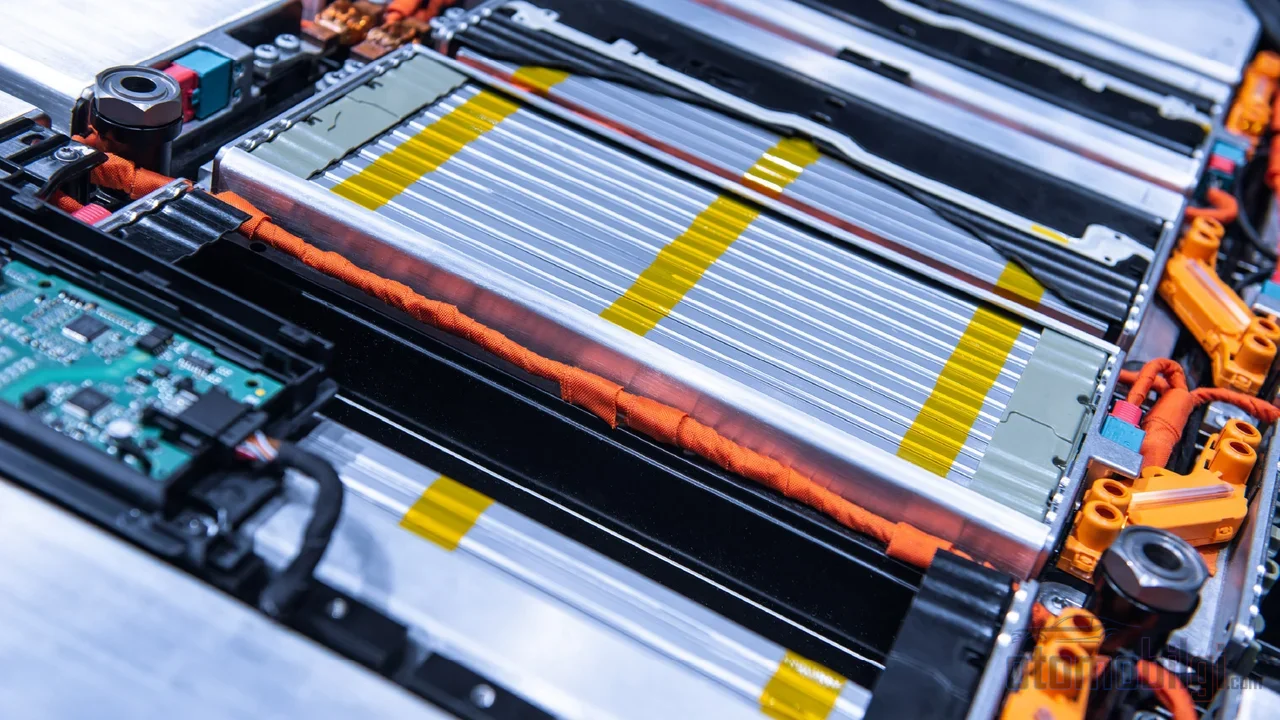
The answer to why the figures above are so moderate lies inside the vehicle: the battery management system (BMS). The BMS continuously monitors cell voltages, current, and temperature during charging and prevents the battery from leaving its safe operating window. The fact that charging typically slows down at 80% SoC is not a fault but, on the contrary, a protection mechanism: as the pack fills, cell voltages rise and high current in this region sharply increases the risk of plating. The BMS deliberately throttles the current.
The same logic applies in the cold. At low temperatures, electrolyte viscosity increases, ion movement slows, and the risk of plating rises; since the BMS knows this, it reduces power and charging time lengthens. Fast charging "working slowly" in winter is a sign that the system is working correctly, not that the battery is damaged.
Thermal management, on the other hand, is the second layer on the hardware side. Without an effective cooling system, the battery cannot be safely charged at high speed; when the temperature threshold is exceeded, both performance and lifespan drop. That is why modern electric vehicles are designed with fast charging in mind, and most of them feature integrated thermal management based on liquid cooling. There is one more layer: battery preconditioning. Before arriving at the fast-charging station, the vehicle brings the battery to its ideal temperature using information received from the navigation system. This can shorten charging time by up to 8.9% and, since the cells are not exposed to high current while cold, it can also reduce degradation by up to 6.2% It should not be forgotten: preconditioning does not increase range, it only affects charging speed and battery health.
Does Battery Chemistry Make a Difference? Comparing NMC and LFP
The same fast-charging habit does not produce exactly the same result in two different cell chemistries. Today, the two most common chemistries in electric vehicles, NMC (nickel-manganese-cobalt) and LFP (lithium iron phosphate), react differently to fast-charging stress. LFP tolerates repeated fast charging better; its cycle life is also typically about 2 times longer (around 3,000 cycles versus 1,500 for NMC). NMC's advantage is energy density: more range at the same weight.
| Feature | NMC | LFP |
|---|---|---|
| Typical cycle life | ~1,500 | ~3,000 |
| Degradation rate in hot climates (relative to rated value) | 40-50% faster | 20-30% faster |
| Tolerance to repeated fast charging | Lower | Higher |
The gap widens even further at high ambient temperatures: while NMC degrades 40-50% faster than its rated value, LFP stays around 20-30%. The practical takeaway is simple: a vehicle with an LFP pack is naturally more forgiving of fast-charging habits; in a vehicle with an NMC pack, heat management and charging discipline matter more.
How to Strike the Balance in Daily Use?
The practical conclusion that all the data points to is to view fast charging as a tool for the vehicle: it works perfectly on long journeys and when genuinely needed, but it should not be the default of your daily routine. Low-voltage AC charging keeps the cell in the mildest regime both thermally and chemically, and home charging makes this easy. Battery-protecting habits can be summarized as follows:
- Keeping the daily charging range between 20-80% as much as possible is the single most effective habit on its own.
- Using AC charging at home or work every day; saving DC fast charging for long journeys.
- Avoiding fast charging on extremely hot days, or charging in the shade.
- Not fast charging when the battery is very hot, very cold, or at very low/very high charge levels (for example, around 5% or 90%).
- Preconditioning the battery before charging in cold weather.
The common denominator of this list is heat. If there is damage, it is most likely heat-related; when the current itself is managed at the right temperature, it does not wear out the cell far beyond expectations. That is why charging at 250 kW in the summer midday heat is a different matter from charging at the same power at a cool station on a winter evening.
Conclusion: Myth or Risk?
The "fast charging ruins the battery" myth wraps an exaggerated shell around a real core. Controlled tests and field telemetry measure the effect of reasonably frequent fast charging on lifespan as a small but non-zero difference; the effect grows when high power, high ambient temperature, and a cold battery come together. In modern vehicles, the BMS, thermal management, and preconditioning keep this risk largely under control. The right strategy is not anxiety but distribution: give daily life to slow charging and the road to fast charging, and trust the system that keeps the battery in the 25-45°C comfort band, but do not push it.
Sources
- Does fast charging affect EV battery life? – Pod Point
- Is DC fast charging bad for your EV battery? – EVBox
- Scientists Reveal how EV Fast Charging Impacts Battery Health – Recurrent Auto
- Does DC Fast Charging Damage EV Batteries? – Power-Sonic
- EV Battery Health Study – Geotab
- What is EV Battery Preconditioning? – Kia UK
- Predictive Battery Preconditioning Strategy – SAE 2026-01-0126
- BMS for EVs – Monolithic Power
- LFP vs NMC Batteries – Electrifying
- LFP Vs NMC Battery Technical Comparison – BSLBATT
- Development of a fast-charging strategy considering lithium plating – ScienceDirect (Lee 2025)
- Research on fast-charging battery thermal management – PMC (Dai 2023)
- Fast Charging of Li-Ion Cells: Temperature Effects – IOP Science (Rodrigues 2020)
- How Batteries Work: Slow vs. Fast EV Charging – EVConnect
- Charging Habits That Protect Your Battery – GreenCars
- EV Battery Health: Essential Guide – KBB