Why Do EV Batteries Swell? Gassing and Its Solutions
Share This Page
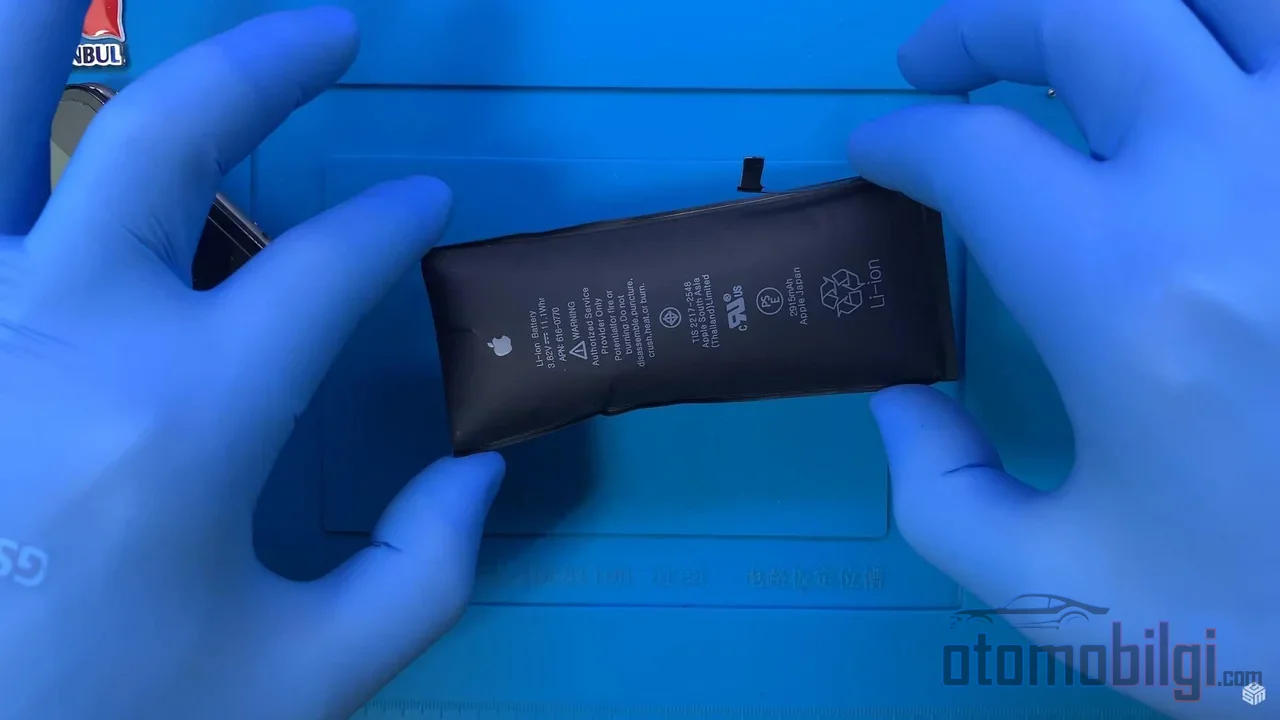
The most visible yet least talked-about symptom of an EV battery fault is the physical swelling of a cell. This process develops under the bodywork, in a pack beneath the seats, where no one can see it; until the battery enclosure's seal lifts slightly, the seat cushion flattens out, or a gas smell comes from under the hood. Swelling does not mean the battery has failed overnight - it is the visible result of a gas generation process running within the cell's internal chemistry over months or years. And the interesting part is this: swelling is inevitable under all conditions, but its speed is largely determined by how the battery is used.
In this article, we will examine which chemical processes cause battery swelling in a healthy cell, how the cell format manages swelling in different ways, and how manufacturers counter this event through pack design and the battery management system. At the end, we will return to the practical question: Can a swollen battery be used safely?
Why does a battery cell swell? The chemical mechanism of gassing
There are three fundamental mechanisms behind the swelling of a lithium-ion cell: structural changes in the electrodes, electrolyte decomposition, and the resulting gas that accumulates inside the cell. The most striking of these is gassing, because lithium-ion cells are hermetically sealed inside an almost full container - every gas molecule formed inside is forced to expand the container's volume.
The SEI layer: A film built for a functional cell that never stops working
When a cell is charged for the first time, the graphite surface of the negative electrode reacts with the electrolyte solvent, forming a protective layer a few tens of nanometers thick: the solid electrolyte interphase, or SEI. This layer is actually beneficial - it allows lithium ions to pass through but prevents the solvent from penetrating deeper and corroding the anode. It is essential for the cell to function. The downside is this: it never completely stops.
With every charge cycle, the SEI thickens a little more, and during this growth, solvent molecules are reduced, releasing gases that accumulate inside the cell. The SEI is also the dominant source of lithium ion loss; as it thickens, it increases charge transfer resistance, the cell's internal resistance rises, and capacity drops. In other words, swelling itself is a byproduct - the real problem is that the side reactions producing it also age the battery.
Experimental studies show that SEI growth largely depends on electrochemically triggered solvent reduction; this is a property that decouples the layer's thickening from temperature. In contrast, temperature continues to determine the rate of gassing - two separate processes, two different behaviors.
Which gases are produced and where do they come from?
When a swollen cell is opened and analyzed, the gas mixture inside is found to consist mainly of CO₂, CO and O₂. The source of these gases is the oxidation of the electrolyte at the positive electrode surface and the reduction of lithium at the negative electrode during charging. Cathode materials release these gases throughout the cycle; a small amount of hydrogen also comes from lithium reacting with moisture that has seeped into the cell. As long as gases accumulate inside the casing, the cell swells; when the cap is opened and the gas is vented, the electrolyte inside the cell is already depleted and the chemistry has changed irreversibly.
Overheating changes the picture: this time not only the redox reactions on the electrode surface but also the electrolyte solvents themselves begin to decompose chemically. Gas production multiplies. During overcharging, cathode-driven gas production rapidly raises the internal pressure - in the worst-case scenario, it can trigger cascading thermal events.
Highlights
- The main source of swelling is gas produced by SEI layer growth and electrolyte decomposition; its main components are CO₂, CO and O₂.
- Hot storage at high states of charge directly accelerates the degradation rate.
- Across data from more than 22,000 EVs, the average annual battery degradation was found to be 2.3%; the biggest risk factor was high-power DC fast charging.
- A prismatic cell 5 mm thick can expand to 8 mm over its service life; this allowance is calculated in advance in pack design.
- A swollen battery should not be used - even if the gas has been vented, the cell's internal chemistry has been permanently degraded.
How the cell format manages swelling: Pouch, prismatic and cylindrical
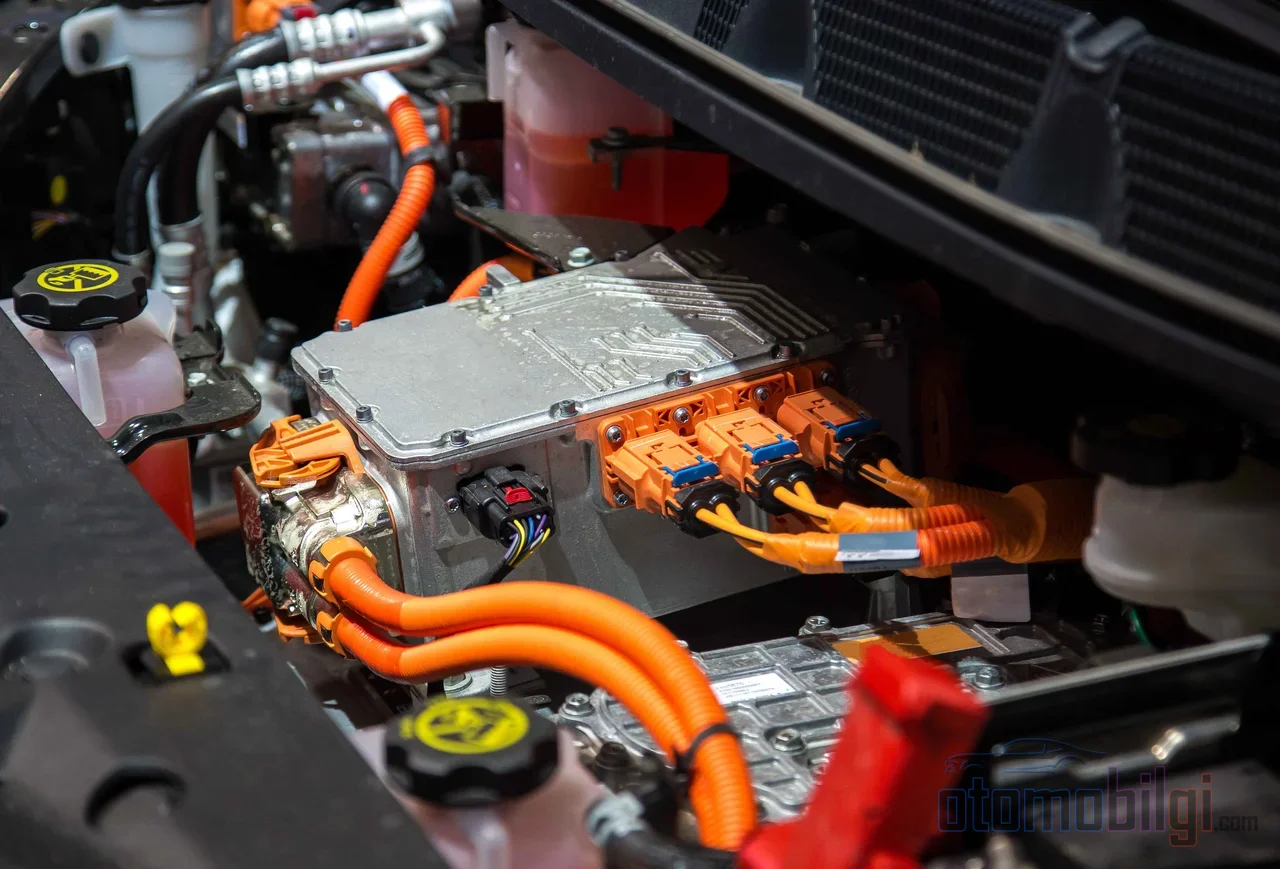
Gas production occurs in every lithium-ion cell; but how swelling manifests outside the cell depends on the casing design. Three main formats solve this in three different ways.
| Format | Swelling behavior | Strength | Weakness |
|---|---|---|---|
| Cylindrical | The loosely wound structure absorbs gas in the internal volume, external dimensions barely change | Dimensional stability, manufacturing repeatability | Fixed volume, inefficient packaging |
| Prismatic | Flat surfaces are the most susceptible to swelling; a large vent valve is required | Rugged metal casing, good mechanical safety | Difficult thermal management, need for volume allowance |
| Pouch | The flexible laminate reflects swelling directly outward | Lightweight, good heat dissipation | The format where swelling is most visible |
A cylindrical cell consists of a structure wound along its mass, and this loose winding swallows gas accumulation and electrode expansion in the internal volume; the cell's external dimensions remain practically constant. In a prismatic cell, however, flat, large surfaces transmit gas pressure directly outward - which is why a large vent valve capable of releasing serious pressure increases without rupturing is mandatory. Since pouch cells use flexible aluminum-plastic laminate packaging, they have no rigid casing, and swelling directly changes the shape of the packaging. In return, pouch cells are significantly lighter than their steel-cased counterparts and dissipate heat better.
The practical consequences are also tangible: a standard 5 mm prismatic cell can expand to 8 mm over its service life. The battery pack designer must know this difference from day one; The spacing placed between the cells is determined through simulation and test data in order to manage swelling forces and limit long-term capacity loss.
Three things accelerate degradation: heat, full charge, and fast charging
Every lithium-ion cell ages; the question is which conditions accelerate that aging. The four main drivers of degradation are heat, deep discharge, fast charging, and calendar aging - that is, time. Since most side reactions are heat-accelerated reactions, high ambient temperatures promote the formation of unwanted byproducts, damage the electrode material, and increase gas production. In an overheated cell, the SEI layer can collapse or form bridges; in that case, the electrolyte comes into direct contact with the electrode and degradation essentially leaps forward.
The second critical variable is the state of charge during storage. In a battery kept in the heat, the higher the charge level, the faster degradation progresses - for an EV parked at full charge under the summer sun, this is the most unfavorable combination. This is why manufacturers recommend a state of charge of around 50-60% for long-term storage; SEI growth and gas production accelerate when the anode remains saturated with lithium for extended periods.
The third driver is the charging method. High-rate pulse charging increases gas production by accelerating electrolyte decomposition, lithium plating, and other side reactions. Large-scale field data supports this: When battery data from more than 22,000 electric vehicles was analyzed, the average annual degradation was calculated at 2.3%, with high-power DC fast charging standing out as the most prominent risk factor. This doesn't mean fast charging is forbidden - back-to-back DC sessions at the peak of heat measurably provoke swelling and capacity loss compared to slow charging.
What does swelling mean: a performance loss, or a safety risk?
Swelling is a bridge that links performance degradation with safety risk. Three things happen simultaneously in a swollen cell: structural integrity is compromised, power and range drop as internal resistance rises, and the casing accumulating gas becomes mechanically stressed. Under excessive pressure, a cell can rapidly generate heat and release large amounts of flammable gas; in the worst-case scenario, this turns into a fire.
So is every swollen battery dangerous? The honest answer to this question is not binary. The safety of swollen batteries cannot be categorically labeled as dangerous or safe; it is evaluated on a case-by-case basis. However, the picture on the practical side is clear: a swollen battery should not be used. Thinking that the cell can be reused after the gas is released is a common misconception - the presence of gas is proof that the chemical processes that produced it have advanced, and this process is irreversible. The electrolyte is depleted, the SEI is degraded, the capacity is gone; the remaining cell is one on the brink of its first internal failure.
The issue of scale also matters: swelling in a single smartphone cell and swelling in an EV pack represent different magnitudes of risk, even when based on the same chemistry. An EV pack contains thousands of cells among cooling plates spanning hundreds of liters, steel frames and fire barriers; a cell venting gas in a controlled manner rarely creates an incident, but the spread of whatever triggered it across the entire system is an undesirable scenario.
Pack design and BMS measures against swelling
Manufacturers' strategy against swelling operates on two layers: the physical design of the pack and electronic management.
On the physical side, the work begins before the cell is even sealed - electrolyte additives are formulated to suppress gas-producing side reactions. At the pack level, calculated gaps are left between the cells, the compression force is adjusted through simulation, and venting paths are defined for prismatic/pouch cells. The design of inter-cell gaps is not a cosmetic detail; in a wrongly sized module, swelling force applies pressure to neighboring cells and accelerates capacity loss.
On the electronic side, the limits of the job must be clearly drawn: The BMS cannot entirely prevent swelling - it reduces the risks, it does not eliminate them. A well-tuned BMS cuts the biggest triggers of gas generation caused by overcharging and deep discharge by monitoring cell voltages and temperatures; when it detects a signal of swelling risk, it can stop charging to protect the cells. But conventional BMSs have an important blind spot: they do not directly detect the pressure inside a cell or the physical effects of swelling. Nor is this blind spot merely a detection deficiency - since the voltage behavior of a swollen cell changes, the BMS's state-of-charge estimates can also become erroneous.
New-generation solutions are being developed to close this gap: detection algorithms that visually identify cell swelling and pressure monitoring at module level are examples of these. Battery swelling, which at first looks like a quality problem, is gradually becoming a measurable quantity integrated into the pack's own internal sensor infrastructure.
What can the driver do to slow down swelling?
The mechanism of swelling is inside the cell, but its accelerators are mostly under the user's control. On the driver's side, simple measures deliver measurable benefits:
- If the car will be parked for a long time, leave the battery at around 50-60%; a cell left waiting at full charge degrades much faster, especially in the heat.
- Park the vehicle in the shade or in an enclosed space whenever possible; high ambient temperature is the main accelerator of gas-producing side reactions.
- In daily use, prefer AC charging and save DC fast charging for moments of real need - field data points to heavy DC usage as the single biggest risk factor in degradation.
- Avoid deep discharge; regularly taking the cell below 20% fuels gas generation through lithium plating and SEI degradation.
- Don't add rapid charging sessions back-to-back on a cell that's already exhausted at the peak of summer heat; give the cooling system time to help the battery recover.
Returning to the last question: Why does an EV battery swell? Because lithium-ion chemistry thickens the SEI layer it builds to protect itself a little more with each cycle, producing gas as a byproduct, and this gas has no choice but to expand the volume of the hermetically sealed cell. Swelling is the physical signature of the bill written by chemistry - it is inevitable, but determining its speed is the joint task of the user and the manufacturer. The manufacturer installs the bill in installments through pack design, ventilation, and the BMS; the driver reduces the total amount through temperature and charging habits. And if a cell has swelled noticeably even once, the only correct decision is to stop using it and submit it for professional evaluation.
Sources
- Swelling Mechanisms, Diagnostic Applications, and Prevention in Lithium-Ion Batteries (Maddipatla, 2025, MDPI Batteries)
- Insight into the Gassing Problem of Li-ion Battery (S.S. Zhang, Frontiers in Energy Research)
- Gas Generation in Lithium-Ion Batteries: Mechanisms (T. Gong, 2025, MDPI Batteries)
- Gas Evolution In NCM Li-Ion Cells: Cathode & Additive Effect (IEST Battery)
- Formation Temperature Effects On SEI Film & Cell Expansion (IEST Battery)
- How Gas Generates in Pouch Cells and Affects Consumer Safety (R. Aalund, Frontiers in Chemical Engineering)
- Revisiting Battery Swelling and the Role of Swelling in Degradation (ASME)
- BU-301a: Types of Battery Cells (Battery University)
- Pouch vs. Prismatic vs. Cylindrical Lithium Battery Cells (Battle Born Batteries)
- Prismatic, Pouch, and Cylindrical Cells Explained (Molicel)
- EV Battery Health: Key Findings from 22,700 Vehicle Data (Geotab)
- The Science Behind EV Battery Degradation (Midtronics)
- The impact of high ambient temperatures on lithium-ion batteries (S. Harasis, ScienceDirect)
- Gas Evolution and Swelling Mechanisms in Lithium-Ion Power Batteries (J. Weng, IOP Science)
- Battery Swelling - Testing Systems for EV Batteries (ZwickRoell)
- On safety of swelled commercial lithium-ion batteries (Y. Li, 2024, ScienceDirect)
- The Analysis of Swelling Lithium-Ion Battery with a Residual Gas Analyzer (EAG Labs)
- How Battery Procurement Buyers Can Avoid Lithium Battery Swelling (Bak-Tech)
- Balancing Gaps And Swelling Force In Battery Module Design (IEST Battery)
- Design of a visual detection algorithm for battery swelling (Y. Zhang, 2026, ScienceDirect)
- A Complete Guide On Lithium Battery Swelling (EcoFlow)