Tesla Officially Applied for ADAS Approval in Turkiye
The new rules announced on November 18, 2026 for Tesla's driver assistance system have become the most concrete step yet in the regulatory tension that has been ongoing in Europe for some time. The approval changes published by the Netherlands Vehicle Authority RDW for HW4-equipped vehicles, together with the software now known as Tesla Assisted Driving, or TAD for short, are ushering in a new era of discipline. So what do these rules actually mean for Tesla owners in Turkiye? The short answer is uncomfortably clear: the system does not officially exist in Turkiye at all, and the new rules also make things harder for those who activate it through illegal means.
On this page, we will address the subject by separating its three layers: the technical scope of the new rules, the current situation in Turkiye, and the practical consequences alongside the subscription model. Because for a Tesla owner in Turkiye to be affected by this development, the system must first actually be usable, and that is exactly where things get complicated.
What Is TAD, and How Is It Different from FSD?
Tesla Assisted Driving (TAD) is the new name in Europe and the United Kingdom for the system known in North America as Full Self-Driving (Supervised). The change is not merely a marketing choice; European regulators had made it clear that they found the FSD name misleading. With the 2026.39.100 software release, the name change came into effect in vehicle menus and user manuals.
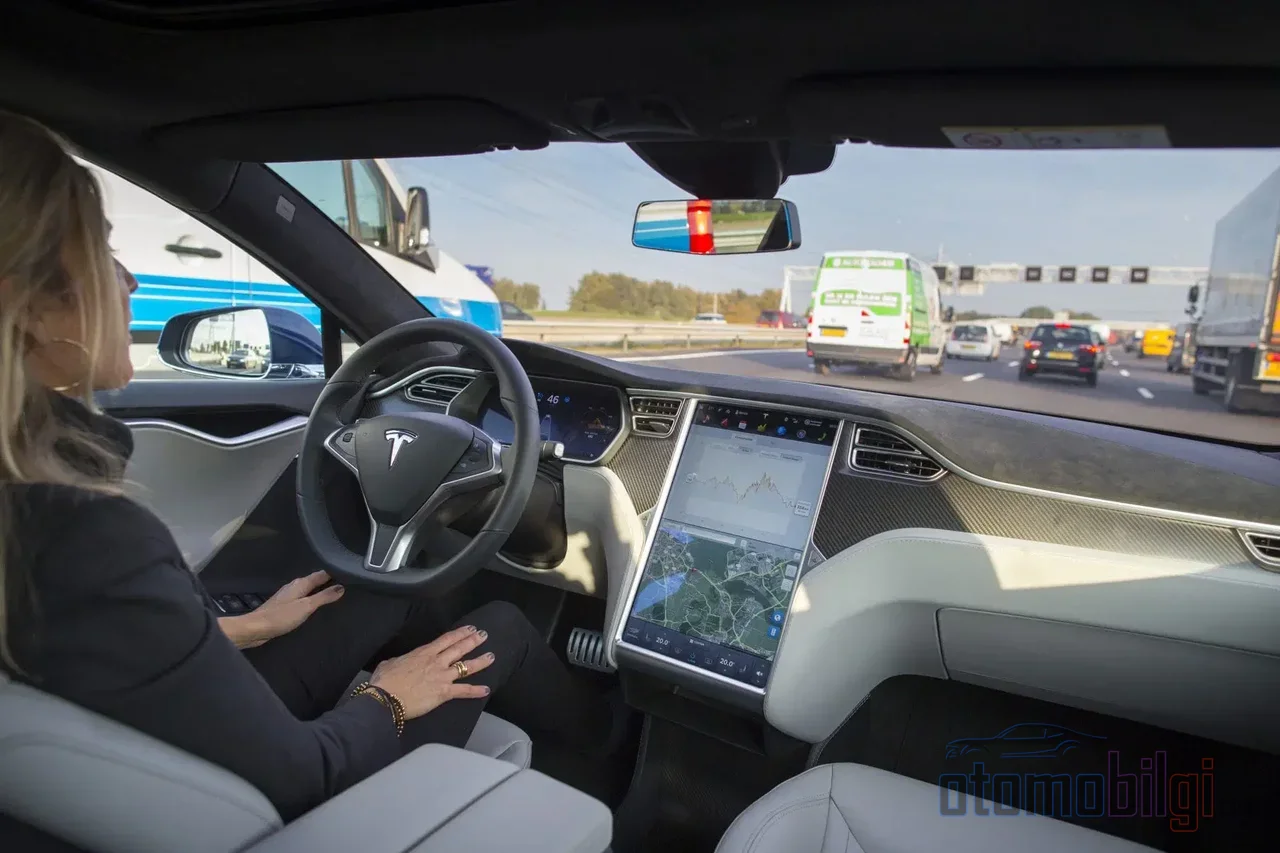
The name change does not alter the nature of the system. TAD is still a Level 2 driver assistance system: the vehicle can steer itself, accelerate, and brake, but the responsibility lies with the driver from start to finish. At every moment the system is active, hands must be on the wheel and eyes on the road. The approach of the Finnish Transport and Communications Agency Traficom to the matter is also within this framework: authorities are of the view that the system must be clearly distinguished from full autonomous driving.
What Do the New Rules Bring?
Highlights
- The new rules for TAD were announced on November 18, 2026; the RDW approval changes were published on November 3.
- The speeding tolerance was lowered from 50% to 10%.
- Above 130 km/h, the driver is required to keep their hands on the wheel.
- TAD is not yet official in Turkiye; the FSD subscription is 4,990 TL per month.
The approval changes prepared by RDW for HW4-equipped vehicles introduce stricter safety rules alongside the software update. There are three prominent headings: the requirement for the driver to keep their hands on the wheel at speeds above 130 km/h, the much earlier detection of driver attention compared to before, and speed control measures together with new warning mechanisms.
On the other hand, the most concrete change visible on Tesla's side so far is the sharp cut in the speed tolerance. The margin the system allows for exceeding the speed limit was reduced from 50% to 10%. This means that driving at 150 km/h in a 100 km/h zone will no longer be accepted by the system. This Tesla setting is seen as part of the company's effort to get its autonomous driving software approved across Europe and Turkiye.
Background of the Rules: Violations in Testing
Behind the tightening rules are the results of tests conducted in Europe. The tests documented that the system violated traffic rules; it was found that in 55% of zones with a 30 km/h speed limit, the system traveled at an average speed of 44 km/h. A driver support system systematically exceeding speed limits is the most direct justification for regulators to trim the speed tolerance. In other words, the rules are filling the gap they exposed; and not without a reaction.
Where Can the System Be Used in Europe?
Tesla is gradually expanding the system's legal footing in Europe. On November 11, 2026, Finland granted temporary permission for the TAD system, bringing the number of countries to eleven. In April 2026, following the Netherlands, Estonia, Belgium, Lithuania and Denmark had taken similar steps.
The key structural issue here is this: At the European Union level, rules for fully autonomous and driverless vehicles have not yet been settled by a common decision. This gap pushes manufacturers into regional and national approval processes, which means a separate approval battle in each country. Finland's temporary permit is read as a breakthrough in Tesla's favor ahead of the upcoming EU-wide vote; but as long as this fragmented structure persists, a geographic patchwork quilt will continue.
What Awaits Tesla Users in Turkiye?
The Turkiye side is built on three realities, and these must not be confused with one another.
First: TAD is not officially offered in Turkiye. Tesla's official Model Y configuration page clearly states that the system is not yet available in Turkiye, that it may be offered in the future, and that this depends on the development process and regulatory approval. The company's Turkiye pages also carry the warning that the system can only be activated in markets where legal approval has been obtained; even if the vehicle is sold in Turkiye, explicit approval from local authorities is required.
Second: Tesla has made its official application to the regulatory authorities in Turkiye for FSD, and Turkiye is listed among the countries awaiting approval. After EU approval, it technically appears possible for Turkiye to gain access to the system without the need for an additional evaluation; however, it is noted that this does not apply automatically and the local process will be evaluated on its own.
Third, and the most critical point: Tesla has dealt harshly with vehicles that activated FSD, which is not officially offered in Turkiye, through illegal methods. The company intervened remotely in these vehicles; some driver support functions were disabled on safety grounds, and a software update was promised. This intervention, carried out without notice, demonstrated before the eyes of users in Turkiye too that control over the vehicle's software layer remains with the manufacturer. With the new strict rules, such interventions are expected to become even more commonplace; the tightening of speed tolerance and driver monitoring is also making unauthorized use easier to detect.
Subscription Model and Prices
Another concrete reality of how business runs in the Turkish market is the change in the sales model. On May 21, 2026, Tesla removed the one-time purchase option for FSD and Enhanced Autopilot packages in Turkiye and moved the features to a monthly subscription model. Under the new arrangement, the FSD subscription is 4,990 TL per month; while Enhanced Autopilot owners are charged 2,495 TL per month.
One of the most striking aspects of this story is that the pricing has arrived in Turkiye even though the system itself has not. Tesla prefers to stand before the market with a subscription infrastructure ready for use once the approval process becomes clear. The TAD Basic subscription covers features such as lane changes, navigating complex environments and parking lots, and locating the vehicle in a nearby parking garage.
Market Context: Is Tesla Strengthening Its Hand in Turkiye?
Despite the uncertainty on the software side, Tesla's commercial arm in Turkiye continues to grow. The company launched an additional warranty program for used vehicles and rolled out a trade-in program; the trade-in process works through a valuation request for the existing vehicle when a new Tesla order is placed. These steps show that Tesla is trying to weave the Turkish market not just as an importer, but as an established player.
There used to be an industry chasing a dream marketed as FSD; now there is a manufacturer trying to get approval for a Level 2 assistance system whose very name has changed, within the framework drawn by regulators. This transformation also clarifies the roadmap for Turkiye: the system's arrival will not be a launch moment, but the result of a national approval process, and the conditions of that process are being written in Europe today.
Conclusion: What Do the TAD Rules Change for Turkiye?
The direct answer to the question is this: the new rules do not change the system's conditions of use in Turkiye for now, because TAD is not officially active in Turkiye; however, they significantly change the shape of the approval process and the risk of illegal use. The RDW-originated changes for HW4-equipped vehicles and tightened driver monitoring concern a large portion of the Tesla fleet in Turkiye at the hardware level; when approval arrives, the system's form in Turkiye will be shaped from the start by these strict rules. The official application has been made, the subscription infrastructure is ready, and the price is known. The only missing piece is local legal approval, and when that approval will come cannot be estimated today.
Until then, the healthiest position for Tesla owners in Turkiye is to follow the news from countries where the system is actually activated and to stay away from unauthorized activation routes. Because Tesla's remote intervention capability is no longer a theory, but a practice that has already been experienced in Turkiye.
Sources
- New rules arrived for Tesla TAD (FSD): they also concern Türkiye
- Finland Grants Temporary Approval for Tesla's Assisted Driving System
- Tesla Assisted Driving | Tesla Türkiye
- Tesla Assisted Driving Basic Subscriptions | Tesla Support Türkiye
- Tesla, A New Era in Autonomous Driving in Türkiye: One-Time Sales Are Ending
- Tesla Remotely Intervened in Vehicles Using Illegal FSD in Türkiye
- Tesla Made an Official Application for FSD in Türkiye
- Tesla's Autonomous Driving Software Violated Traffic Rules in European Tests