The Jump Start Rule and Starting Lights in MotoGP
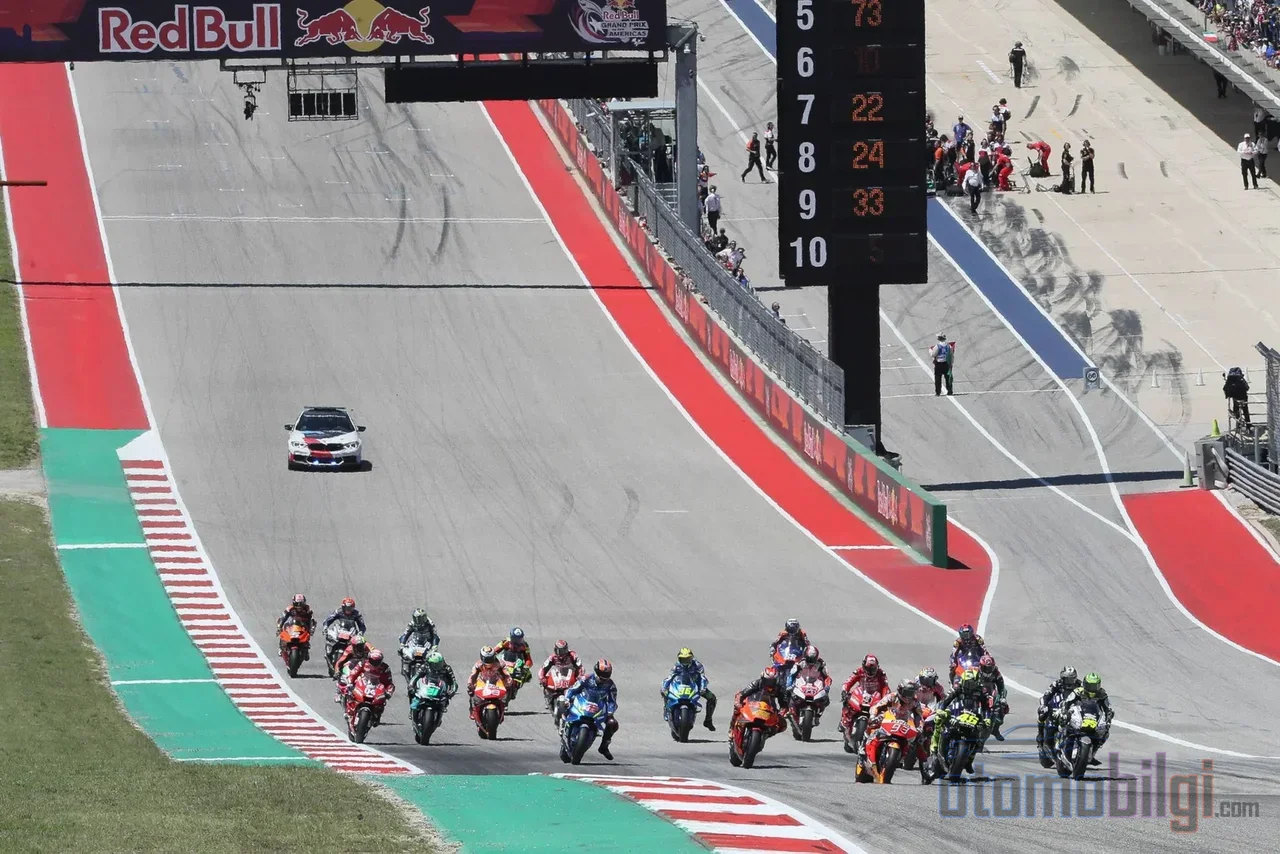
Just imagine: 22 prototype motorcycles lined up on the start-finish straight, engines rumbling, everyone holding their breath. The red lights come on... and what happens if a rider inches half a centimeter forward before those lights go out? Yes, even just half a centimeter can put the race in jeopardy before it has even begun. The MotoGP jump start rule and the system behind the starting lights is a rule-and-technology story that most broadcasts skip over but that actually governs the most tense seconds of the weekend. If you're ready, let's take a close look at what happens during those final 15 minutes on the grid.
What Exactly Is a Jump Start, and How Many Millimeters Are Too Many?
The rule could be this simple, however: According to MotoGP's official definition, a jump start is when a rider moves forward from their starting position on the grid before the official start is given. And yes, there is no measurement involved - even a few millimeters counts as a jump start. So even if you let the motorcycle's weight shift slightly between your feet, in theory, that could put the rider in the penalty zone. The reason the rule is so strict is simple: the start moment is one of the most critical and riskiest moments of the race, and the same standard has to be applied to everyone here.
So who decides, chasing down millimeters? This is where Race Direction and the FIM MotoGP Stewards Panel come in. In the 2026 season, alongside Neil McKenzie on the panel, Andrés Somolinos and Tamara Matko serve together with former racer Simon Crafar; Race Direction is led by Paul Gorst and Webb, and they are on site for all 22 Grands Prix of the season. While Race Direction is concerned with the safe conduct of the race, it is the Stewards Panel that enforces the rule and hands out penalties. So when a jump start suspicion arises, the file goes to the Stewards' table.
Key Highlights
- Jump start definition: moving forward on the grid by even a few millimeters before the start is given
- The standard penalty today: two Long Lap Penalties (since 2020)
- The old penalty: Before 2020, a ride-through penalty through the pit lane was applied
- A long lap normally costs 2-4 seconds and loses you several positions
- Motorcycles carry more than 60 main sensors and a standard Magneti Marelli ECU (since 2016)
From Lights to Launch: What Happens on the Grid?
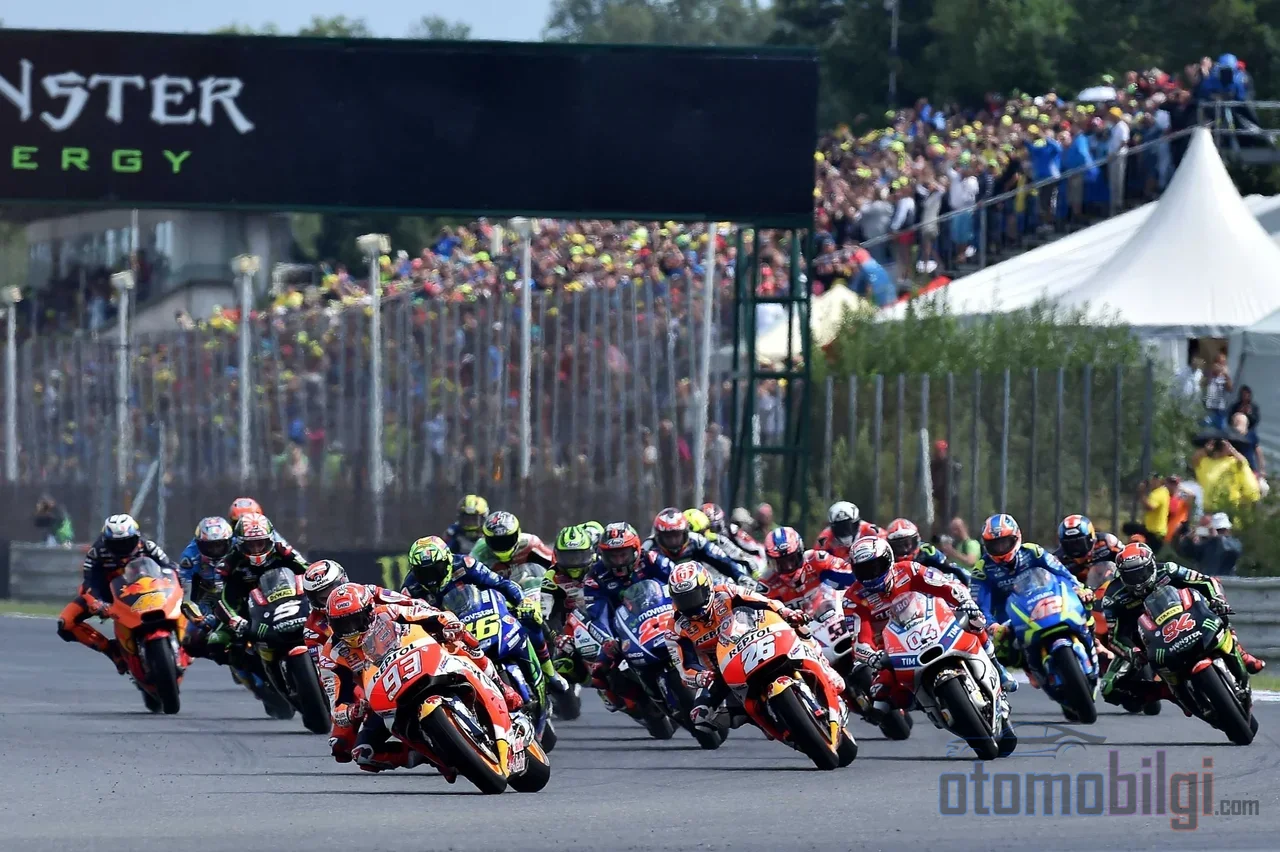
The starting lights are the sequence of red lights that signals the moment the race begins, and the moment riders love and fear most is when those lights go out. The red lights go out, the motorcycles launch - but there is a long procedure to get there. First the riders leave the pit exit on the green light for what is called the sighting lap, then comes the warm-up lap, and everyone takes their place on the grid. Before the race, riders spend about 15 minutes on the grid; tire warmers are collected, final adjustments are made, and nerves gradually tighten.
The grid structure is the same at every circuit: three riders per row, lined up on the start-finish straight from pole position up to 22nd place. are lined up on the start-finish straight, arranged up to that position. The 15-minute wait is never idle - the team's final checks, the rider's concentration, and strategy talks all happen within this window. Then the countdown boards come down one by one and all eyes lock onto the start lights.
The New Delayed Start Procedure of 2026
What happens if a race start is delayed? This is where the 2026 season brings an important change. With the new race direction structure, in the event of a delayed start, the countdown to the warm-up lap now restarts from the 5-minute board instead of 3 minutes. This change, adopted at the Spanish GP at Jerez, gives the team and the rider more breathing room in moments of chaos. Additionally, the FIM's 2026 regulations define a Quick Start procedure that Race Direction can apply in situations it deems necessary, except for interrupted races.
How Is the Motorcycle Launch So Controlled?
Now let's move on to the technology side, because simply calling it a jump start would mean ignoring the systems working beneath the motorcycle until those lights go out. When a MotoGP motorcycle tries to launch with 250+ horsepower, the rear tire tends to spin and the front wheel tends to lift off the ground. This is exactly where Launch Control comes into play: a fully electronic system that automatically adjusts ignition, torque, and traction, helping the rider manage extremely explosive power.
Let me explain with an analogy from everyday life: Launch Control is like that meticulous friend beneath the motorcycle. You open the throttle all the way, and that friend thinks for you - making decisions thousands of times per second so the wheels don't spin, the front doesn't lift, and power is always transferred to the ground. Sensors on the throttle, clutch, and wheels feed data to the ECU; and the ECU continuously optimizes power distribution.
At the heart of the system is a brain that everyone uses the same version of: Since 2016, all teams have been using a standardized Magneti Marelli ECU. This brain; analyzes throttle position, RPM, gear, front and rear wheel speeds, lean angle, temperature, and traction data thousands of times per second. A motorcycle has more than 60 main sensors; clutch, lever, and throttle position sensors assist both launch and traction control. Electronics entered MotoGP in the early 2000s, and from 2002 onward manufacturers put weight into this area - meaning the millimeter-perfect start discipline we watch today is the product of a twenty-year evolution.
The Difference Between Launch Control and the Holeshot Device
There are two concepts that are confused, so let's separate them right away: Launch Control is entirely electronic; while holeshot and ride-height devices are mechanical, operated manually by the rider, and change the motorcycle's geometry at the moment of launch. Why is this important? Because with the 2027 rules, as engine capacity drops from 1000cc to 850cc, 100% sustainable fuel arrives, and aerodynamics are restricted, all ride-height and holeshot devices are being banned. Launch Control stays in place because it is electronic - meaning in 2027 mechanical aids will go but electronic control will remain. The center of gravity of start technology is shifting ever more toward software.
How Is a Jump Start Detected?
So did the rider's motorcycle actually move at that critical moment or not - who decides, and how? Race Direction closely monitors whether the rider jumped the start, and there are official rule videos explaining this process. The requirement to stay stationary on the grid until the lights go out is clear: according to the rule text, every rider who jumps the start is penalized by the FIM MotoGP Stewards. Periodic debates about a GPS revolution and transponder-based timing systems come up as parts of this oversight infrastructure; however, the full technical details of the sensors and GPS systems used in jump start detection are not detailed in publicly available materials. So let's be honest: what the system monitors is certain, but exactly how which data is processed remains behind the scenes for now.
Penalties: From Ride-Through to Two Long Laps
The price of a jump start has never been small. For many years the standard penalty was a ride-through through the pit lane, but from 2020 onwards the standard penalty became two Long Lap Penalties. This change came after three consecutive high-profile jump start incidents - meaning even the penalty system evolved in response to events.
What is a Long Lap penalty, and what does it cost? The rider has to go through the added extension of the track; this lap normally means a loss of 2-4 seconds and usually costs one or several positions. Now imagine two long laps: losing 5-8 seconds and several places at the start of the race despite having made a good launch. The few meters you gain with a jump start are billed back to you as seconds and positions.
| Period | Standard Jump Start Penalty |
|---|---|
| Old team regulations (dated) | Statement of a 15-second time penalty at the end of the race |
| Until 2020 | Passage through the pit lane (ride-through) |
| From 2020 onwards | Two Long Lap Penalties |
Case Studies: Martín in Indonesia and Crutchlow
The theory is fine, but real events make the rule visible. Do you remember that controversy surrounding Jorge Martín at the Indonesian GP? A video that went viral on social media created the impression that Martín moved on the grid before the lights went out, and fans hurled jump start accusations. But the assessment was clear: Martín did not receive a penalty because he stayed stationary until the red light went out. This incident also shows us how the system works - an impression is not enough, the result of the official review is what decides.
In the past, Cal Crutchlow's jump start penalty also made headlines, and rival riders even defended the penalty. In other words, the voice from inside the garage was also along the lines of "the penalty is harsh, but a rule is a rule". Indeed, fan forums still circulate the debate "how much time can you really gain with a movement of a few millimeters for the penalty to be this harsh?" The essence of the criticism is this: most jump start cases do not actually give the rider an advantage, but the rule makes no concession even at a millimeter. Is that strict? Yes. But equality at the moment of the start is preserved precisely through this strictness.
In summary: What Is the Jump Start Rule and Its Penalty?
Here's a short and clear answer, in a version you can quote: In MotoGP, a jump start is moving forward on the grid before the start lights go out, and it is a rule violation even by just a few millimeters; since 2020, the standard penalty is two Long Lap Penalties, meaning the rider rides through the extended section of the track twice, typically losing 5-8 seconds and several positions. Detection is monitored by Race Direction and decided by the FIM MotoGP Stewards Panel.
The next time the lights come on before a race, you'll know: in those few silent seconds, it's not only the riders who feel the tension - the sensors, ECUs, Race Direction, and the Stewards Panel experience it too. That may be the one moment where millimeters decide fate - and that's exactly why MotoGP starts are never ordinary.