MotoGP Pit Lane Rules and Speed Limit
Just think about it: A prototype motorcycle that turns into a red missile at 360 km/h takes the corner, and then suddenly you see the same rider, the same weekend, having to crawl at 60 km/h through a corridor. Yes, you read that right: sixty. The speed at which we get annoyed even behind a bus in the city. So why is this road, called the pit lane in MotoGP, taken so seriously, what happens to a rider who exceeds the speed limit, and why is every circuit's pit lane different? Buckle up (or put your helmet on), because the MotoGP pit lane rules are a world calmer than you think, and just as ruthless.
What Is the Pit Lane and Why Is It So Important in MotoGP?
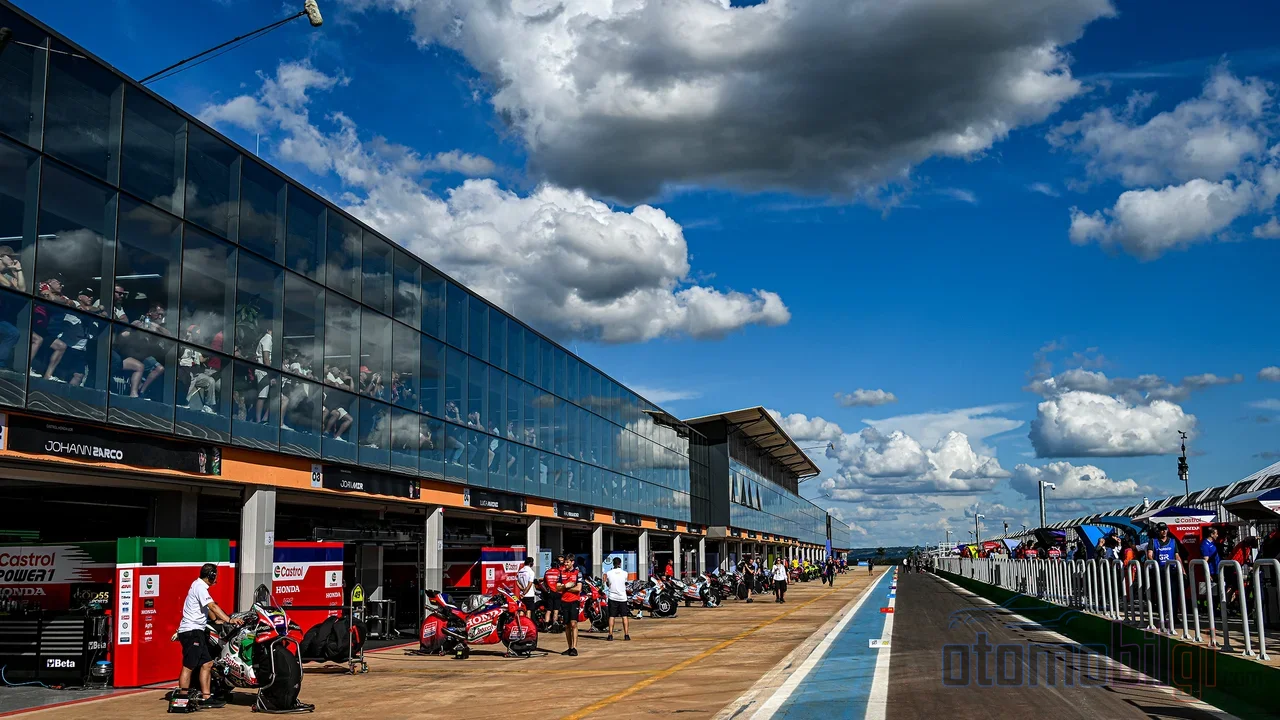
The pit lane is that narrow strip running in front of the garages; the place where pre-race warm-up laps begin, where a bike swap happens when it rains, and where the fate of a race is sometimes decided. For Formula 1 viewers, a pit stop means a tire change, strategy, and stops measured in seconds. In MotoGP, however, the picture is a bit different: in a dry race, pit stops are virtually nonexistent, because the race distance is designed to be completed on a single set of tires anyway. So the pit lane isn't there for routine service, but largely for safety, preparation, and exceptional circumstances.
That's why the rules are built on this very logic. In the pit lane, everyone - riders, mechanics, officials - moves in the same narrow space. In a place where people walk side by side with machines that can exceed 300 km/h, the speed limit is not a triviality but a vital line. Just as we shouldn't run in a school corridor... but here the price of running is not a warning, but the loss of positions in the race.
Highlights
- The MotoGP pit lane speed limit is 60 km/h throughout the event.
- The standard penalty for exceeding the speed limit during a race is the 2x Long Lap Penalty.
- A Long Lap Penalty causes an average loss of ~3 seconds.
- Under flag-to-flag conditions, MotoGP riders can change their bikes an unlimited number of times.
- In June 2026, the pit lane entry/exit protocol was officially added to the regulations.
What Is the Pit Lane Speed Limit and Where Does It Start?
The number is clear: According to the FIM Grand Prix Regulations, a 60 km/h speed limit always applies in the pit lane throughout the event. So whether it's practice, qualifying, or the race - no matter which session it is, you cannot exceed 60 in that corridor. The limit starts at the 60 km/h sign placed at the pit lane entrance and lasts until the crossed-out 60 km/h sign. The rider must keep their speed between these two signs.
Think of it with an analogy from everyday life: the pit lane is the "school zone" inside the race track. On the main road you can go as you like, but the moment you see that sign, your foot comes off the throttle. 60 km/h is a value far below the motorcycle's top speed of 300 km/h - meaning for the rider, it feels almost like standing still. And this is exactly why it requires discipline: easing off the throttle is easy, but keeping yourself at 60 while your head is still at 300 is hard.
What Happens to Those Who Exceed the Speed Limit? The Anatomy of the Penalty System
Long Lap Penalty: The 3-Second Price of the Standard Penalty
The standard penalty for exceeding the pit lane speed limit during a race is the 2x Long Lap Penalty, meaning two long lap penalties. The Long Lap requires taking a pre-determined long route around the track and creates an average loss of ~3 seconds; it usually results in losing 1-2 positions. With two long laps in mind, exceeding the speed limit even once can end the fight for the podium.
But it doesn't end there: the race direction (MotoGP Stewards) can impose a different or additional penalty depending on the nature of the violation. For example, if the speed in the pit lane is excessive enough to create danger, the penalty can be increased. The Stewards' toolkit is broad: a warning, a fine, a position penalty, a time penalty, and a grid penalty; for serious violations, it goes as far as disqualification, deduction of championship points, and exclusion. So the 60 km/s limit is not as simple an equation as "if you get caught, you ride two long laps"; it is a tiered system where the penalty increases as the severity increases.
There Used to Be a Fine: A Brief Look at the Different System of 2017
An interesting detail: In 2017, things worked differently. Back then, a first speeding violation resulted in a fine of about 200 €, the amount increased for repeated violations, and repeated offenses could turn into a race discipline penalty. Today's 2x Long Lap practice replaced this old fine system. The logic of the change is simple: a fine didn't change the outcome, while a penalty paid directly during the race is fairer and more deterrent for everyone.
The Long Lap is not specific to pit lane speed either: jump starting the race is also penalized with 2 Long Laps; exceeding track limits means a long lap during the race and a canceled lap time during practice and qualifying. The penalty system as a whole is built on the philosophy of "pay within the race."
Ride-Through: The Penalty for Serious Offenders
Above the system sits the ride-through penalty: the rider must pass through the pit lane at a limited speed. It's a much bigger time loss than the long lap because riding the entire length of the pit lane at 60 km/s is like watching a film in slow motion for a MotoGP motorcycle that sweeps the track at lightning speed. This penalty, applied for serious violations, is a good example of where pit lane speed limits sit in the discipline hierarchy: the heavier the violation, the slower and more painful the passage.
When It Rains, Everything Changes: Flag-to-Flag and Bike Swap
The moment the pit lane truly takes the stage is the moment the weather turns bad. According to the flag-to-flag rule adopted in 2005, if a race starts wet or rain begins during the race and the white flag is shown, MotoGP riders can switch to their second motorcycle. This is not a luxury but a chain of necessities: continuing to ride a motorcycle fitted with slick tires for dry conditions on a wet track is a serious safety problem.
The rule applies only in MotoGP, and the reason is practical: only in this class do riders have two motorcycles. There is no limit on the number of swaps - if conditions require it, the rider can go back and forth as many times as they like; there is also no restriction on tire type. A rider entering the pit lane for a bike swap must, as you would expect, comply with the speed limit; and the penalty, if they don't, is a familiar one: a double long lap.
The swap itself is also subject to strict rules. According to the 2017 regulations, only 4 mechanics may be present in the pit lane during a bike swap, and they must wear helmets. Gear selection is made only by the rider; the mechanics may hold the clutch. So there is no "the team does everything while the rider watches" scenario - the rider is, quite literally, the driver of their own fate.
History is full of the drama of this rule. The first flag-to-flag race was run at Phillip Island in 2006, and Marco Melandri won it. At Phillip Island in 2013, after the mandatory bike swap decision imposed by tire supplier Bridgestone, Marc Marquez was disqualified for swapping too late. At the 2021 Austrian GP, Brad Binder risked staying on slicks on a wet track and won - never entering the pit lane is sometimes the best strategy. At Misano in 2024, Jorge Martín paid the price for an early tire change and finished 15th. . The same door sometimes leads to victory, sometimes to disappointment.
Technical Rules Concerning the Pit Lane: Engine Quota and Limits
The pit lane is not only the place of penalties and rain, but also the measurement point for technical regulations. Each rider is allocated 7 engines per season, and whether an engine counts as "used" depends on a detail in the pit lane: a new engine enters the used-engine list the moment the motorcycle passes the transponder point at the pit lane exit with that engine. So an engine's fate is written not by the liter, but by that passage as recorded by the transponder.
The motorcycles themselves are also subject to strict limits: a minimum weight of 157 kg, a maximum engine capacity of 1000 cc, and a fuel limit of 22 liters. The pit lane operates as the operational center where these limits are enforced and checked.
Is It Possible to Start the Race from the Pit Lane?
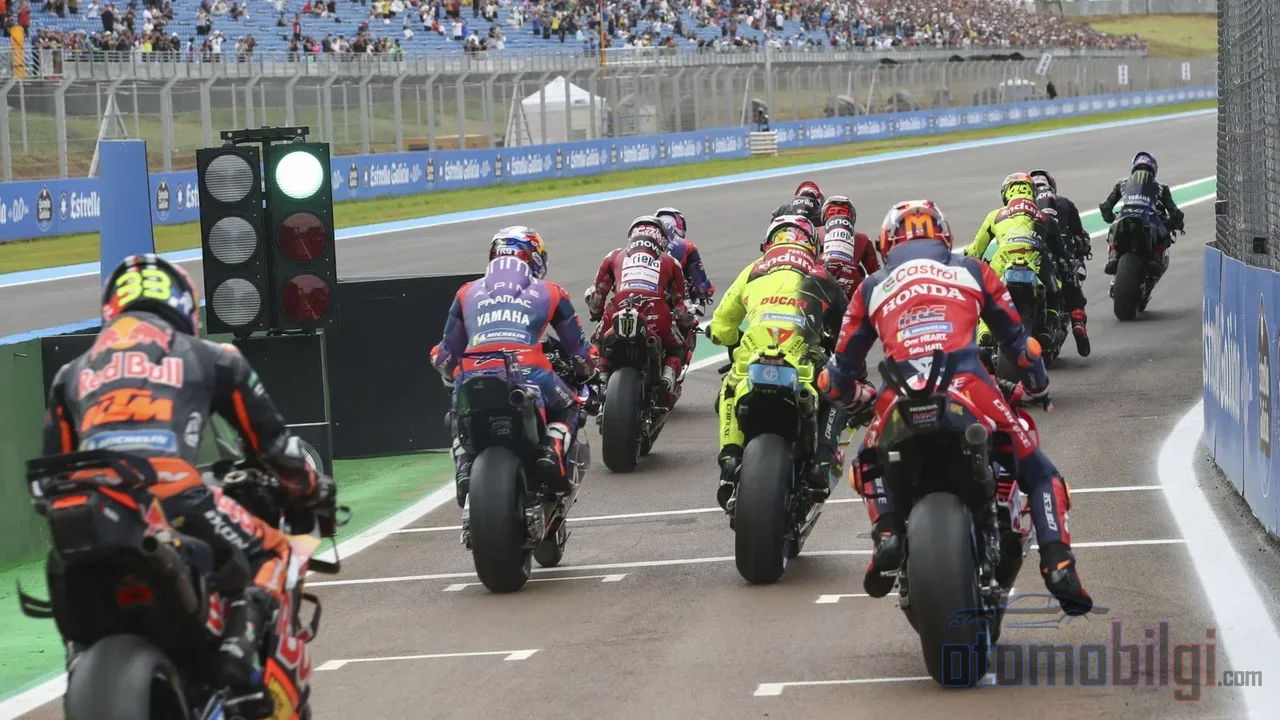
Yes, and this scenario happens more often than you might think. Riders who remain in the pit lane after pit lane closure start the warm-up lap from the pit exit and also start the race from the pit lane. A rider starting from the pit lane sets off after waiting for the field to pass, instead of taking their normal grid position. So the pit lane is sometimes not a penalty but a way for a team facing last-minute problems to stay in the race - albeit with a starting disadvantage.
Why Does It Differ from Track to Track?
Since we're on the subject of the pit lane, we can't skip a frequently asked question: is every track's pit lane the same? The basic speed limit on the MotoGP calendar is generally 60 km/h, and the FIM regulations allow this limit to be set freely with additional arrangements. The FIM's track standards also provide for lines drawn at intervals separating the working area from the fast lane in the pit lane - so even the internal layout of the corridor is subject to standards.
Looking at Formula 1 for comparison is illuminating: there the standard limit is 80 km/h, but on circuits with narrow pit lanes this limit is lowered to 60 km/h; on some circuits, such as Singapore, the limit has also been seen to be raised. The main idea is this: the physical width and geometry of the pit lane determine the safe speed limit. A wide and straight pit lane allows room for a higher limit; a narrow and winding one pulls the limit down. The same logic applies on the MotoGP front - pit lane designs that vary from circuit to circuit are each facility's own physical reality, not a uniform corridor.
A New Era in 2026: Entry/Exit Protocol Formalised
Pit lane rules are a living organism, and the last big step was taken on June 2026: the pit lane entry/exit protocol was officially added to the regulations. From now on, in all practice sessions and races, pit lane entry and exit may only be made via the defined entry/exit point and route determined by the Race Director. This step, also known as the formalisation of the practice referred to on social media as the "Marc Marquez rule", means that the entry rules previously determined separately before each race weekend have become permanent and written. WorldSBK has also adopted a similar rule. Practice details, such as the previous prohibition of crossing the white line, are now also evaluated within this clear framework.
Summary: The Logic Behind 60 km/h
So let us give the clear answer: In MotoGP, the pit lane speed limit is 60 km/h throughout the event; 60 km/h applies from the 60 km/h sign until the crossed-out sign, and exceeding it during a race carries a standard penalty of 2x Long Lap Penalty - the stewards also retain the authority to increase the penalty according to the severity of the infringement. The logic behind this lies in the character of the pit lane: it is not the track, but a working area where people and machines share the same square metres. The fastest class of racing demands the strictest discipline in its slowest corridor. Next time it rains, watch as the riders dive into the pit lane: that 60 km/h sign may carry the fate of an entire season.
Sources
- Grand Prix racing explained: How the MotoGP championship works and key rules
- How Do MotoGP Riders Switch Bikes During a Race?
- Pitlane Entry and Exit protocol formalised in regulations
- What Happens During a MotoGP Pit Stop?
- 2021 FIM Grand Prix World Championship Regulations
- FIM Standards for Circuits 2021
- MotoGP 2017: Regulation changes – Box Repsol
- Everything You Need to Know about MotoGP Infringements & Penalties – IntentsGP
- Everything you need to know about MotoGP engines for 2026 – IntentsGP
- F1 Pit Lane Rules and Speed Limit – Formula Dream