40 Milliseconds at the Moment of Crash: MotoGP's Airbag and Safety Technologies
Share This Page
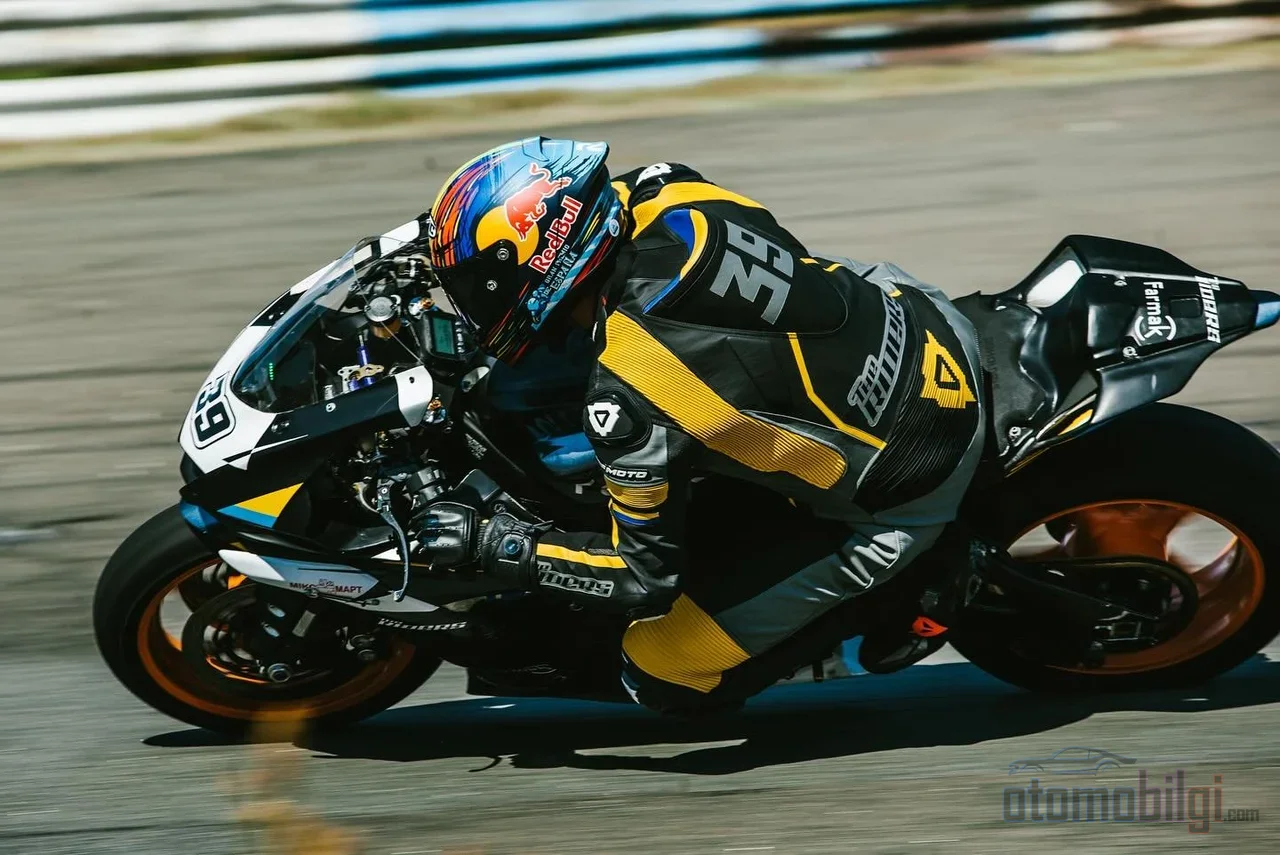
In MotoGP, the airbag system uses sensors and algorithms embedded in the racing suit to detect the moment of a crash faster than a rider could react, creating a protective shield that inflates in roughly 20 to 60 milliseconds . But that's only the beginning of the story: there's a massive safety ecosystem ranging from inflatable barriers at the edge of the track to helmet certifications. Let's go through them one by one, because on a motorcycle traveling at 350 km/h, every millisecond truly saves lives.
Highlights
- Alpinestars Tech-Air, with its AI-powered algorithm, can inflate in as little as 20 ms in the fastest scenarios
- Dainese D-air independent vests deploy in about 45 milliseconds- that's below even human reaction time
- For track limit violations, a rider gets a warning after three run-off excursions, and a Long Lap penalty on the fifth
- Front holeshot devices were banned starting from the 2026 season, beginning with the Dutch TT Assen
- The 2027 technical regulations are being designed to prioritize safety over speed
How Does the Airbag in the Racing Suit Work?
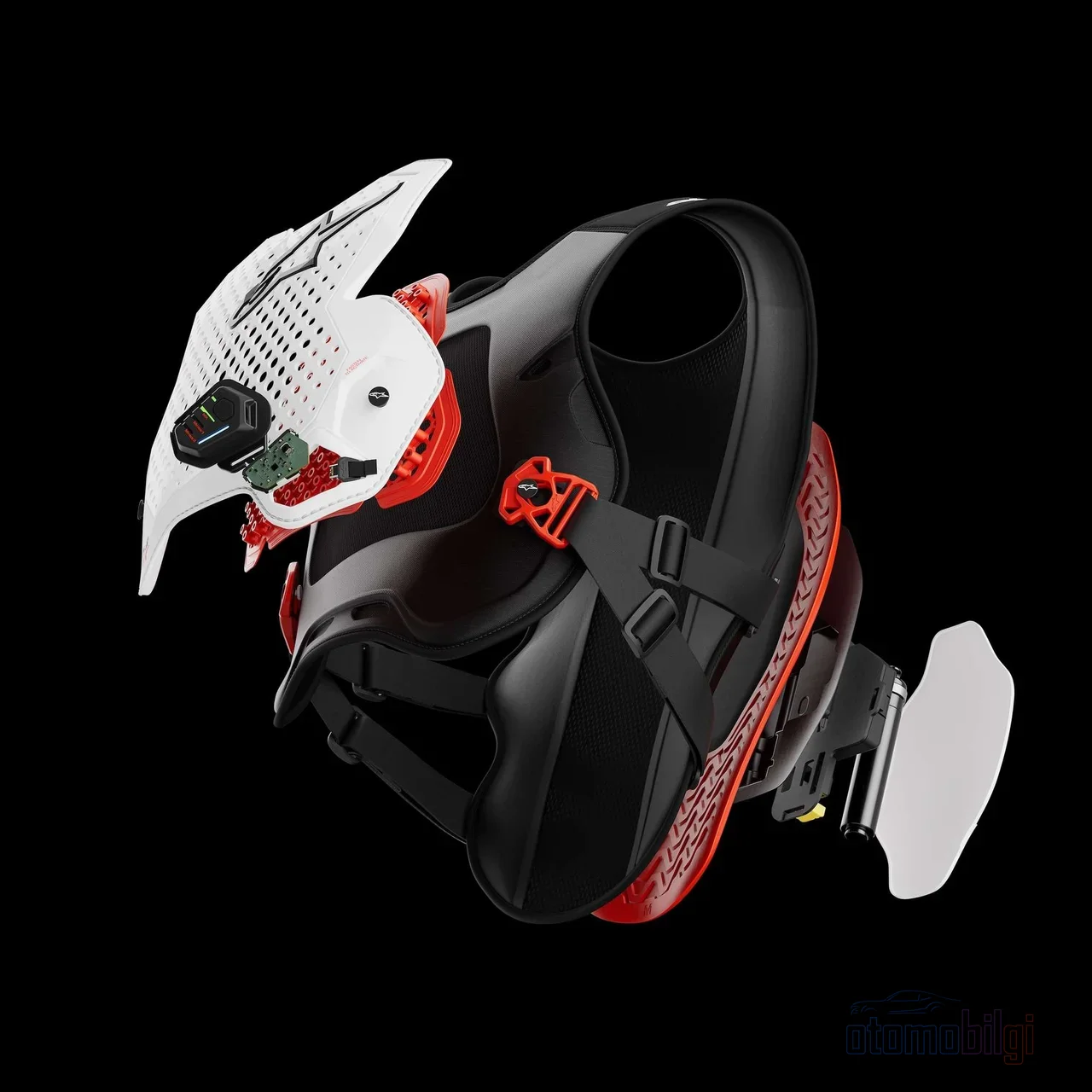
Think of it this way: when you drop your phone off the table, it takes you half a second to realize what happened. The MotoGP airbag, on the other hand, realizes a crash is happening before the crash has even fully occurred. Accelerometers and gyroscopes integrated into the suit continuously monitor the sudden changes in speed and position as the rider is thrown from the bike. The system is trained not to confuse normal riding, a hard corner, or even a small slide with a crash.
The mechanical side is interesting too. In some systems, the moment a rider separates from the bike, a tether triggers the gas cylinder and the airbag inflates - a purely physical chain reaction. In electronic systems, software makes the decision: when sensor data exceeds threshold values, the bag deploys within milliseconds and then deflates in a controlled manner. It's a relative of car airbag logic but a much harder problem, because on a motorcycle both the vehicle and the rider are spinning through the air.
Dainese D-air and Alpinestars Tech-Air: Two Different Approaches
There are two big names in the market, and each solves the problem a bit differently. Dainese also adds a GPS unit to its system: when accelerometer data, three gyroscopes, and location data combine, an impact can be detected before the collision. D-air's independent vest products inflate in about 45 milliseconds- below typical human reaction time, meaning it's a technology faster than what the eye can even blink at.
Alpinestars' Tech-Air system, on the other hand, uses an advanced algorithm instead of GPS; AI-powered software fed by accelerometer and gyroscope data generally captures the impact within a 30-60 millisecond window depending on the type of crash. In the fastest scenarios, inflation 20 ms can go down to as fast. One detail about the system that I liked: it doesn't activate at speeds below 40-48 km/h, because at that point unnecessary deployment rather than protection could be the issue. The technology has matured so much that Tech-Air has now expanded into motocross and mountain biking modes as well; in those modes the airbag deploys in about 32-45 milliseconds.
| System | Detection Method | Inflation Time |
|---|---|---|
| Dainese D-air (racing suit) | Accelerometer + 3 gyroscopes + GPS | Within milliseconds, specified on a per-model basis |
| Dainese D-air standalone vest | Automatic crash detection | Approximately 45 ms |
| Alpinestars Tech-Air | AI-powered algorithm without GPS | 30-60 ms, up to 20 ms in the fastest scenario |
| Tech-Air MX / mountain bike mode | An extension of the same algorithm | Approximately 32-45 ms |
But could the system deploy by mistake? This is exactly why the algorithms are so valuable. A system that confuses a crash with hard braking or corner cutting turns the rider into a tower filled with an airbag in the middle of a race - nobody wants that. The sensors are designed to distinguish the acceleration patterns of normal riding from the sudden change in speed of a rider being thrown off a bike. Moreover, the industry is going even further: hybrid approaches that feed radar data into the algorithm can detect a pre-collision situation. Since traditional sensors can be damaged during a crash and malfunction, pre-crash radar data seems to be the way of the future.
What About Off-Track? Air Fences, Asphalt Cushions and Barriers
The airbag protects the rider while in the air, but the track determines where the journey ends. At the most critical points of MotoGP circuits - especially in front of hard walls and solid objects - there are air fences, soft, inflatable barriers filled with air. The logic is simple: instead of hitting concrete, hit a big cushion. These blocks, whose pressure is constantly monitored with a low-power compressor, can be re-inflated within minutes after a crash.
Safety is now also calculated from the start in circuit design. Balaton Park Circuit in Hungary is a good example: the entire 4.115 km track opened in compliance with MotoGP safety standards, with concrete barriers and debris fencing along its full length. Having safety be part of the foundation itself, not something added later, when a new circuit is built - this shift is very important. Energy-absorbing barrier concepts used in oval racing can also be applied to temporary concrete barriers; different branches of motorsport steal safety ideas from each other, which in my opinion is the only positive example of theft.
The Simoncelli Tragedy: A Turning Point for Safety
Now let's move on to a hard topic, but skipping this section would be disrespectful. Italian rider Marco Simoncelli raced in the MotoGP World Championship for exactly ten years, from 2002 to 2011. He lost his life as a result of the tragic crash he suffered at the 2011 Malaysian Grand Prix at Sepang; the race was stopped on the second lap and cancelled. The severity of the crash was so great that officials defended the cancellation decision without hesitation. The last fatal crash in the premier class is still referred to as this crash today.
Officials reported that the death was technically unavoidable, but the story did not end there. After this tragedy, trackside medical intervention systems were rebuilt and improved, and changes to track safety were implemented. There is no single magic button on the bike or the track - safety is a structure built layer by layer upon terrible lessons. This legacy created by Simoncelli lives on today in the airbag on every rider's back.
Long Lap and On-Track Rules: Is Safety Just About Hardware?
If you think it's all in the air, the answer is no. Discipline on the track is also part of safety. The Long Lap penalty requires the rider to lose time by taking a longer marked route on the track - slowing down whoever gained speed, a form of elegant justice. Once the penalty is given, it must be completed within three laps; if fewer than three laps remain, Race Direction makes the decision. For track limit violations, there is a ladder: go into the run-off three times and you get a warning, by the fifth we're knocking on your door with a Long Lap. Taking off during qualifying laps or before the start lights go out is one of the easiest ways to collect this penalty.
This penalty is not without controversy. Some think the penalty is disproportionate to the advantage gained, and that a single violation can turn into a loss of position. Maybe there is some truth to that, but it is undeniable that the purpose lies exactly there: to discourage riders from the dangerous habit of cutting short, and to keep everyone safe.
What Changed in 2026? The Holeshot Ban and New Helmet Rules
You need to know about two major recent moves. First: front holeshot devices have been banned as of the Dutch TT Assen. These devices lowered the motorcycle at the start and pressed the front wheel to the ground, providing a launch advantage, but the rider's role in start accidents with these devices was a matter of debate. The same season, the FIM also implemented major changes to restart regulations regarding restarting the engine. Whether the new grid arrangement and the holeshot ban have truly made starts safer is being monitored step by step with the Race Director's data - meaning the decision has not been made, it is being measured. This scientific patience seems very sensible to me.
The second move concerns helmets. The new FIM 2 certification brings stricter safety tests, better protection against rotational impacts, advanced visor systems, and even QR code features. Why is rotational protection critical? Because what kills the head is often not a straight impact, but the rotational movement at the moment of collision. The transition was not smooth, of course: at the start of the 2026 season in Buriram, some riders had to use disguised helmets, and the new rules caused unexpected practical problems. Milestones in helmet technology continue too - following the mobile air flaps introduced in 2023, ventilation innovations are being discussed for 2026.
Speed or Safety? The Great Balancing Act of the 2027 Rules
MotoGP's technical regulations are set in 5-year blocks, meaning sudden radical changes rarely come. But in the new era being prepared for 2027, the picture is different: the rules are being designed to prioritize safety over speed. You can read it this way - like the limit imposed in 2010 on the number of engines a rider could use during a season, and what happened in 2011 during the final year of the 800cc machines, cost and technical balance have always been on the agenda in the championship's history. 2027 claims to be the first era in which safety is the strongest card on the table.
The picture isn't always clear. Before the 2022 season, riders were divided on the safety of ride-height devices; the same technology was protection to some and risk to others. Viewed from a Türkiye perspective, the picture is also emotional: it is known that Kenan Sofuoğlu, who raced in World Supersport, crashed at the season opener in Australia and finished the race in 13th place; his older brother Sinan Sofuoğlu lost his life in a crash during practice. The heroes of this sport know danger by heart and still take to the track - they are the real customers of safety technology.
Let me ask you: an airbag that inflates in 20 milliseconds, a helmet hardened against rotational impact, and tracks that steer you into cushions instead of concrete... Which of these surprised you the most? I think it's hard to answer, because every piece in this ecosystem completes the other. The rider survives so that the races can keep being watched.
Sources
- MotoGP™ Safety Features Explained: How Riders Stay Safe in Grand Prix Racing
- Alpinestars Tech-Air Explained: How It Works, Which Suit...
- Dainese D-Air Explained: How It Differs From Tech-Air
- Motorcycle Airbag | Dainese D-air® Safety System
- How It Works: Modern Airbag Suits
- How Airbag Deployment Systems Work: Sensors, Timing, ...
- Design of an airbag deployment algorithm using a radar sensor
- NeuroSense Can Speed Motorcycle Airbag Deployment, ...
- Alpinestars Tech-Air MX Gets DH Mode. Airbag Enters MTB ...
- MotoGP safety: Life-saving elements at the circuits
- Hungary's Balaton Park Circuit opens with MotoGP safety ...
- Racetrack SAFER barrier on temporary concrete barriers
- What is a Long Lap Penalty in MotoGP?
- Everything You Need to Know about MotoGP Infringements
- What Are MotoGP™ Track Limits?
- MotoGP Rules and Regulations: The Ultimate Guide
- Yamaha Racing – About MotoGP
- MotoGP's 2027 rule changes puts safety ahead of speed
- MotoGP introduces new safety rules as holeshot devices are banned
- Helmet safety rules cause early drama in 2026 MotoGP season
- What Gear Do MotoGP Riders Wear in 2026?
- Riders split on safety of MotoGP's big tech battleground
- MotoGP Workshop – Safer starts: what do the riders think?
- Helmet Safety Rules Impacting 2026 MotoGP Season
- Marco Simoncelli – Wikipedia
- Marco Simoncelli dies after MotoGP crash in Sepang
- Marco Simoncelli's death was unpreventable
- Sepang defends decision to cancel race after Simoncelli's accident
- Sofuoğlu's friends had an accident on the TEM
- Kenan Sofuoğlu Finished 13th