Uraloglu Announces 4x Penalty Move for HGS Complaints
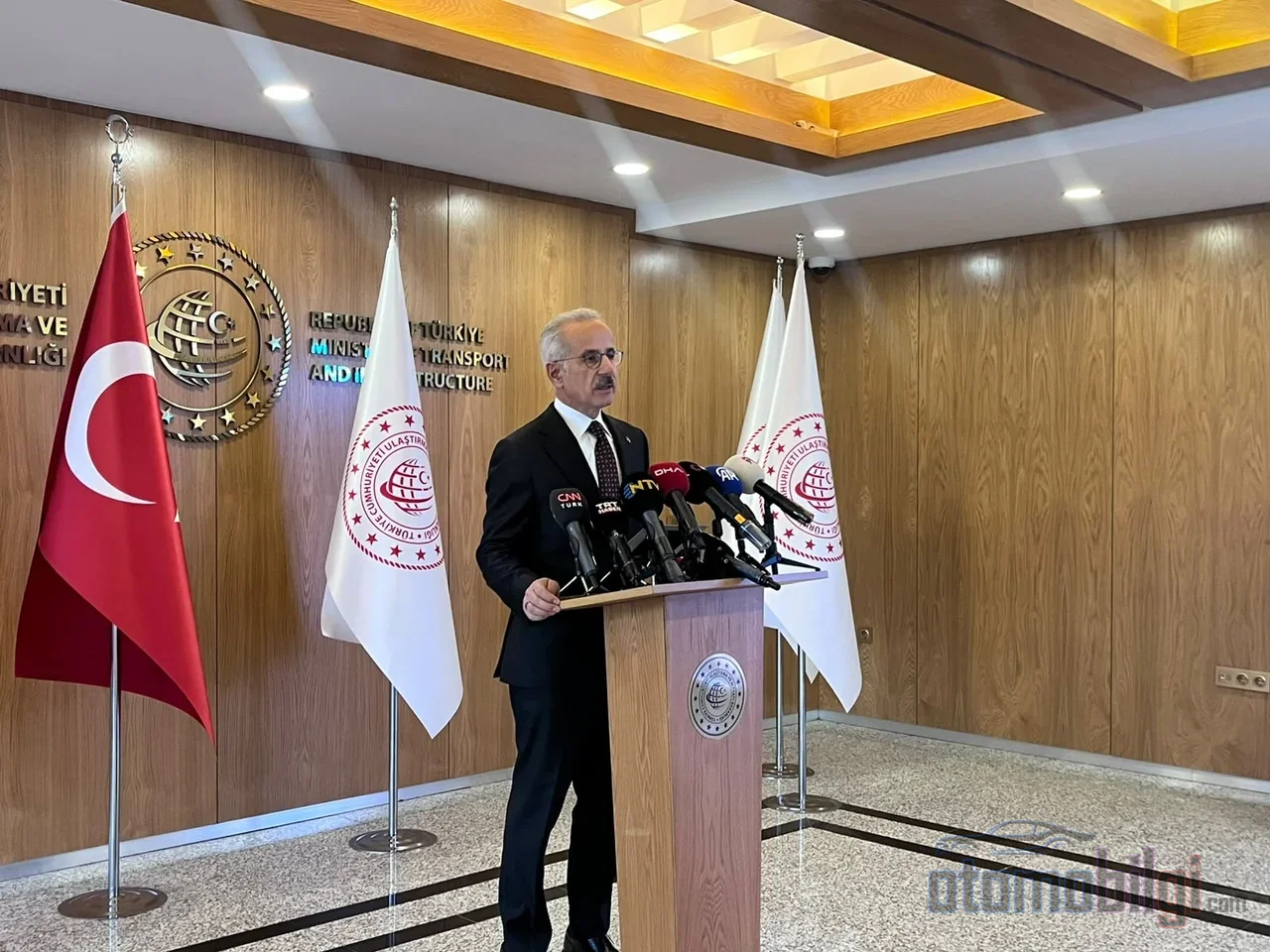
There is balance in the account, yet the toll fee simply cannot be collected; the debt does not appear on e-Devlet, but one day it arrives at your door as an enforcement file. A 165-lira highway toll multiplying to roughly 20 times its original amount once enforcement costs are added is no longer an exception but a commonly told story. As drivers' complaints about the Fast Transponder System (HGS) kept rising on both social media and in the press, Minister of Transport and Infrastructure Abdulkadir Uraloglu stepped in on November 17, 2026 and brought the issue to the table of the General Directorate of Highways and the operators. The Minister's statement is well worth examining carefully, as it shows why the problems millions of vehicle owners face at highway tolls have grown so large and what will change from now on.
What Does Minister Uraloglu's HGS Statement Include?
In his statement at the Ministry, Uraloglu first outlined the purpose of the system: he emphasized that the intent is not to punish citizens but to ensure that notifications are followed up. This sentence directly refers to the most debated point on the agenda, namely small-toll debts being escalated to lawyer-led enforcement and the fourfold penalty stage. The Minister announced that he has instructed the General Directorate of Highways and that on November 18 the highway operators will meet with the relevant institutions under KGM coordination. On the agenda of the meeting are what can be done before violations are passed on to lawyers, in other words before reaching the fourfold penalty stage, and how the current situation will be improved.
Highlights
- Uraloglu: The goal is not to penalize citizens but to ensure that notifications are followed up
- To prevent violations from reaching the fourfold penalty stage, a meeting will be held with operators under KGM coordination on November 18
- No penalty is applied to those who top up their account and pay within 15 days after a violation passage
- If a wrong plate reading is reported, all past transactions are canceled
- Following a KVKK Board decision, HGS passage inquiries can now only be made through e-Devlet
Why Have Drivers' HGS Complaints Increased?

The backbone of the complaints rests on a single paradox: the fee not being collected on time despite sufficient balance in the account. Users report that they have faced direct enforcement proceedings even though the debt did not appear on e-Devlet. The examples that have come to light are striking: a driver who says he paid 15 thousand liras in August for two violation passages, even though he had balance in his account at the time of passage; another case in which a 165-lira toll multiplied to roughly 20 times its original amount through an enforcement file. Complaint platforms indicate that HGS payment complaints rose by 24 percent in October; glitches on the payment screen, bulk payment problems, and debts reflected late are the leading items.
Beyond the balance problem, there are also technical issues. Plate reading errors, the HGS tag not matching the vehicle, charging based on the wrong vehicle class, and system-related technical glitches are the constant items on the complaint list. On the recognition side, the system identifies vehicles without an HGS via their license plates; AI-powered detection estimates the plate on dirty, deformed, or old plates. The word "estimate" itself sums up the problem: if the estimated plate is wrong, the fine may be issued to your vehicle instead of the one you know.
KVKK Decision and the Query Restriction
Another development feeding the agenda is the decision made by the Personal Data Protection Board following complaints. Previously, anyone could query the HGS crossings of any plate; after the personal data breach was identified, queries were opened only to the relevant person, via e-Devlet. Uraloglu openly admitted that the change of a long-standing habit had created a new agenda item. The fact that users are now redirected to identity verification via e-Devlet for some transactions that could previously be done on KGM's own website using plate information is also one of the reflections of this decision. In other words, part of the wave of complaints stems not from the system breaking down, but from access being restricted.
How Does the HGS Fine Calendar Work?
The calendar the Minister shared is the most critical piece that drivers suffer losses from because they are unaware of it. The process starts with a passage in violation and gets harsher step by step:
- After a passage in violation, an SMS notification is sent within 15 days to the phone defined in the system; the same notification comes in case of insufficient balance.
- No fine is applied to those who open an HGS account and make payment within these 15 days.
- From day 15 to day 45, payment is still possible with a single fine.
- After day 46, especially on public-private partnership (PPP) highways, the process is attempted to be halted with a notification period of at least 15 days.
- If no payment or application is made despite the notification, the file goes to enforcement by a lawyer and the quadruple fine stage kicks in.
In other words, in the system's logic, collection comes before punishing the violation. The problem begins when these steps do not reach the user, or when the debt does not appear even if they do. The Minister said that if an unfair action is taken against a citizen despite all notifications, the processes are followed one by one and an administrative sanction can be applied to the relevant operator.
The critical commitment is this: if a misreading such as a wrong plate is reported, all transactions made retrospectively are canceled. This is the most concrete assurance available to the driver who has been victimized by faulty recognition.
Where Are Complaints and Objections Made?
The Minister called on vehicle owners to update the mobile phone number defined for their registered plate. This can be done via e-Devlet or through the HGS and KGM systems as the most reliable channels. Following SMS and e-Devlet notifications means not skipping the first step of the fine calendar.
According to current official information, in case of a violation, an HGS subscription must be opened or balance loaded to the account within 15 days. Objections are handled by the General Directorate of Highways. On the PTT side, the hgs@ptt.gov.tr email address and the 0 850 460 60 60 call center are in service; account information can be tracked on PTT's HGS customer site, the HGS mobile app, and e-Devlet. For vehicles with TR plates, crossing violations and debt inquiries are made through the e-Devlet Gateway. CIMER, meanwhile, remains open at every stage as a general complaint channel.
What to Do If Enforcement Arrives?
If a debt has gone to enforcement despite a sufficient balance in the account, the strongest available evidence is account statements showing sufficient balance on the crossing date and for the following 15 days. An objection can be filed with the Magistrate Courts within 15 days of the penalty notification; however, since an administrative correction request does not pause the objection deadline, attention must be paid to the time limits. The Minister's statement on administrative sanctions completes this picture: the state has sanction tools at its disposal for an operator that persists in wrongful practice.
What the Statement Means for Vehicle Owners
When you read this statement with an eye that has followed this business from past to present, the real signal is this: the quadruple penalty mechanism is being put on the table for the first time as an admitted problem. Uraloglu's clearly saying that they are seeking a solution before matters reach the penalty stage, and setting up the November 18 meeting for this purpose, means the collection process with the operators on the KOI highways is back on the negotiating table. The outcomes of the meeting are not yet clear; presenting its output as a settled regulation would be premature for now.
In the short term, there are three clear things a vehicle owner can do: update the phone number via e-Devlet, query through e-Devlet instead of waiting for violation notifications, and, if a balance-debt contradiction arises, keep the account statements. In the long term, the real expectation is a system where a 165-lira crossing does not grow file by file into enforcement, where notifications genuinely arrive, and where misreading ends not with penalties but with cancellation procedures. The Minister's words contain a commitment in this direction; what needs to be followed is what comes out of the table on November 18.
Sources
- Statement from Minister Uraloğlu regarding the Fast Pass System (Anadolu Agency)
- Minister Uraloğlu's HGS statement (Sabah)
- Regulation signal for the 4x penalty in HGS (Evrensel)
- Is the penalty process in HGS changing? (Cumhuriyet)
- HGS statement from Minister Uraloğlu: Meeting with operators tomorrow (Memurlar.Net)
- HGS official page (General Directorate of Highways)
- Payment complaints in HGS increased by 24 percent (ShiftDelete)
- The uninformed penalty impasse in HGS (Yeni Şafak)
- HGS complaints multiplied: Balance exists, no collection (Cumhuriyet)