Ford Otosan: No Investment Decision Without Measuring
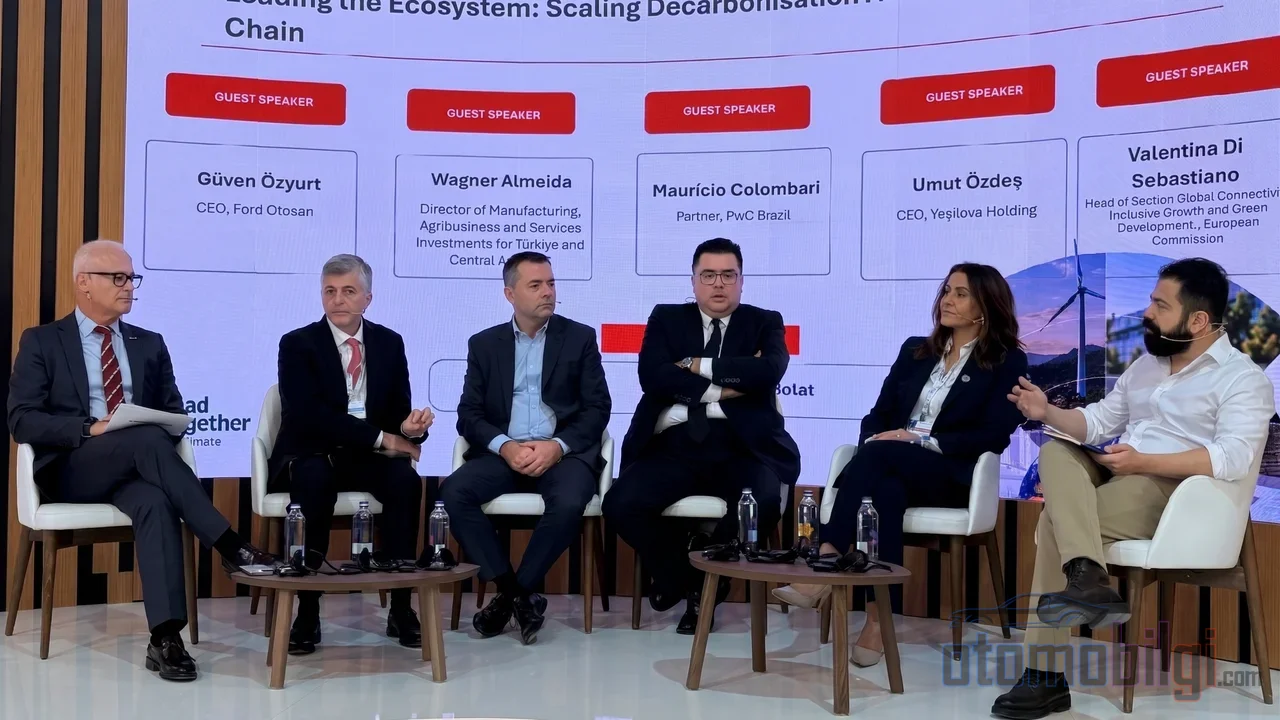
With Turkiye hosting COP31 this November, the most striking statement rising from the automotive industry in the green zone of the climate summit in Antalya was about commitments: success in decarbonization is measured not by signed lists of targets, but by investments entering the value chain and measurable emission reductions. The carrier of this message was Ford Otosan, one of the largest exporters of the Turkish automotive industry. On November 16, 2026, within the summit supported by Koc Holding as a global business partner, the company hosted a panel discussing how decarbonization in the supply chain can be scaled. The real story emerging from the panel is more intricate than the headline suggests: most of the obstacles to transformation depend not on technology, but on financing, competence and public support.
For someone who has been taking the pulse of this industry for more than thirty years, the picture is familiar. Sustainability reports used to be decorative pages at the very back of the activity report; now they have taken their place at the center of purchasing decisions, supplier evaluations and investment plans. As Ford Otosan General Manager Guven Ozyurt also noted on the panel, the company has significantly increased this weight since 2022: suppliers are regularly evaluated, development roadmaps are drawn up, a Supplier Sustainability Committee operates, and sustainability performance is reflected in purchasing decisions. In other words, the matter is no longer a declaration of intent, but a mechanism embedded in the operation.
Highlights
- Ford Otosan hosted the supply chain decarbonization panel in Antalya on November 16, 2026 as part of COP31
- The four elements that make supplier transformation possible: competence, purchasing conditions, financing and public support
- Approximately 82% of Ford commercial vehicles sold in Europe come from Ford Otosan's production network in Turkiye and Romania
- The company has started work on Turkiye's first Battery Assembly Plant investment in Kocaeli
- Ford Otosan and PwC are preparing a joint report addressing the economic impacts of the transformation
The Four Keys to Transforming the Supply Chain
The backbone of the panel was the four elements that enable suppliers to join the decarbonization journey: competence, purchasing conditions, financing and public support. Although this quartet looks like a management consultancy slide at first glance, each points to a concrete bottleneck. Lack of competence means an SME cannot measure its emissions correctly; unsuitable purchasing conditions mean the buyer, under price pressure, leaves no margin for the supplier's green investment; lack of financing means the bank cannot offer a standardized loan product; and the absence of public support means the doors of incentives and technical support are closed.
The perspective conveyed by Umut Ozdes, General Manager of Canel Otomotiv, who represented the supplier side of the panel, also confirms this picture: It was emphasized that expecting emission reductions from suppliers alone would not be sufficient, and that small and medium-sized enterprises' access to technical capacity, suitable financing, incentives and technical support is critical. Wagner Almeida, the IFC's Director for Turkiye and Central Asia, hit the nail on the head: reliable data, correct prioritization and economically viable business models are needed for strong targets to turn into investment decisions. The gap is exactly here; in the space that stands between the target and the project the bank finds investable.
Is Large Investment Mandatory: Starting with Measurement
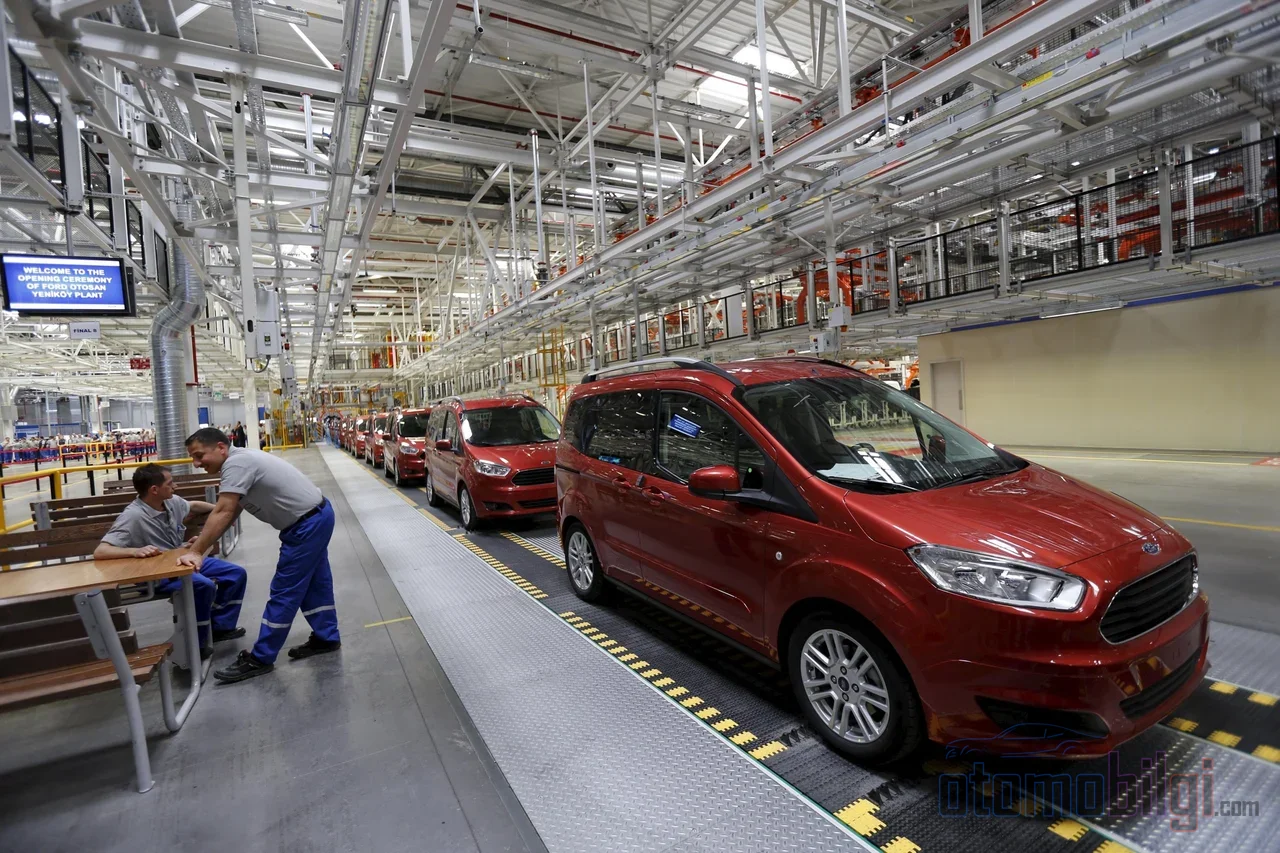
The panel's most practical output was breaking the perception that the decarbonization journey must necessarily begin with high-capital investment. According to Ozyurt, no: correct data collection, correct measurement and reducing waste through resource efficiency can produce meaningful results in some enterprises even before major capital investment. This is a fact that anyone who has been steeped in this business has witnessed. Ordering solar panels without knowing how to read the energy bill is a wrongly scaled investment; first you measure, then you make the investment decision.
Still, a journey that starts with measurement requires investment at some point. Ford Otosan listed examples of this necessity on its own side: electric vehicle development and production, energy and water efficiency efforts at facilities, training and technical guidance for suppliers, regular evaluation of ESG performance and the expansion of electric commercial vehicles into customer operations. The company's sustainability vision, which it calls "The Future Is Now," puts the production and engineering capacity in Turkiye and Romania at the service of this transformation.
The Weight of the Kocaeli Production Center
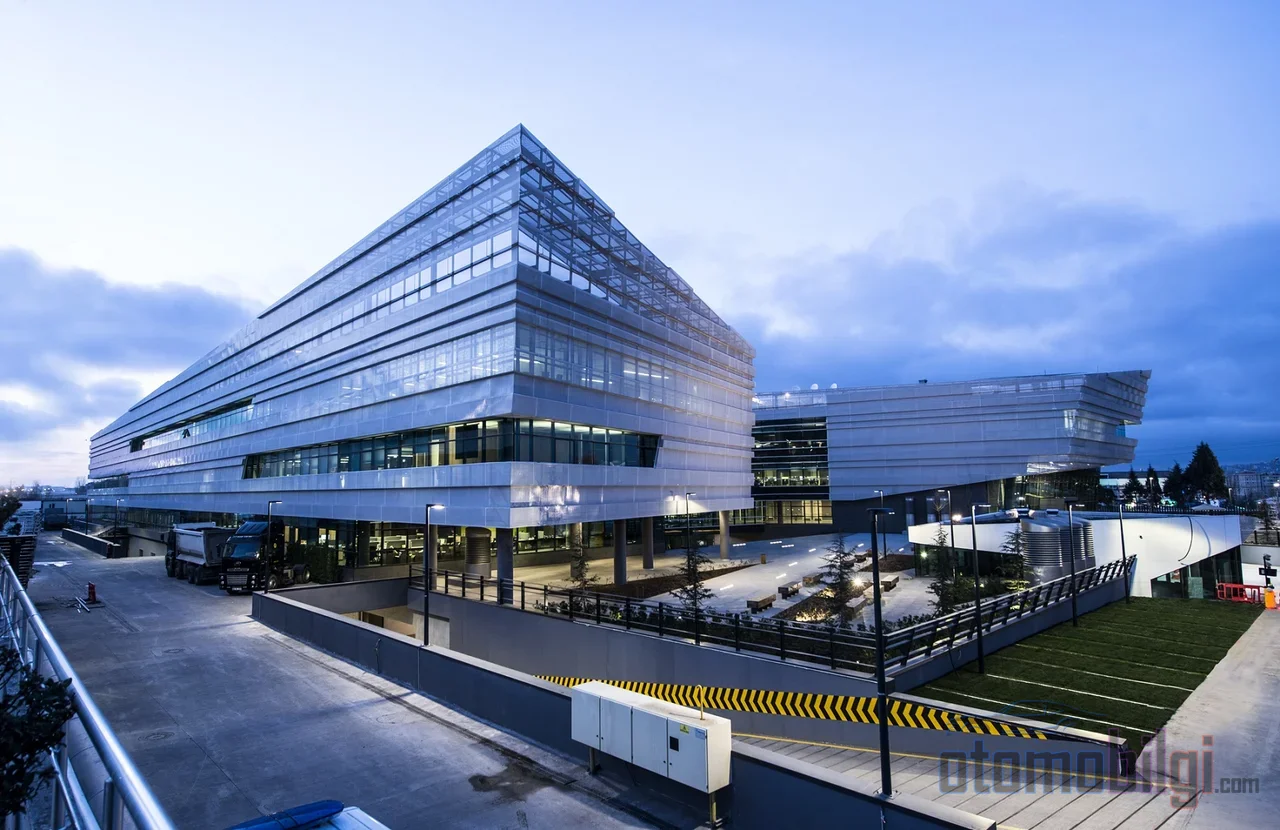
To understand why this discussion is so important for the Turkish automotive industry, it is enough to look at Kocaeli. Ford Otosan's Kocaeli Plants are Ford Europe's largest commercial vehicle production center; internal combustion, plug-in hybrid and fully electric commercial vehicles are produced together here on a common production infrastructure. Approximately 82% of Ford commercial vehicles sold in Europe come out of this production network, that is, the facilities in Turkiye and Romania. This share clearly shows the company's weight in Europe's commercial vehicle supply, and therefore the ripple effect that supply chain decisions will create on the continent.
There is also a concrete step on the electrification side on the table: Ford Otosan has begun work to establish Turkiye's first Battery Assembly Factory in Kocaeli. Although the factory is still under construction, adding battery assembly to a facility that continues electric commercial vehicle production on the same lines as internal combustion models is the most concrete proof of how the decarbonization target and the production geography are intertwined. Looking at the supply industry, the picture broadens: charging and energy infrastructure and the battery ecosystem were also the main theme of the second panel organized within the scope of COP31.
Cost Today, Benefit Tomorrow: The Hard Side of the Equation
The economic math of the transformation was the most debated topic of the panel. The framework presented by PwC Brazil Partner Mauricio Colombari at the panel contains a candid admission: investment costs emerge today, while value and competitive advantage only become visible in the medium and long term. It is not surprising that a board of directors under short-term profitability pressure does not look kindly on this asymmetry. The other half-sentence Colombari added is the key point: companies must also calculate the economic loss of delaying the transformation. In other words, the matter is not only how much you will spend, but also what delaying will cost you.
The traces of this tension can also be seen in the financial statements. Ford Otosan's balance sheet figures for this year show that it has been going through a period in which the newly competitive pricing environment and the decline in domestic revenues sat at the same table as long-term transformation investments. In the second quarter, a net profit of 4.5 billion TL was announced, a 45% year-on-year decline; although net profit exceeded expectations in the third quarter, revenue fell 7% year-on-year to 228.9 billion TL, while domestic revenues dropped 45% to 28.8 billion TL. In short, even on days when decarbonization is being discussed, the balance sheet keeps issuing the bill for price pressure and domestic market contraction.
The Role of the EU and International Financing
The panel's international dimension showed that the transformation is not merely a burden on industry's shoulders. Valentina Di Sebastiano, representing the EU Delegation to Turkiye, conveyed that the European side's promise is clear and predictable policy standards and a reduced reporting burden for small businesses; in cooperation with Turkiye, technical support, access to finance and capacity building were listed as the three main priorities. The need described by Almeida from the IFC side aligns with this: standardized, accessible and performance-oriented financing solutions for SMEs with limited resources. Until small suppliers gain this access, the transformation will remain an investment arena only for strong companies; and that is a desirable outcome neither for industry nor for the climate.
Figures, Reports and the Next Step
The panel's concrete output was that Ford Otosan and PwC will work on a joint report addressing the economic effects of the supply chain's sustainability transformation, namely investment costs, competitiveness and the financial dimension. The report will be shared with the public in the coming period. The value of such a study lies in its effort to translate abstract commitment language into figures: how much does the transformation cost a supplier, at which stage does it produce measurable savings, and through which financing instrument does it become payable. Without clear answers to these questions, none of the four keys can turn the lock.
So what is the summary of this whole discussion? The real obstacle to decarbonization is not technology, but the financial and institutional infrastructure to carry it. Unless competence, favorable purchasing terms, accessible financing, and public support come into play simultaneously, the transformation in the value chain will progress as fast as the strongest link and as slowly as the weakest link. For its own share, Ford Otosan seems to have started this chain from within itself: The production network carrying an 82% share of European supply, the Kocaeli lines producing different powertrain technologies in a single facility, and the planned battery assembly plant say far more than the goal lists on paper. The words "commitment is not enough" gain meaning when read not as a criticism, but as a work program. The report to be shared in the coming period will provide the first concrete clues about how much this program will cost; the rest of industry will make its decisions in light of those figures.
Sources
- Ford Otosan shared its roadmap for 'decarbonization' at COP31
- Ford Otosan shared its roadmap for decarbonization in the supply chain at COP31: From targets to investment, to measurable emission reduction
- Ford Otosan: Decarbonization is possible with tailored financing and competence for suppliers
- Commitment is not enough for decarbonization: Ford Otosan announced its supply chain-focused roadmap at COP31
- Ford Otosan exceeds expectations with third-quarter net profit
- All eyes of Europe are on vehicles produced in Kocaeli!
- Ford Otosan has begun work to establish Türkiye's first 'battery assembly plant'
- Ford Otosan will bring the future of sustainable industry and mobility ecosystem to the agenda at COP31