Ford's Objection to the EU's Made in Europe Proposal: The Transit Example

The European Union's "Made in Europe" regulation prepared for the automotive sector has received a strong objection from an unexpected place: From Ford itself, the maker of the Ford Transit, which risks being left out of scope because it is produced in Turkiye. Jim Baumbick, the company's President of Europe, said in a statement on November 17 that a vehicle designed in Europe with more than half of its parts coming from EU suppliers being excluded from counting as a European product solely because of its final assembly location would weaken, rather than strengthen, the sector against Chinese competition. So what exactly is this objection against, and what does it mean for Turkiye's automotive exports?
What Does the Regulation Bring, and Why Is the Transit Left Out of Scope?
The regulation, still at the draft stage, foresees that vehicles must be produced within EU borders and local supply conditions must be met in order to benefit from certain incentives and public procurement. The text, prepared as part of the legislative package, includes a local supplier requirement for Chinese car manufacturers to be able to benefit from core incentives and bid in public tenders. The critical point is which criterion will be used to determine origin: the draft takes the assembly location as the basis, leaving non-EU production bases such as Turkiye, the UK and Morocco out of scope.
Ford's objection centers precisely on this contradiction. According to the Transit example Baumbick gave, the vehicle's design and engineering are done by teams in the UK and Germany, with more than 50 percent of the parts coming from suppliers in the EU, and more than 30 percent coming from the UK and Turkiye. In contrast, because final assembly is done in Turkiye, the vehicle will not count as "Made in Europe" under the current plan. It is not yet clear whether these percentages are calculated based on the number of parts, their value, or some other criterion; it should not be read as a cost distribution.
Highlights
- Ford Europe President Jim Baumbick objected to the draft regulation with the Transit example on November 17, 2026.
- More than 50 percent of the Transit's parts come from EU suppliers; but it remains out of scope because assembly is done in Turkiye.
- The total annual capacity of Ford Otosan's Kocaeli plants is 612,000 vehicles; 85 percent of the Transit family sold in Europe is produced in Kocaeli.
- 60 percent of Turkiye's automotive exports go to the EU; this means a trade exceeding 30 billion dollars annually.
- The regulation is still a draft: it was announced that the decision could come at the end of November.
Transit, the Backbone of Turkiye's Production and Exports
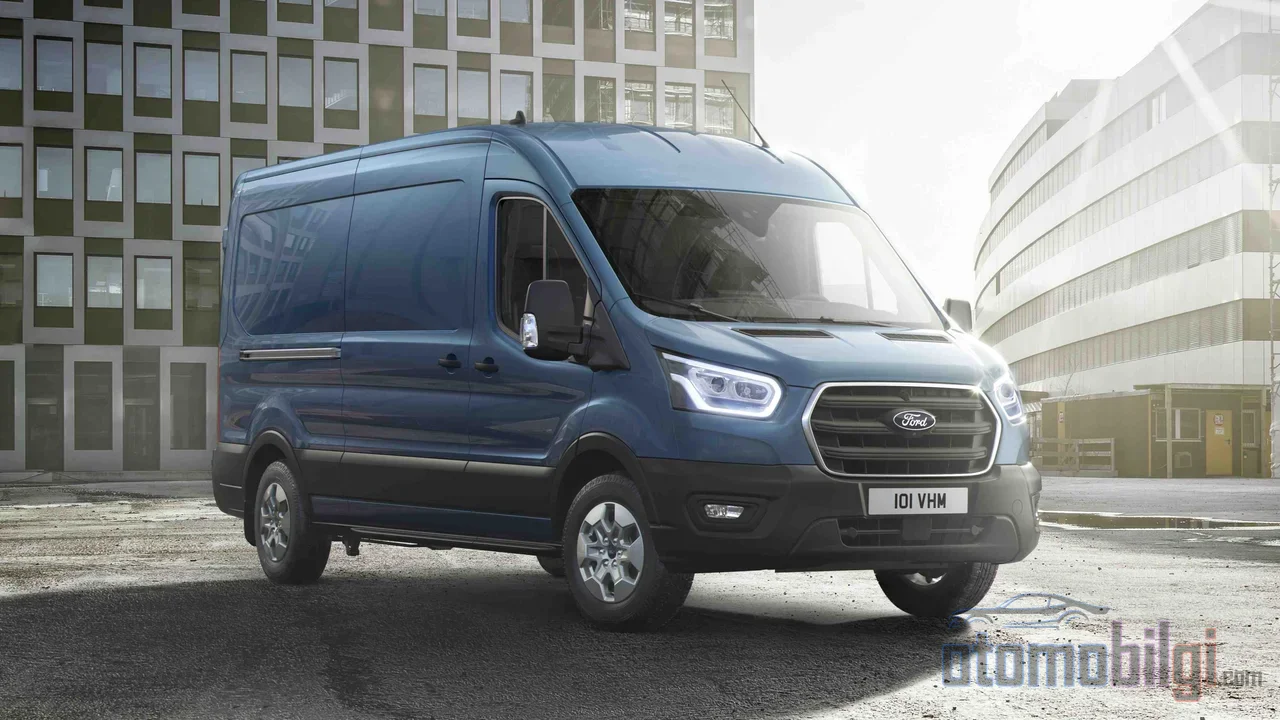
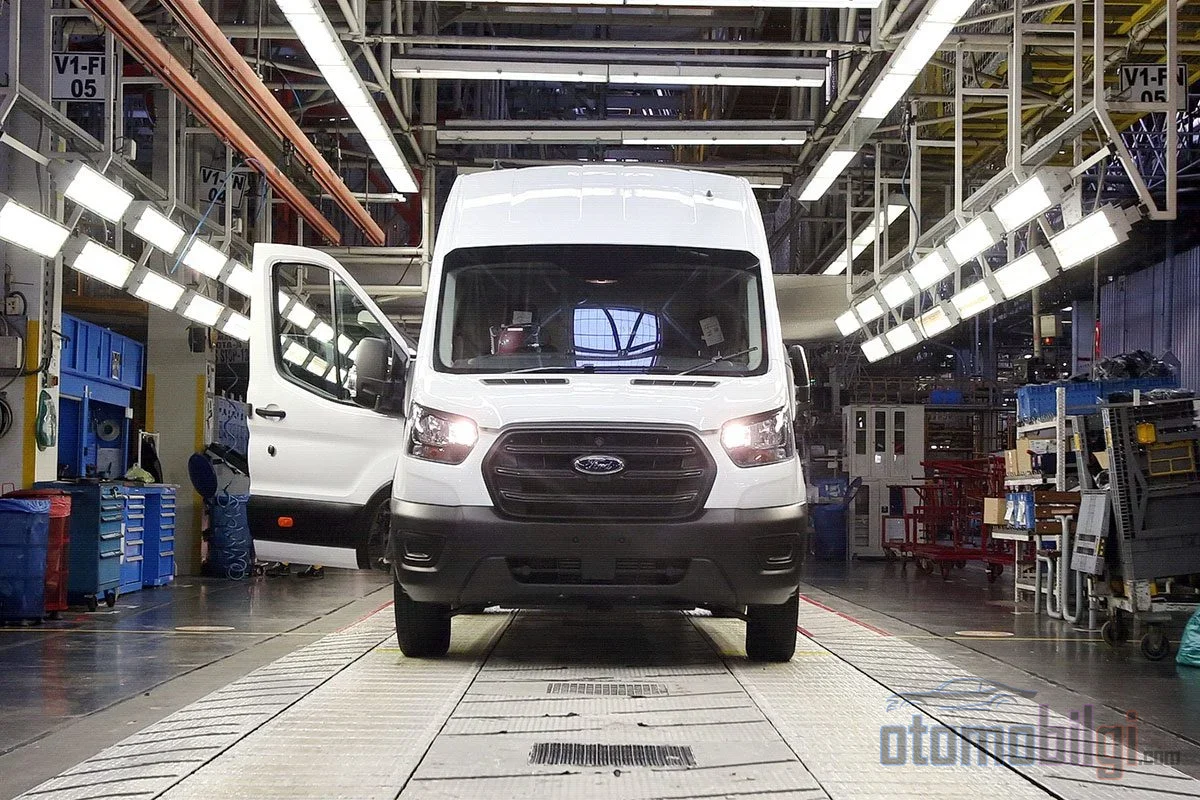
It is no coincidence that Ford chose the Transit in its objection. According to Ford Otosan's official figures, the total annual production capacity of the plants in Kocaeli is 612,000 vehicles: 207,000 of this is used by the Golcuk plant where the Transit is produced, and 405,000 by the Yenikoy plant where the Custom family is produced. Although capacity does not mean actual production, it is sufficient to show the scale's magnitude. 85 percent of the Transit family vehicles Ford sells in Europe are produced in Kocaeli; the electric E-Transit also comes off the lines in Golcuk.
The company's production map is broad: the electric and hybrid versions of the Transit and Custom families are produced in Kocaeli, while all versions of the Courier and Puma families are produced at the Craiova plant in Romania. In other words, Turkiye is not just a part of Ford's European commercial vehicle strategy - it is its center of gravity. This is also the point Baumbick described as "the definition of shooting yourself in the foot": changing the conditions after investors have planned their billion-dollar investments according to the current rules creates an uncertainty that could deter new growth investments.
How Big a Bet Is This for Turkiye and the EU?

Approximately 60 percent of Turkiye's automotive exports go to the EU, and this trade exceeds 30 billion dollars a year. Ankara is continuing its diplomatic efforts to be included in the regulation, emphasizing that joint automotive supply chains provide employment for more than 250,000 people on the EU side. Trade Minister Omer Bolat and industry representatives traveled to Germany to discuss the matter; Bolat announced that a decision on "Made in Europe" could come by the end of November.
There is a concrete concern behind this effort: While the Commission's first draft counted content produced in Turkiye, a customs union partner, as EU-origin, it is reported that the compromise reached between France and Germany on October 15-16 covers the United Kingdom while leaving Turkiye out of the draft. However, the regulation has not yet been finalized; there is also no clear decision on Turkiye's inclusion.
Will the Vehicles Not Be Sold in Europe?
The short answer: no. Current statements do not mean that the entry of vehicles produced in Turkiye into the European market will be completely banned; the debate focuses on the conditions for access to certain incentives and public procurement. The Customs Union, which entered into force in 1996, abolished customs duties and quantitative restrictions on industrial goods; but according to the EU Council, it does not cover services and public procurement. In other words, a new incentive program does not automatically cover Turkiye. On Ford's side, there is no announced cancellation decision or calculated loss amount for investments in Turkiye; Baumbick's words are not the balance sheet of an implemented sanction, but an objection to the draft under negotiation.
A similar warning also came from industry organizations. The European Automobile Manufacturers' Association (ACEA) and the British automotive association SMMT made a joint statement warning that the annual 80 billion euro EU-UK automotive trade would be at risk if the United Kingdom is excluded; the call came ahead of the EU-UK summit to be held on Friday, November 20.
Why Do Export Figures Make the Picture More Critical?
The Turkish automotive industry is facing this debate already within a difficult year. In the January-October period, total production fell by 6 percent to 1,092,519 units; While automobile production fell 17 percent, commercial vehicle production rose 12 percent, with Ford Otosan and Tofas increasing their output. Capacity utilization stood at 61 percent. Although exports declined 9 percent in unit terms to 779,557 units, export revenue rose 3 percent to approximately $35.2 billion, setting a record; in October, the sector ranked first in Turkiye with $4.032 billion in exports. The year-end target is $43.7 billion. Revenue rising while unit numbers fall shows that high value-added production is gaining weight; and that is precisely why the origin definition in Europe is not merely a technical detail.
What to Watch in the Coming Weeks?
Although Ford's objection may appear as a single company's supply chain defense, at its core it raises the question of how Europe's industrial map will be defined. Automotive production today operates through transnational supply chains; a perspective that looks at design, engineering, and supply networks rather than assembly location places the same vehicle in entirely different positions. The topics to follow are clear: how the "country of origin" definition will be made, by which method local content will be calculated, and how the status of existing investments and transition provisions will be determined. The decision is expected by the end of November; whether Turkiye will be included in the scope is not yet certain.
In this process, where Turkiye's automotive exports will be directly affected, Ford's objection based on the Transit example points in the same direction as Ankara's diplomatic efforts: Europe counting part of its own supply chain as non-European strengthens no one against Chinese competition. Until the final rules and transition periods are announced, it is impossible to measure the market impact; but the stakes on the table are far greater than what can be measured.
Sources
- Ford's objection to the EU over Türkiye: It cited the Transit as an example
- Ford's warning to the EU over Türkiye
- Ford's warning to the EU: Excluding Türkiye would harm the automotive sector
- Ford's warning to the EU over Türkiye: The Made in EU plan could hit the automotive sector
- Critical contact for the Made in EU regulation: Minister Bolat and automakers head to Germany
- The automotive industry ranked first in October with $4 billion in exports
- OSD - October 2026 results