What Does an Inspection Report Tell You About a Used Vehicle?
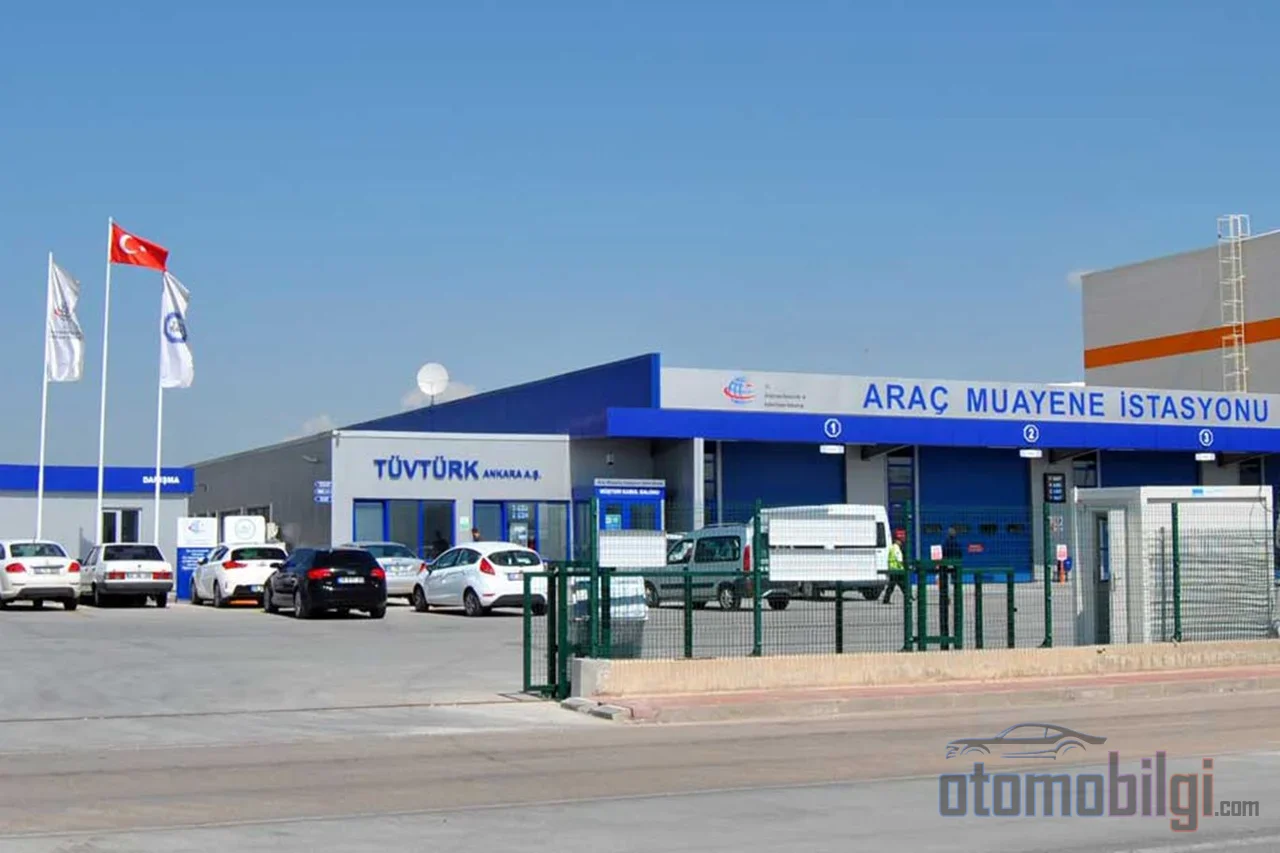
When buying a used vehicle, getting an inspection report and querying damage records has now become routine for many buyers. But what are we looking at in that TUV TURK inspection report in the file the seller hands over? Most of us look at the result first and close the file without ever reading the lines behind it. Yet let me tell you, as someone who has been in this business for over thirty years: the official inspection report tells you things the appraisal cannot see; when read correctly, it is full of clues that could change your purchase decision. In this article, we will go step by step from which headings are checked in the report to what the pass/fail concept actually means, and from validity periods to what you need to do if the report is lost.
What exactly does the inspection report include?

The periodic vehicle inspection is an official check that audits whether the vehicle is safe in traffic and compliant with environmental regulations. At the station, the vehicle passes through fully equipped stops in a certain order. The main systems checked are as follows: the brake assembly, lighting and electrical equipment, steering and suspension, and exhaust gas emissions. These four headings form the backbone of the report.
At the bottom of the report, however, details that are less visible but as important as years of experience teach are listed: exhaust connections, chassis corrosion condition, fuel line, oil leaks and suspension connections are examined one by one. Even the wiper and washer fluid system is within the scope of the inspection; in the words of veteran inspectors, "if you cannot see the road, there is no safety either". In addition, an equipment check is carried out: a first aid kit, two warning triangles, a fire extinguisher and a spare tire are looked for. Missing items are recorded in the report as minor defects; vehicles that originally have no spare tire, have runflat tires or a tire repair kit are exempt from this requirement.
It is also worth knowing a few technical thresholds. In passenger cars, tire tread depth must be at least 1.6 mm. Unauthorized interventions on the plate such as embossing, covering with film, or screws and paint that obstruct readability are considered serious defects and the inspection is not approved. If there is no valid exhaust emission measurement, it is again assessed as a serious defect; in LPG-powered vehicles, the absence of a Gas Tightness Report is a minor defect item.
Passed or failed: what do the result categories mean?
The inspection report concludes in one of four ways: Defect-Free, Minor Defects, Serious Defects and Unsafe. Many buyers think in the binary of "passed" and "failed"; in reality the picture is a bit more nuanced and reading the lines is rewarding.
| Result | Meaning | Note for the buyer |
|---|---|---|
| Defect-Free | No deficiencies at all; a label showing the validity period is affixed to the plate and the report | The cleanest picture; keep the report |
| Minor Defects | The vehicle is considered passed, no re-inspection required; the deficiencies are expected to be corrected | A signal of small expense, a bargaining chip |
| Serious Defects | The report is not approved; within one month the defects must be corrected and the same station visited | Risk of serious repair costs |
| Unsafe | A defect dangerous to life and property; the report is not approved and the situation is reported to the traffic police | Stay away from this vehicle |
Looking at examples of heavy defects helps a used-car buyer understand what I mean: serious faults in the braking system, steering and suspension problems, cracks in the chassis or body. These are not cosmetic shortcomings, but issues that touch the vehicle's skeleton and safety. If a vehicle falls into the unsafe category, it is considered dangerous for traffic safety, and this is a red line for the buyer. A vehicle that ends up heavy-defect or unsafe must have its defects fixed and go through inspection again at the same station; for vehicles arriving within one month, one repeat inspection is free of charge.
Highlights
- The inspection result falls into four categories: Defect-Free, Lightly Defective, Heavy-Defective, Unsafe.
- For private passenger cars, inspection is done at the end of the first 3 years, then every 2 years.
- The report does not replace a pre-purchase inspection report; the two measure different things.
- For a vehicle past its due date, an extra 5% inspection fee is charged for each month of delay.
- The report is now also issued digitally and can be queried via e-Government.
Why is the validity period on the report such a critical date?
One of the first dates to check when buying a used car is the expiry date of the inspection's validity. The mandatory schedule varies by vehicle type: for private passenger cars, the first inspection is at the end of 3 years, then every two years. For official cars, this period begins at the end of the first two years; for commercial vehicles such as taxis, buses and trucks, it is at the end of the first year and repeated every year. Motorcycles follow the same calendar as private passenger cars, while tractors are inspected every three years.
When looking at the report the seller hands you, read not only the result but also the date. A report with a very short remaining validity means a new inspection expense shortly after the purchase. If the vehicle's inspection has long expired, the matter is even more serious: under Article 35 of Highway Traffic Law No. 2918, a 5% surcharge is added to the inspection fee for each month of delay, and delays are calculated in 30-day blocks; even a delay of 1 to 20 days counts as a full month. A vehicle past its inspection date is also considered at fault in traffic and may face administrative penalties. So when the seller says "no need to worry about the inspection, I just had it checked," the date check gives you the first real official picture.
What is the difference between a pre-purchase inspection report and a periodic inspection report?
These two are the most commonly confused documents, and in fact they are not rivals but complements. The periodic inspection is a legal and mandatory periodic safety and emissions check; A pre-purchase inspection, on the other hand, is an informal condition assessment done before a sale; it gives buyer and seller assurance about the vehicle's market value and its condition on the day of the examination. it gives the buyer and seller assurance about the vehicle's market value and its condition on the day of the inspection.
In practice, think of it this way: the inspection report tells whether the vehicle met traffic safety standards on that day. The expertise report covers painted parts, paint thickness measurements, mechanical details, and a market comparison. Both together, not one instead of the other. Moreover, an expertise report is not a magic wand; it shows the vehicle's condition on the day of inspection and does not predict a breakdown that may occur tomorrow. On the other hand, items checked at the periodic inspection such as chassis corrosion and underbody linkages are among the points a good expertise check cares about most. If you see inconsistencies in the same sections of the two reports, the list of questions to ask grows on its own.
What can a buyer do if there is no inspection report?
If the seller cannot present a current inspection report, the door is not closed. Someone who does not own the vehicle can also take it to the inspection station with the power of attorney documents they will obtain from the owner. This way, you can have the vehicle you are about to buy checked in your own name under the official periodic inspection before making the purchase decision. This method also subjects the brake, suspension, and emission values that the expertise leaves in the shade to an independent measurement.
A few practical points before heading out: appointments are taken free of charge from the station's website, the call center, or the station kiosks; the procedure takes about an hour on average, so it is wise to allow close to two hours at busy metropolitan stations. Before the inspection, a debt check is performed: if traffic fines, motor vehicle tax, and bridge-highway debts are not clear, the vehicle is given an appointment but the inspection cannot be started. Among the required documents are the registration certificate, ID, traffic insurance document, and exhaust gas measurement certificate; for LPG vehicles, a Gas Tightness Report is also requested. The vehicle's mileage is entered into the system when the queue number is taken; in other words, the km value of that day is officially fixed in the inspection record. This is concrete data you may obtain later if a mileage dispute arises.
Reading the report together with a damage record inquiry
The inspection report alone is not sufficient; a holistic check is only formed by reading three sources together: the insurance damage record, the expertise report, and the test drive. You can query the damage history from the Insurance Information and Monitoring Center records via e-Government, and you can also access inspection records with the plate, chassis number, and mileage. These inquiries also provide a concrete data advantage in negotiation; the serious defect line in the report is the clearest document that strengthens your hand in the price discussion.
It is also an old rule not to trust the mileage information alone; comparing the figure on the odometer with the km values in the inspection records is the cheapest step that can be taken against the possibility of rollback. In case of suspicion of a hidden defect, signs such as an underbody guard inspection, a milky appearance on the dipstick, or oil in the radiator should be taken seriously; if neglected, there is a risk of a 15% to 30% loss in the vehicle's value. In the past, all these checks were done by phone, one after another, taking days; now they can be completed in a single evening without leaving home. It is not changing habits, but ease of access.
There is also a solution for those who lose the report: even without a report number, a barcoded vehicle inspection report query can be made via e-Devlet, and the inspection status can also be queried separately. With the regulation change that came into force in September 2023, inspection reports also started to be issued digitally; the digital report is expected to save paper, and for the buyer, the trouble of a lost report has largely become a thing of the past. Don't forget: the new validity period after the inspection is no longer entered on the Motor Vehicle Traffic Certificate; the report itself is issued and must be kept in the vehicle.
What should you pay attention to when requesting a report from the seller?
Once the report is in your hands, I recommend proceeding in this order:
- Read the result category: Even if it is Minor Defects, look at what the defect lines are.
- Check the validity date; if it is about to expire, factor in the cost of a new inspection.
- Compare the km value in the report with the reading on the odometer and the information in the Tramer query.
- Evaluate the brake, suspension, and chassis corrosion lines together with the expert inspection report.
- Verify the digital copy of the report via e-Devlet or the station's query page.
The notes from the inspection are also a treasure trove of information for the buyer. The most common failure items are malfunctioning high and low beams, faulty brake lights and turn signals, tires with insufficient tread depth, insufficient braking performance, steering play, windshield cracks, exhaust leaks, and non-functioning wiper systems. Every defect line in the inspection report is a sign of which area of the vehicle has been neglected in maintenance; vehicles owned by owners who perform regular maintenance rarely show these lines.
Conclusion: reading the report is half the decision
In a used vehicle, the inspection report is an official document stating whether the vehicle met legal safety and emission standards on that day; it works with four result categories, for passenger cars it starts after three years and is renewed every two years, and it is not a replacement for the expert inspection report but a component to be fulfilled alongside it. Its proper use can be summarized in three steps: request the current report from the seller, read its date and defect lines, and interpret the result together with damage records and expert inspection findings. If there is no report, you also have the option of having the vehicle inspected at a station of your choice with a power of attorney. The most expensive mistakes I have seen in thirty years come not from unread reports, but from reports never opened at all.
Sources
- Vehicle Inspection Query Result - TÜVTÜRK
- Digital Inspection Report - TÜVTÜRK
- Vehicle Inspection Delay Fee Calculation - TÜVTÜRK
- Barcoded Vehicle Inspection Report Query - e-Devlet
- TÜVTÜRK Inspection Status Query - e-Devlet
- Things to Consider in the TÜVTÜRK Vehicle Inspection Process
- How Is a TÜVTÜRK Vehicle Inspection Carried Out?
- What Are the Critical Defects in Vehicle Inspection?
- Checklist for Buying a Used Car
- How to Read an Appraisal Report?