What to Check During a Test Drive of a Used Vehicle?

Share This Page
A test drive of a used vehicle is the only way to see how the car behaves not on paper but on the road: the first start of a cold engine, the feel of the gears and clutch, brake behavior, whether the steering wheel stays centered, and noises from the suspension are only revealed during a drive. An inspection report can tell you about paint and mechanical components; but you cannot get to know a car without getting behind the wheel. This page explains step by step which checks to perform, and in what order, during a 15-20 minute drive.
Highlights
- The test drive should last at least 15-20 minutes and should include city stop-and-go driving, a fast road, rough surfaces, and a hill climb together.
- The engine when cold should be started; ask the seller not to start the car before you arrive.
- When braking at 50 km/h, the steering wheel must not pull, the pedal must not vibrate, and there must be no noise.
- Keep the radio off; the car's own sounds are the real data of the test.
- A test drive is not a substitute for an inspection; the two complement each other.
Why isn't a five-minute spin around the neighborhood enough for a test drive?
Most used-car buyers in Türkiye drive around two streets in the same neighborhood as the seller, stamp the car with a "drives well" verdict, and head home. Yet such a five-minute spin takes place in exactly the conditions where the car shows itself at its best: the engine is warm, the road is flat, the speed is low. A warm engine hides strain; a flat road doesn't hide a misalignment but doesn't make it felt either. In the past, both dealers and buyers considered this tour sufficient; today, everyone accepts that this is not a test.
Sufficient duration 15-20 minutes and this time should be divided among different road types. City stop-and-go traffic tests the clutch and brakes, a road where you can reach speed tests vibration and road holding, rough and speed-bump-filled surfaces test the suspension, and a hill climb reveals the engine's power and gear behavior. The goal is not to strain the car; it is to observe how it responds under different conditions. A car that looks trouble-free on a flat road shows a different face when climbing uphill or passing through a pothole.
It is also sensible to choose the route according to the driver. If the car will be driven on the highway, drive it on that highway; wind noise and rattles only emerge at that speed. Overtaking and seeing how the engine picks up revs is also possible thanks to this road. The test day should be in daylight and unhurried; a drive at dusk, combined with the bad habit of looking at the instrument panel in the dark, leaves much unnoticed.
Before the drive: how is the first cold start performed?
The most critical moment of the test comes before you get in for the drive. Ask the seller not to start the car before you arrive. The first start of a cold engine is the method that reveals problems most easily; a warm engine masks strain, kicking, and abnormal sounds for a few minutes. This habit comes from old-school mechanics and has not lost its validity today.
Before turning the ignition, check whether the vehicle is standing level on flat ground, whether the gaps between doors, hood and trunk are even, and whether the headlights and taillights are fogged. If there are traces of oil or water drips under the vehicle, bend down and inspect closely; check for oil leaks with the engine running if possible.
When you turn the ignition on, the warning lights on the dashboard should light up and go out within a few seconds. Be sure to ask about the cause of any warning light that stays on after the engine starts; a fault light staying on during driving is a solid reason to walk away from the vehicle. The engine should start easily on the first attempt and idle steadily. It should run without shaking, stumbling, metallic knocking, rattling or hissing sounds; no thick colored smoke should come from the exhaust. A clicking, knocking or scraping sound heard while turning the ignition is a sign of a serious fault.
There is also a hearing condition: turn off the radio and all audio devices. This is the simplest but most commonly skipped rule of the test. A drive where you cannot hear the vehicle's sound becomes the price you paid for the music you were listening to.
Gearbox and clutch: what to check in manuals and automatics?
In manual vehicles, the clutch itself tells you the health of its lining. If the pedal grabs at the very top, the lining may be worn; the higher the bite point, the more worn it is. Gear changes should be made without force or noise. Observing the clutch's smoothness and bite point is the most cautious testing method; although some recommend a pull test in third gear from low revs at full throttle, such forcing with the seller's car is not always necessary and can carry a risk of damage.
With an automatic transmission, the job is a bit more subtle; it is not enough to just check whether the gears engage. Watch the initial engagement, the launch with light throttle, the behavior at low speed and the moment of upshifting. Shifts should be free of jerks, there should be no delay on launch, and the gear should not hold at unnecessarily high revs. Hesitations and noises during gear changes indicate that the transmission's life is shortened; transmission repair is one of the most expensive items in a used car.
Brakes and steering: does the car hold its line?
Do the brake test in a closed-off or safe area. As a concrete benchmark, brake from 50 km/h: the steering should not force itself to turn, there should be no noise, the pedal should not vibrate; the pedal should be neither soft nor sticky. If the vehicle pulls to one side during braking, there is a problem; squealing and scraping sounds require checking the pads or discs. If the car's nose dips noticeably under braking, it may be a harbinger of shock absorber failure.
The steering test is a two-stage process. When you lightly release the steering wheel on a straight road, the vehicle should hold its line; a constant pull to one side may indicate an alignment or suspension problem. If the pull continues even after an alignment has been done, a steering box fault should be considered. Loose or wobbling steering, stiff and uneven movement, clicking and creaking sounds, and oil leakage from the steering box are typical symptoms of this fault. No clicking should be heard when turning fully to the right and left. Performing a parking maneuver in a tight space is a practical way to see the turning angle and whether any noise comes from the steering box.
Suspension noises and rough roads: hearing the undercarriage costs before they happen
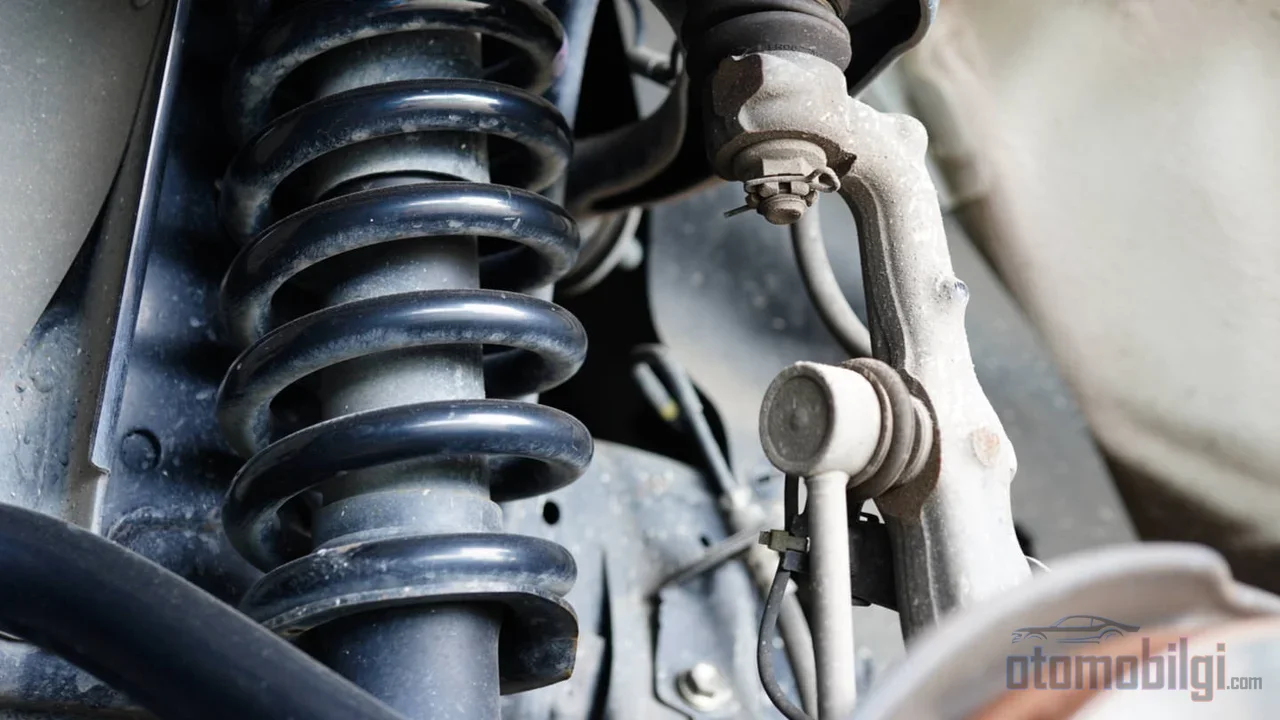
Suspension is the most overlooked part of a test drive, because looking for rough roads seems like a hassle. Yet a speed bump or a pothole-riddled street reveals in seconds a problem that an inspection report might miss. Bouncing and swaying over speed bumps, a jarring ride that worsens with speed, knocking and a feeling of drifting are signs of shock absorber and suspension failure. A faulty suspension is not merely a comfort issue either: it leads to uneven tire wear, longer braking distances, and unstable road holding.
The "clunk-clunk" sounds heard when passing over potholes mean trouble in the undercarriage. This noise has no single source; it can come from different parts such as a tie rod, control arm bushing, or stabilizer link, and requires a precise diagnosis. In the test, your job is to note the sound; leave the diagnosis to the inspection. Check the tires in the same section too: tread depth, tire age, and whether all four tires have worn evenly are important indicators. A tire worn on one edge points to an alignment/balancing or suspension problem. There is a practical measuring method: place a 1 lira coin in the tire groove; if the groove depth is less than 0.64 cm, the tire is worn out.
A road map for a 15-minute drive
To put it all in order, a well-structured test drive works like this:
- Startup: Make sure the car has not been started before meeting the seller; start the cold engine yourself, listen to the warning lights and the idle sound.
- City stop-and-go: Clutch bite point, gear shifts, automatic transmission behavior at low speed, and braking in traffic are tested in this section.
- Fast road: At high speed, vibrations, road holding, and wind noise emerge; overtake to see how the engine picks up revs.
- Rough road and speed bumps: Suspension jolt, undercarriage noises, and nose dive under braking are the subjects of this section.
- Ramp: Uphill pulling power, engine strength, and gears are observed; downhill, the braking response is monitored.
- Parking maneuver: Full steering lock in a tight space checks for clicking sounds and the steering box.
- After the drive: Listen to the engine again at idle; open the hood and check for oil leaks, burning smells, and steam; see whether it left any dripping marks where it was parked.
One more small but meaningful check: run the air conditioning with all the windows closed and smell the air coming out. A musty odor may indicate a risk of flood damage in the car's past. Simple electrical faults, such as a button that seems not to work, should not be overlooked either; the fix may be simple, but every fault that looks minor can be a harbinger of unexpected repair costs.
Does a test drive replace a professional inspection?
No, it does not; the two complement each other. The test drive gives you the car's feel and behavior on the road; an independent inspection is essential for paint, replaced parts, and the condition of the mechanical components. In practice, the usual order is: a Tramer query via SMS using the plate number, followed by the inspection, with the test drive added as the final step. If the seller does not allow an inspection, that in itself is a sign to take into account. On the other hand, do not base your decision solely on the inspection report; along with the damage history and mileage information, the impression you get behind the wheel is also part of the decision. What professionals who have done this for years might miss cannot be expected to be seen by you in fifteen minutes; but what you notice is not always written down in the report either.
One final practical note: a test drive is usually free; however, making an appointment in advance for a test at a dealership or with a private seller both ensures you find the seller prepared and is the easiest way to make sure the engine has not been started before you arrived.
Sources
- What Should You Check During a Test Drive When Buying a Used Car?
- What Should You Pay Attention to During a Test Drive?
- What Should the Test Steps Be When Buying a Used Car?
- What Should You Check During a Test Drive When Buying a Car?
- What Should You Check During an Automatic Car Test Drive?
- Used Car Buying Checklist 2026
- What Do Sounds From the Car During a Test Drive Mean?
- How to Detect a Faulty Shock Absorber?
- Symptoms of a Faulty Steering Gear Box
- What Should You Pay Attention to When Buying a Car?