Which Safety Equipment Is Mandatory in Karting?
Share This Page
I think every karter has the same moment in their head: you put on the helmet, buckle the strap, and as you join that lineup stretching down the track, you ask yourself, "is everything right?" I prepared this article to answer that question well. Because the topic of karting safety equipment is left incomplete in most places: there's a helmet, and the rest is unclear. So which equipment is truly mandatory in a race, and which is enough at a rental track? Let's go step by step.
Helmet Certifications: Not Every Helmet Is Suitable for Karting
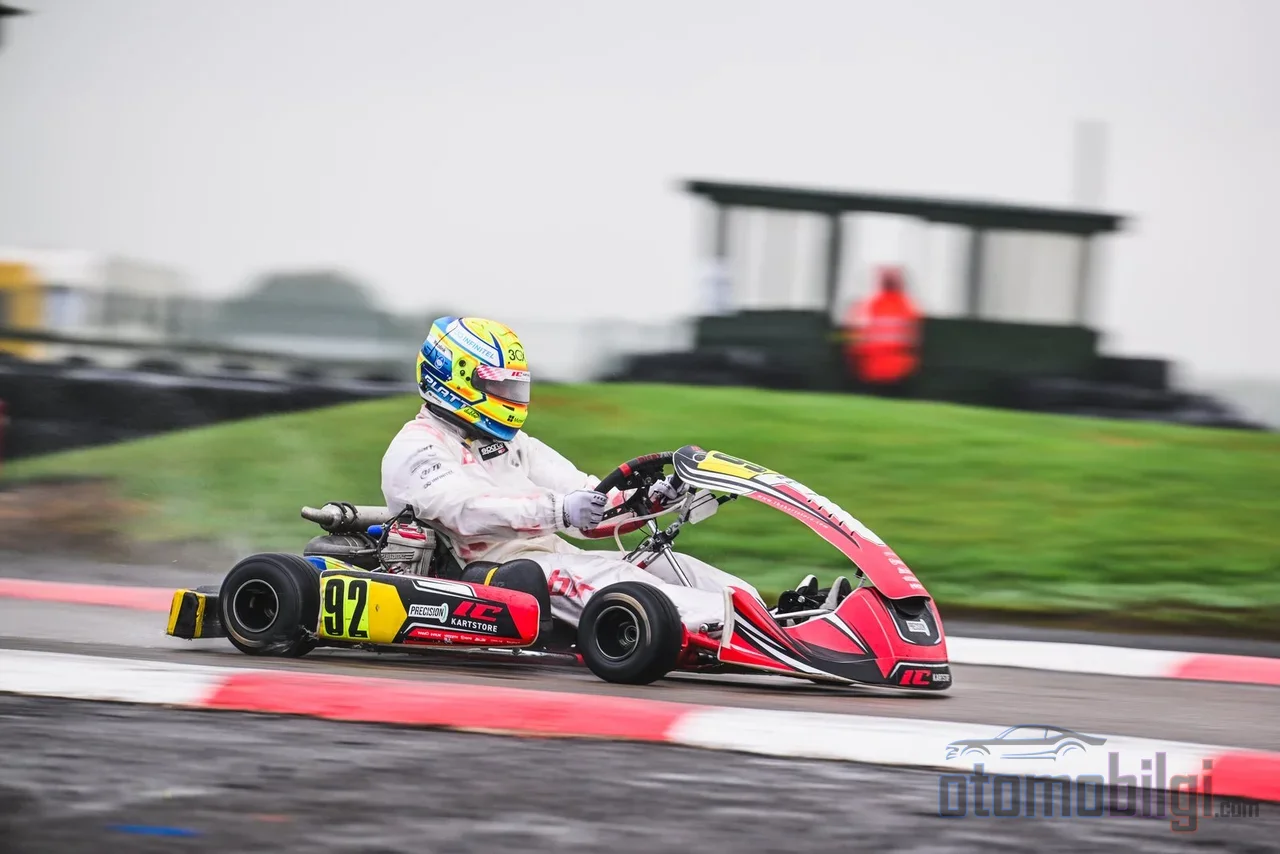
Let's start with the most critical piece, because the helmet is the heart of karting equipment. Simply saying "I have a helmet" isn't enough; the helmet needs to meet a recognized standard. The standards valid in karting come from two families: Snell and FIA. On the Snell side, Snell-K2020 and the current kart racing standard Snell-K2025 stand out. On the FIA side, the 8860 series and entry-level standards such as FIA 8859-2015 are recognized; FIA Karting's current karting helmet standard is FIA 8878-2024.
Age is the deciding factor here. For drivers under 15, the Snell-FIA CMR/CMS standards are mandatory. These helmets are normally relatively light, but the versions specially designed for karting are light enough to limit the force transmitted to the neck and have good energy absorption capability. So putting your child in their father's old motorcycle helmet is not a good idea at all; the standard doesn't match and it's risky in terms of neck load. Drivers over 15 can use suitable Snell karting helmets, Snell-certified racing helmets, or FIA-approved karting helmets. There's also a simple secret to finding the right size: if the helmet doesn't slide off your head with the chin strap fastened, the size is correct.
The rules of use are as important as the equipment itself. A balaclava is always worn under the helmet, the chin strap must be tightened correctly, and on a full-face helmet the visor must always be closed and locked. Wearing an unapproved visor is forbidden and a real danger. There's also a detail most people don't know: a helmet that has taken an impact, or even just been dropped from your hand, should not be used again without being inspected, even if its label shows the correct standard; a cracked helmet is not accepted under any circumstances. The good news is this: FIA's entry-level standard offers about 80% of the safety performance at about 10% of the cost of a top-level helmet. So you don't have to buy a helmet that costs as much as a house when you're starting out. And yes, FHR (HANS) type neck systems and M6 anchors are not required in karting; this is a difference we're used to from car racing.
Highlights
- The Snell-FIA CMR/CMS helmet standards are mandatory for drivers under 15.
- FIA's entry-level helmet standard delivers about 80% of the safety performance at about 10% of the cost of the top level.
- Karting suits are designed against abrasion, not fire; that's why they differ from car racing suits.
- At rental tracks, the minimum set is usually an approved helmet + gloves; some tracks require long-sleeved clothing.
- The budget-friendly total of a basic racing kit can be kept under 500 dollars, based on per-item prices.
Why Is a Karting Suit Different from a Car Racing Suit?
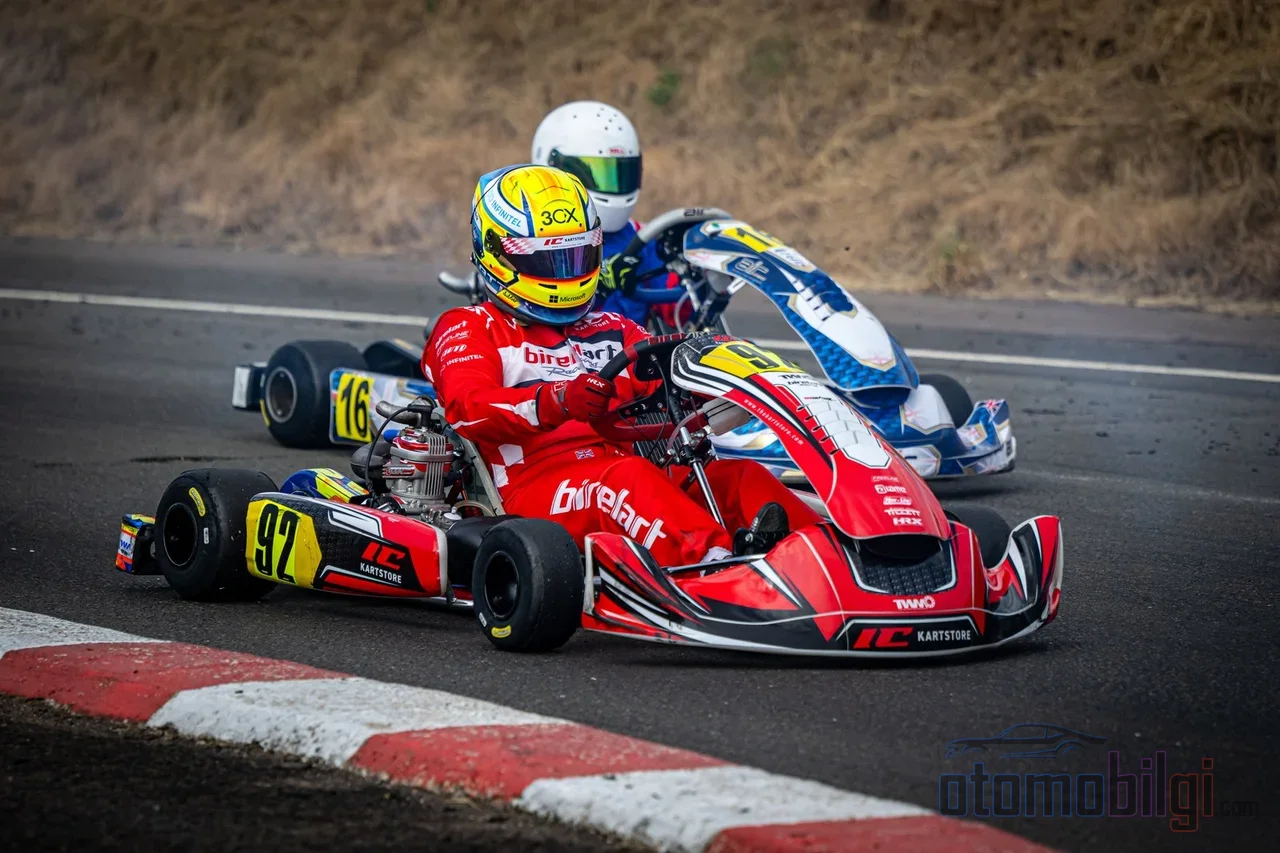
At first glance you might say "it's just a suit," but there is a serious design difference between them. Car racing suits are developed against the risk of fire; the goal is to protect against flames. In karting, since you are not near the engine, the real enemy is friction with the track asphalt. That's why karting suits focus on abrasion resistance and comfort. When you consider that F1 drivers' suits are manufactured according to their professional risk level, the distinction makes sense: each discipline has its own unique dangers.
If you use rental karts and are thinking of buying a suit, it's also useful to know this: track suits are largely similar to each other in quality; the real deciding difference is the FIA certification. So checking the label is far more important than the look. Long pants and a long-sleeved top also provide at least minimum coverage at rental tracks; some tracks recommend a full suit or a long pants + long-sleeved clothing combination.
Rib Protector, Neck Protector and Gloves: The Unseen Heroes
Why is a rib protector so important?
I was surprised when I first heard this: rib injury is one of the most common injuries in karting. The reason is simple; in corners, the kart applies lateral force to you and your body constantly absorbs this force. Think of it like leaning on the handrails at every turn while standing on a bus; but in karting this force turns into pressure on your ribs in every corner. Rib protectors are a critical piece designed precisely to prevent these injuries. The golden rule when choosing one: it should fit the body snugly but not squeeze too tightly, and should not restrict breathing. It is strongly recommended for young drivers.
There is also a new-generation development: FIA Karting introduced a body protection system that combines chest and rib protection in a single piece; this protector is worn under CIK-FIA approved suits. So protection is becoming increasingly integrated.
What does a neck protector do?
In a kart, the head is outside the cockpit; meaning in impacts from the side or rear, your head can move freely. Neck protectors come into play exactly at this point, aiming to prevent permanent damage to the cervical spine in impacts or rear-end collisions. There are closed-structure models specifically designed for karting that reduce the risk of lateral impact. A few well-known examples of karting-specific neck protectors on the market: Leatt Brace, Freem Road Runner, OMP K1 and Best Standard. So there is no shortage of options in this area either; you just need to choose a model compatible with your helmet and suit.
Gloves and shoes
Gloves do double duty: they both improve steering grip and protect your hands from the asphalt in the event of a minor accident. They are also mandatory at the vast majority of rental tracks; some provide free shared gloves, others require you to bring your own. As for footwear, most tracks require closed-toe shoes. While these details may seem trivial, they directly affect your contact with the pedals and your protection in the event of an accident.
What Is Mandatory in Races in Türkiye vs. What Suffices at a Rental Track
Now we come to the main question: what is mandatory where? In official races in Türkiye, the rules are set by TOSFED. The 2026 National Karting Rules published by the federation in February 2026 regulate safety equipment under the Supplementary Competition Regulations EK-1 and refer to the Karting Technical Rules for technical matters. So if you are going to enter an official race, you need to verify your equipment list from that document; the sport's own regulations always have the final say.
At rental and hobby tracks, the picture is a bit more flexible. In Türkiye, the Ministry of Youth and Sports' Hobby Karting Track Directive regulates the operational safety of tracks; matters such as seats being easily adjustable for drivers of different sizes, and brake and pedal adjustments, fall within the scope of this directive. Looking at international rental track examples, the general framework of the minimum equipment set also becomes clear: an approved helmet provided by the track is mandatory almost everywhere, gloves are required at many tracks, and clothing with long sleeves/long pants or a suit is recommended. Some tracks require from the outset that you wear the approved equipment provided by the track.
- Official race (TOSFED): a helmet to a recognized standard, neck protection, gloves, abrasion-resistant suit, and the other items specified in the regulations.
- Rental track minimum: track-provided approved helmet + gloves; recommendation of long-sleeved clothing/long pants.
- Serious hobby/club level: a rib protector should be added to the above, especially for young drivers.
Budget-Friendly or Race Level? Prices Alongside
The most frequently asked question when buying equipment is: how much do you need to spend on a starter set? The figures vary considerably depending on the level. Here are typical prices showing the difference between basic and professional levels:
| Equipment | Basic Level | Professional Level |
|---|---|---|
| Helmet | $199 | $800 |
| Racing suit | $150 | $750 |
| Gloves | $59 | $149 |
| Neck protector | $99 | $299 |
Adding it up, a four-piece basic-level set comes in at around $500; at the professional level, this figure exceeds $2000. My recommendation is this: never compromise on the helmet, because standard and fit are everything; for the suit and other pieces, make a choice appropriate to your level. Even an entry-level FIA-standard item offers high protection at first; you can push the limits as your race calendar grows.
How Risky Is Missing or Incorrect Equipment?
This part gets a bit serious, but I have to say it. The most common types of go-kart injuries are cuts, contusions, abrasions, and sprains/muscle strains. Track design also has a direct bearing on safety: a modification made on a track reduced the accident rate from 1 in 12,000 laps to 1 in 20,000 laps. In other words, the measures are working. But what if the protection isn't enough? In a scientific case published from Türkiye, two go-kart accidents required emergency surgery; the study clearly emphasizes that customers and facility personnel must comply with safety rules and equipment requirements. Understanding trauma mechanisms enables the development of both active and passive safety measures.
And there is one more insidious mistake: assuming that everything is safe now as long as the equipment is complete. A significant portion of injuries occurs precisely in the opposite scenario - those who neglect safe driving thinking the equipment is "good enough." Following track rules even while wearing a helmet, keeping a safe distance between karts, and knowing your own limits are just as vital as the equipment itself.
Which Safety Equipment Is Mandatory in Karting? In summary
The clear answer I promised is here. The mandatory core set for official karting races is as follows: a full-face helmet meeting a recognized standard (Snell-FIA CMR/CMS for under 15, appropriate Snell K or FIA standards above), neck protector, gloves and an abrasion-resistant karting suit; depending on the regulations, rib protection and other parts are added to this. At rental tracks, the minimum equipment is usually the approved helmet and gloves provided by the track, plus long-sleeved/long-pants clothing or a suit. Although a rib protector isn't mandatory everywhere, it is the smartest first investment, especially for young drivers. And the golden rule: every piece should have a valid certificate, the right fit, and solid condition; have any helmet that has taken an impact inspected immediately. That way, your mind stays only on the corners at the track, not on the equipment. Which piece would you buy first? In my opinion, start with the helmet, the rest will follow.
Sources
- Recognised Standards for Helmets in Karting (CIK-FIA Appendix No.2)
- FIA Standard Guidelines Helmets
- 2026 National Karting Rules – TOSFED
- Hobby Karting Track Instructions – Ministry of Youth and Sports
- Karting Helmet Buying Guide 2026 – The Kart Store
- The Ultimate Guide to Karting Protective Equipment – Zamp
- Choosing The Right Kart Rib Protector – Tillett
- Successful Introduction of New FIA Karting Body Protection
- 4 Specific Collars for Karting Neck Protection – TKART
- Safety – Kart – Motorsport UK
- Karting Equipment Guide – Racing24
- What to Wear for Go Karting – Team-Sport
- Terms and Conditions – Larkhall Circuit
- Go-kart Safety Equipment – Racehall
- Regulations – Karting des Fagnes
- Auto Racing vs. Karting Suits Comparison – Driven Racing
- Karting Injuries: Prevention Guide – Kart-Map
- Emergency Surgery Due to Go-kart Injuries – National Journal of Trauma
- Trauma Mechanisms and Injuries Associated with Go-Karting – PMC
- 10 Safety Tips – GoKart Guru