Why Doesn't Everyone Brake Late in Corners? Fundamental Techniques of Driving Fast
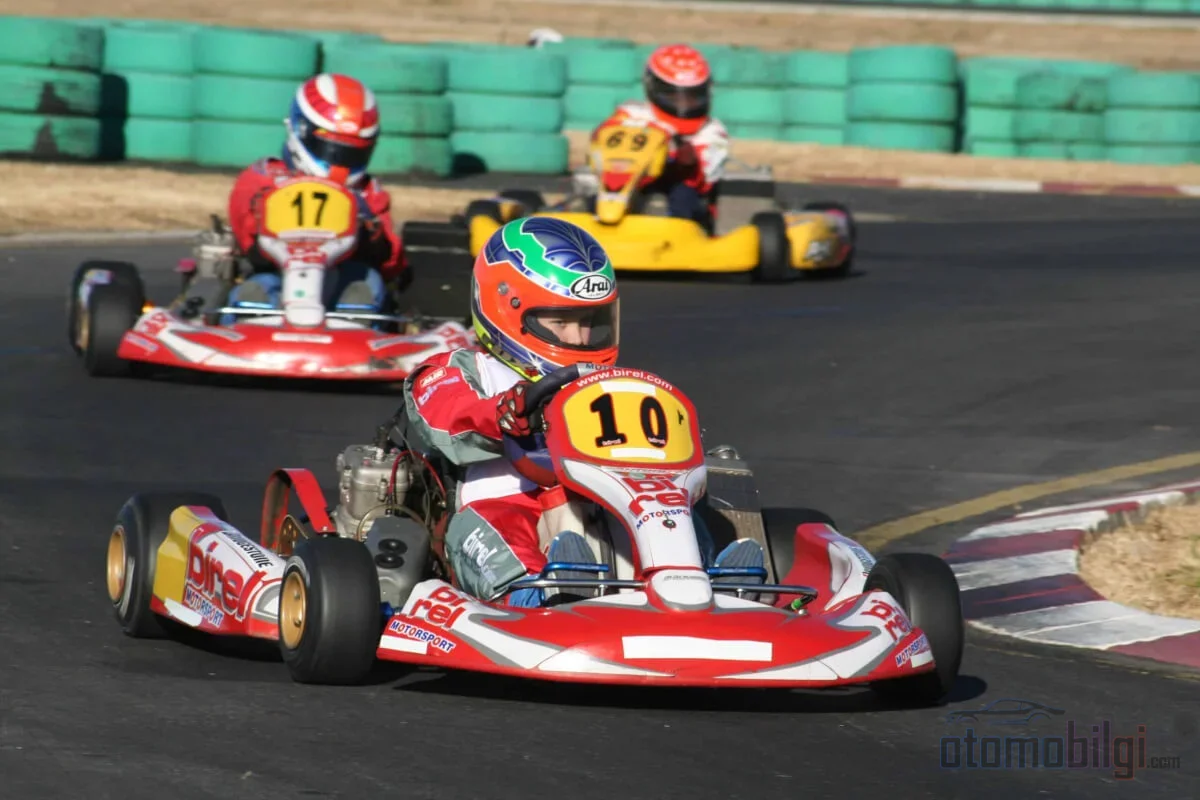
Share This Page
The secret to being fast in a kart is definitely not the hardest-braking pedal; it's the right racing line, late but consistent braking, and a smooth throttle application. These three skills are what separate who is fast and who is just loud on track, and all of them are learnable. Here are the karting driving techniques that will help you from your first practice day onward.
Key Takeaways
- The basic formula is outside-inside-outside: wide entry, clipped apex, wide exit.
- Braking is always done while going straight ; braking mid-corner unsettles the kart.
- Most of your lap time is gained with a clean throttle application at corner exit.
- Contrary to instinct, leaning outward in a corner increases grip.
- Even a tiny change in tire pressure, such as 0.02-0.03 bar , can shift the balance.
The Racing Line: The Four-Part Story Every Corner Tells
I think the biggest mistake we make in karting is this: "If I enter the corner as fast as possible, I'll be the fastest." No! Sometimes sacrificing one corner a little to take the next one better improves your total lap time. Because a corner doesn't exist on its own; how you exit onto the straight that follows matters too. Ponder this simple question: do you want to be fast at the end of the straight, or do you want a flashy speedometer reading in the middle of the corner?
The basic principle of the racing line is the same on every track: a wide entryinto the corner, clipping the apex, and widening again on exit. In other words, the classic outside-inside-outside approach. Doing this lets you preserve speed because it reduces the corner's angle to the fewest degrees possible. It's like drawing a gentle arc on a road instead of a sharp turn - you stress your tires less.
You can think of every corner as four parts:
- Braking point: The moment you lift off the throttle and begin slowing down. Pick yourself a marker - a barrier, the start of a kerb, a sign at the edge of the track. The human eye can't measure distance on a track, but it can remember markers.
- Turn-in point: The moment you turn the steering wheel. If you turn in too early, the kart runs wide on exit; if you turn in too late, you leave your speed on the ground.
- Apex: The tightest inner point of the corner. The maximum speed you can carry up to here is the heart of your lap time.
- Exit: The section where the steering straightens and the throttle opens progressively. This is where laps are won and lost.
Corner types change the job too. In fast sweepers, you want a smooth line and minimal steering movement. In chicanes, the order is hard braking, quick rotation, and a strong exit.
Braking: The Art of Late but Smart Braking
The braking rule is crystal clear: always while going straight. If you brake while entering a corner, the kart loses its balance; the front wheels can't do the job of slowing down and turning at the same time. Also, never press the throttle and brake at the same time - that's just making two pedals fight each other.
So where do you find the braking point? Here's my favorite method: brake just a little later on each lap, and find the sweet spot step by step. If you brake too late, you enter the corner too deep and ruin your exit; but braking too early is relatively harmless, because it gives you time to plan the corner. So if you're a beginner, fearfully braking early is actually not a bad strategy.
There are two fundamental braking techniques:
- Threshold braking: Stopping at the very limit of the brake's power without locking the wheels. The aim is to slow down as quickly as possible on the straight.
- Trail braking: Gradually releasing the brake as you enter the corner. In some corners, braking and turning begin almost simultaneously; that's why it's considered a difficult art to master. It's perfectly normal not to know this in your early days.
Steering position is not a trivial detail either: holding the wheel in the 10:10 position, keeping your shoulders relaxed, and finishing all braking before turning the wheel both preserves grip and buys you time to be ready for the throttle. Hands that grip too tightly both tire out and make the kart uneasy.
Throttle Transition: Why Is the Fastest Moment the Moment You Press the Pedal the Slowest?
Here's the big truth that separates us on the track: a large portion of your lap time is won or lost in the cleanliness of the corner exit. Early and aggressive throttle suddenly makes the kart lose grip; the rear tire starts to slide and your speed goes up in smoke.
The right approach has two parts. First, on exit use only as much steering as needed to stay on the track. Too much steering angle causes the inside tire to scrub against the road (what we call "scrub") - the kart slows down without you noticing. Second, power should be applied gradually while the steering is as straight as possible. Think of it like the tap at home: if you open it suddenly, you water everything; if you open it slowly, the water goes exactly where you want. The throttle works the same way.
There are some medium-speed corners where neither braking nor full throttle makes sense. For these corners there's the "lift-and-turn" technique: instead of braking, you briefly ease off the throttle and turn. The kart maintains its balance, and you exit smoothly.
Body Weight: Instinct Says Lean Inward, Technique Says Outward
A kart doesn't wrap you in a seatbelt; you and your body are part of the kart. That's why where you place your body weight has an effect of dozens of kilograms. The funny thing is: almost every beginner leans inward, whereas the right approach is usually the exact opposite.
Leaning inward causes understeer, meaning the kart's nose resists turning into the corner as much as you want. The right approach, in order to transfer weight to the tire holding the grip, is to lean outward. This becomes even more critical on a wet surface, because when grip decreases, every gram of loading makes a difference.
On exit, the story changes: leaning back slightly transfers load to the rear wheels, improving grip and traction. Shifting your body inward mid-corner reduces outward weight transfer; leaning back as you exit the corner "frees up" the kart and prevents speed loss caused by the inside tire's scrubbing. In short, your body is a tuning device - it has a different job in each phase of the corner.
Tire Pressure and Temperature: The Power of the Invisible Adjustment
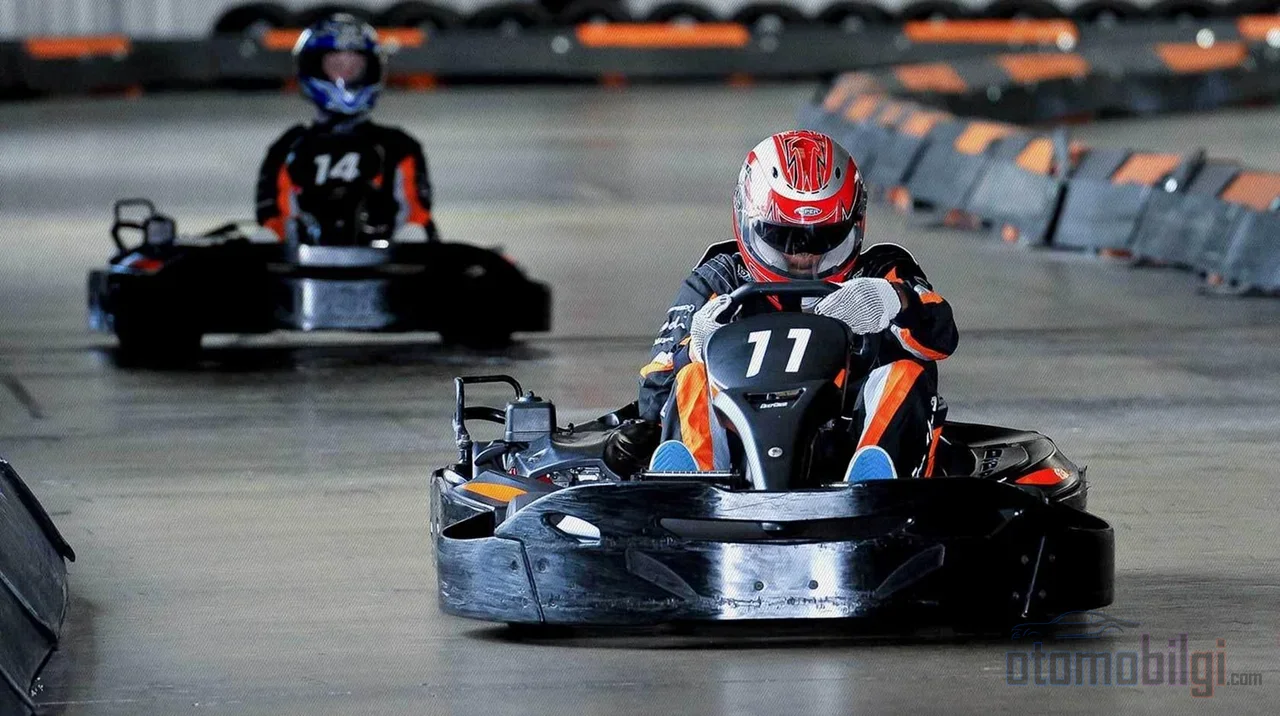
The most sensitive adjustment in karting is undoubtedly tire pressure. Even a tiny 0.02-0.03 bar change can alter the kart's balance, grip phase, and tire temperature. So for those who say "let me just add some air, what difference could it make," the answer is: quite a lot.
The most important concept here is hot pressure (hot pressure). When the tires reach operating temperature on the track, the air inside expands and the pressure rises. For this reason, the cold pressure should be set so that the target is reached once the tires warm up. An example logic works like this: to "grow" into a target 15 PSI hot pressure, you can start cold at 11-12 PSI . If you start with a very high cold pressure, the tires overheat and balloon; along with road grip, your confidence becomes a thin layer as well. Many racers make fine adjustments in 0.3-0.5 PSI steps; some setup guides, on the other hand, recommend an increase of 1 PSI per session to bring the tires up to operating temperature faster.
| Adjustment | Recommended Value | Why It Matters |
|---|---|---|
| Fine pressure adjustment step | 0.3-0.5 PSI | Seeing which direction the balance is going in small steps |
| Sensitive pressure threshold | 0.02-0.03 bar | Even this much changes the grip phase and temperature |
| Cold starting point (example) | 11-12 PSI | To "grow" into the target hot pressure as they warm up |
| Target hot pressure (example) | 15 PSI | Sitting the tire in its operating window |
| Per-session increase | 1 PSI | To bring the tires up to temperature faster |
What beginners often do is run the kart blindly at whatever pressure is recommended to them. You don't need to be a setup guru in your first days; but even knowing that the hot-cold pressure difference exists explains why the kart feels different every lap.
The Most Common Amateur Mistakes (And How to Fix Them)
Let's take a look at ourselves. I've made all of these mistakes, and so will you - but knowing which one is which is half the cure:
- Entering corners way too early: The most classic rookie mistake. The kart runs wide on exit, kills speed, and moreover drifts toward the outside of the track.
- Entering the corner on the throttle on the straight and then braking suddenly: Reflex says so, but this ruins the kart's momentum. Finish your slowing down on the straight, at the braking point.
- Jerky and harsh inputs: Sudden steering movements destabilize the kart. Smooth driving is always more efficient.
- Trying to drive at 100% pace all the time: That's the road to missed apexes. Controlled speed is faster than hurried speed - yes, it sounds contradictory, but that's exactly how it works on track.
- Getting on the throttle too early: Hurrying on the throttle at exit loses grip, which ultimately means a slower straight.
- Holding the exit too tight: Refusing to use the extra track width and keeping the exit tight sacrifices exit speed. The whole track is yours, use it!
- Not using the full width of the track: Being afraid of the barrier and driving along the edge is a loss of free speed.
As the level progresses, the goal changes too: at beginner level a clean outside-inside-outside line is enough; at intermediate level late apexes and smooth entries come into play; and at advanced level more complex techniques - trail braking, body usage, fine tuning - become part of the game.
Step-by-Step Plan for Your First Practice Day
A clear plan for your first day is better than a thousand general tips. Proceed like this:
- Use your first 1-2 laps as practice: Get to know the kart, let your tires warm up, don't race against the clock.
- Pick a single corner and drive it the same way every time: Consistency is the mother of speed. Same braking point, same turn-in, same exit.
- Then brake slightly earlier and aim for a late apex: This way you enter the corner with a plan and keep the exit clean.
- Keep going and use the references: Tyre walls, markers along the edge of the track - use these as reminders for braking and turn-in points. Wherever your eyes look, the kart goes there; keep the braking marker in your side/peripheral vision, look at the apex, then at the exit.
There are also things outside of driving, and they seriously boost performance: walk the track, watch the fast drivers, ask the track staff about that track's secrets. If possible, watch yourself with onboard videos; working on specific corners instead of the same full lap is much more effective. Whoever you talk to, keep one thing clear: no one will teach you that track in one go - but if you drive each corner the same way over and over again, the track will reveal itself to you.
How This Journey Looks in Türkiye
These techniques may sound abstract, but karting in Türkiye really works as a school of skill. Karting can be started from the age of 6 and the federation recommends that beginners receive training first; starter packages, including vehicle supply and rental, also make this process easier. TOSFED Karting Academy stands at the center of the grassroots pipeline as a program launched to raise and develop young athletes.
The picture on the track is also vibrant: the months of the Turkish Karting Championship are run across four categories with dozens of athletes; the fact that even the 2025 champion in the junior category is someone who reached the top at a young age shows just how early this sport begins. Young drivers are no longer confined to the national stage - a Turkish driver represented our country at the inaugural FIA Arrive and Drive World Championship. And the road upward from karting advances not only through reflexes but through physical development managed under the supervision of specialist doctors and physiotherapists. In other words, the braking points and throttle transitions on this page may one day be the first sentences of a story told on the world stage.
Frequently Asked Questions: Brake or Lift, Inside or Outside?
Clear answers to the three questions I hear most at the track:
- Brake, or lift off the throttle to slow down? Braking is always done while driving in a straight line; early throttle inside the corner or late/incorrect braking kills momentum. In medium-speed corners, a short lift of the throttle instead of braking (lift-and-turn) can also be a sensible option.
- Should I lean inward or outward in a corner? Instinct says inward, but the correct approach is to lean outward to transfer weight onto the gripping tire. On exit, lean back slightly and load the rear wheels.
- Which corner should I prioritize? The corner before the longest straight - how clean your exit is there is what carries your speed for the longest time.
If you ask whether to brake early or late: neither is the answer on its own. Not mindless late braking, but a consistent braking point found gradually on every lap brings speed. The kart is an honest teacher - every lap it asks you the same question: did you mark the same spot this time?
Now it's your turn. Pick a braking marker, drive a single corner the same way throughout a lap, and then try to make your exit just a touch cleaner. The rest depends on the pedals talking to you.
References
- Karting explained: The racing line – Silverstone
- Unlock Speed: Learn the Secret of Perfect Racing Lines – Republic of Karting
- Ultimate Karting Tips: The Racing Line – Redlodge Karting
- Karting tips: 7 mistakes novices make – Red Bull
- 10 Beginner Mistakes That Slow You Down – Midland Karting
- 10 Essential Go-Karting Tips For Beginners – Redline Racing
- Karting Cornering Tips – Athboy Karting Centre
- Setting Tyre Pressures: The Updated Complete Guide – Kartletix
- LO206 Tire Pressure: Hot vs Cold – Swift Karting
- Weight Transfer in a Kart – Senndit
- 5 Advanced Go Karting Techniques – Republic of Karting
- Karting Driving Techniques and Line Tracking – MetaGelişim
- Hobby Karting Track Regulations – TOSFED/GSB
- How Can I Become a Racer? - TOSFED
- How are young drivers trained in F1? - Motorsport.com TR