Why Are ADAS Features Moving to Subscription Models?
The car has a camera behind the windshield, a radar in the bumper, a heating wire running through the steering wheel - but none of it works. Why? Because the key is in the software, and you are expected to pay for that key every month. Yes, you heard that right: some manufacturers are unlocking driver assistance features that were installed at the factory via subscription. The question of why ADAS features require a subscription has become one of the most hotly debated automotive topics in recent years - and the answer is more complicated than you think.
On this page, I will explain one by one both how the model works and how it affects your wallet and resale value. Let's get started if you're ready, because this topic concerns all of us closely.
What Is ADAS and What Is Factory-Installed Hardware For?
ADAS, or Advanced Driver Assistance Systems, is the general name for digital technologies that support you in terms of speed, lanes, and parking, without fully automating you. Since most traffic accidents stem from human error, these systems have a single goal: to reduce the margin of error.
The Difference Between Passive and Active Systems
They are divided into two groups, and this distinction is important for understanding the subscription debate:
- Passive systems warn you, and you take the precaution: such as blind spot warning and lane departure warning. They alert you through sound, visual signals, or steering wheel vibration.
- With active systems, the vehicle itself intervenes: automatic emergency braking (AEB), Adaptive Cruise Control (ACC), lane keeping assist, and traffic jam assist are in this group.
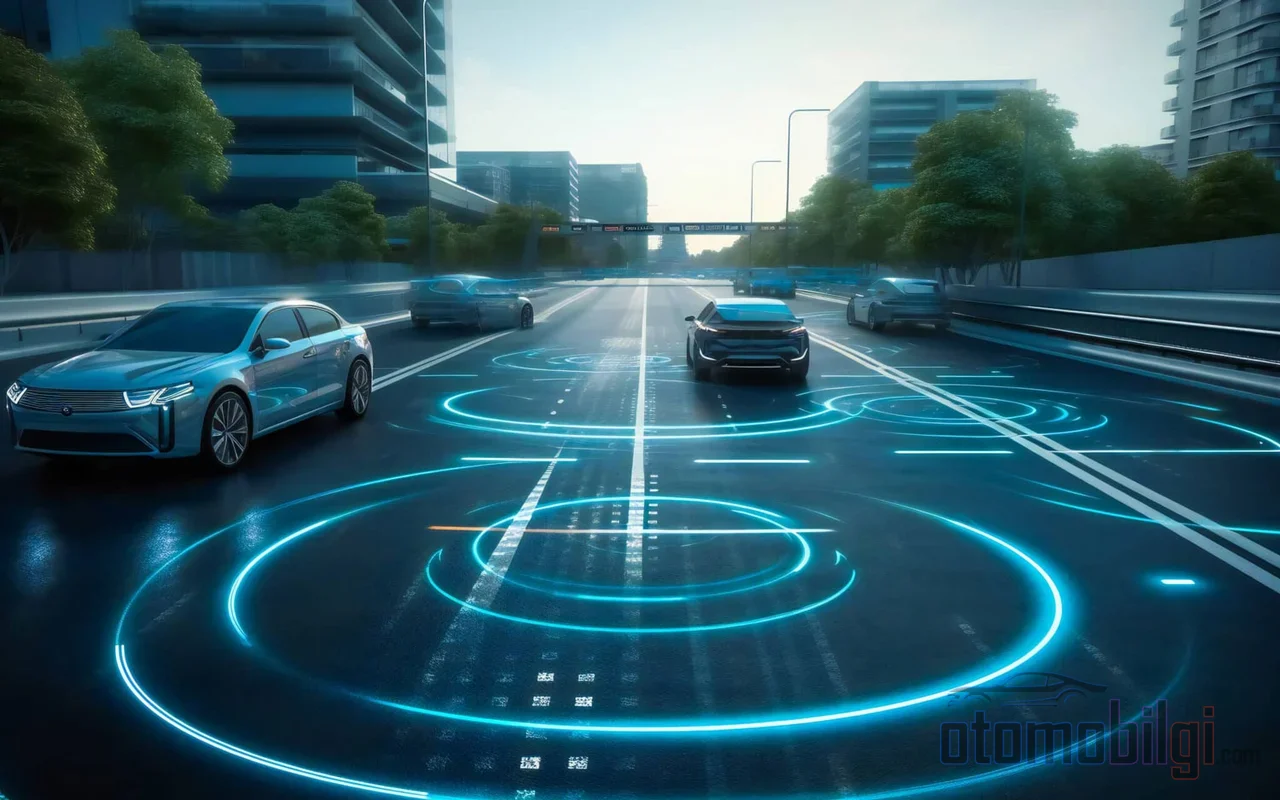
So how does all this magic happen? A single or stereo camera mounted behind the windshield, just behind the interior rearview mirror, watches the scene; in some vehicles, lidar and radar data also come into play. Adaptive Cruise Control tracks the traffic ahead using these sensors; it slows down if the vehicle ahead slows down, and returns to the speed you set once the road clears up. Versions with Stop & Go capability can come to a complete stop behind the vehicle ahead and start moving again. Blind spot monitoring, on the other hand, scans the blind areas with ultrasonic or radar sensors placed on the sides and rear; if a vehicle is in the blind spot while you signal, it escalates the warning to an audible alert or haptic feedback on the steering wheel. Automatic emergency braking also engages the brakes when a frontal collision is approaching, without you touching anything.
Everything is fine so far. Here's the real issue: all this hardware is often installed as standard in every vehicle - but the software layer can keep the features turned off.
Key Takeaways
- Some manufacturers are tying hardware that is physically present in the vehicle to a subscription with a software lock.
- 75% of vehicle buyers do not want features to be locked behind a subscription.
- When monthly subscriptions expire, they are not transferred to the next owner.
- Forward collision warning reduces rear-end collisions by 27%; the rate rises even further when automatic braking is added.
- According to NHTSA, these systems do not replace the driver; responsibility always lies with the driver.
What Does Software Locking Mean When the Hardware Is Already in the Vehicle?
Now we come to the heart of the matter. In 2020, BMW became one of the brands announcing a model that charges subscription fees for features already installed in the vehicle, such as heated steering and Adaptive Cruise Control. Audi also asked A3 customers in Europe for subscription access to features like adaptive cruise control and automatic high beam - and this move drew serious criticism. Because according to critics, the situation was crystal clear: all the hardware was already there.
Let me explain the logic with a simple analogy: you set up a home cinema system, the speakers are on the wall, the screen is in front of you - but they only hand over the remote if you pay a monthly fee. The production cost of the hardware has long been reflected in the vehicle's price; the manufacturer is merely unlocking the software. There is no additional physical cost. According to news reports in 2022, manufacturers like BMW, Ford, Toyota and GM aimed to earn billions of dollars by tying hardware such as heated seats to monthly fees. As we arrive at 2026, the picture has not changed: manufacturers keep testing how much drivers will pay for features they already own, from heated seat subscriptions to wireless (OTA) upgrades.
What Happens When the Subscription Ends?
There is no single answer to this question, and this aspect is the most ambiguous part. The most common scenario is the system shutting down when monthly subscriptions expire. Toyota's remote start application stops working when the subscription ends; only the remote control function on the key remains. So the hardware stays in the vehicle but is non-functional - just like a phone with a dead battery; no matter how nice its screen is, if it's off it's of no use.
On the other hand, there are mixed examples too. In automotive diagnostic devices, even if the subscription ends, the device keeps working with its basic functions; only the online features shut down. In other words, the picture varies from manufacturer to manufacturer and feature to feature. Knowing this detail before purchasing is critical to avoiding surprises later.
One more important detail: safety recalls. If an OTA update fixes a safety recall, federal law requires all safety recalls to be provided free of charge. So safety fixes are not being placed behind a paywall.
Are Subscription-Based Features Transferred on the Used Car Market?
As a second-hand buyer, there are two scenarios you may face, and the difference between them determines whether money comes out of your pocket:
- Monthly subscription: It is not transferred to the next owner when it expires. Even if you buy the vehicle, you need to start your own subscription to use the feature.
- One-time purchase: It stays with the vehicle. Even if the vehicle is sold, it remains valid for the new owner.
In practice, this means: if the feature is activated when you buy the used vehicle, you inherit it; if it is not, you inherit the restriction. In short, the same model, the same year, the same hardware - but they can be two completely different vehicles. Checking the feature list and whether it's activated before buying is now as important a step as listening to the engine.
How Does a Safety Feature Turn Into a Paywall?
This is the most sensitive point of the debate. A heated seat subscription is annoying, but not a life-or-death matter; automatic emergency braking is another story. Looking at the numbers, it's easier to understand why people are so tense:
| System | Effect |
|---|---|
| Forward collision warning | Reduces front-to-rear crashes by 27% |
| Automatic rear braking | Reduces backing-up crashes by 78% |
| Backup camera | Reduces backing-up crashes by 17% |
| Automatic emergency braking (AEB) | Cuts frontal crashes in half |
The fact that AEB will become mandatory on all new vehicles by 2029 also fuels this debate. Because a proven safety technology can become an item the consumer is forced to pay thousands of dollars extra for, just because of how purchase packages are bundled. That was exactly the message Consumer Reports conveyed to Congress: safety should not be a subscription matter. Public opinion thinks similarly - 75% of vehicle buyers don't want features locked behind a subscription. BMW's heated seat subscription drew such a huge backlash that it's cited among the major examples of companies forced to backtrack.
There's movement on the legal front, too. A bill that emerged in the US in 2022 proposed making it illegal for manufacturers and dealers to sell, by subscription, features that use hardware already inside the vehicle. In New York State, Senator James Skoufis is working on a bill that would ban turning built-in features like heated seats, remote start, and driver assistance into subscriptions. So the future of the model may still rest in the hands of lawmakers.
Are Systems Replacing the Driver? The Definitive Answer
Let's give a clear answer to the question that has been building since the start of the article: No, no ADAS system replaces the driver; whether passive or active, whether unlocked by subscription or bundled in a package, control and responsibility always remain with the driver. NHTSA emphasizes this explicitly. In fact, 40% of drivers misunderstand the functional limits of these systems - meaning, independent of the subscription debate, knowing what these systems can and cannot do is a safety issue in its own right.
The legal side points in the same direction: automatic braking and lane keeping do not eliminate the driver's responsibility. The manufacturer can only be added as a defendant in the event of a system malfunction. So even while ACC is active, you are the sensor behind the wheel.
Conclusion: Watch the New Line Item in Ownership Costs
There's a single reason ADAS features come with a subscription: the hardware is already in the vehicle, and the only thing needed to unlock it is removing a software lock. While this model provides the manufacturer with revenue at almost zero cost, for you it means a monthly bill, uncertainty on the resale market, and in some cases safety technology locked behind a paywall. When buying a car, you should now look not only at the equipment list, but also at whether that equipment is offered permanently or on a subscription basis. And don't forget: no matter which system you activate, the responsibility behind the wheel is yours. No one can take over that seat for you.
Sources
- What Is ADAS? Meaning, Working, Types, Importance, and Applications
- BMW Launching Subscription Model for Features
- Audi Wants European A3 Customers To Subscribe
- Subscribe to Get Certain Features on Your Next Car
- Driver Assistance Technologies - NHTSA
- New York Lawmakers Move to Ban Fees on Heated Seats, Remote Start
- 75 Percent of Car Buyers Don't Want Features Locked Behind Subscriptions
- Consumer Reports to Congress: Auto Safety Legislation
- Driver Assist Crash Liability in California
- Modern Driver Assist Features Explained