Is an Aftermarket ADAS Kit Reliable?
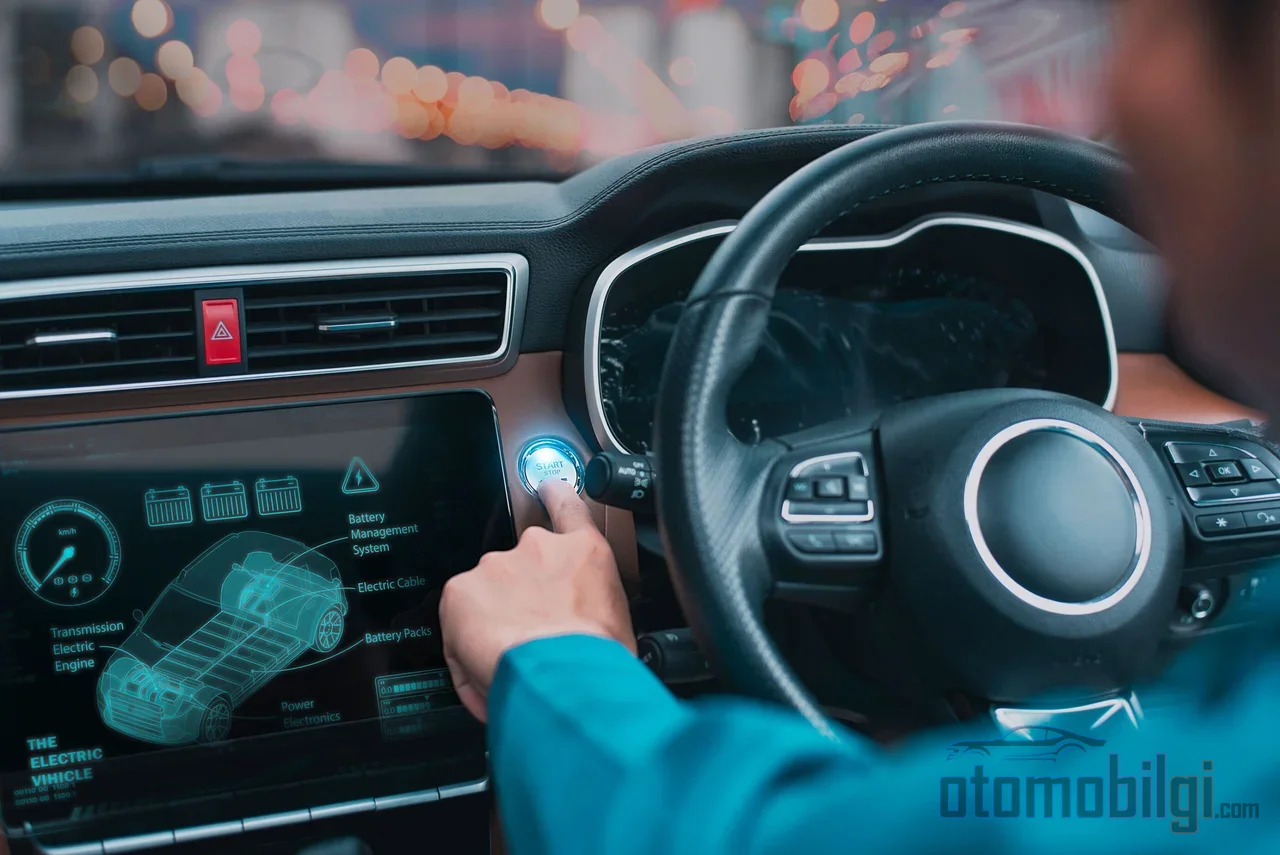
Think of it this way: Your car is a 2015 model, and its screen shows neither lane keeping nor automatic braking. Then one night, while browsing the internet, this pops up: a small box, a camera stuck to the windshield, and promises written in capital letters: automatic emergency braking, lane warning, blind spot monitoring. It did not come from the factory, but it can be installed. So is it really safe? The answer to this question is far more complicated than we think, and no one tells that side of the story. So let me tell it.
First, let's state one thing clearly, because this entire article is built on that fact: ADAS systems, no matter the brand or the installation method, do not replace the driver. Advanced Driver Assistance Systems, or ADAS, is an umbrella term covering functions such as forward collision warning, automatic emergency braking (AEB), Adaptive Cruise Control, lane departure warning, blind spot monitoring, and parking assist. They are designed to HELP recognize hazards and, in some cases, to prevent or mitigate a collision. The steering wheel must always be in your hands.
What Is the Difference Between a Factory System and an Aftermarket Kit?
Here is the crux of the matter: factory-fitted, that is OEM, systems run all the way to the heart of the vehicle. They are deeply integrated into the braking system, electric steering, and vehicle electronics. When the vehicle ahead brakes suddenly, the system does not just beep; it can actually apply the brakes.
Aftermarket, that is retrofit kits, can often not reach that depth. They usually stay at the warning and monitoring level: they tell you "watch out, there is a vehicle ahead" but cannot intervene in the brake pedal or the steering. So even if the box says "automatic emergency braking," it may not be a system that actually brakes the car. This is the first and biggest source of confusion.
But is this warning function at least as good as the factory one? A 2025 SAE study steps in right here, and its results are thought-provoking.
Highlights
- While factory forward collision warning systems warn on average 1.1-2.5 seconds before impact, aftermarket kits react much more variably, in the range of 0.3-3.5 seconds.
- Most retrofit kits cannot intervene in the brakes or steering and only produce warnings.
- If the camera angle shifts by just 1 degree, the collision prevention system looks in the wrong direction.
- Lack of modification and calibration can shift liability to the vehicle owner after an accident.
- AEB is not a system that prevents all accidents; no ADAS replaces the driver.
Why Is Warning Time So Important?
Let me give you the details of that SAE study, because the numbers tell everything. Factory-fitted forward collision warning systems give a warning on average 1.1 to 2.5 seconds before the moment of impact. That sounds like very little, doesn't it? But even at 100 km/h, 1 second is a gift that significantly shortens your braking distance.
In aftermarket systems, the warning time varies between 0.3 and 3.5 seconds. So sometimes it can warn you earlier than the factory would, and sometimes it can drop to the point of beeping just half a second before the collision. This is not about being average, it is about CONSISTENCY. For you to trust a system, it needs to behave similarly every single time. An inconsistent system, on the other hand, creates exactly the opposite effect in you: a false sense of security. You start thinking "my car will warn me anyway" and that is exactly when the real danger begins.
Calibration: Where Everything Falls Apart
Now let's get to the most technical part, but don't worry, I'll explain it with a simple analogy. Think of the ADAS sensors as binoculars. At the factory, those binoculars are aimed one by one according to the vehicle's exact height, geometry, and mounting angles. The algorithm works knowing exactly where and at what angle the sensor is looking.
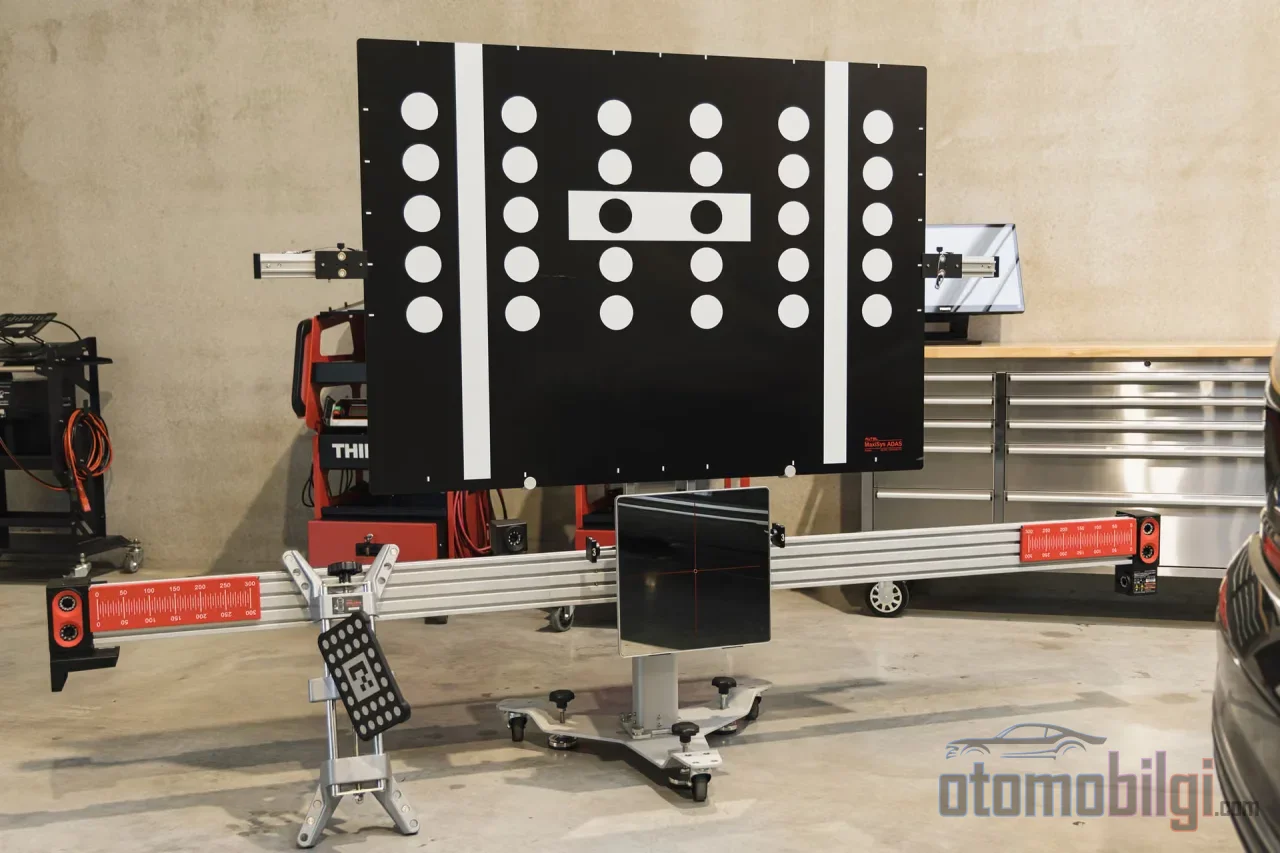
Calibration can be done in two ways: in the static method, special targets, specific distances, and a level surface are used; in the dynamic method, a test drive is performed with parameters defined by the manufacturer. In both cases, access to up-to-date manufacturer information is essential. And this is exactly where the biggest shortcoming of retrofit kits lies: independent accessory kits do not communicate with the vehicle's original electronics using this calibration data.
Clearing Error Codes Is Not Calibration
There is a very common misunderstanding: people think the job is done when a scan tool is connected to the vehicle and error codes are cleared. However, a scan tool does not prove that the sensor is physically aimed correctly. Worse still, some systems keep working misaligned without ever producing an error code. So concluding that "there is no problem" just because no warning light is on in the dashboard is a complete trap.
What Does a 1-Degree Shift Mean?
Keep this number in mind: if the angle of the camera in the windshield is off by just 1 degree, the collision prevention system starts looking in a completely different direction instead of the one it should be looking at. What am I trying to say? It cannot see the vehicle in the adjacent lane, gives a warning for no reason when there is no vehicle, or warns too late. Even small shifts degrade the performance of the entire system. That is why almost all manufacturers make camera calibration mandatory after a windshield replacement; front bumper repair, suspension work, axle alignment, module replacement, and collision repair are also on the same list.
Things Get Even Trickier with Modified Vehicles
You may have lifted your vehicle with a lift kit, fitted large wheels and tires, or lowered it. The look is great, but the sensors' pitch angle, meaning their up-and-down viewing angle, is no longer at the factory value. If the front radar looks too high or too low, AEB and collision warning may react late. Most aftermarket modification parts contain no technical data telling the ADAS system that the geometry has changed.
Manufacturers are also clear on this: they generally do not approve ADAS calibration for vehicles with altered height. In fact, on vehicles lifted more than two inches, calibration often fails, and the warning lights can stay on until the vehicle returns to stock appearance. For example, Toyota has a technical service bulletin stipulating that, as a safety measure, the collision prevention system be disabled at the service center on vehicles fitted with unapproved lift kits. But note this: the same Toyota, with its own approved performance lift kit, provides the necessary hardware and ADAS reprogramming information together with the package. So there is a clear safety difference between a factory-supported modification and an aftermarket accessory kit.
The Most Dangerous Scenario: The Silent System
The scenario radar experts fear most is this: the system appears to be working but cannot be verified or calibrated. No warning lamp, no error code. The driver keeps driving believing the system is protecting them, and learns the truth too late, usually at the moment of the crash. Big tires also belong to the same family of silent dangers, shifting the speedometer by changing their rolling circumference and throwing off all ADAS calculations that depend on speed data.
The Insurance and Liability Side: What Happens When There Is a Crash?
We have talked technical so far; now let's talk legal, because after a crash happens, technical details take a back seat. When a vehicle with ADAS is involved in a crash, the court examines whether the maintenance standard was met. Was the vehicle kept in line with the manufacturer's guidelines, was the required calibration performed, was the right service provider chosen? If a vehicle that went on the road without the required calibration is involved in a crash, investigators and insurers comb through the repair history in minute detail.
And the other side of the coin is merciless: performing a modification means you assume the liability and it eliminates the manufacturer's liability. If you fit an unapproved kit and the system does not work as expected, the manufacturer can say "that was not my system." On commercial vehicles, ADAS calibration can be an insurance requirement, and a lack of calibration can prolong damage claim processes. On the other hand, your strongest card on the defense side lies in keeping records: time stamps of pre-service and post-service scans, which systems were calibrated, the results and the equipment used all make things considerably easier.
And do not forget this: even a faulty ADAS does not save you from liability. You can be held responsible for neglecting to monitor the system's warnings or to intervene when necessary. A malfunctioning system can add an extra defendant to the courtroom, but the main defendant usually remains the person behind the wheel.
What Does AEB Actually Do, and What Does It Not Do?
Automatic emergency braking uses sensors such as cameras and radar to detect the vehicle or pedestrian ahead and applies the brakes itself if necessary. It sounds like a superhero, but its job description is more modest: the main goal is to reduce injury and neck trauma in low-speed collisions. Even factory systems only HELP prevent or reduce the severity of a collision with the vehicle ahead at speeds above roughly 3 km/h, they do not miraculously cancel every accident. In that case, the "AEB promise" of a retrofit kit with no braking ability amounts, at best, to a warning system.
So, Can ADAS Be Installed Aftermarket? The Clear Answer
Yes, aftermarket systems for older vehicles really do exist, and some companies make bold claims in this area. The full answer is this: aftermarket ADAS kits can be installed and may provide warning-level benefits, but they are clearly separated from factory systems in terms of calibration, integration, and warning consistency; most cannot intervene with the brakes or steering, carry the risk of creating a false sense of security, and can shift responsibility to the vehicle owner in the event of an accident.
To be fair to the defense side of the argument: retrofit advocates say they open the way to modernizing the existing vehicle fleet at low cost. Some new research even suggests that height changes do not affect ADAS as much as assumed. But the critics' evidence carries more weight: calibration uncertainty, the absence of manufacturer approval, and variable warning times as in the SAE test. So the decision is entirely yours, but keep your eyes open when making it.
Is There No Problem If the Warning Light Doesn't Come On?
The question is everyday, but the answer is critical: no. Some ADAS malfunctions produce no warning at all on the dashboard. The system can quietly be looking in the wrong direction. If your car has factory ADAS, make a habit of asking about calibration after a windshield replacement, bumper work, or suspension modification; and if you are considering a retrofit kit, get in writing what the system can and CANNOT do. The number of independent reviews is also not very high; the pool based on user experiences is not as large as the sellers' glossy brochures.
Conclusion: Eyes Open, Foot on the Brake
Let me sum up. Factory-fitted, properly calibrated systems really do work; in heavy trucks, forward collision warning reduced rear-end collisions by 44 percent, and AEB by 41 percent. The numbers are impressive, but this success depends on two conditions: the system must be factory-grade and correctly calibrated. An aftermarket kit often fails to meet the first of these two boxes and leaves the second entirely to you and the installer.
That is why the essence of the answer is this: an aftermarket ADAS kit is not a dangerous toy, but it is not a reliable guardian angel either. It can be useful as a warning system; if it promises real intervention capability, question that promise, never skip asking for the calibration certificate, and most importantly: you are the safeguard. Not the system.
Sources
- ADAS Calibration Is a Fleet Safety and Liability Issue
- Retrofit vs. Factory-Fit ADAS: Which Fits Your Fleet?
- Do Aftermarket and Original Equipment Forward Collision Warning Systems Respond to Vehicles and Pedestrians? (SAE, D. Kidd, 2025)
- Understanding the Importance of Calibration: What are the Facts? (AGSC)
- ADAS Recalibration | Windshield Camera Calibration (Safelite)
- Ride Height and ADAS on Modified Light Trucks
- Liability for Defective Advanced Driver Assistance Systems (Hurwitz & Fine)
- Driver Assistance Technologies (NHTSA)
- What is Automatic Emergency Braking (TomTom)
- Driver-Assistance Technologies: The Future of Safe Driving (NCSR)