What Do Emergency Steering Intervention Systems Do?
Share This Page
Emergency Steering Assist is a safety system that, when braking alone is not enough to prevent a collision, touches the steering with small, quick interventions to steer the vehicle around the obstacle. In other words, while conventional automatic emergency braking (AEB) kicks in and slows the car down, this system goes one step further, aiming to avoid the collision entirely by swerving the vehicle to the side. But don't forget: you are still the one at the wheel.
Highlights
- The system works in five stages: detection, evaluation, decision, action, and notification.
- AEB reduces the impact speed by braking; emergency steering assist steers the vehicle around the threat.
- The driver can always override the system's intervention by turning the steering sharply in the opposite direction.
- From 2026 onward, emergency steering assist is measured directly in Euro NCAP tests.
- The system may not work, or may be delayed, in heavy rain, snow, fog, or on winding roads at night.
What Does a System That Intervenes in the Steering in an Emergency Do, and How Does It Work?
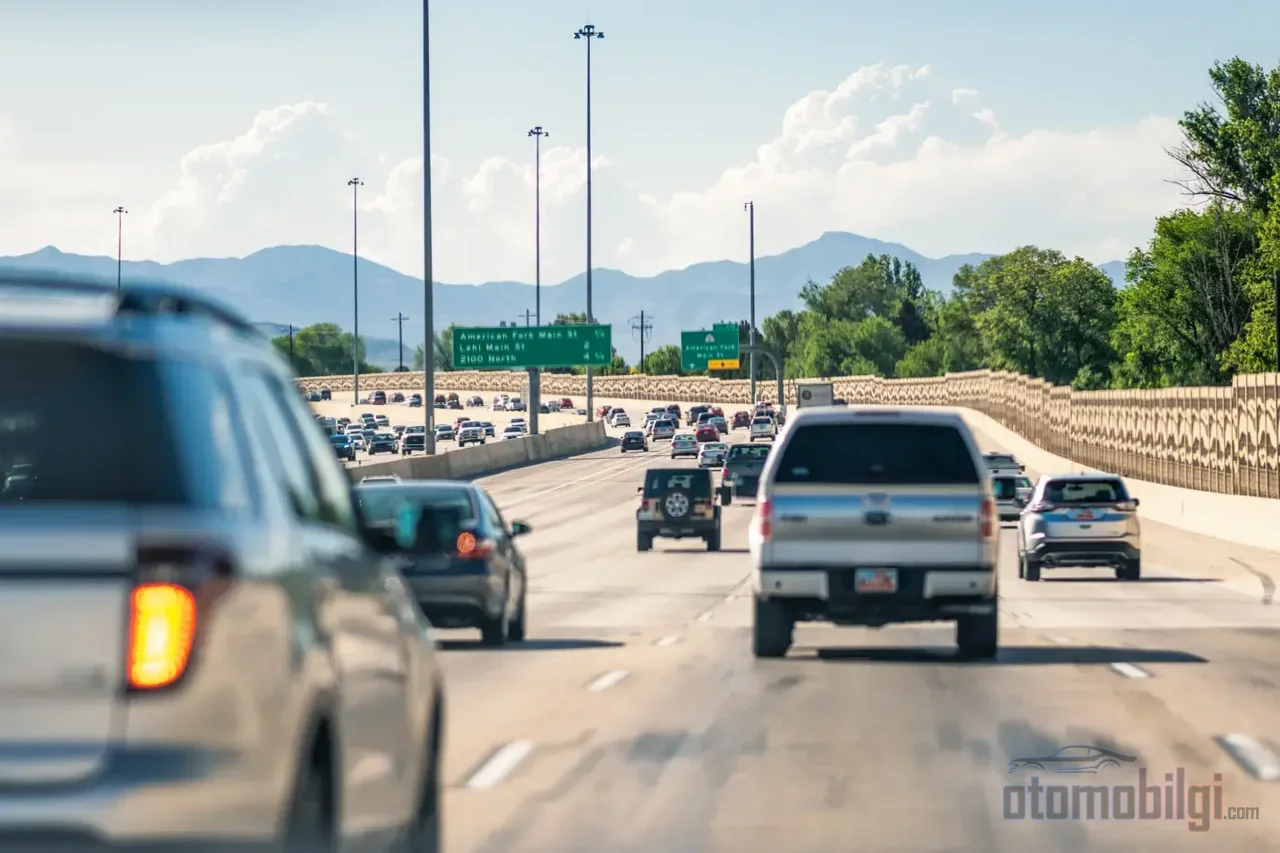
Think of it this way: you're driving on the highway, and the car ahead suddenly stops. Your foot is on the brake pedal, but your speed is too high and the distance too short. Even if you brake, you're going to hit it. And that's exactly the moment when emergency steering assist steps in: using data from its surroundings, which it continuously monitors via radar, camera, and LiDAR if equipped, it swerves the vehicle aside and steers it around the obstacle. In a sense, you could say the system's goal is "no crash at all," while AEB's goal is "a slower crash."
Inside the system's head (that is, its software), a well-organized process is actually running. This process can be summarized in five stages:
- Detection: The sensors detect surrounding vehicles, pedestrians, cyclists, and even obstacles such as debris or animals.
- Evaluation: The proximity of the obstacle, your speed, and the trajectory of both parties are calculated. Is there a risk of collision, and if so, how many seconds are left?
- Decision: If braking alone is sufficient, the steering is not touched. Steering intervention only comes into play if braking is inadequate.
- Action: The steering actuator sets the required angle; the risk of veering into the oncoming lane or off the road while swerving is also taken into account.
- Notification: Visual and audible warnings sound, the steering wheel may turn on its own, and you are reminded to take control.
There's another nice detail: this system usually turns on automatically active on every drive. So you don't have to press the "on" button in the menu every time. In some vehicles you can turn it off if you wish, but when you restart the engine, the system automatically comes back on. Annoying? No, think about it: if one day you forget and leave it off, you'll have switched off a safety net quietly waiting by your side.
What Is the Difference Between Emergency Steering Assist and AEB?
These two are not rivals, but teammates. To clarify the difference, let's draw up a small table:
| Feature | AEB (Automatic Emergency Braking) | Emergency Steering Assist |
|---|---|---|
| Basic function | Brakes to reduce impact speed | Steering intervention to swerve the vehicle aside |
| When it activates | When braking alone can prevent the collision | At the critical distance where braking alone is not enough |
| Its goal | To reduce the severity of the collision | To prevent the collision entirely |
| Working together | It works integrated with AES and is also compatible with ABS | While AEB slows the vehicle down, it is steered into a safer position |
In modern vehicles, these two systems work together like layered defense: one reduces speed, the other directs the path. Examples are also multiplying on the manufacturer side; some brands' evasive steering support first warns when it detects a risk of colliding with a pedestrian or cyclist near the vehicle's front edge, then intervenes automatically. The road is monitored continuously by the front camera, and these systems are designed as part of a single package.
In Which Situations Does the System Activate, and In Which Does It Stay Silent?
That's the critical question, because assuming it "saves you in every condition" is the most dangerous misconception. There are two different philosophies: some systems only step in and lend a hand when your own steering movement is not enough to prevent the collision; others intervene on their own even if you never touch anything. Also, the speed range in which it operates varies from vehicle to vehicle; some are active only at city speeds, others at highway speeds. Opening your own vehicle's manual and learning this range will genuinely help you.
Moments when the system struggles
- Heavy rain, snow, and dense fog: The sensors' vision is degraded, detections may be missed, or unnecessary alarms may occur.
- Strong sunlight and winding roads at night: The camera's reading ability drops.
- Ambiguous scenarios: A pedestrian darting into the road or an object falling from a vehicle; unpredictable human behavior is the hardest lesson for software.
- Odd angles: At intersections, if the collision angle with a crossing vehicle falls outside a certain range, the warning and intervention may be delayed, or may never come at all.
To give some real-life examples: debris in the middle of a highway lane, a cyclist emerging from between parked cars, a sudden lane change in stop-and-go traffic, a narrow two-lane road with a vehicle drifting across from the opposite direction, or an animal running onto the road at night... These are among the scenarios the system was designed for. But knowing which one is supported in your vehicle is still the manual's job.
Evasion Maneuver into the Oncoming Lane: Saving You or Endangering You?
An evasive maneuver is like a weapon: used correctly it saves lives, done at a bad angle it makes things even harder. For example, swerving left to pass the vehicle in front of you on a two-lane road can put you right in front of oncoming traffic. Or a maneuver toward the sidewalk can plunge into a crowd of pedestrians. The good news is this: AES factors in these extra risks in its own decision process. The system may choose not to take on the danger that turning the wheel toward the oncoming lane or off the road would create; meaning every avoidance maneuver is not automatically the "safest avoidance" option.
The scientific side is also interesting: earlier studies had shown that the avoidance steering maneuver carries high potential for preventing collisions in many driving situations. More recent research, on the other hand, is built on frameworks that separately measure the safety benefit of steering systems and AEB for pedestrians and cyclists. In other words, the industry takes this seriously and tries to verify it with numbers. That said, if an unavoidable collision is at stake, the system making the "harm-minimizing" decision is an ethically complex question; and who bears responsibility in an accident - the manufacturer, the vehicle owner, or the software developer - is still a debated issue.
Hands Stay on the Wheel: How Big Is the Driver's Role?
Here comes the most important sentence on this page: These systems cannot take the place of your attention and judgment. Emergency steering support was not designed to replace the driver; it has limits in bad weather, complex traffic, and ambiguous scenarios. A safe speed and following distance are your job; watching the road is your eyes' job. The system is just a hand reaching out to you at that critical half second.
What's more, you always have the right to have the final say: A misaligned radar either fails to intervene when the moment comes, or needlessly touches the steering. The general rule is already to keep both hands on the wheel; especially in emergencies, an avoidance maneuver requires it. So instead of fighting the system, steer in the same direction as it - don't interfere. One note: the idea that the driver should not take their hands off the wheel is so important that the 2026 update also expanded the evaluation of driver monitoring systems in safety tests. The car now keeps watch over your watchfulness - how about that?
Post-Crash and Post-Repair Calibration
The sensors are hidden in the windshield, bumper, side mirror, and undercarriage. A windshield replacement, bumper repair, suspension work, or any procedure affecting ride height can throw these sensors out of alignment. A misaligned radar either fails to intervene when needed or unnecessarily touches the steering. That's why recalibration at a certified center is mandatory after any repair. It may sound like a formality, but the system's eyes depend on this calibration.
Where Are We in 2026: Tests, Brands, and New Scenarios
Emergency steering support has now left the drawing board and landed on the exam table. With its 2026 protocol changes, Euro NCAP has begun testing collision prevention systems far more rigorously, and the new protocols explicitly cover emergency steering. It is also confirmed by testing firms: in 2026, new motorcycle and intersection scenarios, higher speeds, emergency steering, and robustness tests were added to the collision avoidance tests. The test protocol even gave autonomous emergency steering an official definition, as steering intervention applied automatically by the vehicle. The collision avoidance area now measures both emergency braking and evasive steering support together.
On the brand side, the picture is promising: These systems are becoming increasingly common in brands such as Audi, BMW, Mercedes-Benz, Volvo, Tesla, Toyota, Honda and Hyundai; of course, this varies depending on the hardware level and model year. Some manufacturers even go one step further; one German brand's advanced emergency intervention feature can pull the car over to the roadside and stop it if it detects that the driver is experiencing a medical emergency. So the steering support concept no longer just means "avoid the obstacle" - it extends to "if you're in trouble, bring the car to safety."
Final word: Emergency steering support is truly an exciting technology and can make a difference under the right conditions. But see it not as a guardian angel, but as a capable co-pilot. Don't take your hands off the wheel, stay true to your speed and distance; rely not on the system alone or on your own carelessness, but on the two working together. So, which of these systems would you like to see save a life for the first time? Let's talk in the comments!
Sources
- Understanding ADAS: Automatic Emergency Steering
- Automatic emergency steering - Transports Canada
- Evasive steering support
- Emergency Steering (Evasive steering assist) Operation - Kia Owner's Manual 2026
- Limitations of Forward Collision-Avoidance Assist - Kia Owner's Manual 2026
- Drive safely and conveniently from start to finish - Hyundai Motor Group
- How to Use Ford Evasive Steering Assist on 2026
- Special Circumstances and Emergencies - Pennsylvania Driver's Manual
- Euro NCAP announces 2026 protocol changes to tackle modern driving risks
- Euro NCAP Protocol - Safe Driving Vehicle Assistance v1.2 (July 2026)
- Euro NCAP 2026: What's Changing and How to Stay Compliant
- Euro NCAP 2026: ADAS testing and development
- Euro NCAP 2026 Protocols
- Safety benefit assessment of AEB and steering systems - Kovaceva et al., 2020
- Steering and Evasion Assist - Franke et al., 2012
- Volkswagen expands driver assistance features in US models