ADAS Guide: It Keeps You in Your Lane But Doesn't Replace the Driver
Share This Page
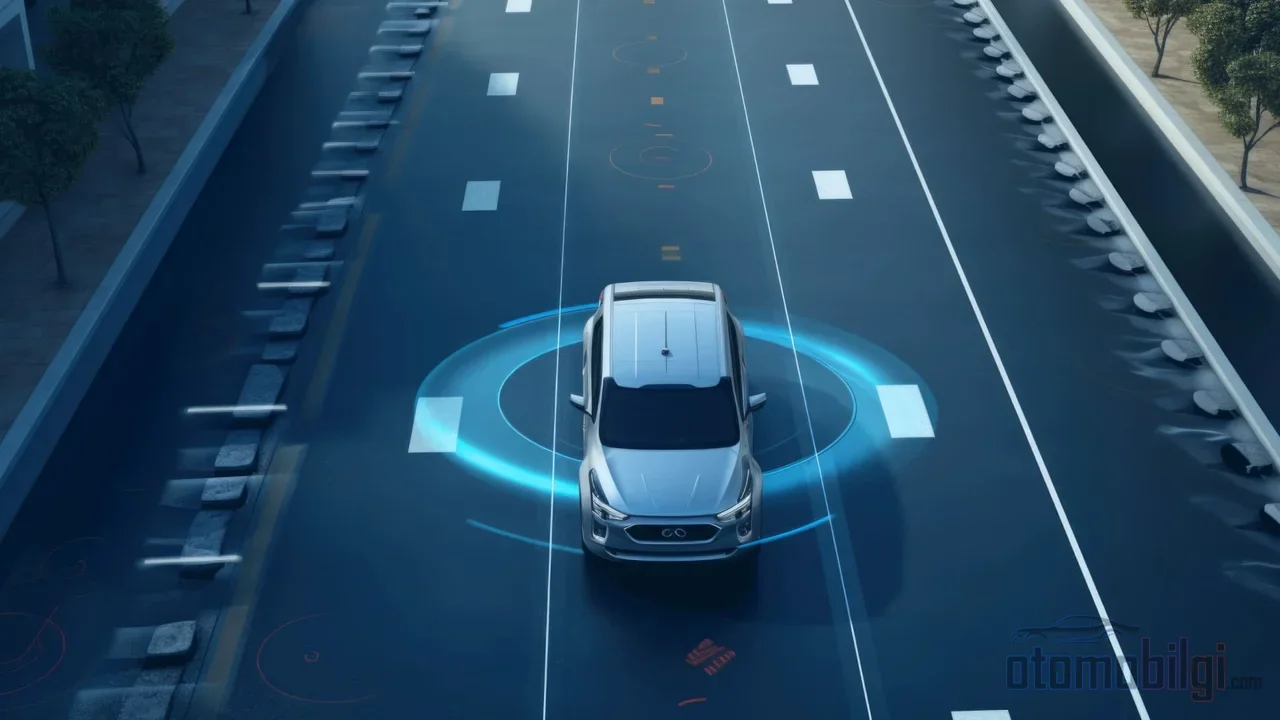
No, the car that keeps you in your lane doesn't take the wheel for you - at least not yet. ADAS (advanced driver assistance systems) such as adaptive cruise, lane keeping assist, automatic emergency braking, and blind spot warning process the data coming to their sensors to help you; but the steering wheel, the throttle, the brake, and most importantly your attention always remain with you. In this guide, I will explain one by one when each system kicks in and when it gets things wrong.
Key Highlights
- Automatic braking with pedestrian detection reduces the risk of pedestrian collisions by roughly 25-27% ; but at night and on curves, it doesn't always see pedestrians.
- The biggest enemy of lane keeping assist: faded, missing, or snow-covered lane markings.
- In most systems, adaptive cruise is deactivated below about 40 km/h or asks to be restarted.
- Even at Level 2, the driver is fully in the loop; responsibility never legally passes to the machine.
What Exactly Is ADAS and How Does It Work?
ADAS, or Advanced Driver Assistance Systems, is the general name for technologies that work with the radar, camera, and ultrasonic sensors fitted to your vehicle. The logic is simple: sensors scan the surroundings, the computer interprets this data, and the system warns or intervenes when necessary. Think of it with this analogy: these systems are a co-pilot sitting in the passenger seat, attentive but not perfect. It warns, supports, sometimes even brakes - but it never takes your seat.
Modern vehicles usually don't have just a single sensor; radar and camera fusion is now standard. Radar provides solid distance measurement, while the camera classifies what it sees. Millimeter-wave radar is usually hidden behind the front bumper, and the camera sits behind the windshield near the mirror. Ultrasonic sensors mostly play a role in parking and blind spot tasks. Weather conditions are the interesting part: fog, rain, and snow interfere with these three sensors in different ways. Camera and lidar are seriously affected by bad weather; radar is more resilient, but snow, ice, or dirt on its front surface can block it too.
Adaptive Cruise Control: Why Can't You Trust the Car Ahead?
Standard cruise control just holds you at a fixed speed. Adaptive cruise control (ACC) is a step ahead: it monitors the traffic ahead with radar, lidar, or a camera, and automatically slows down or speeds up to maintain the following distance you have chosen. The following distance is also mathematical: speed multiplied by the time gap you selected. That's why choosing a long gap makes sense for most driving.
So when does it clearly get things wrong? Here are the real limitations:
- Curves and hilltops: The system's field of view looks straight ahead. It is possible to miss a car in your lane or target a car in the adjacent lane and slow down unexpectedly.
- Suddenly cut-off vehicles: If someone quickly changes lanes in front of you, the system may brake hard or shut off completely.
- Low speeds: Many systems are deactivated below about 40 km/h or wait for you to restart after coming to a stop.
- What They Can't See: It does not detect intersections, traffic lights, or signs, nor does it keep the steering wheel. It is weak at detecting stopped or slow vehicles, pedestrians, animals, bicycles, and motorcycles.
Manufacturers' official manuals are very candid about this. ACC's braking capacity is limited, and some systems may not see parked vehicles at all. It is also explicitly stated that it should not be used in conditions such as slippery surfaces, heavy rain, steep hills, and city traffic. So ACC is not a collision prevention system; it is a speed management assistant. The moment you press the brake, ACC is canceled - driver input always takes priority. That is actually good news: the system never opposes you, you have the final say.
Let me also add a small service note: in a vehicle with ACC, the sensors need calibration after a windshield replacement or front bumper repair. If the camera alignment is off, the system either malfunctions or does not work at all. This is one of those details that can turn a minor accident into a costly one.
Why Does Lane Keeping Assistant Give Up on Faded Lines?
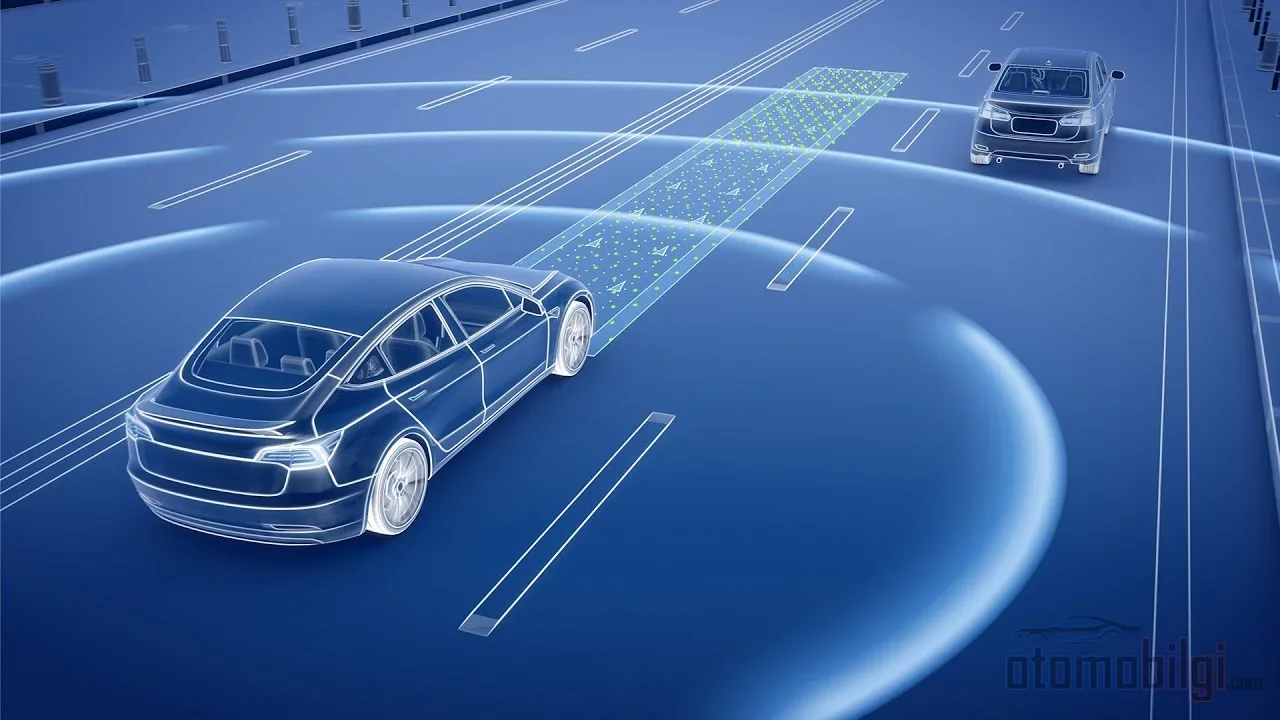
The lane keeping assistant (LKA) is a system that reads lane markings with a camera and helps you stay in your lane. Sounds great, right? But here's the nature of the thing: this system is only as good as what it can see. And the camera, just like your eyes, cannot see if something is blocking its view.
The conditions where LKA most often fails are almost like a checklist:
- Faded, worn, or nonexistent lane markings
- Snow, mud, puddles, or dense fog covering the lines
- Sharp curves and low-contrast roads
- Wide or unusually striped roads
Academic studies examining the system's field performance also show that the main cause of lane assistant malfunctions is challenging conditions such as faded or missing lane markings. So the system is not broken; it just cannot find the line. Once it loses the lane marking, it either silently deactivates or tries to correct you in the opposite direction - both mean surprises on the road. That is why no one has to tell you that your hands must be on the steering wheel even while LKA is active. The driver can intervene and override the system at any moment, which is a well-designed behavior: the machine suggests, the human decides.
Automatic Emergency Braking (AEB): Strong Numbers, Risky Edge Cases
AEB is the system that brakes for you when it realizes a collision is inevitable - and statistically it is the star of the ADAS family. According to research, AEB reduces rear-end collisions by about 50%, and injury-causing ones by 56% . Versions with pedestrian detection are associated with a 25-27% reduction in pedestrian collision risk, and 29-30% fewer pedestrian injury collisions. These numbers are serious; claiming otherwise would be dishonest.
But now for the other side of the coin. AEB cannot always see pedestrians and cyclists at night or around corners. In trials by independent testing organizations, it was observed that even at urban speeds (around 40 km/h), some vehicles gave no warning at all and did not brake in pedestrian scenarios. Manufacturers' own support pages also acknowledge the situation: the system may not always detect pedestrians and children who are not directly ahead. So AEB saves lives, but expecting miracles from it does it an injustice. Think of it as the last layer of the safety cushion, not the first - the first layer is always your eyes and your foot on the brake.
Blind Spot Warning: Why Does It Give False Alarms in the Rain?
Blind spot monitoring works with radar or ultrasonic sensors placed in the corners of the vehicle's rear bumper, and tells you about the car in the adjacent lane that you cannot see. On a straight road, in good weather, it really does its job. But these sensors sit under the bumper, at corners exposed to the road - meaning they are the sensors closest to the world's dust, mud, and water.
Heavy rain, snow, and mud can block the corner sensors; their alignment can be thrown off after bumper damage or repair. Ultrasonic sensors lose their effectiveness in heavy rain and can give false positives in dense traffic. In camera-based variants, a single water droplet on the lens can blind the system. That is usually the reason for those meaningless lights flashing beside you in the rain.
The most dangerous behavioral trap here is this: some drivers say they stopped doing the shoulder check (that is, actually turning their head to look) because they trust the blind spot system. Never do that. That light is an assistant, not a second pair of eyes. Turning your head is still the most reliable blind spot sensor.
What Does Level 2 Mean: Where Does the System End, Where Do You Continue?
The automotive world has levels of automation, and here is the gist: ACC on its own is Level 1; combined with lane centering, Level 2 emerges, i.e. "partial automation." At Level 2, the system provides continuous assistance with both acceleration/braking and steering. But the critical sentence is this: the driver remains fully in control. So Level 2 does not mean "the machine is driving, I am resting"; it means "the machine is assisting, I am on duty."
The legal side agrees: driver assistance features do not transfer legal responsibility to the human. Distracting yourself by relying on these systems can be considered negligence if you are involved in an accident. There is also an interesting phenomenon in English called the "disuse paradox": some people turn the system off completely, taking offense that the responsibility is on them; others over-trust the system and dive into their phones while it is active. Both are wrong extremes. The correct use is in the middle: use the system, but keep your hands on the wheel and your mind on the road.
One-Sentence Usage Rule for Every System
To wrap up the guide, I have fit the one thing to remember for each system into a table:
| System | What It Is Best At | Its Weak Point |
|---|---|---|
| Adaptive cruise (ACC) | Automatically maintaining following distance on the open road | Not seeing corners, hill crests, suddenly cut-off vehicles, lights, and signs |
| Lane keeping assist | Keeping the vehicle in its lane on roads with clear markings | Faded/covered lane markings, fog, sharp curves |
| Automatic emergency braking (AEB) | Preventing or mitigating a collision at the last moment | At night, on curves, pedestrians and children who are not directly ahead |
| Blind spot warning | Alerting you to a vehicle beside you during a lane change | Heavy rain/snow/mud, bumper damage, and miscalibration |
As you can see, all the weak points share a common denominator: the sensors' line of sight. Bad weather, a dirty windshield, faded markings, a damaged bumper - they all blind the system's eyes. That's why the best ADAS user is one who knows what the system can and cannot see. Don't be surprised when the system warns you; but stay alert when the system falls silent.
Final Word: Hands on the Wheel, Mind on the Road
ADAS is one of the most exciting safety steps in the history of automobiles, and it genuinely saves lives - the numbers say so too. But the word "assist" in this technology's name is not there for nothing. No matter how smart the radar or how sharp the camera, the responsibility behind the wheel belongs to one single person: you. These systems are a good travel companion; but the driver will still be you. And frankly, that's not such a bad thing - being behind the wheel is something we already enjoy, isn't it?
Sources
- What Is Adaptive Cruise Control? How It Works, Pros & Cons
- Adaptive Cruise Control limitations
- About Adaptive Cruise Control
- Adaptive cruise control
- Empirical Performance Evaluation of Lane Keeping Assist
- Lane-Keep Assist Failures: Understanding Driver and Manufacturer Responsibility
- Lane Keep Assist Safety Feature: Troubleshooting
- Effects of automatic emergency braking systems on pedestrian crash risk
- Advanced driver assistance - IIHS
- Guide to Automatic Emergency Braking
- Pedestrian Detection Tech Improves, But Still Unreliable at Night
- Driver Assistance Technologies - NHTSA
- Blind Spot Information System - Honda
- Blind-Spot Monitoring
- Analysis of Impact of Rain Conditions on ADAS