Why Is ADAS Calibration Mandatory After Windshield Replacement?
Share This Page
After a windshield replacement, ADAS calibration means realigning camera-based driver assistance systems to the new glass; in most modern vehicles, if this step is skipped, systems such as lane warning and automatic braking start working misleadingly. In short, installing a new windshield is only half the job - the camera system "opening its eyes" again is essential. So why exactly is this calibration necessary, how is it done, and what questions should you ask the service? Let's go through it step by step.
Highlights
- The majority of vehicles produced after 2015 require calibration after windshield replacement
- Even a shift of just 1 degree in a camera can mislead safety systems
- Calibration usually takes 30-60 minutes ; together with windshield replacement, the total process is around 1-2 hours approximately
- Even if the warning light doesn't come on, misalignment can silently exist
- Correctly calibrated lane warning systems can reduce accidents by 11% and injuries by 21% can reduce
Why Is the Camera Behind the Windshield So Critical?
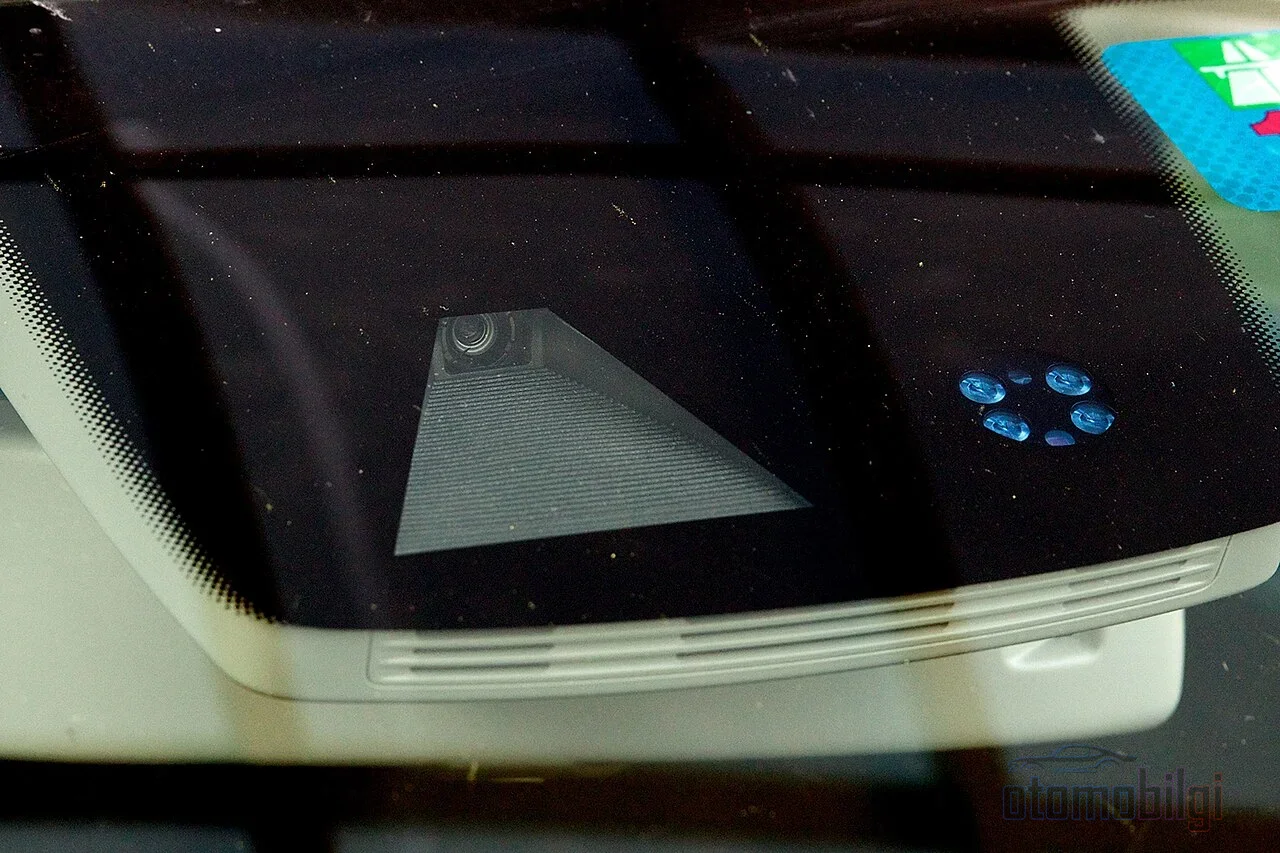
Let's clarify this first: ADAS, or Advanced Driver Assistance Systems, is the collective name for all those smart helpers that enable your vehicle to perceive its surroundings. Lane departure warning, lane keeping assist, automatic emergency braking (AEB), adaptive cruise control, forward collision warning, pedestrian detection, blind spot monitoring... Some of these work with radar, others with ultrasonic sensors. But the star player responsible for "seeing" the road is the forward-facing camera, mounted on the upper part of the windshield, usually in the area where the interior rearview mirror is located. This camera reads lane markings, signs, and vehicles ahead; the software analyzes these images and decides what to do.
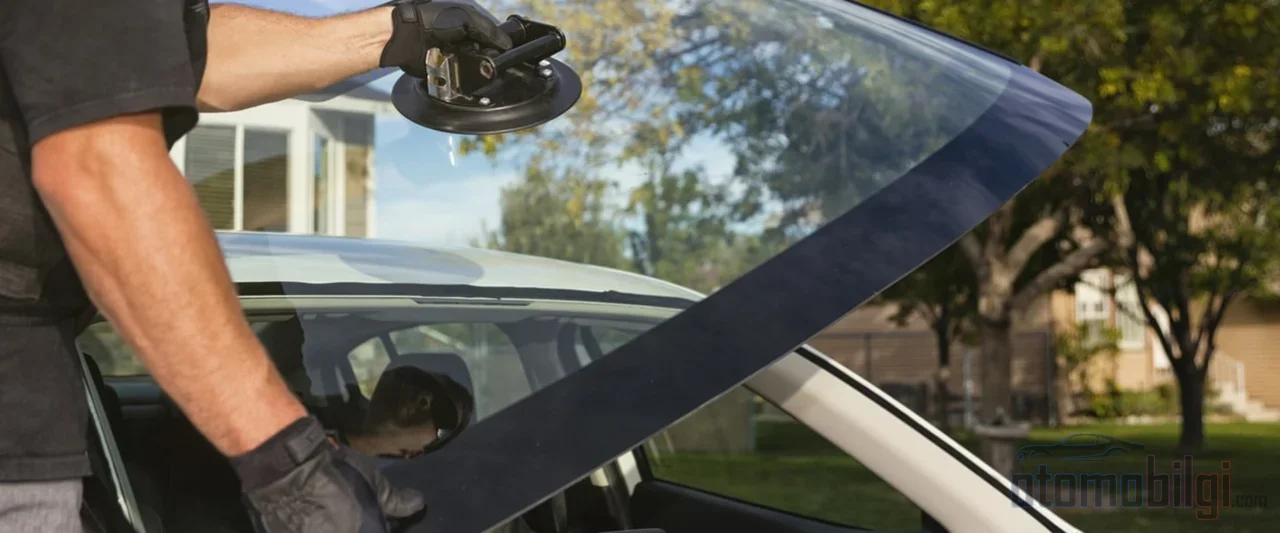
Now for the interesting part: during windshield replacement, the camera is removed and reinstalled. And this is exactly where the problem arises - the camera cannot be placed back into its original position with millimeter precision. And the system cannot recalibrate itself. The calibration is not done on the windshield itself, but on the camera system attached to it. If you tell the optician where you got your glasses, they will replace the lens, but readjusting your eyes' focus is up to you; in a vehicle, this "adjustment" is calibration. Almost all manufacturers require this recalibration after a windshield replacement involving a camera.
Is this shift really that tiny a thing? Think: even a 1-degree angular deviation created during installation or by a light bump is enough for the system to misperceive the road and surrounding vehicles. One degree is too small to think about, but quite a big shift for the camera's world.
What Is the Difference Between Static and Dynamic Calibration?
Calibration sounds like a single method, but there are actually two different approaches, and your vehicle's manufacturer decides which one will be applied. Let me explain both with simple analogies:
Static calibration, is performed while the vehicle is stationary, in a controlled indoor environment. The service places manufacturer-specific target images at a certain distance and uses special equipment to adjust the camera's height and angle. Think of it like a photographer setting up a tripod and aligning the frame nearly perfectly - fixed ground, fixed target, high precision. For most late-model vehicles, this method is mandatory after a windshield replacement.
Dynamic calibration is done, as the name suggests, in motion: The engine is running, a handheld device is connected to the vehicle, and you drive at a certain speed on roads with clearly visible lane markings. During this process, the camera adjusts itself by seeing the real world. It is also known as "mobile calibration"; some services can even perform this type of calibration at the vehicle's location.
| Feature | Static Calibration | Dynamic Calibration |
|---|---|---|
| Condition | Vehicle stationary, indoors | Vehicle while driving |
| Equipment | Manufacturer-specific target images, measuring rig | Handheld diagnostic device |
| Adjusted according to | Camera height and angle | Real road and lane markings |
| Environment | Controlled, requires a precise surface | Roads with clearly visible lane markings |
| Alternative name | - | Mobile calibration |
Here's the key point: While some manufacturers require only one, others require both together. Generally, dynamic calibration comes into play as a controlled road test after the static calibration done first. So saying "static is done, it's finished" is not always correct - what really matters is that the service knows which one your vehicle requires.
What Happens If Calibration Is Skipped?
I recommend reading this section carefully, because skipping calibration is not a "minor glitch" - it is a direct safety issue. A misaligned camera shows the system the world through a distorted window. And the system looking through that window makes wrong decisions:
- Phantom braking: AEB may activate for a danger that does not exist - a serious surprise for the vehicle behind you.
- Missed hazard: The system may fail to react to an obvious obstacle or a vehicle in the adjacent lane; no warning comes when lane drift occurs.
- Unnecessary intervention: If the camera misreads lane markings, the vehicle may make unnecessary steering corrections, and even on a straight road the steering may pull slightly to one side.
- Inconsistent speed control: Adaptive cruise control may maintain an inconsistent following distance with the vehicle ahead.
- Delayed or phantom warnings: Warning sounds when no vehicle is present, and silence when the warning should come.
The scariest part, in my opinion, is this: The system may consider the wrong data "valid" and may not generate any error codes. In other words, the problem may exist silently without a warning light on the dashboard. That's why assuming "everything looks normal, no problem" is misleading. This is precisely why experts emphasize that calibration is necessary even without a warning light or error code.
Then there's the financial side: If calibration is skipped, warranty coverage and insurance claims may be affected. Some manufacturers may not honor warranty or insurance rights for ADAS-related malfunctions if there is no calibration certificate. Let's also not forget the value of properly calibrated systems: when lane departure warning works correctly, it can reduce accidents by 11% and injury rates by 21%. A misaligned system, on the other hand, reverses this protection and increases accident risk.
How Long Does Calibration Take and What Makes Up the Cost?
The time varies by the vehicle's make and model, but a rough framework can be drawn. Calibration alone usually starts at 30 minutes and can extend to 45 minutes, or in some vehicles to an hour or several hours. Together with windshield installation, the total process takes on average 1-2 hours or so. The factors affecting the time are make, model, year, the number of systems to be calibrated, whether a static or dynamic method will be used, and the service's location.
The cost issue involves some shadow play, and this is the part consumers complain about the most: The windshield replacement price unexpectedly climbing upward. But if you have comprehensive insurance, you usually pay only the deductible; moreover, requesting calibration does not lead to a premium increase in most cases. It's worth checking the details of your insurance policy - knowing in advance is both cheaper and more pleasant than living with surprises.
What You Should Ask Before Going to the Service: A Practical Checklist
If you're going to have a windshield replaced, asking these questions when you sit down at the table prevents headaches later on. I've listed them so you can keep them in mind:
- "Does my vehicle require ADAS calibration after windshield replacement?" - The most basic question; for vehicles made after 2015, the answer is almost always yes.
- "Do you perform the calibration at your own service center?" - Some businesses outsource this job; it's important to know who is in charge of the process.
- "Do you provide documentation?" - The pre-scan, the post-scan, and confirmation of successful calibration should appear on the invoice. Asking for written proof is not an exaggeration at all.
- "Can you install OEM glass?" - If possible, request original equipment (OEM) glass. Small differences in curvature, tint, thickness, and mounting bracket in non-OEM glass can shift the camera angle; in some cases, the calibration procedure may even fail on non-OEM glass.
After the job is done, keep your eyes wide open: If you see warnings on the screen after the service such as "Lane Departure Unavailable", "Forward Collision Warning Disabled" or "Cruise Not Available" the calibration may be missing or may have failed. Another red flag: a job taking less than 30 minutes on a vehicle that requires two calibrations. No documentation provided, and calibration performed in a facility where the level plane hasn't been checked and lighting is inadequate also fall into the same category. If you see these, don't hesitate to go back and ask - your car's safety system isn't there just for show.
One final note: windshield replacement is not the only situation that requires calibration. A minor accident (fender bender), a wheel alignment, suspension work, or removing or replacing the camera also create the same need. So you may not be able to simply say "I only repaired the bumper after a collision" and move on.
Remember: The System Does Not Replace the Driver
While we are diving into the topic of calibration, there is one fact that must not be forgotten: These systems are, as the name suggests, driver assistance systems. Official safety institutions and manufacturers' manuals deliver the same message - the technology has the potential to reduce collisions and save lives, but it does not replace the driver. Respecting speed limits, paying attention to the road, and staying alert behind the wheel are your responsibility.
In systems classified as Level 2, this responsibility clearly lies with the driver. Even the manufacturers' official manuals state this clearly: due to their own limitations, the systems cannot respond independently to all traffic situations; the risk of accidents, injuries, and property damage always exists. Even a perfectly functioning, calibrated camera does not change this fact - calibration restores the system's reliability, but it does not fire the person in the driver's seat.
Frequently Asked Questions: What People Wonder About Calibration
Can calibration really be skipped?
In most late-model vehicles the answer is clear: no. If skipped, the safety systems operate unreliably and it creates a risk in terms of warranty/insurance. For an older vehicle or one with simple equipment that has no camera, asking the service center is still the best approach.
Can the car be driven if there is no warning light?
Technically yes, but it is not recommended. As I explained above, silent errors can exist without a warning light; the system may be working misleadingly without telling you "I am broken."
Is mobile calibration possible?
Yes, for vehicles that require dynamic calibration; some service centers can perform this procedure where the vehicle is located - at your home or office. For vehicles that require static calibration, however, a controlled workshop environment is essential.
Does calibration also fix existing faults?
No - calibration only fixes problems caused by misalignment. If the camera or another part is physically damaged, that part must first be repaired or replaced; calibration comes afterward.
To sum up: A windshield replacement means your car's eye is out of place, and it is calibration's job to refocus that eye on the right point. When you go for a windshield replacement, treat calibration as an integral part of the service package, ask for the documentation, check the warnings - and never forget who is ultimately responsible behind the wheel.
Sources
- ADAS Recalibration | Windshield Camera Calibration - Safelite
- Do You Need ADAS Calibration After a Windshield Replacement or Fender Bender? - Gates GMC
- What is Windshield Calibration? - Car ADAS
- Avoid 3 Costly ADAS Calibration Mistakes - MN ADAS
- Lane Departure Warning (LDW) Overview and Calibration - Revv
- Static vs Dynamic ADAS Calibration - Only1 Auto Glass
- ADAS Calibration After Windshield Replacement: Why It's Not Optional - Payless Auto Glass
- What to Ask Your Auto Glass Shop About ADAS Calibration - Tarpon Auto Glass
- How Long Does ADAS Calibration Usually Take After Repairs? - Relux Collision
- Driver Assistance Technologies - NHTSA
- Advanced driver assistance - IIHS
- Risks of hands-off driving in Level 2 systems - ETSC
- BMW ADAS Reference Guide (PDF) - BMW USA