Is It Right to Turn Off ADAS Systems, and When Should They Be Turned Off?
Share This Page
Disabling ADAS systems is often an unnecessary move; however, temporary shutdown can make sense in situations like snow-covered lane markings, sensors getting confused while towing a trailer, or automatic braking that brakes in the wrong place. Permanent deactivation, on the other hand, carries serious risks in terms of warranty, insurance, and safety.
Highlights
- Lane assist already doesn't work when the lines are covered by snow or leaves; turning it off prevents inconsistent interventions.
- When towing a trailer, classic blind spot systems get confused; the solution is the manufacturer's trailer mode.
- Important warnings are re-enabled by default at every start; permanent deactivation is not possible in most models.
- In Europe, some ADAS features have become mandatory in new models since 2022.
- Permanently disabling AEB is generally a bad idea both from a safety and a legal standpoint.
Stop, let's talk openly: what was your first reaction when the steering wheel slipped slightly out of your hands and corrected the path on its own? Mine was "wow, the future is here!" My second reaction, upon seeing the mischief of a system trying to follow a line sliding in the snow, was "now I'm turning you off." This page is exactly about that decision: what is ADAS, which system should be turned off when, what do you lose by turning it off, and which one should you never turn off?
ADAS, or Advanced Driver Assistance Systems, is a family of technologies ranging from automatic emergency braking to blind spot warning, from lane assist to adaptive cruise control. Some only give warnings, some brake, and some make slight steering corrections. But the golden rule is this: none of them replaces the driver. No matter how smart the system is, you are the one controlling the car. Now come, let's put each system under the microscope one by one.
When Does Turning Off Lane Assist Make Sense?

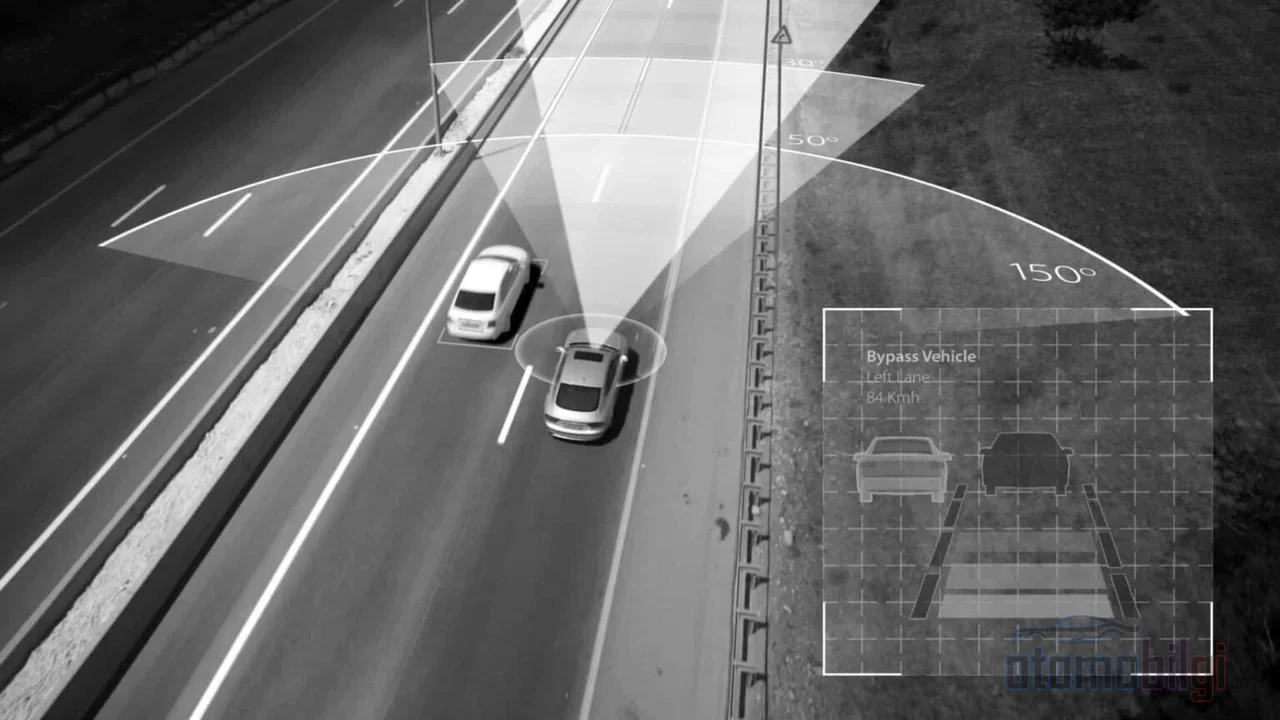
The working logic of lane assist is simple: a system that looks through a front-facing camera sees the painted lines on the road, and when you try to cross the line, it warns you, and in some vehicles even applies small corrections to the steering. Nice, right? Until the lines become invisible.
Here's the real point: if the lines are covered by snow or leaves, or if heavy rain and fog have blinded the camera, the system either becomes completely disabled or, worse, makes inconsistent interventions. At intersections and crossings where the road continues without painted lines, the system can get confused; some drivers say they find these situations "extremely dangerous." Having the car turn the steering on your behalf on snow or slippery surfaces is not a surprise you would want at all.
So the formula is clear: if the lines are not visible, the system is not doing its job anyway, so temporarily turning it off from the menu is quite reasonable. For this, trust the manual and the manufacturer's own settings menu; there's no need to cut any cables, don't worry. Just remember to turn the system back on when the weather clears and the lines reappear.
Why Does Blind Spot Warning Get Confused When Towing a Trailer?
Blind spot monitoring works with radars placed in the blind zones on both sides and behind your vehicle, warning you with an alert on the mirror when a vehicle approaches. Designed for solo driving, this system throws its calculations into disarray when you attach a trailer, caravan, or bike carrier behind it. Why? Because the radars may start mistaking the trailer for a "vehicle in the adjacent lane" or may lose a genuinely approaching vehicle behind the trailer.
The complaint list for trailer use keeps growing: constantly triggered parking sensors, radar blockage warnings, and automatic braking giving false alarms for equipment like bike seats are the best-known problems. In some models, if the trailer profile is not selected, the blind spot system shuts down completely and even gives a warning; forcing the sensors while they are confused creates a risk of malfunction.
The good news is this: manufacturers have long been thinking about this problem. Many brands offer a solution called "trailer mode" or "trailer blind spot alert." For example, in some models the lane change warning can be reactivated from the settings menu while a trailer is attached. So the point I need to make is this: when towing a trailer, it is not about ripping out the system, but choosing the right mode. You do not shut the system off; you tell the system the correct context.
Phantom Braking: Is Turning Off Automatic Emergency Braking the Right Call?
Automatic emergency braking (AEB) detects the risk of a frontal collision with radar and cameras, first issuing a warning and braking itself if necessary. This system works so well that it has been shown to significantly reduce rear-end collisions, especially in city driving. Multiple safety organizations report that the ADAS technologies they examined are associated with a decline in accident and insurance claim rates.
So why do people want to turn it off? Because of what is known as "phantom braking," meaning the system braking unnecessarily when there is no obstacle at all. This can cause panic and increase the risk of a collision from a vehicle coming from behind; there are also accident and injury reports attributed to false activations. So let us admit the complaints are not unfounded.
But here the line is very clear: in some models there is no way to permanently turn off AEB; you have to turn it off again with every start, and manufacturers do this deliberately. In some vehicles, emergency braking can be disabled from the settings menu while the warnings can be left on; this middle path is my favorite. Because hearing the warning is free and you can brake yourself; whereas if you turn braking off completely, you are left alone the moment your mind wanders. Disabling AEB is generally a bad idea in terms of the overall safety balance.
Adaptive Cruise Control and Lane Centering: What to Do in Bad Weather?
Adaptive cruise control (ACC) is a system that adjusts your speed according to the vehicle ahead, and it makes long journeys a treat. But never forget this: no matter how advanced it is, ACC is not autonomous; the driver must be included. This is not just a warning, it is an admission that the system works this way by definition.
The limits are real too. Rain, snow, fog, and dirt on the sensor can impair detection. On hill crests, the vehicle ahead can momentarily become invisible. Faded lane markings, sharp curves, and steep grades can disrupt both lane centering and ACC at the same time. In other words, rather than entrusting yourself to ACC on a mountain road in winter, taking speed control into your own hands isn't a flaw of the system - it's exactly the right way to use it.
So what should you do in that case? In my view, the most honest answer is this: turn it on if the conditions match the "ideal highway, clean air" scenario the system was designed for; if not, switch cruise control to classic mode. Pressing the off button isn't a defeat; it's a far safer move than forcing the system in the wrong environment.
Why Does It Turn Back On By Default When I Turn It Off?
Here's the part that frustrates many drivers: yesterday you turned off the lane assistant, but today when you start the car, the system is on, clean and fresh, as if nothing ever happened. This isn't a bug - it's by design. Many manufacturers allow features to be turned off, but this setting resets every ignition cycle; you have to do it again on every drive.
So why? There are several reasons, and they're all interconnected:
- Regulations mandate that certain safety systems be on by default. In Europe, specific ADAS features became mandatory for new models from 2022 and for existing models from 2024.
- Manufacturers, out of liability and compensation concerns, want safety functions to start active on every drive.
- Type approval compliance and insurance risk management also push in the same direction: a vehicle with the system off isn't the vehicle that was certified.
What's more, this trend isn't reversing; the direction is toward more mandatory default-on behavior. Expecting permanent disable options to shrink and settings to become software- and even subscription-controlled in the future isn't a bad guess at all. In short, the era of "turn it off once and it stays off" is closing; if you're going to turn it off, be ready to navigate a few seconds of menus at the start of every drive.
The Risk of Permanent Deactivation: What Do You Lose?
Permanent deactivation is a much deeper operation than simply muting it from the menu: it's done through methods like coding, ECU programming, unplugging the sensor, or calibration manipulation. Temporarily disabling something from the menu and tampering with a certified safety system are two entirely different worlds. The first is an option the manufacturer gives you; the second means altering the state in which the system was certified.
Why is this so serious? Because modifying a feature can affect radar alignment logic, camera calibration, and steering assist thresholds. Moreover, calibration doesn't only degrade through tampering: after a windshield replacement or front bumper repair, recalibration is mandatory; without calibration, system performance drops and it may even malfunction. Many of us aren't even aware of these consequences.
Practical consequences are also at stake: warranty coverage, compliance with road regulations, and insurance validity all become shaky. After an accident, your insurer may ask you: was the vehicle modified, were the safety systems changed, did this change contribute to the accident? An unreported modification can affect your insurance claim. So playing with the off button may seem free, but the bill can be handed to you on your worst day.
Why Do Drivers Turn Them Off, and How to Make the Right Decision?
Surveys and field studies all say the same thing: the most common reason drivers give for turning systems off is finding the warnings "annoying." Some ADAS alerts sound so grating that people switch the system off rather than listen to it. Systems' false interventions, rural or towing use, and the privacy debate over driver monitoring cameras are added on top of this. In return, there is public safety, accident liability, and regulatory compliance; this debate is not settled yet, and frankly, settling it won't be easy.
So what should you, the person behind the wheel, do? Here is my practical checklist:
- Temporarily turning them off is allowed and sometimes makes sense: snowy weather, faded lane markings, towing, narrow off-road work all fall into this category.
- Stay away from permanently disabling them: especially with AEB, the safety and legal risks go far beyond an annoying warning.
- Learn the trailer mode: if the blind spot system gets confused by a trailer, the manufacturer's trailer-specific setting is your solution.
- Ask about calibration after repairs: if you had work done on the windshield or front bumper, make sure the calibration was performed.
- The off button is not an attention button: with the system off, all responsibility is entirely on you; as NHTSA emphasizes, ADAS never replaces the driver.
One last word: think of these systems as assistants that should be treated like a big-sister chauffeur; sometimes they yell unnecessarily, sometimes they misunderstand, but most of the time they protect you. Turning them on in the right setting, temporarily silencing them in the wrong setting, and never ripping them out is a balance that benefits both you and everyone on the road. Don't you think exiling such a smart assistant over a warning sound is a bit cruel?
Sources
- The Ultimate Guide to ADAS and the Legality of Turning Features Off
- Lane-Keeping Assist: Everything You Need to Know - KBB
- How to Use Trailer Side Blind Zone Alert - Chevrolet
- How Trailer Side Blind Zone Alert Works on a Silverado [2026]
- Stop Right There-Automatic Emergency Braking Explained - MotorTrend
- Automatic emergency braking will be standard by 2022, false activations still a concern - CBS News
- Adaptive Cruise Control: Should You Pay Extra For It? - KBB
- What Is Adaptive Cruise Control, and Is It Safe? - Tremoulis Law
- Adaptive Cruise Control: How It Works, Pros & Cons - iDriveCertified
- A Beginner's Guide to Advanced Driver Assistance (ADAS)
- Report: Automated ADAS Safety Features Are A 'Nightmare' - Forbes
- Why Do Most Drivers Turn Off Vehicle Safety Systems? - Forbes
- Many Drivers Disabling ADAS Systems, J.D. Power Study Says - Body Shop Business
- ADAS and Safety Features Drivers Don't Use - The Brake Report
- Is It Safe and Legal to Disable ADAS Features? - Elite ADAS
- Driver Assistance Technologies - NHTSA
- Advanced Driver Assistance - IIHS
- Advanced Driver Assistance Systems - National Safety Council Injury Facts
- ADAS System Reset & Initialization - Revolution Motors
- Mastering ADAS Recalibration - Snap-on
- Is it possible to permanently turn off automatic emergency braking? - Reddit
- Phantom braking, no way to permanently disable emergency braking - Tesla Motors Club
- Should I turn off my lane keep assist when it's snowy/icy? - Reddit
- Blind spot detection while pulling trailer - Reddit
- Towing Blind Spot and Cross Traffic Alerts - F150 Forum