Cars Say 'Level 2', What Exactly Does This Tell Us?
Share This Page
The 'Level 2' label means the car can manage steering and speed at the same time, but legal responsibility for everything it does still rests with the driver . In other words, the car is not, in theory, driving by itself; an assistant that is constantly monitored and must be taken over at any moment is at work. So what do these levels actually mean, and why is there such a big gap between what is claimed in car marketing and where the car actually stands? Let's go through them one by one.
Highlights
- Automation per the SAE definition consists of six levels from 0 to 5.
- At Level 2, the duty to respond always lies with the driver; at Level 3, it lies with the system under defined conditions.
- Labels like 'Level 2+' have no official standing in the SAE standard.
- The vast majority of vehicles on the road are still Level 1-2; Level 5 remains entirely theoretical today.
What are the SAE driving automation levels, and how are they determined?
Let's first lay the groundwork. These levels are not a marketing idea dreamed up by a manufacturer; they are defined by the J3016 standard of SAE International, an engineering organization, and serve as a common language for car manufacturers, regulators, and insurers worldwide. Even the United Kingdom's 2024 autonomous vehicle law refers to these levels in its own definitions. So when a brand says 'we are Level 3', what it means maps onto a universal measure - at least in theory.
Here's the simplest analogy for you: These levels can be thought of just like swimming lessons. At Level 0 you enter the water empty-handed, at Level 1 you have a floatie in one hand, at Level 2 you have floaties in both hands but the lifeguard is still watching you from the poolside. At Level 3, the lifeguard can finally take their eyes off you - but only under certain conditions. At Level 5, you are already like a fish in the sea: the car doesn't need to do anything else for you.
What does each level mean?
If we gather all six levels in a table, things become much clearer:
| Level | What does the system do? | Who is responsible? |
|---|---|---|
| 0 | No automation; only safety systems that engage at certain moments (e.g. automatic emergency braking) | Driver |
| 1 | Only one of longitudinal or lateral support (ACC or lane keeping, not both together) | Driver |
| 2 | Longitudinal and lateral control at the same time (e.g. adaptive cruise control + lane centering) | Driver |
| 3 | Under defined conditions, driving is entirely with the system; the driver intervenes when the warning period ends | System, depending on conditions |
| 4 | Fully autonomous under certain conditions and on certain routes; the vehicle can operate without a driver and stop safely | System |
| 5 | Fully autonomous everywhere, in all conditions; no steering wheel or pedals needed | System |
Let me highlight a detail you may have missed in the table: some systems classified below Level 0 are actually pretty cool. Active safety systems like ESC or automatic emergency braking can intervene on their own in a moment of danger, but they don't manage anything during normal driving. That's why they don't count as automation. So saying 'my car brakes itself' is not the same as saying 'my car drives itself'.
Why is the difference between Level 2 and Level 3 so critical?
This is the heart of this article. From the outside, the two look almost identical: in both cases the car holds the steering wheel and manages speed and following distance. But the real question is: when something goes wrong, who is responsible for responding? At Level 2, that answer is always you. At Level 3, while defined conditions are in effect, the system is responsible for responding and only notifies you to take over when it reaches its limit, after a specified warning period.
What does this difference mean in practice? At Level 2, falling asleep is absolutely not legal; you must watch the road, touch the steering wheel regularly, and be ready to take control at any moment. In NHTSA's words, Level 2 means 'constant support and full driver engagement in the driving task.' At Level 3, the picture changes: for example, with a Level 3 system operating in congested highway traffic, checking email, watching a movie, or joining a video meeting is legal - but sleeping is still forbidden, and you must be ready to take over when the warning arrives. On a Level 3 system approved in the US, this warning period is about 10 seconds; that doesn't mean you have plenty of time, though.
Even on the internet, people are debating how the difference between the two isn't visible from the outside - I think that's the best proof of how confusing the issue is. Two systems that appear to be doing the same thing when you look through the car window live in completely different legal worlds.
Is 'Level 2+' an official thing?
Short answer: No. 'Level 2+', 'L2+' and similar labels have no official counterpart in the SAE standard. These are marketing definitions invented by the manufacturers themselves. Some brands define Level 2+ as 'a clever interconnection of various advanced driver assistance systems'; another technology company describes it as L1-L2 capabilities supported by location data. So the same label can mean something slightly different for each brand.
This confusion is so serious that the UK government opened a consultation on protecting marketing terms, stating that using the term 'self-driving' for unauthorized vehicles would be extremely misleading. And it's a known fact that most terms in the self-driving field are used in different ways by vendors without a standard definition. So if you see 'semi-autonomous' in an ad, squint and ask this: 'Who is monitoring the system?' If the answer is 'me', then no matter what the vehicle says, you are still the driver.
What level is your car actually at?
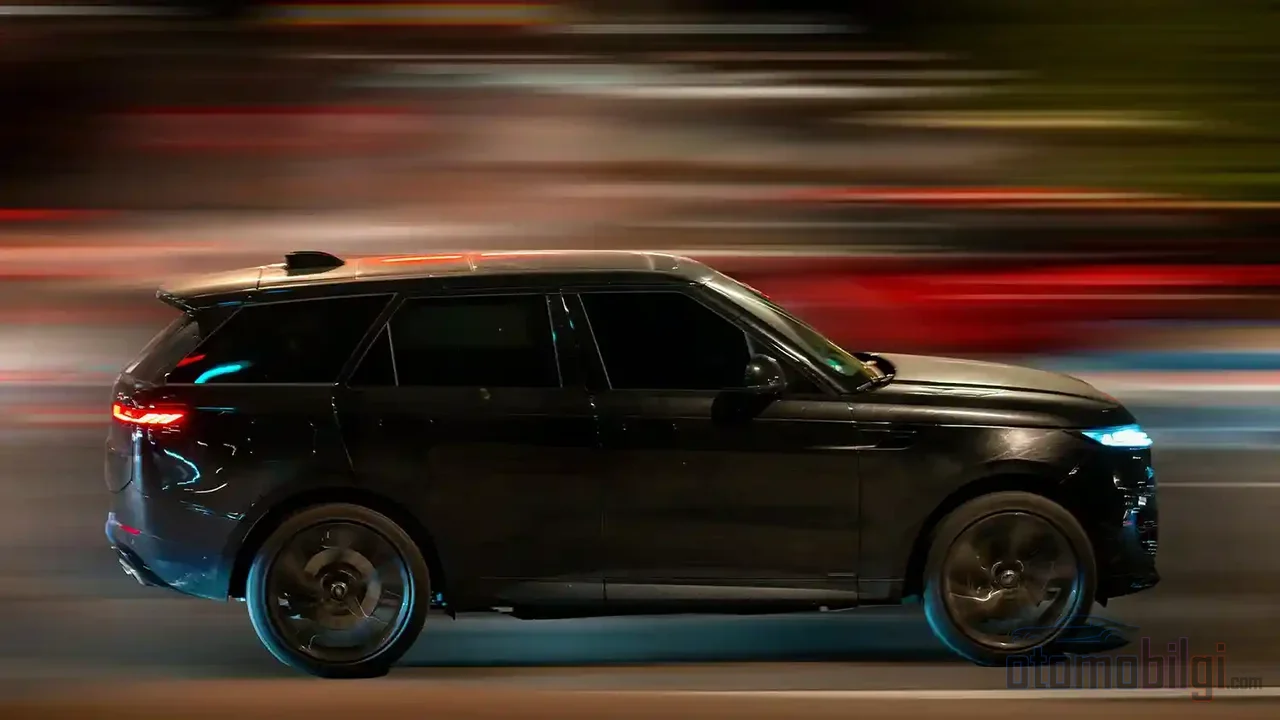
Now let's move on to the fun part: it's time to diagnose your own car. The rule is quite simple - if your car can control steering and acceleration/braking at the same time under certain conditions, it's Level 2. If it does only one, it's Level 1. If it does neither, it's Level 0. Let's place common features on this ladder:
- Adaptive cruise control (ACC) alone: Maintains distance from the vehicle ahead with radar and camera; adjusts speed but does not manage steering. Level 1.
- Lane centering + ACC together: Speed and steering controlled at the same time. This combination is effectively Level 2; traffic jam assistants also fall into this group.
- Blind spot monitoring: Scans blind spots with side and rear radar/ultrasonic sensors; when a vehicle is detected, an indicator lights up on the side mirror, and in some systems there is also an audible warning. It is a support system within Level 0.
- Automatic emergency braking (AEB): Monitors traffic ahead and brakes on its own to prevent or mitigate a collision. Again, Level 0-1 class.
As you can see, most of the fancy-looking features fall individually into the Level 0-1 box. What makes Level 2 special is the simultaneous combination of the two controls. But be careful: combination does not mean handing over responsibility. You should also know the limits - weak lane markings, sharp curves, steep hills and bad weather can disrupt both centering and ACC; some manufacturers' user manuals specifically call for extra caution on steep descents, noting that the following distance may not be maintained. On the other hand, these systems are not useless: adaptive cruise control and lane keeping systems have been shown to carry the potential to reduce accident rates; and let's add that a system that leaves you completely at ease on long journeys can also invite distraction and fatigue. So it's not a weapon, it's a tool: how you use it matters.
Where do Levels 3-5 stand today?
Up until the moment you read this article, the picture is as follows: Mercedes-Benz became the first manufacturer to receive Level 3 approval for passenger cars; the system has been working at up to 60 km/h in congestion traffic on German motorways since 2022, and Drive Pilot is approved in Germany as well as in certain US states such as California and Nevada. Looks advanced, right? But there is an interesting move: it was reported that BMW abandoned Level 3 with the 7 Series facelift and followed Mercedes. Industry analysts expect new Level 3 launches to shift mainly to the 2027-2028 period.
The legal side is also taking shape quickly: The SELF DRIVE Act, introduced in the US House of Representatives in February 2026, contains provisions on Level 3 automation features, and the relevant section is expected to enter into force on September 30, 2026. US state laws regulate Level 3-5 operations; some require a licensed driver to be in the vehicle for the first 12 months. On the Level 4 side, robotaxis such as Waymo are operating in a few US cities including Phoenix and San Francisco. As for Level 5... Let me put it briefly and clearly: No Level 5 vehicle exists to date and experts say it could take decades. So we will have to wait a bit longer for the dream of 'letting go of the wheel and sleeping anywhere, in any conditions.'
Meanwhile, we should not forget Level 3's legal gray area: when an accident happens, is the driver at fault, the manufacturer, or the software provider? This uncertainty is the rationale behind the United Kingdom's 2024 autonomous vehicle law and insurers' new policies. The more the system takes over, the more complex the distribution of liability becomes - and in my opinion, this debate has only just begun to heat up.
Final word: the monitoring question matters, not the label
Knowing which systems your car has should now be much easier. Are steering and speed controlled at the same time? If yes, you are at Level 2 and your hands must stay on the wheel and your eyes on the road. If no, the system is providing one-dimensional support. Labels like 'Level 2+', 'semi-autonomous', and 'smart driving' give you no legal freedom, no matter how much they sell the feeling - because the responsibility still lies entirely with you. The first question you should ask when reading the next vehicle review or browsing at the dealership is now clear: 'Does this system leave the monitoring to me?' Knowing the answer starts with knowing what your car can actually do.
Sources
- SAE Levels of Driving Automation™ Refined for Clarity and ...
- From Level 0 to 5: The Steps to Autonomous Driving
- The SAE Levels of Driving Automation Fully Explained
- Levels of Automation
- Automated vehicles: protecting marketing terms
- Understanding L2+ in Five Questions
- Levels of Automation: Self-Driving Limits
- What Is Adaptive Cruise Control?
- Blind-Spot Monitors
- The 6 Levels of Vehicle Autonomy Explained
- Highly automated vehicles: laws and regulations
- H.R.7390 - SELF DRIVE Act
- Following Mercedes, BMW also abandons Level 3
- State of Self-Driving in 2026 and Beyond