How Much Difference Do ADAS Make in Real-World Crashes?
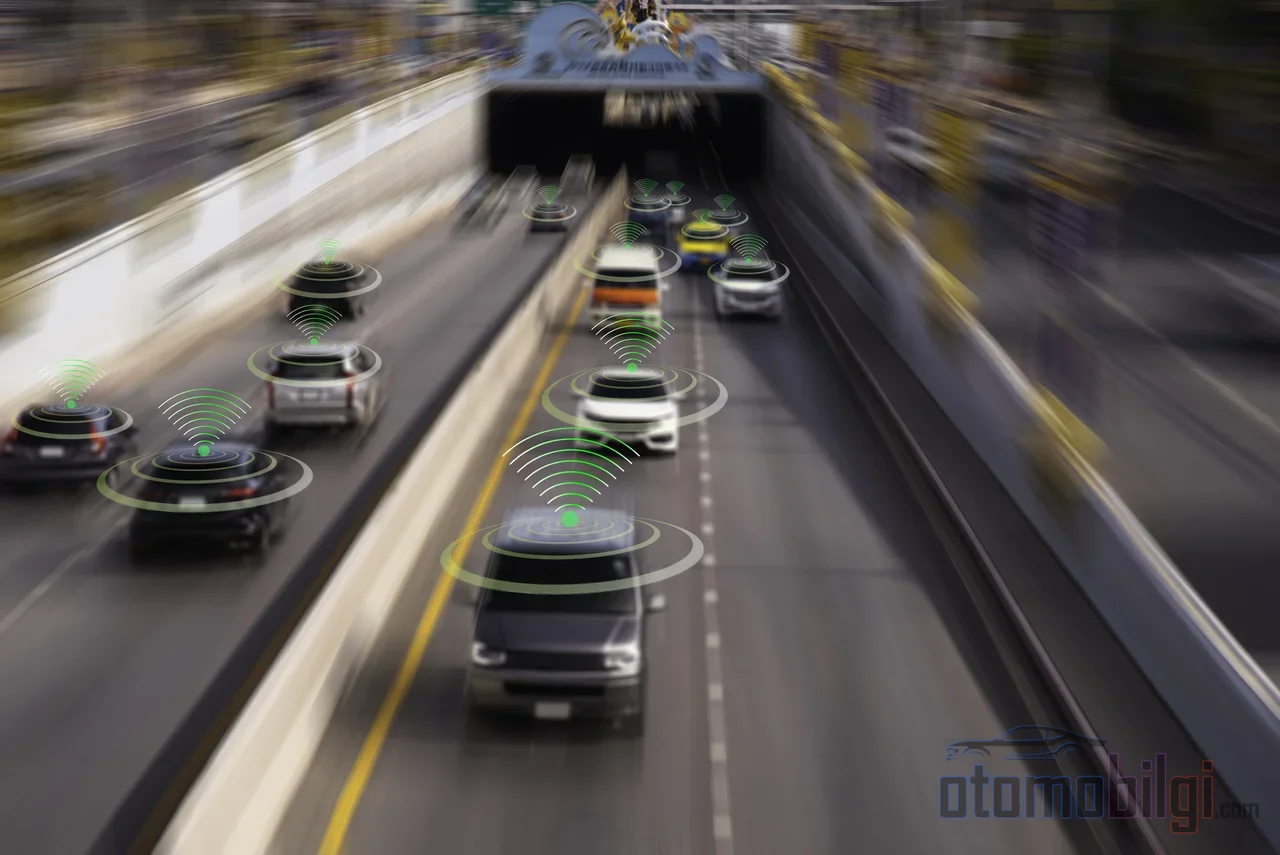
In ads, we always hear the same sentence: the car brakes by itself, keeps itself on the road. But in real life, meaning in real crashes that make it into police records, do these systems really make a difference? Or are they just a luxury extra that looks nice in the brochure but stays switched off in traffic? Are you one of those wondering where automatic emergency braking, blind spot warning, and lane keeping systems stand in crash statistics? Then let's dig into the numbers together, because the answer is more interesting than you think.
Automatic Emergency Braking: Myth or Truth in Rear-End Crashes?
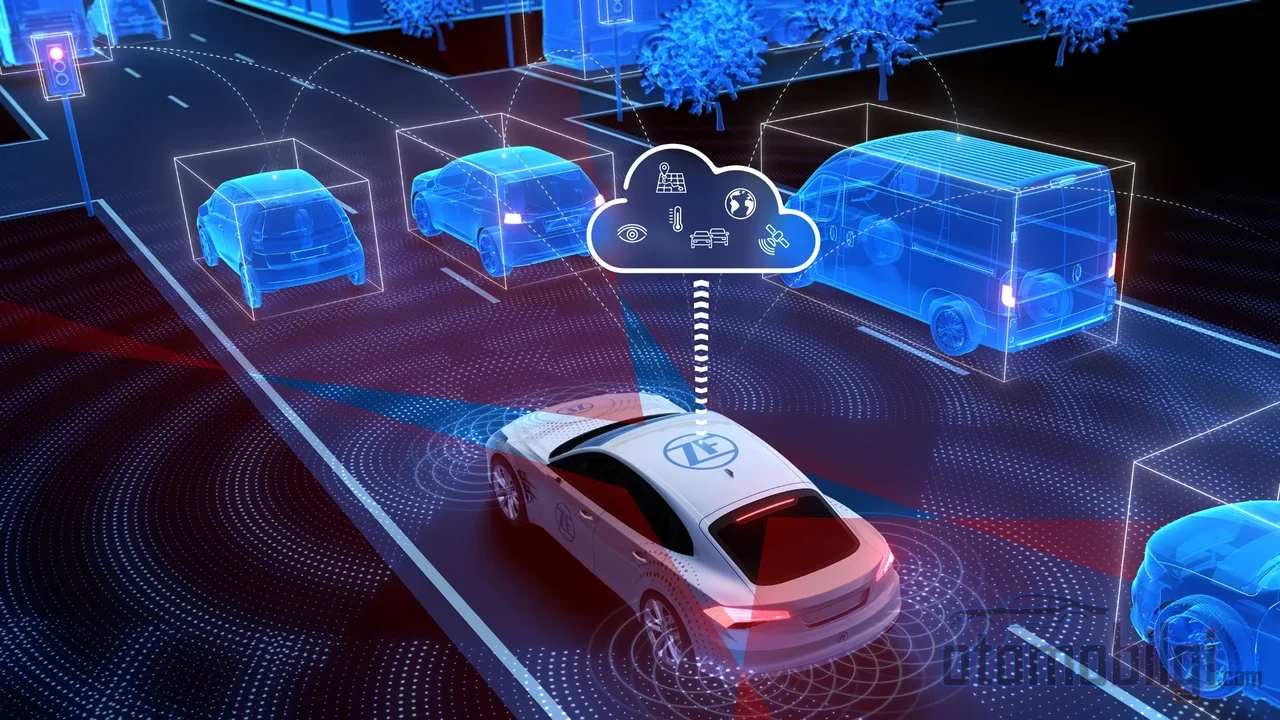
Let's start with the star system of them all: automatic emergency braking, or AEB. The logic is simple; radar or camera sees the vehicle ahead, and if the driver is too slow to react, the system cuts the throttle and intervenes with full braking power. Just like a quiet passenger sitting beside you with lightning-fast reflexes. So is this quiet passenger doing its job?
Real crash data speaks quite clearly here. In vehicles with AEB, two-vehicle rear-end style crashes occur at rates 34% to 50% lower compared to similar vehicles without AEB. Even the collision warning alone works: in vehicles with a warning system, front-to-rear crashes dropped 27%, and injury crashes dropped 20%. AEB that activates at low speeds alone delivers a 43% reduction, while in vehicles with both warning and AEB, this figure climbs to 56% in injury crashes. In some large-scale analyses, reductions of up to 60% have even been measured for injury crashes involving rear-end collisions. So yes, these numbers are not an advertising slogan; they are a real result drawn from police records.
And there is the bigger picture: experts estimate that systems like collision warning and emergency braking each carry the potential to prevent roughly 14% of road deaths. Even NHTSA is no longer waiting; under the new rule, all cars must be equipped to prevent collisions with a vehicle ahead at speeds of up to about 100 km/h. In short, AEB is no longer an optional decoration, it is gradually becoming a mandatory standard.
Key Highlights
- Automatic emergency braking reduces rear-end crashes by 34-50% in real records.
- AEB combined with collision warning reduces injury front-to-rear crashes by 56%.
- Blind spot warning reduces lane change crashes by 14%, and injury crashes by 23%.
- Lane departure warning delivers a reduction of 11% across all crash types, and 21% in injuries.
- Pedestrian detection systems struggle in the dark; they deliver their best results in daylight.
Blind Spot Warning and Lane Systems: Small But Noteworthy Numbers
Don't think of blind spot warning as a superhero; it's more like a careful friend on your shoulder. It puts radar where you can't see in the mirror and tells you when you change lanes. So how much difference does it make in real life? In real crash data, vehicles with blind spot warning show 14% fewer lane change crashes. This may seem like a modest number at first glance, but here's the truly interesting part: the reduction in injury-causing lane change crashes rises to 23%. So the system doesn't prevent every crash, but the ones it does prevent are precisely the ones with serious outcomes. In versions that also cover cross traffic approaching from behind, this improvement is even more pronounced.
Lane departure warning is another beast altogether. It tracks lane lines with a camera, and if you start drifting over the line when you're sleepy or looking at your phone, it warns you; some systems intervene directly on the steering to keep you in your lane. Broad crash analyses have shown this system reduces all crash types by 11% and injuries by 21%; some analyses even measure a far greater drop in fatal crash rates. Real-world data from Sweden explains why: in 81% of drowsiness and run-off-road crashes, the cause is unintentional lane drift - in other words, sleepiness, inattention, or zoning out. So the system targets exactly those moments when drivers say "it won't happen to me."
The Numbers Side by Side: Which System Works Where?
Now let's look at the real-world crash performance of the main systems in a single table. Since each row measures a different crash type, comparing the numbers directly against each other would be misleading; but it's a great summary for seeing where each system shines.
| System | Crash type affected | Measured reduction |
|---|---|---|
| Automatic emergency braking (AEB) | Rear-end crashes | 34-50% |
| Collision warning (alone) | Injury-causing front-rear crashes | 20% |
| Collision warning + AEB | Injury-causing front-rear crashes | 56% |
| Blind spot warning | Lane change crashes | 14% |
| Blind spot warning | Injury-causing lane change crashes | 23% |
| Lane departure warning | All crash types | 11% |
| Lane departure warning | Injuries | 21% |
When the angle of test stars is added to this table, the picture is complete. Vehicles with five-star safety ratings carry a roughly 10% lower risk of injury compared to two-star ones; for fatal or serious injuries, this gap rises to as much as 23%. So laboratory stars do have a real-world counterpart. In fact, the 30-year crash test program is estimated to have saved about 50,000 lives; that's twice the population of a full stadium.
So When Do These Systems Not Work?
Here's the part they don't tell you in the ads. AEB is not an all-seeing superhero; it struggles seriously in certain scenarios:
- If one of the vehicles is making a turn, the crash prevention success drops noticeably.
- On high-speed-limit roads and at highway speeds, effectiveness is a serious question mark; most tests are already carried out at much lower speeds.
- On icy or snowy surfaces, braking distance is longer, so even if the system wants to, it can't react in time.
- If the vehicle hit is not a passenger car but a large and tall vehicle like a truck, the sensors and braking may fall short.
Independent tests show these limits mercilessly. For example, in one test series, vehicles approaching at 40 mph collided fully with the stationary target in most scenarios; but here's the critical detail: even when the system could not prevent the collision, it reduced the impact speed by an average of 62%. In other words, even if it cannot eliminate the crash, it significantly reduces its severity; and that is a huge difference for the airbags and your head.
Pedestrians and Darkness: The System's Weakest Point
The pedestrian detection system really works during the day and on well-lit roads; there is a measurable reduction in daytime pedestrian accidents. But at night? In the dark, cameras see the road only as well as your eyes do, and some analyses found no reduction at all in nighttime pedestrian injuries. That's why safety organizations emphasize that pedestrian detection is currently effective mainly during the day. Also, in vehicles with large blind spots on the driver's side, the risk of hitting a pedestrian crossing while turning left is much higher; the blind spot is not the sensors' only enemy.
Why Don't the Sensors Work in Every Condition?
The logic here is actually very simple: AEB, blind spot warning, and lane support systems all work by seeing through cameras and sensors. If the camera doesn't see the lane line, the lane assistant loses the line; if rain, snow, or ice covers the road surface, the sensors don't recognize obstacles as well. In other words, the system's performance is only as good as what the environment lets it see. Just as you struggle in the fog, the system does something similar; only its reaction time is faster, but its eyes see at most as far as you can. On snowy days, even the cleanliness of the camera lens directly affects its effectiveness.
The Discussion Part: Does Automation Reduce Attention?
This is the most colorful and most controversial aspect of the matter. Most peer-reviewed studies confirm that AEB, blind spot warning, and lane systems provide clear improvement in their own crash types. But some researchers have caught a contrary signal: one preprint study suggests that high-safety-rated systems are, interestingly, positively correlated with fatal crash risk, attributing this to drivers falling into overconfidence and reducing their attention. Although this study has not yet been peer-reviewed, the hypothesis that warning systems keep the driver alert while attention relaxes as full automation approaches has sparked serious debate. In fact, increased phone use and hands leaving the steering wheel have even been measured in drivers accustomed to semi-automatic systems; that's why experts say driver monitoring technologies should be considered together with these systems. The question of effectiveness in high-speed highway collisions remains an unresolved issue.
In other words, the technology inspires confidence, but at the same time can easily lead to overconfidence. Both of these are true at the same time, and the balance between them is entirely in your hands.
Conclusion: How Much Difference Does ADAS Make?
Here is the clear answer I promised: Automatic emergency braking and other advanced driver assistance systems deliver measurable, serious reductions in specific crash types in real-world crash data; but none of them can prevent all crashes or take over the driver's responsibility. AEB reduces rear-end collisions by a quarter to a half, blind spot monitoring and lane support each deliver real drops in their own domains. In return, we are learning the price of pushing the system in scenarios like corners, high speeds, slippery surfaces, night, and trucks.
Think of these systems as a silent co-pilot in the driver's seat; a good pilot, but one who never takes over the plane. It tries to wake you if you fall asleep, brakes if you react too late, reminds you if you forget the blind spot; but the moment you take your eyes off the road, you are still the most important sensor. Technology increases your odds, it gives no guarantees. Isn't that exactly why these systems are so valuable?
Sources
- IIHS-HLDI
- Advanced driver assistance - IIHS
- Effectiveness of forward collision warning and autonomous emergency braking - Cicchino 2017
- Effects of blind spot monitoring systems on police-reported crashes - Cicchino 2018
- The safety potential of lane departure warning systems - Sternlund 2017
- PARTS: Effectiveness of ADAS - MITRE
- NHTSA Finalizes Rule on Automatic Emergency Braking
- Potential Reduction in Crashes - AAA Foundation
- How cars are tested - Euro NCAP
- Comparison Euro NCAP vs real-world - Kullgren 2010