Can AEB Detect a Pedestrian Emerging Between Parked Cars?
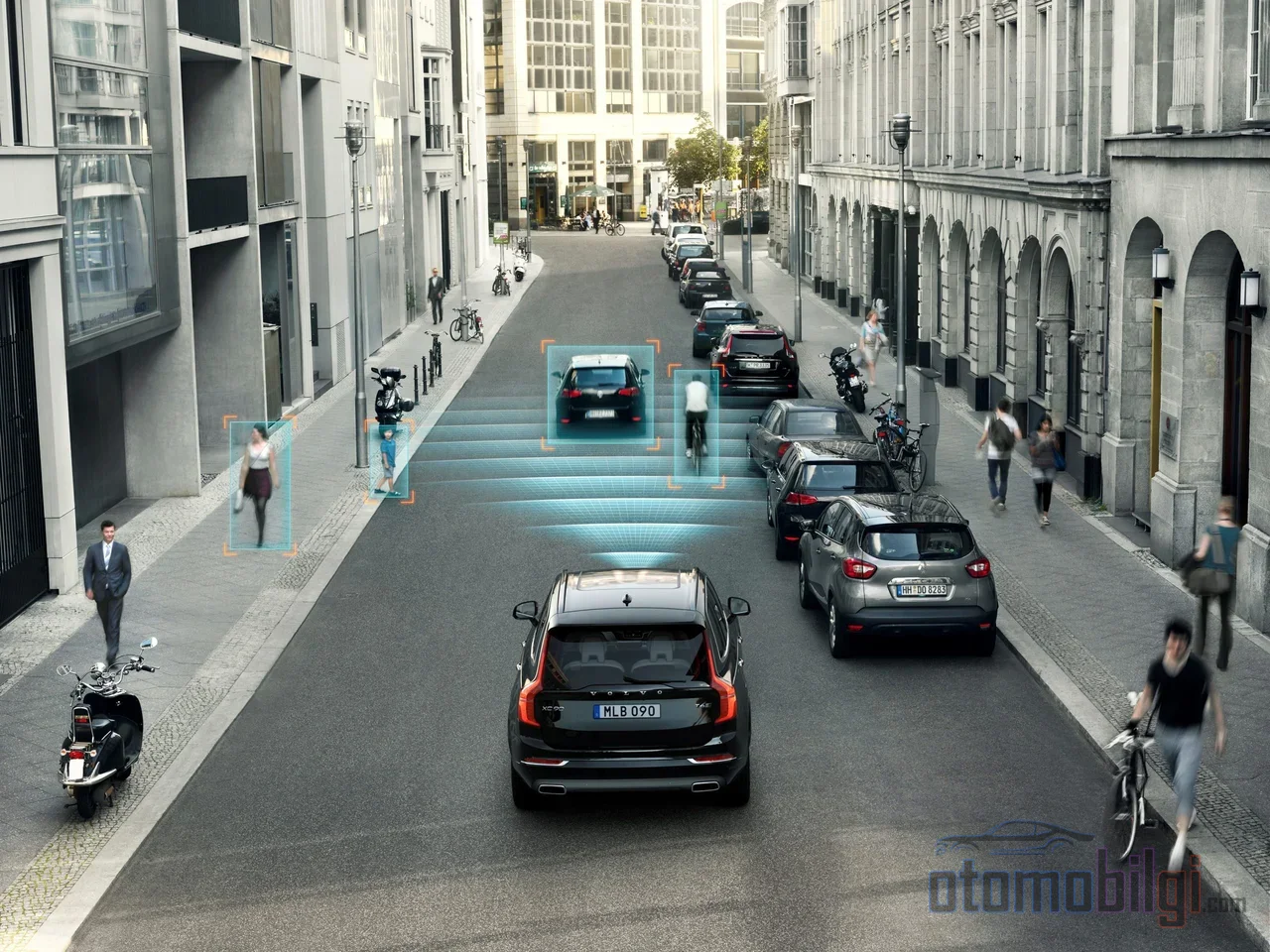
Think about this: You're slowly gliding down a narrow street, with cars parked in rows on both sides. Then, right from between those two cars, a child darts into the road. You're trusting your reflexes to hit the brakes, but can your car's automatic emergency braking system, or AEB, spot that child as quickly as you can? Here's my honest answer: sometimes yes, sometimes no, and the difference really can be lifesaving or fatal. This scenario is one of the toughest tests for any driver assistance system, because the sensors' field of view is physically blocked by an obstacle.
How Does AEB Work at Its Core?
Let's take a quick look at the mechanics first so the rest makes sense. AEB systems typically use a camera and a radar together; this is called sensor fusion. Radar is very good at measuring distance and speed, while the camera identifies the object it sees - or rather, how should I put it: is that a pedestrian, a cyclist, or a plastic bag? Radar alone struggles to make this distinction, because its resolution is lower than precise sensors like lidar. A camera alone can't tell you the distance with full confidence either. When the two combine, they make a powerful team.
When the system recognizes the pedestrian, it usually warns the driver first; if the driver doesn't react and a collision seems inevitable, the brakes engage automatically. Sounds flawless, doesn't it? But there's a critical detail here: the system first has to classify that pedestrian, and it won't brake for something it can't classify. And that's exactly where the story of the pedestrian darting out between parked cars begins.
Key Takeaways
- Bosch states that pedestrian collisions can be prevented or mitigated by automatic braking at speeds up to 60 km/h.
- In 2023, an estimated 7,314 pedestrians lost their lives in the United States; a pedestrian died every 72 minutes.
- More than 75% of pedestrian fatalities occur at night.
- Pedestrian-detecting AEB has been associated with a 25-27% reduction in pedestrian collision risk in real-world crashes.
- In closed-track tests, automatic braking was triggered in only 59% of cases involving pedestrians.
Why Is It So Hard to See a Pedestrian Emerging from Between Parked Cars?
Now let's watch the scenario from the sensor's point of view. The camera and radar look forward, but the gap between the two parked cars is like a closed curtain to them. Until the child steps into the road, the system physically cannot see them - and what it cannot see, it cannot detect. Technically, this situation is called occlusion - a curtain drawn over the field of view. Researchers are working on approaches designed specifically for this scenario, such as radar and stereo camera fusion that accounts for occlusion, but most systems on the road today know nothing about it.
The second problem is even sneakier: when a pedestrian suddenly appears, the classification algorithm relies on their silhouette to recognize them. Unusual situations like a long skirt, a hood, hands in pockets, or a silhouette seen from the side reduce the probability of recognition. So even if the system sees the child, it won't brake unless it is confident that what it sees is actually a pedestrian. If you want to understand why it didn't brake, keep this in mind: the system doesn't choose not to brake; the system doesn't know what to brake for.
What Happened at the Test Track?
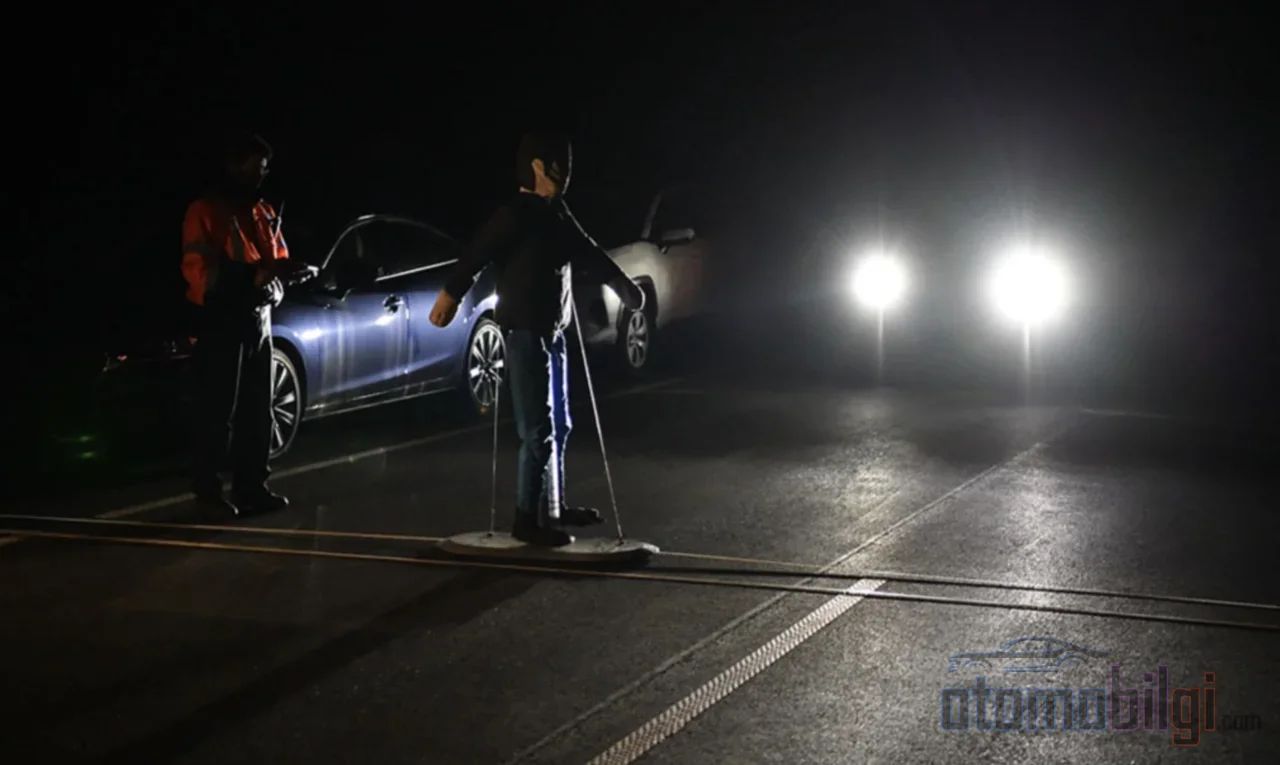
This is a serious testing issue, so official bodies are now testing this scenario directly. The FMVSS 127 rule, which came into force in the United States in April 2024, makes AEB that detects both vehicles and pedestrians mandatory for all new light vehicles, and the test protocol even includes a scenario evaluating a child pedestrian running into the road from behind a parked car. Euro NCAP's 2026 test methodology, meanwhile, recreates the typical crash pattern of a child suddenly stepping out in front of a parked car in the city. So the scene you're afraid of is now a standard exam question for engineers.
So how do real vehicles fare in this exam? Closed-track studies are informative. In a test in which five popular models went through 44 attempts, AEB braked only 26 times, that is, at a rate of 59%; even the warning system stayed at 64%. While the braking rate rose to around 80% on a straight road, only one of the five vehicles managed to brake on a curve. In 17 of 31 attempts with a pedestrian mannequin, the system did not respond at all. That gives you a knot in your stomach reading it, doesn't it?
The Clothing Factor: Can Wearing a Vest Disrupt Perception?
Here comes the most surprising part of the story, if you're ready. In October 2026, six vehicles were tested in darkness under the night protocol. The results paint a really strange picture.
| Scenario (dark environment) | Result |
|---|---|
| Adult in reflective vest | All vehicles detected, collision avoided |
| Adult in standard work clothes | Almost all vehicles failed to detect or reacted too late |
| Child in dark clothing | All vehicles successful |
| Child in reflective clothing with a school backpack | Almost no system detected |
Yes, you read that right: while the reflective child with a school backpack burned almost every system, the child in dark clothing was detected. The single exception stood out as the only vehicle that detected the reflective child darting out from behind a parked car. This is a striking example that matches the main scenario on our page exactly.
The problem here appears to be in the software, not the hardware; in many cases, even a software update may be enough. But current regulations and test protocols do not mandate robustness in reflective-clothing detection, meaning manufacturers are not tested for this scenario. On the other hand, it is also a fact that reflective items greatly improve nighttime visibility and safety; once the systems are fixed, reflective material can even improve sensor range. So don't give up on wearing a reflective vest; the problem lies not in the clothing but in the algorithm.
Night and Speed: Two Great Enemies
Night deserves its own section, because the numbers are brutal. More than 75% of pedestrian deaths occur at night. The good news: the collision avoidance rate in night tests rose from zero in 2019 to 60% by 2025, so there has been serious progress. The bad news: the same tests show that reflective clothing can produce reactions ranging from improved system detection to complete loss of detection. The majority of the 23 vehicles evaluated in the first night test could only manage basic scores or none at all; experts openly say that most pedestrian AEB systems do not work well in the dark.
Speed is also critical. Bosch states that thanks to the wide-angle radar, pedestrians can be detected early and automatic braking can prevent or mitigate pedestrian collisions at speeds of up to 60 km/h. However, it is known that in the industry, most systems sold between 2018 and 2022 limited pedestrian detection to a speed range of approximately 40-60 km/h. Moreover, as speed increases, the stopping distance grows longer and the system's decision-making time shortens; meaning that at high speed, your own reflexes are still the number one insurance for a pedestrian darting out between those parked cars.
So, From How Many Meters Away Does AEB See This Pedestrian?
Here is where I have to be honest. No exact detection range specifically for masked pedestrians emerging from behind obstacles, in other words how many meters in advance they are seen, has been disclosed by manufacturers or test sources. Since this value has not been disclosed, I will not make it up; anyone who makes it up becomes unreliable. Here are the solid speed and range figures we have: Bosch's intervention claim up to 60 km/h, the approximately 40-60 km/h pedestrian detection ceiling of most systems, and the 25 mph used in tests, i.e. an evaluation speed of about 40 km/h. The logic is simple: a pedestrian behind an obstacle can only be detected the moment they are physically visible; until that moment, no sensor can magically see inside the parked car.
Rules for Surviving This Scenario as a Driver
Since the system is not perfect, what will you do? First, let's accept this: pedestrian-detecting AEB does work in the real world; comparisons made with real crashes have associated it with a 25-27% reduction in pedestrian collision risk and a 29-30% reduction in injury accidents. But experts agree: AEB supports the driver, it does not replace the driver. You must not assume the technology will catch everything. Here are the simple rules you should apply when passing alongside rows of parked cars:
- Reduce your speed significantly; under 40 km/h multiplies the reaction margin for both you and the system.
- Treat anyone whose body is visible between parked cars or passing through the gaps as a potential pedestrian; if you notice someone walking toward the roadside, put your foot on the brake.
- Be extra cautious in areas with children, around schools, and at night; these are exactly the conditions where systems are weakest.
- Make sure your windshield and sensors are clean and your calibration has not been disturbed; a dirty windshield is a curtain for the camera.
- Whether or not a warning comes, never delegate your own braking decision to the system; some systems even skip the warning step and brake directly - be prepared for this but do not rely on it.
Short Answer: Does It See It or Not?
Let's wrap up, because the question at the beginning deserves a clear answer. AEB can only see a pedestrian emerging between parked vehicles from the moment the pedestrian enters the sensors' field of view; while the pedestrian is behind an obstacle, seeing them is physically impossible. Even after appearing, recognition usually succeeds depending on clothing, lighting, and speed, but it is not guaranteed: in track tests, the braking rate varies between 59% and 95%. Therefore, low speed, a cautious approach, and your own reflexes remain the real heroes of this scenario. Do not expect the car to think for you; you think, and let it assist. This is a team effort, and the best player on the team is still you.
Sources
- NHTSA PAEB test scenarios, child running from behind a parked vehicle (S1d)
- NHTSA FMVSS 127 final rule
- ADAC night pedestrian detection test transfer
- AAA pedestrian braking technology study
- IIHS nighttime pedestrian AEB test results
- Bosch pedestrian and cyclist emergency braking system
- Cicchino 2022, real-world crash effects of AEB systems
- Euro NCAP AEB VRU test protocol v4.5.1
- Occlusion-aware radar-stereo camera fusion research