Why Does ADAS Struggle in Tunnels?
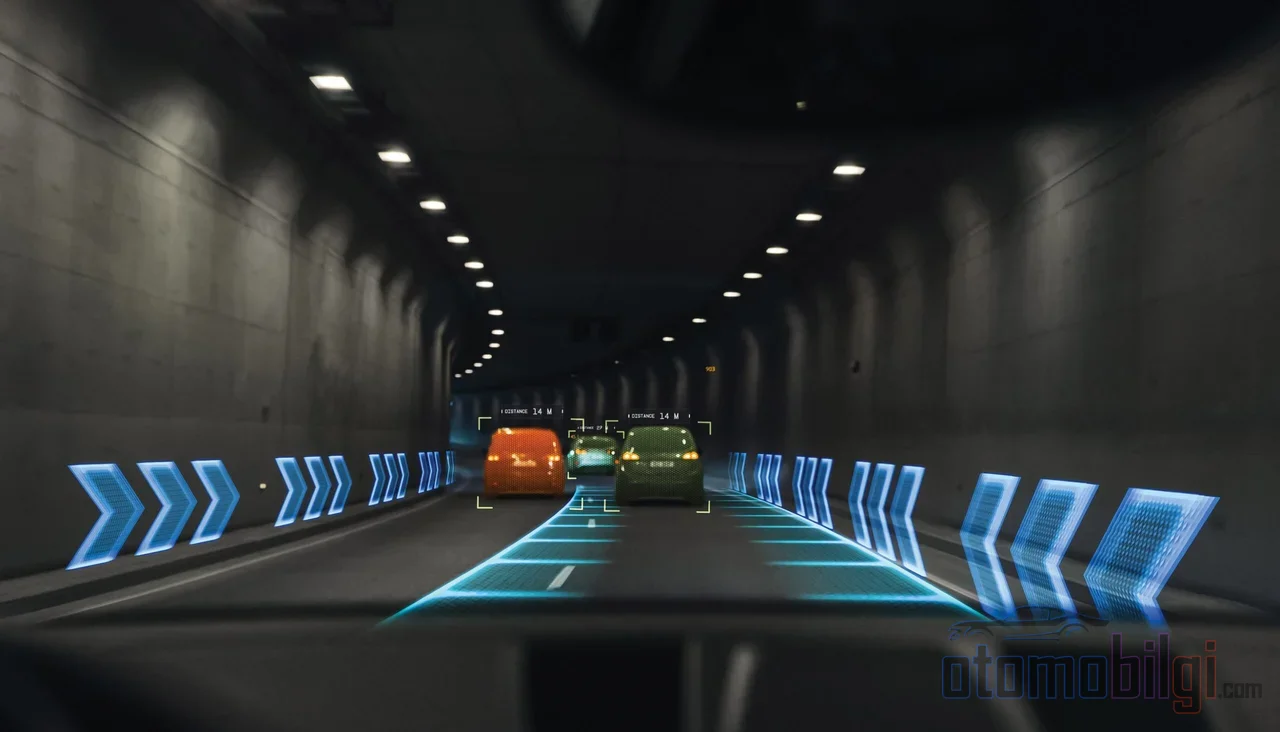
The moment you enter a tunnel, the lane keeping assistant goes silent, Adaptive Cruise Control suddenly brakes, and the navigation wanders aimlessly on the map, right? Stay calm, your vehicle hasn't broken down. A tunnel is practically a nightmare test track for driver assistance systems: sudden light changes, monotonous wall patterns, and on top of that, radar signals bouncing off the walls and returning. So why does all this smart technology suddenly lose its "intelligence" in a tunnel we're driving through? The answer lies hidden in the working logic of the sensors.
What Does the Camera Experience in a Tunnel?
Systems like the Lane Keeping Assist (LKA) and Lane Departure Warning (LDW) rely on the image from a camera mounted on the windshield. If the camera cannot see and interpret the road lines, the system cannot work; it's that simple. And a tunnel is one of the camera's least favorite environments.
Sudden Light Transition: The Black Hole and White Hole Effect
The moment you dive from daylight into the darkness of the tunnel while cruising, the camera's pupil cannot fully adapt for a while. This sudden change in brightness experienced at high speed creates a "black hole" effect for the camera, or conversely a "white hole" effect at the tunnel exit: the image either goes dark or cuts out completely white for a moment. The human eye experiences the same thing; you've felt that one or two seconds of blindness. For the camera, this means the image cannot be processed, and lane tracking may be disabled at that moment.
Monotonous Walls and Low Contrast
The inside of a tunnel is also a challenging place. These systems usually can't already handle faded, incomplete, or low-contrast lane markings; and the artificial, colored light of tunnel lighting makes lane detection even more difficult. Vehicle manufacturers know this too: some user manuals explicitly state that dimly lit tunnels and dirty or fogged cameras lead to system limitations. So the system going silent in a tunnel is not a malfunction, but a recognized limitation.
Why Does Radar See False Targets in a Tunnel?
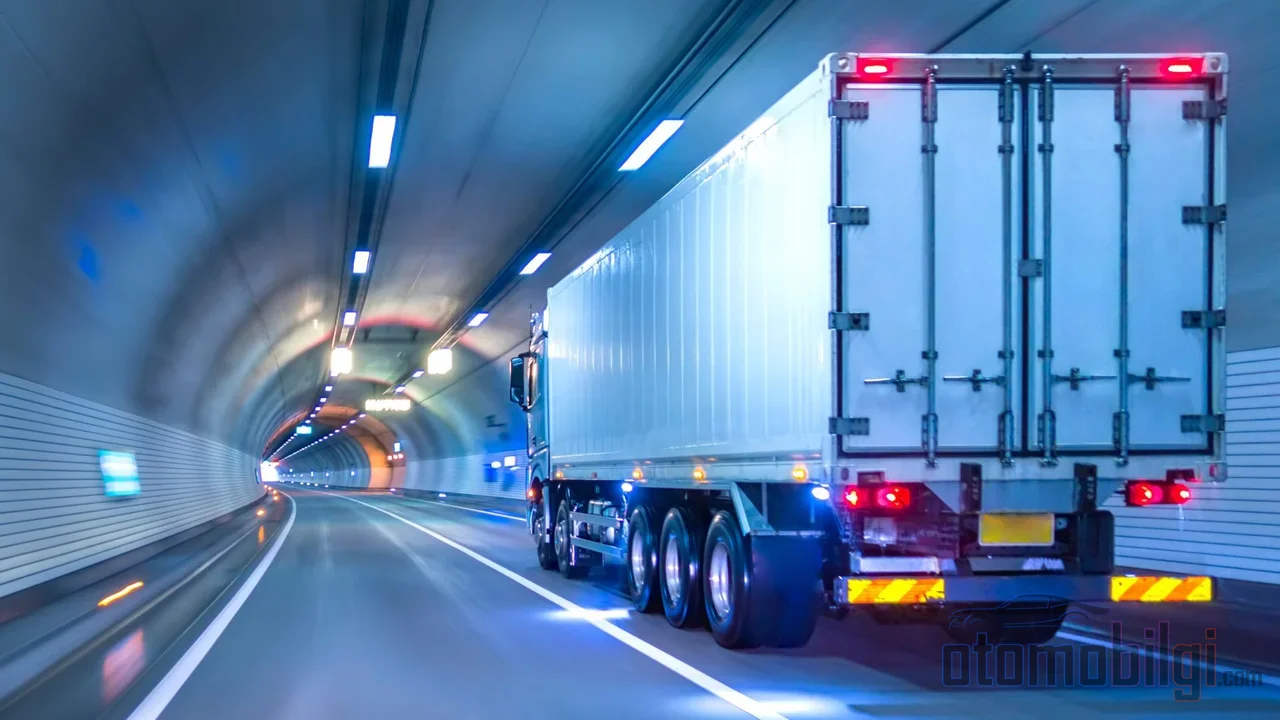
At the heart of systems like Adaptive Cruise Control (ACC) and Blind Spot Monitoring (BSM) lies a radar sensor. Radar signals travel in straight lines, but the concrete walls and ceiling of the tunnel reflect these signals. When the signal hits the wall and returns, the system may think there is a vehicle where none actually exists. This is called multipath reflection, or multipath, and tunnel walls are the most typical example of this problem.
So what is the result? ACC may brake toward a meaningless spot, "lock onto" a non-existent vehicle ahead, or abandon tracking the real target. The blind spot warning can also produce false alarms. The good news is: new-generation 4D imaging radars filter out reflections and show clean object detection in in-tunnel tests; meaning the problem is known and on its way to being solved. But most vehicles on the road still have classic radar, so you need to be cautious in tunnels.
Highlights
- 73% of reported ADAS performance issues are related to lane assistance.
- Vehicles with lane keeping assistants are involved in unintended lane departure accidents 24% less.
- GPS does not work in tunnels and underground; navigation keeps estimating the position.
- Tunnel walls reflect radar signals, leading to false target generation.
- In vehicles with lane and blind spot systems, the relevant accident types are 11% lower, and injuries 21% lower.
Why Does GPS Get Lost in Tunnels?
The GPS signal comes from satellites in space; a few meters of concrete easily blocks it. That is why GPS goes completely offline in a tunnel - precisely where vehicles need location information the most. So why does the navigation still seem to be progressing on the map? Because most modern apps keep estimating the position using the last known location, speed and direction information when the signal is lost. Sometimes this estimate holds, sometimes it can map the vehicle onto the wrong road; in mapped tunnels and beacon-supported segments, the experience improves. The bottom line: the position on the navigation screen inside the tunnel is not "real" - it is an estimate.
System-by-System Tunnel Behavior
Lane Keeping and Lane Departure Warning
The system that struggles the most in a tunnel is lane tracking. Cameras can lose the lane in glare, shadow, low light and low-contrast lines; 73% of reported ADAS issues are related to lane assistance. So the stopping of steering corrections in a tunnel is not a cause for panic, but a situation that requires attention. Also, LKA tends to keep the vehicle fixed at the center of the lane in curves; it follows a path different from the natural curve line of a human driver, which can be noticeable in tunnel curves.
Adaptive Cruise Control
ACC carries two risks in a tunnel: false targets arising from wall reflections and weakened detection in systems where the camera is also active during sudden light transitions. If you experience seemingly unexplained braking at the tunnel entrance or inside it, this is the likely explanation. If traffic is heavy, be ready to manage the following distance yourself.
Blind Spot Warning
Since BSM is radar-based, it can be affected by tunnel reflections; moreover, some systems are not designed to work efficiently at low speeds. Never give up the shoulder check habit before changing lanes. These systems work best together with solid driving habits; in vehicles with blind spot monitoring together with rear cross traffic warning, reversing accidents decreased by 78%, so when they work, they really do work.
What Should the Driver Do? Practical Rules for Tunnels
First, let this be clear: No ADAS system drives for you; they are all assistants, and you must be ready to take over at any moment. Hands on the wheel, eyes on the road. Ignoring system warnings, taking your hands off the wheel or getting distracted means the responsibility lies with the driver; in the event of a possible accident, as a rule, this does not disappear.
- Before the tunnel entrance, do not relax by relying heavily on lane tracking and ACC; keep steering control in your hands.
- Clean the sensor surroundings regularly; a dirty or fogged camera doubles the light problems.
- Stop skipping the shoulder check by trusting the blind spot warning.
- Re-verify gauge warnings and system status at the tunnel exit; after the light transition, systems should receive data properly again.
- In narrow and enclosed passages (such as car wash tunnels), disabling some systems is recommended as an official safety practice.
Is the Tunnel Challenge Permanent, or Is a Solution on the Way?
Technology is not standing still. Sensor fusion, meaning the approach of combining data from cameras, radars and other sensors, increases reliability by compensating for the weaknesses of a single sensor (glare, signal loss). 4D radars are showing significant progress in rejecting reflections inside tunnels, and tunnel radar interference is on the industry's current agenda. But the current reality is this: most vehicles on the road are equipped with systems weighted toward a single camera or classic radar, and these naturally struggle in tunnels. Calibration is also a critical part of the job: Tests have shown that a camera mounted with a 1-degree error reduces automatic braking performance by 60%; three out of four vehicles that have undergone repairs report ADAS problems. Re-verifying warnings at the tunnel exit is meaningful with properly aligned systems.
Short Answer: Why Do ADAS Systems Struggle in Tunnels?
ADAS systems struggle in tunnels because the camera cannot safely detect lane markings during a sudden light transition and between monotonous walls, radar signals reflect off tunnel walls producing false targets, and GPS signal is completely cut off under concrete. Systems do not replace you; maintaining control throughout the tunnel and at the exit, and re-verifying warnings, is the driver's job. A tunnel does not expose a system's weakness; it actually reminds us why careful driving is indispensable in every condition.
Sources
- Limitations of Camera and Radar Based ADAS
- Lane-Keep Assist Failures: Understanding Driver and Manufacturer Responsibility
- ADAS Limitations - Lucid Owner's Manual
- Highway Vehicle Tracking with Multipath Radar Reflections
- 4D Radar Advances: Improved Situational Awareness for Autonomous Vehicles
- Limiting the Radar Disturbances and Artefacts in Tunnels - Mobex
- Blind Spot Monitoring: A Crucial Technology for Safer Roads
- Safe ADAS: Why Mobile Calibration Alone Isn't Enough
- Effect of Environmental Factors on ADAS Sensor Performance - AAA
- Traffic Safety Improvement via Optimizing Light Environment