What Does Adaptive Cruise Control Do at a Roundabout?
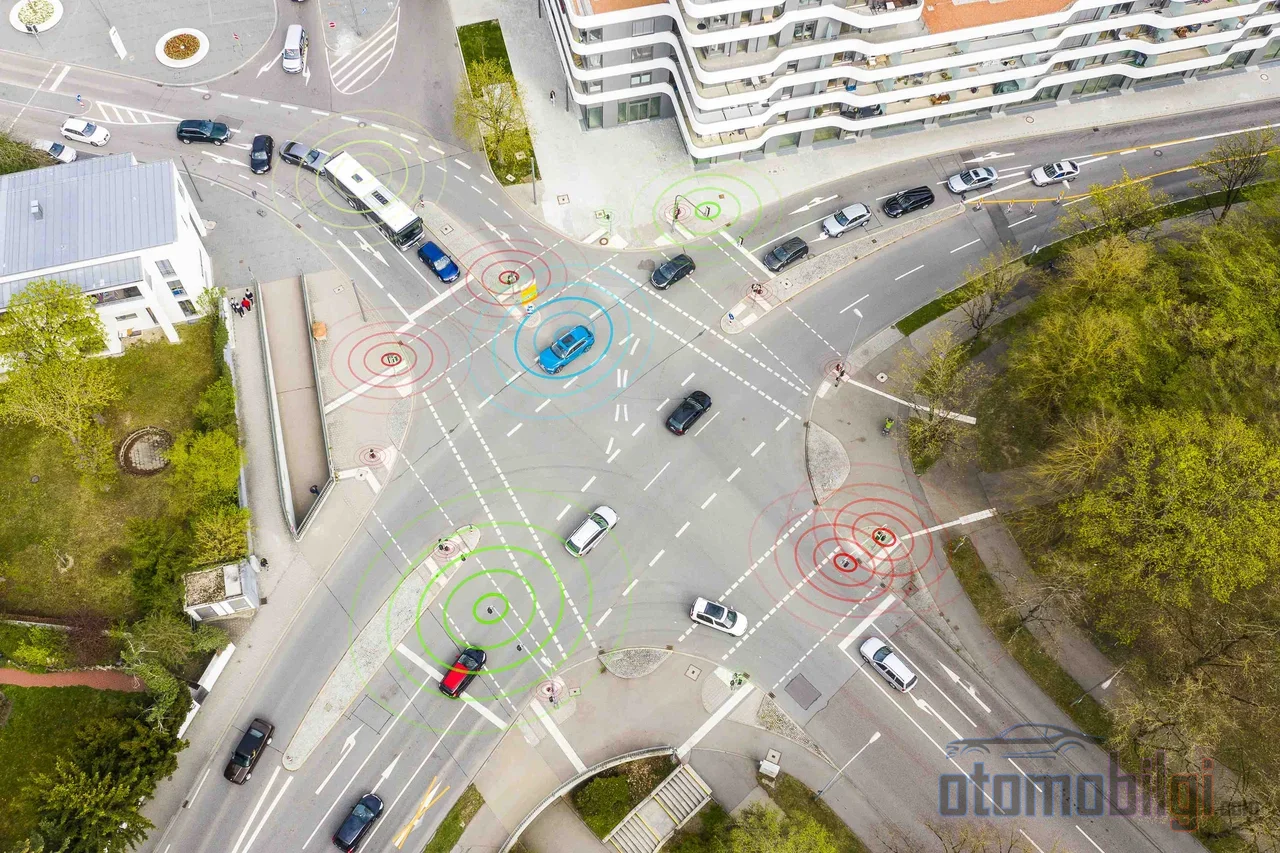
You are approaching a roundabout, Adaptive Cruise Control is on, your foot is off the gas, and everything seems fine. Then the roundabout narrows, the vehicle ahead disappears into the curve, and the system slams on the brakes as if someone had suddenly cut in front of it. A few seconds later, when you reach the exit, the same car accelerates on its own and regains its previous pace. So what does Adaptive Cruise Control actually do at a roundabout, does it think the roundabout is a curve or a normal stretch of road, and why does it sometimes give up and let go? The answer to these questions is one of the most discussed but least explained topics on car forums.
Let's clarify one thing first: on this page we will only talk about the speed side of things. Because Adaptive Cruise Control, as the name suggests, is a speed system. It never interferes with the steering and does not turn at the roundabout for you. This distinction is the key to everything we will see later.
How Does Adaptive Cruise Control Perceive a Roundabout?
The brain of Adaptive Cruise Control is made up of two main sensors: the forward-facing camera and radar. In new-generation vehicles these two work together, accelerating and slowing down to maintain the following distance you have selected; in older vehicles sometimes only the camera or only the radar does the job. The critical point is this: the system's eyes look straight ahead. On curvy roads the radar beam can drift out of your lane, so the system may try to follow a truck in the adjacent lane and slow down unexpectedly; or, quite the opposite, it may fail to see the vehicle in your own lane.
A roundabout falls right in the middle of this limitation. The system does not recognize the roundabout as a special structure; for it, that spot is simply a curve plus a following scenario. Systems that can truly recognize roundabouts are only those that work with navigation or road recognition data. For example, the curve speed reduction function in some Toyota models detects the curve using the camera and yaw sensors and reduces the speed on its own; this setting can be turned on and off. Navigation-based systems, on the other hand, know curves and road changes in advance from map data. For an ACC without integrated navigation or roadside recognition, the roundabout is an improvised exam that the sensors have to cope with.
Highlights
- ACC does not see the roundabout as a special structure, but as a curve + following combination.
- At tight roundabouts it loses the vehicle ahead and slows down, then returns to the set speed at the exit.
- Some manufacturers officially recommend ACC in their manuals only for motorways and barrier-separated roads.
- The system does not provide steering control; turning at the roundabout is always the driver's job.
- Most lane-keeping systems are disabled at speeds below approximately 72 km/h.
Why Does It Brake at Roundabout Entry and During the Turn?
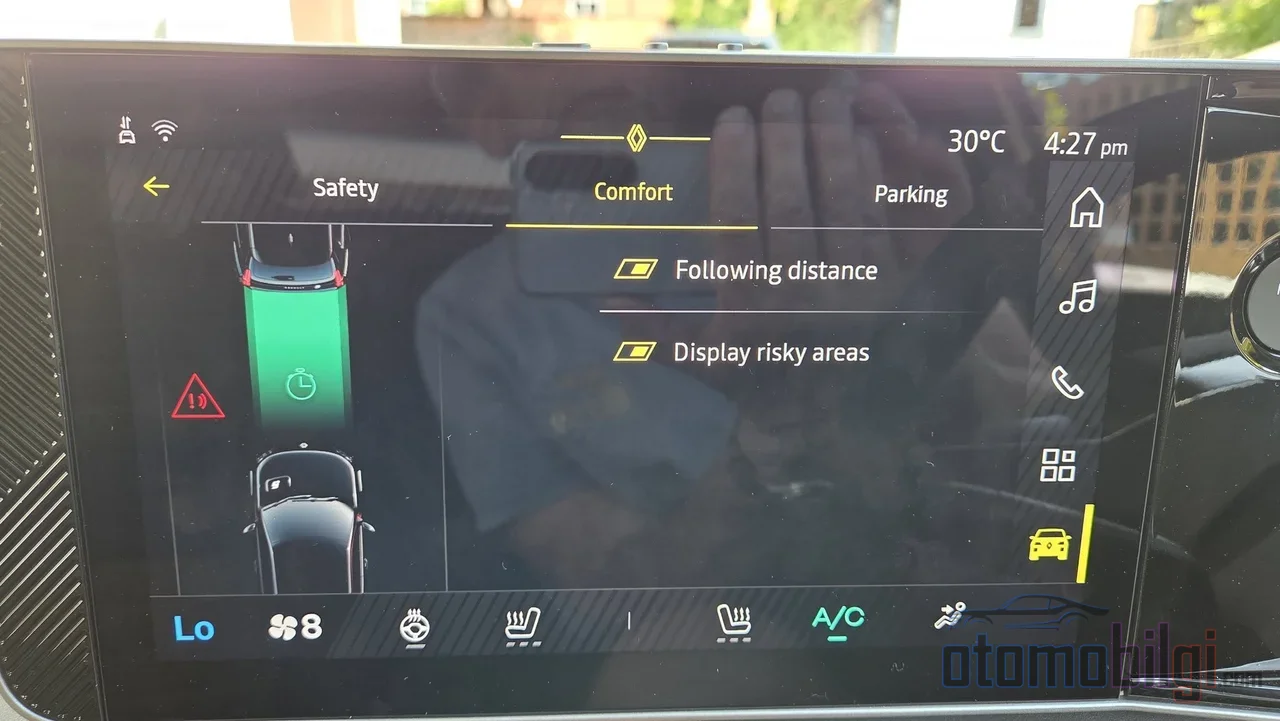
Two separate mechanisms can cause braking when entering the roundabout. The first is deliberate slowing: systems with navigation or road recognition features can detect the roundabout in advance and reduce speed gradually. The second is a more vulnerable situation: at narrow and small intersections, the radar loses the trajectory of the vehicle you are following within the turn. The vehicle is still physically in front of you, but the sensor cannot see it; and the system slows down as a safety measure. This is the scenario most commonly described by electric vehicle owners on forums: a sudden slowdown inside the intersection, followed by the car relocating its target and recovering its speed.
The approach phase can also hold surprises. If the vehicle ahead slows down as you approach the intersection, you need to remember that ACC's braking capacity is limited. Manufacturer manuals are clear on this: if the vehicle ahead stops very abruptly, the system warns the driver and the braking task passes to the driver. Moreover, ACC is not a collision prevention system; it is designed for comfort. It may not react to parked or very slowly moving vehicles. So the eyes that see pedestrians, cyclists and stationary vehicles at the intersection entrance are still your own eyes.
Why does braking sometimes feel harsh?
On a curve, ACC may mistakenly select a large vehicle in the adjacent lane as its follow target, or its reaction can be aggressive when it momentarily loses the target. The best-known example of this on forums is the unnecessary slowdowns experienced while overtaking wide vehicles such as trucks. Such sudden braking is known in English as hard braking due to false alarm, and it is one of ACC's most complained-about behaviors.
When Does Speed Come Back After the Intersection?
The intersection exit is the most critical moment of the whole affair, and here the system characteristically splits into two. If the vehicle ahead turns onto a different direction than your intersection exit and you are in close-follow mode, the system loses the target vehicle. In some vehicles, this results in ACC being completely deactivated; the warning on the steering wheel or instrument cluster tells you that you need to reactivate the system. In other vehicles, when the system loses the target, it tries to return directly to the set speed. Be careful in this second scenario: the system may accelerate hastily.
There is also a known consequence of this second behavior: if the vehicle you are following turns onto another road at the intersection exit and starts moving along the new road, whether or not your ACC still sees it as a target can lead to surprising speed decisions. The general rule is simple: it is you, not the system, who should manage when and how your speed comes back at the exit. Pressing the accelerator pedal temporarily disables automatic braking; pressing the brake pedal cancels ACC. If you wish, you can also exit the system with the Cancel button or the on/off button.
Does the Lane Keeping Assistant Help at Intersections?
The short answer: no, in most systems. The lane keeping assistant (LKA) and lane centering systems work by following the road markings; the circular geometry and complex markings of a roundabout are a hard-to-read map for these systems. Moreover, many lane centering systems do not work below a certain speed: one well-known example is a system that remains disabled below approximately 72 km/h. Speeds inside a roundabout are usually well below this, so it is normal for lane support to shut off at the roundabout rather than a malfunction.
Even if lane support remains active, hands-free driving is out of the question. In vehicles with lane centering, the driver must lightly hold or nudge the steering wheel every few seconds. More advanced packages make a difference: some manufacturers' driver assistance packages work more capably than a plain ACC and lane assist combination, because they anticipate slowing before intersections and curves and know upcoming speed limits. But these do not take over the steering at a roundabout either; they only manage the speed side more intelligently.
Why Does the System Back Off at Multi-Lane Roundabouts?
The multi-lane roundabout is the most challenging environment for ACC: vehicles slowing down, others changing lanes, and vehicles entering from outside the intersection all at once. Manufacturer manuals address this situation explicitly. Some manufacturers recommend using ACC only on highways and multi-lane roads separated by barriers; roundabouts and complex urban intersections are clearly outside this recommendation. One manufacturer also says the system should not be used on winding and hilly roads or highway on- and off-ramps, because under these conditions the vehicle ahead may not be detected.
Disabling the system at busy intersections is not a defeat, it is correct use. Leaving it disabled with the throttle for a long time is not a solution either: in some vehicles, if you disable the system for longer than 60 seconds, ACC shuts down completely and you need to reactivate it.
Why Is the System's Inability to Read Traffic Important?
There is a small but striking scientific finding here. A university team conducted more than 1,000 miles of open-road testing in Arizona in 2019 with seven vehicles from two manufacturers. The result: in every test, the vehicle using ACC slowed down more than necessary compared to the vehicle ahead, and this turned into phantom traffic congestion creating chain-reaction slowdowns. When the lead vehicle dropped its speed from 50 mph to 6 mph, the speed of the seventh vehicle in the queue fell below even ACC's minimum operating threshold. The researchers' explanation is instructive: a human driver sees several vehicles ahead, while ACC's sensors see only the vehicle immediately in front. The system cannot anticipate traffic flow, it only reacts.
A roundabout is exactly this: an environment where the flow constantly changes, and seeing several vehicles ahead and the intersection entrances is essential. ACC being limited to remaining a comfort tool in this environment stems not from design, but from the limits of physics and software.
Short Answer: What Does Adaptive Cruise Control Do at a Roundabout?
In summary: Adaptive Cruise Control does not recognize the roundabout, it evaluates it as a curve and following scenario. At tight roundabouts it loses the vehicle ahead and slows down; at the exit it either returns to the set speed if it finds a target, or shuts down completely and leaves control to you. It never interferes with the steering under any circumstances; navigating a roundabout safely always remains the driver's responsibility.
The Right Way to Approach a Roundabout-Ready Intersection
So what should you actually do in practice? The rule is very simple, and manufacturer documentation says the same thing: trust the system, but be prepared. This short list will come in handy:
- Before approaching the intersection, keep control of speed monitoring and braking yourself; if necessary, brake to cancel ACC.
- Completely switch off Cruise Control at narrow and multi-lane intersections; this is not a mistake, it is correct use in line with the manuals.
- x
- Don't wait for automatic acceleration when exiting; watch the traffic and manage the throttle yourself.
- Know that the lane assistant will shut off at low speeds and don't loosen your grip on the steering wheel.
- Never take your hands off the wheel; the systems fall under SAE Level 2, and responsibility always lies with the driver.
The situation is also clear in terms of traffic rules: you are always responsible for the safe use of your vehicle, and relying solely on safety features is not recommended. Adaptive Cruise Control is a great road companion on the highway; at a roundabout, at its best it is a gentle assistant, and at its worst a passenger open to surprises. A driver who knows the difference loves both.