What Are the Differences Between Adaptive and Classic Cruise Control?
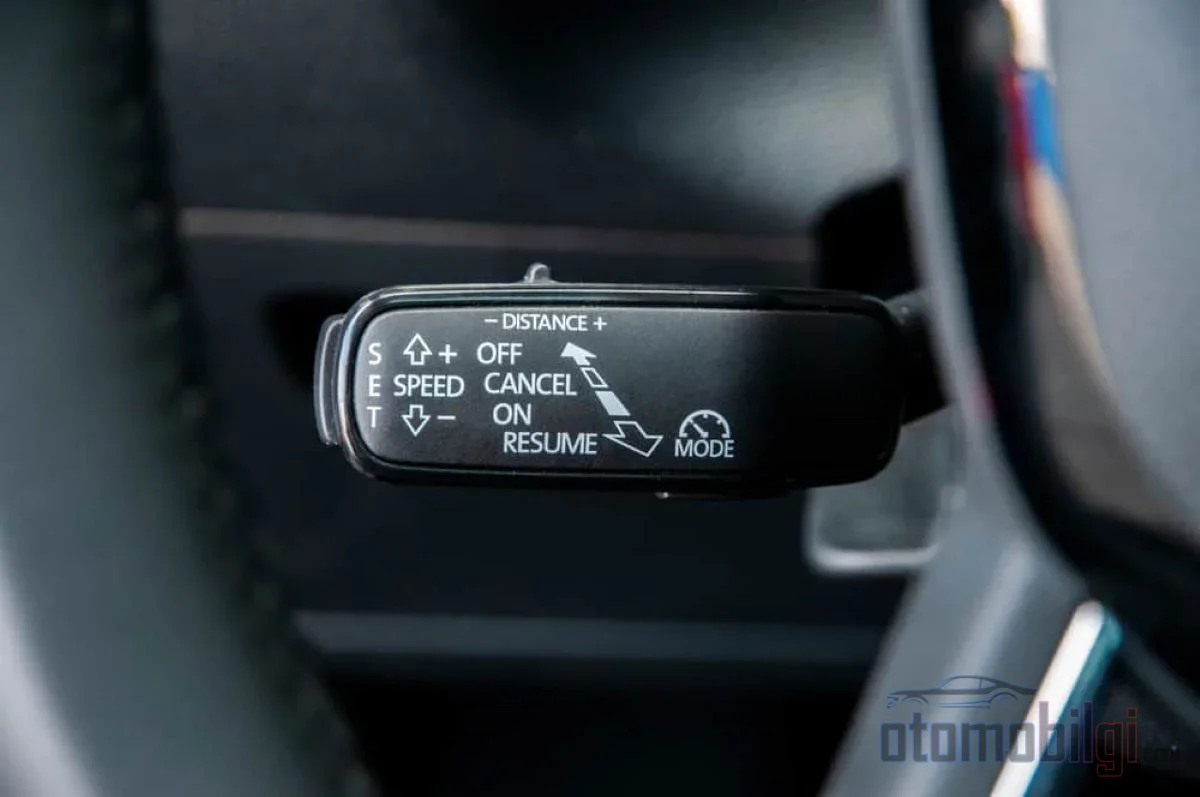
You're sitting behind the steering wheel, you press a button, and the car now holds the speed by itself. But do you actually know what that button you see really does? Because many drivers we encounter on the road think that the classic Cruise Control in their vehicle and Adaptive Cruise Control (ACC) are the same thing. Yet the difference between these two is as big as the difference between a fixed bicycle and an intelligent driver assistant. Let's break down these two systems layer by layer.
What Exactly Does Classic Cruise Control Do?
The job description of classic Cruise Control is very clear: to maintain the speed you set, exactly as it is, until you press the brake or turn the system off. It doesn't care about traffic, doesn't see the car ahead, doesn't slow down. Here's a thought experiment: you set 120 km/h on the highway, a vehicle pulls in front of you and slows down. What does the classic system do? Nothing. While it keeps holding that fixed speed, the braking job is entirely left to you.
In other words, classic Cruise Control has no eyes, no ears; it's simply a mechanism that replaces your right foot. It's a great comfort tool on long, open highways with flowing traffic. But there's no way it's meant to be used in heavy traffic; it's a system that has learned to stay disabled wherever uninterrupted flow is broken.
How Does Adaptive Cruise Control Work?
Adaptive Cruise Control, on the other hand, is one of the most beloved members of the advanced driver assistance systems (ADAS) family. Its basic idea is simple but clever: you again choose the speed you want and the distance you want to keep from the vehicle ahead. The system handles the rest. If the traffic ahead slows down, it reduces the throttle itself, and in most systems it even brakes if necessary. When the road opens up, it gently climbs back to your desired speed.
In short, unlike the classic system, ACC looks ahead of the vehicle. But let's make one thing clear from the start: ACC is not autonomous driving. Literally speaking, it is only a single component of a driverless system. In the SAE International classification, most ACC systems are Level 1 automation; that is, they control only forward and backward movement. When combined with lane centering, it rises to Level 2, but an alert driver at the wheel is still essential.
Highlights
- A radar sensor can measure distances exceeding 160 meters and can be hidden behind the bumper.
- The first radar-supported ACC was introduced in 1999 by Mercedes with Distronic in the S-Class.
- Most ACC systems are Level 1 in the SAE classification; with lane centering, they become Level 2.
- The typical range of Stop-and-Go ACC systems is approximately 130 meters.
- Bad weather conditions can reduce or disable the performance of both systems.
The Heart of Both Systems: Sensor Differences
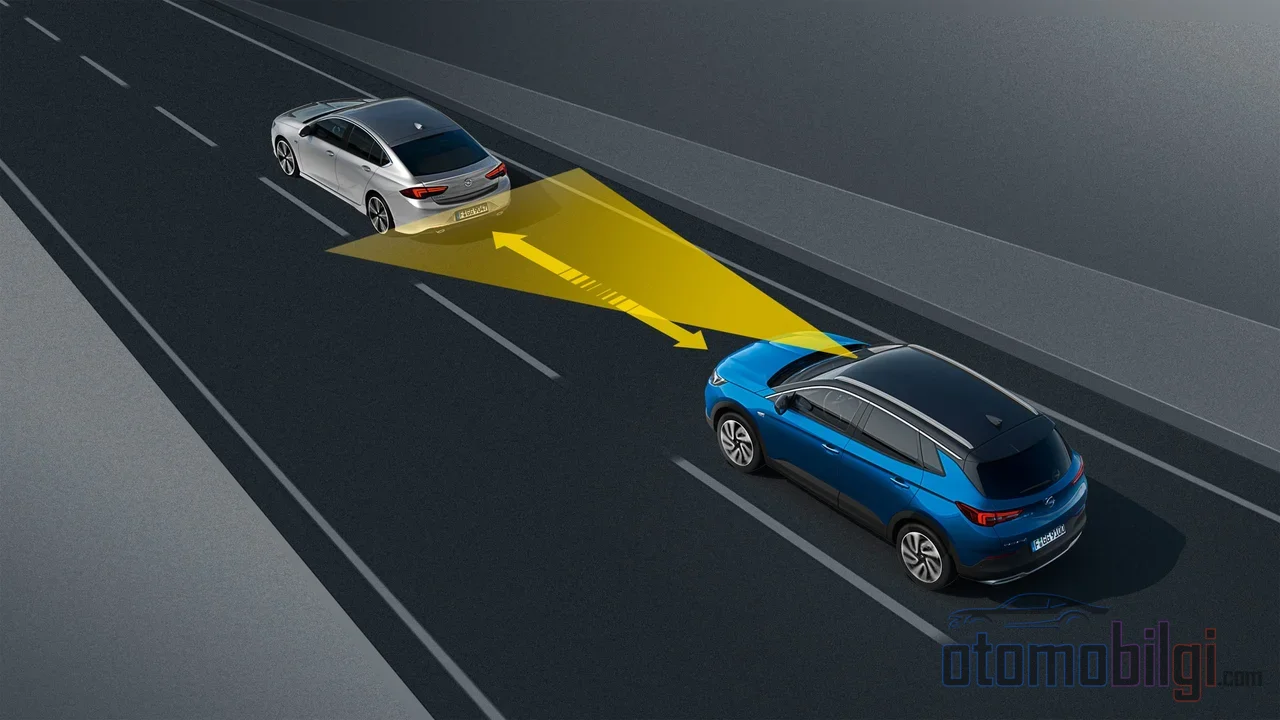
Classic Cruise Control doesn't have even a single sensor; it only reads the wheel speed. ACC, however, has a set of hardware that sees, measures, and interprets. That's exactly why the two should not be confused. So how does ACC actually see the world?
Radar: Master of Distance
At the core of most ACC systems is a radar sensor, usually positioned at the front of the vehicle. It emits 24 GHz or 77 GHz radio waves and measures distance by calculating how long the signal takes to return. Since radio waves spread widely, the viewing angle is broad, and it can accurately measure distances exceeding 160 meters. Moreover, it can be hidden behind the plastic bumper, so it doesn't spoil the vehicle's exterior appearance. The nice thing is this: it is hardly affected by light rain and provides reliable distance and relative speed data.
Laser and Camera: Those That Understand Images
Laser-based (lidar) systems theoretically offer the longest detection range and the best accuracy; but they also have weak points. Because fog and water particles absorb and deflect laser light, reliability drops in bad weather, and they also struggle to track dirty and non-reflective vehicles.
Camera-based systems, on the other hand, detect the vehicles ahead using computer vision. Rather than measuring distance directly, they infer it from image cues such as object size and motion between frames. Systems using dual (stereo) cameras can perceive real depth thanks to parallax. The camera's strength lies in object recognition and scene interpretation; tasks such as reading road signs or seeing lane markings are its domain.
When the Power of Both Combines
The most common modern solution is the hybrid approach: while radar provides solid distance and speed measurement, the camera takes on object classification and scene interpretation. You can think of it as a team: radar is a reliable rangefinder that tells you the distance even in the dark; the camera, in turn, is the eyes that understand whether what you see is a vehicle, a sign, or a shadow. When the two work together, the system knows both how far away something is and what it is approaching.
The State of Both Systems in Stop-and-Go Traffic
Here is the scene where ACC differs most clearly from the classic system: a traffic jam. Classic Cruise Control is completely useless in this environment; speed stays constant, and braking is left to you. As for ACC... this is where the classes of systems separate. There are three main categories:
- Systems that can come to a complete stop but wait for driver input to reactivate
- Systems known as traffic jam assist or Stop&Go that can resume on their own after a stop-and-go
- Partial systems that shut themselves off below a certain minimum speed
Many systems operate up to around 32-40 km/h; while full-speed-range (FSRA) systems can also handle stop-and-go traffic, limited-speed-range (LSRA) systems deactivate at low speeds. The typical range of stop-and-go type systems is about 130 meters; road gradient and weather conditions can affect this. One detail to be aware of: some systems can bring the vehicle to a complete stop but reset themselves after a few seconds; you need to press the brake pedal to keep the vehicle stationary. Moreover, even in stop-and-go traffic, ACC does not give you steering support; keeping the vehicle in its lane is still your job.
Which One Makes Sense on Which Road?
Now let's get to the real practical question: in which conditions should you use which system? The answer is clearer than you think.
| Condition | Classic Cruise Control | Adaptive Cruise Control |
|---|---|---|
| Open, flowing highway | Ideal; comfort at constant speed | Ideal; following at a safe distance |
| Heavy, stop-and-go traffic | Not usable | Works in FSRA/Stop&Go systems |
| Rain, snow, fog | Can be used with caution | Not recommended; sensor performance drops |
| Winding roads | May deactivate on slopes and curves | Not recommended; should be avoided according to owner's manuals |
| Unpredictable traffic | Risky; the driver must stay engaged at all times | Helpful, but driver supervision is mandatory |
ACC's favorite environment is open, relatively straight roads where it can look ahead and traffic is predictable. It may struggle to see lane markings, puddles, drifting snow, or stationary traffic in low visibility. With a dirty or blocked sensor, or in overly sensitive systems, sudden braking can occur - those jarring hard stops some drivers know all too well. There is also a psychological side to this: a study by a safety organization found that drivers using ACC tend to exceed the speed limit more often. When the system looks calm, it's easy to fall into the set-and-forget trap; yet in heavy traffic, automatic speed control can invite distraction.
Is ACC Self-Driving? The Driver's Real Role
No. And if you like, mark this as the most important sentence on the page: ACC is not a system that replaces the driver, but an assist system that replaces your foot. The steering wheel is yours, the anticipation is yours, the responsibility is yours. Driver's manuals come to the same conclusion: it is the driver's obligation to take into account all driving, traffic, weather and road conditions. Anticipating what other drivers will do is also up to you; no radar does it for you.
So think of ACC as a helpful assistant that manages acceleration and braking on a long journey. Comfort genuinely increases, and if a safe following distance is maintained, traffic flow can also improve. But the moment you think you've taken your feet off the pedals is exactly when you need to remember the system's limits. Your braking or intervention takes immediate effect in every condition; the system always accepts your command.
In short: The Difference in One Sentence
Classic Cruise Control only maintains the speed you set; it doesn't see the traffic ahead, and braking is always left to you. Adaptive Cruise Control, on the other hand, monitors the vehicle in front with radar and camera, maintains a safe distance on its own, slows down when necessary, and returns to your set speed once the road clears. Even so, in both cases the steering wheel and the responsibility belong to you: ACC is not an autopilot, but a smart assistant. When used on the right road, in the right conditions, while staying alert, both are comfort features that can be lifesavers.
Sources
- Adaptive cruise control - Wikipedia
- What Is Adaptive Cruise Control? How It Works, Pros & Cons
- Adaptive cruise control for passenger cars
- Adaptive Cruise Control vs. Traditional Cruise: What's the Difference?
- Cruise Control: What It Is and How to Use It
- Stop and Go adaptive cruise control - Renault user manual
- Adaptive cruise control conditions and limitations
- Adaptive cruise control users more likely to speed more: IIHS study
- Radar vs Camera based cruise control : r/cars