How Does Traffic Jam Assist Handle Stop-and-Go Traffic?
Share This Page
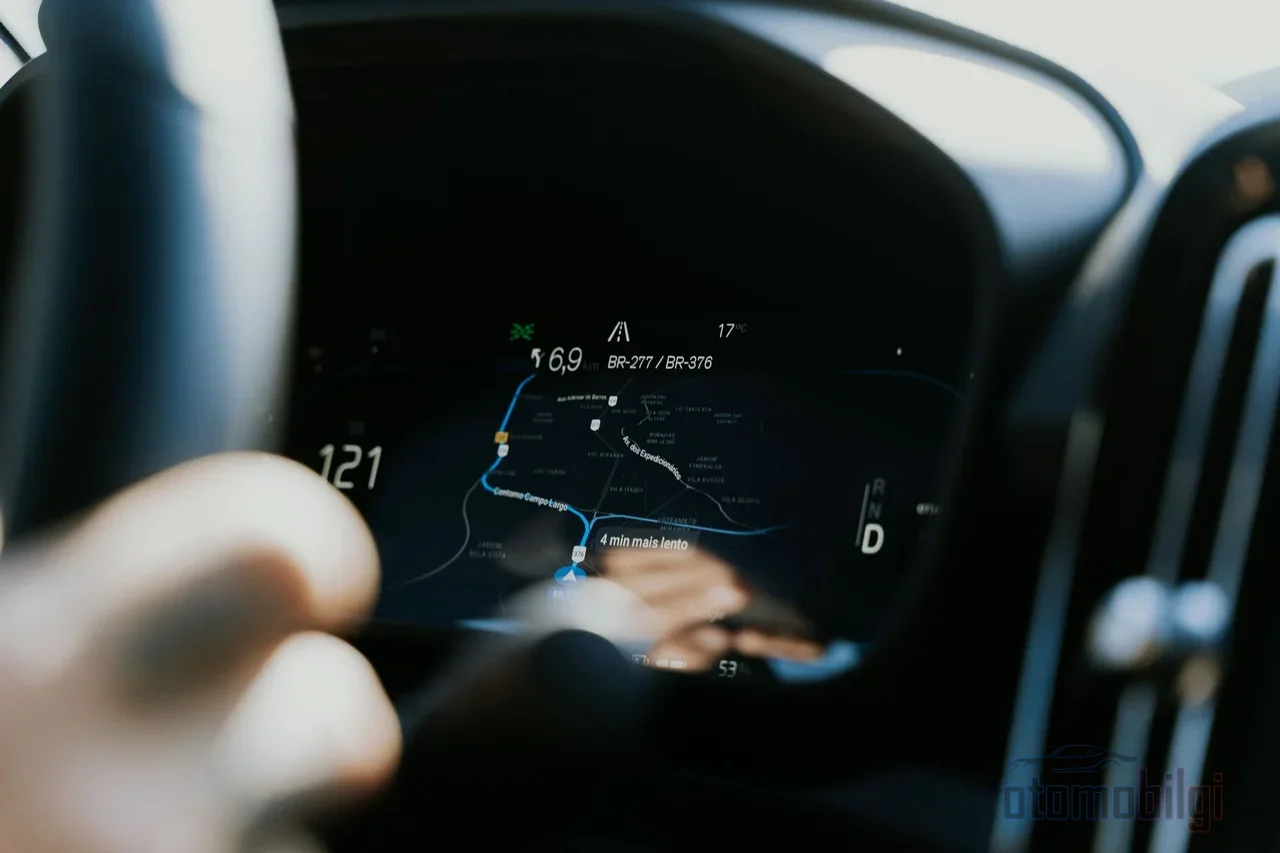
Traffic jam assist is adaptive cruise control adapted to heavy, stop-and-go traffic: the car maintains the following distance from the vehicle ahead on its own, comes to a complete stop when traffic stops, accelerates again when traffic moves, and even provides small steering inputs to keep you within your lane. But the critical point is this: this system is not autonomous driving; the driver's attention and control over the pedals always take priority.
Highlights
- The general operating range is usually the 0-65 km/h band; in some brands the 60 km/h limit applies
- On Ford, after a complete stop there is an automatic resume window of about 30 seconds
- On Subaru and Audi this window is only about 3 seconds
- The system expects both hands on the steering wheel; leaving your hands free triggers a warning
- It may not always detect a stationary pedestrian ahead; seeing them is the driver's job
What Exactly Does Traffic Jam Assist Do?
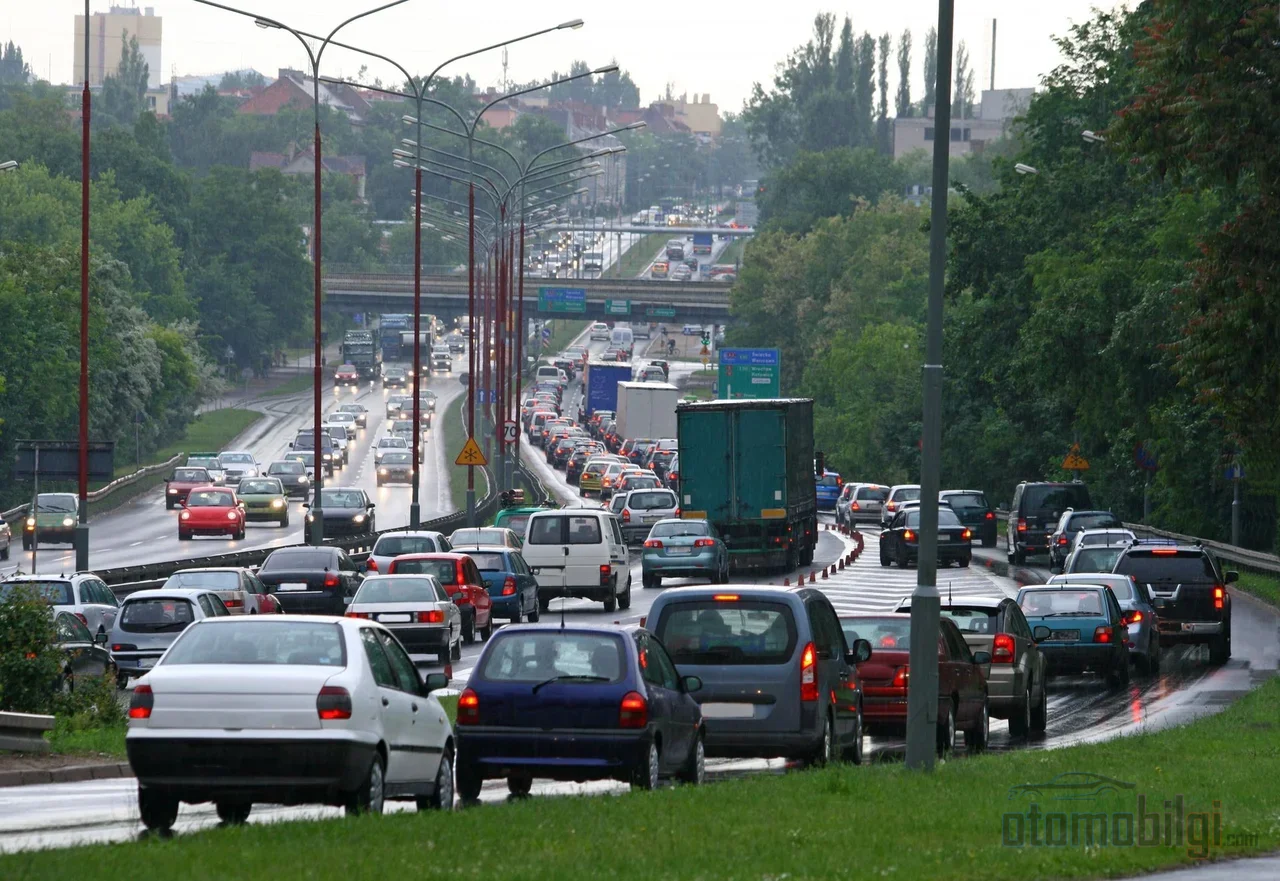
Think of it this way: stop-and-go traffic is one of the most exhausting parts of driving. Press the gas, press the brake, move a meter, stop again... For hours your foot never leaves the pedals and your wrist aches. Traffic jam assist (known in English as Traffic Jam Assist, or TJA for short) is a driver assistance feature designed precisely to ease this ordeal. It continuously monitors the vehicle ahead with radar and cameras, maintains the distance, brakes as traffic slows down, and accelerates as it opens up.
But what about the steering? This is exactly where it differs from regular adaptive cruise control. The system detects the lane markings on the road, calculates the center, and adjusts the steering angle with tiny corrections accordingly. So while it may seem like the car is steering for you, what is actually being done is slow and small corrections. As clearly stated in official user manuals, this steering support is designed only for gentle movements; sharp maneuvers are not expected.
You might wonder, at what speed does this system operate? It varies from brand to brand, but the picture is roughly this:
| Brand | Operating range / scope |
|---|---|
| Honda | 0-65 km/h; engages when ACC and lane keeping are active |
| Volkswagen | Up to 60 km/h; stops, starts and steers by monitoring the movement of surrounding vehicles |
| BMW | Up to about 38 km/h; only on motorways and controlled-access roads |
| Audi | Helps with acceleration and braking while maintaining the selected following gap together with ACC |
As you can see, on the BMW side there is not only a speed limit but also a road type limit: the system does not work outside motorways and roads with controlled access. On Honda, it is said that steering support is provided up to 45 mph (about 72 km/h), and at higher speeds the job is handed over to the lane keeping assistant. So every car's stop-and-go assistant does not behave the same; checking your vehicle's manual is a must.
What Happens When the Vehicle Comes to a Complete Stop? The Stop, Wait and Go Logic
The most critical moment of stop-and-go traffic is the moment the vehicle ahead comes to a complete stop. The good news: Most TJA-equipped vehicles stop at this point and don't press the pedals for you. The bad news is this: after stopping, the vehicle doesn't wait forever. The systems usually offer an automatic resume window for a certain period, and once that window closes, it's up to the driver to set off again.
How long is the automatic resume window?
There are serious differences between brands here. According to Ford's official manual, the system can stay in automatic resume mode for about 30 seconds; when the time runs out, you need to press the accelerator or hit the resume button. With Subaru, it closes much sooner: about 3 seconds after the vehicle comes to a complete stop, the system deactivates or goes into standby mode. The Audi Q7 similarly has an automatic resume window of about 3 seconds. On the Lucid side, things are even clearer: after dropping to 0 km/h, manual intervention is required every single time to move forward.
So you can laugh in my face, but this detail really matters: there are mountains between the system setting off on its own at a short light and you having to press the accelerator in a long traffic buildup. As for the question of who has priority when setting off, the answer is always the same: your inputs always take priority. The moment you press the accelerator or brake, the system overrides itself and control passes to you.
What's the Difference Between Adaptive Cruise Control and Traffic Jam Assist?
These two names are often confused with each other, yet the division of labor is quite clear. Adaptive cruise control (ACC) basically manages speed and following distance; classic versions are generally designed for highway speeds, that is, driving at roughly over 60 km/h. Full-speed-range new-generation ACCs can also work in stop-and-go traffic, but keeping the car in its lane remains your job.
A traffic jam assistant, on the other hand, is the layer that adds steering support to this picture. When ACC is combined with lane centering at low speeds, that's exactly when brands market this package as a traffic jam assistant. In real-world use, the difference is noticeable: while TJA offers a smoother experience by softening acceleration in heavy traffic, classic ACC follows a speed rhythm that mostly mirrors the vehicle ahead. But whatever you do, don't get mesmerized: these systems still struggle with sudden lane changes and erratic braking.
What Does the System Do If a Pedestrian or Motorcycle Suddenly Cuts In?
This is the most vulnerable side of the stop-and-go assistant. City traffic isn't just about stationary vehicles; pedestrians cross from side to side, motorcycles slip between cars, and some dart right in front of you by a hair. The sensors certainly scan the environment, but we can't say they see everything. There's a situation widely voiced among users: a pedestrian standing right in front of the vehicle may not always be detected. Seeing and avoiding pedestrians is ultimately the driver's responsibility.
Think of it this way: for the system, the vehicle ahead is a large, clear, and continuous target. A pedestrian or a motorcycle suddenly changing lanes is a small, fast, and unpredictable target. Even detection latency can make a serious difference at low speeds. That is why, while TJA is active, watching the traffic - especially in places where pedestrians and motorcycles are likely - and keeping your foot near the brake is, to put it mildly, recklessly brave. Here is an honest subscriber's advice: the drivers who use these systems most effectively are those who act as if they have handed nothing over to the system.
What Are the Limits? Why Do Your Feet Still Need to Be Near the Pedals?
Let's list the rules TJA is subject to altogether, because every line of this list is a warning:
- Your hands must be on the steering wheel. If the system sees no activity on the wheel for a certain period, it warns the driver to put their hands back. Some brands, like BMW, also monitor with a driver attention camera whether the driver is actually looking at the traffic.
- Clear lane markings are a must. If the lines are faded, covered with snow, or missing altogether, lane centering may not work; the guides literally include a warning that the system may fail to keep the vehicle centered in the lane.
- Signaling or leaving the lane disables it. When you signal or want to intentionally change lanes, the system gives way to you.
- It is only supportive. Official manuals emphasize the same thing: the system is not a substitute for the driver's attention, judgment, and control of the vehicle.
There is also a psychological trap, and its name is overconfidence. When your feet come off the pedals, the human brain relaxes in a strange way and attention drifts. Yet the responsibility does not get distributed: regardless of the technology, obeying speed limits, paying attention to the road, and staying in control of the vehicle are the driver's responsibility. So is avoiding the risk of an accident. Think of the system as an assistant - like a careful friend sitting in the passenger seat; you have not handed the steering wheel over to it, you are simply sharing the load.
Another limitation is the confusion of activation conditions. In some systems, the traffic jam assistant only engages on certain road types, such as highways, while radar-based full-range ACC can stop down to 0 km/h on any road. It therefore becomes hard to know exactly what works under which conditions; that is also why the user should sit down and read the manual at least once.
Will Stop-and-Go Assistants Make Traffic Smoother?
There is another interesting debate: whether these systems are good or bad for phantom traffic jams - stop-and-go waves that form without any visible cause - is still being discussed. According to some, if everyone kept a consistent distance and braked smoothly, traffic would flow better; according to others, if the reaction logic is incompatible between different vehicles, things could get even worse. There is no definitive verdict, so it is healthier to view these systems not as a traffic solution but as a personal comfort feature.
One fact also needs to be accepted: capabilities vary so greatly between brands and models that expecting uniform behavior is a mistake. Some users say their ACC never fully stops in stop-and-go traffic, while others report that it comes to a complete stop and resumes from where it left off. That's why you should trust your own vehicle's manual, not the generalizations on the internet.
Final Word: Does the System Replace the Driver?
No, it does not. Traffic jam assist is a great comfort technology that makes the world's most frustrating type of driving a little more humane. It stops when the vehicle ahead stops, releases automatically within a short window, and helps you stay centered in your lane. But it is an assistant that waits for your approval at every moment; the moment you press the accelerator or brake, control returns to you, it has limits in detecting pedestrians and motorcycles, and it does not allow your hands to leave the steering wheel. Sit close to the pedals, watch the traffic, and use the system for comfort - not for safety. So what about you - do you know these systems well enough to trust them in stop-and-go traffic?
Sources
- Traffic Jam Assist | Honda Technology
- Traffic Jam Assist | PILOT 2025 - Honda TechInfo
- Adaptive Cruise Control with Traffic Jam Assist - Audi USA
- Traffic Jam Assist - Toyota Owners Manual
- Adaptive Cruise Control - Resuming the Set Speed (Ford Service Content)
- Lincoln ACC with Stop-and-Go and Lane Centering
- BMW Traffic Jam Assistant FAQ - BMW USA
- BMW ADAS Reference Guide (PDF)
- Traffic Jam Assist - Miles Continental Volkswagen
- What Is Traffic Jam Assist in Honda Vehicles? - Steele Honda
- What is Traffic Jam Assist? - JD Power
- Understanding ADAS: Traffic Jam Assist - CarADAS
- Adaptive Cruise Control - Wikipedia
- What Is Adaptive Cruise Control? - iDrive Certified