How Quickly Must a Driver Take Over When ADAS Requests Control of Driving?
Share This Page
In a vehicle with ADAS, when a "take over" warning appears, the time a driver has to intervene is typically only a few seconds; In Level 3 conditional automation, this period is considered to be about 7 seconds. So what exactly does this warning mean, how many seconds do manufacturers give you, and what happens if you miss the deadline? Here is a step-by-step explanation in this article.
Highlights
- In Level 3 systems, the target takeover time has been set at about 7 seconds
- New driver monitoring rules allow you to take your eyes off the road for at most 5 seconds
- If you ignore the warning, the vehicle may perform a safe stop in its lane
- In Level 2, accident liability is always on the driver, even if the system performed the maneuver
What Does the "Take Over" Warning Actually Mean?
When lane keeping assist and adaptive cruise control work together, the vehicle manages acceleration, braking and steering at the same time. This means Level 2, or partial automation: the system can do its job quite well, but there is someone who must stay alert every second, and that someone is not the sensors, it is you. When the car says "take over", do not act as if it has made a mistake; it is telling you that the system has reached one of its capability limits. Maybe the lane markings ahead are faded, maybe there is roadwork, maybe you are approaching an exit. Whatever the case, the message is the same: you now need to take control yourself.
Ireland's Road Safety Authority sums this up in a single sentence:
When systems reach their limits, the driver must be able to intervene at any moment after a warning period.
You can compare this to a group project. Your friend prepares the presentation, but you need to do the final check. Even if the presentation looks good, you do not go on stage before saying "all good". Likewise, in ADAS, when the system winks at you and says "you take over", it means you are still in the game at that moment.
How Many Seconds Do You Have to Intervene? Manufacturers and Rules
Here is the crucial part: this period is not the same in every vehicle and is often much shorter than you think. Assisted driving systems currently on the European market generally require you to keep your hands on the steering wheel; if you take your hands off completely, the system starts issuing warnings within a few seconds. So the period you know from classic "hands on the wheel" systems is already measured in seconds, not minutes.
Let's look at the numbers:
- ~7 seconds: The takeover time required for a safe driver intervention was found to be about 7 seconds in earlier studies; the UNECE R157 rule regulating Level 3 automated lane keeping systems is based on this.
- 5 seconds: Under the new DCAS, or driver control assistance systems, rules, driver monitoring systems allow you to take your attention off the road for at most 5 seconds. That is 2.5 times the period considered safe, and it is a figure right at the center of the debates.
- 5-10 seconds: According to user observations, if you do not look at the road for about this long in Tesla Full Self-Driving, a red warning lights up in the cockpit.
- 9-14 seconds: An AAA Foundation modeling study examining takeover readiness shows that the best performance is achieved when the driver receives a 9-14 second advance warning, with the peak occurring at 11 seconds.
As you can see, the difference isn't about "how patient the system is" but about the system's level and what it measures. 7 seconds is the time needed for a safe intervention after control is handed back to you; 5 seconds is how much attention drift driver monitoring tolerates. The two don't measure the same thing, but both deliver the same message: these windows are very narrow.
| Scenario | Duration | What does it mean? |
|---|---|---|
| Hands fully removed from the steering wheel | A few seconds | Warning begins in classic Level 2 systems |
| Driver not looking at the road (DCAS rules) | Maximum 5 seconds | Driver monitoring issues a warning |
| Level 3 takeover window | ~7 seconds | Target duration based on UNECE R157 |
| Most effective advance warning window | 9-14 seconds | Best takeover performance in AAA modeling |
How the Warning Arrives: Sound, Visual and Vibration Escalation
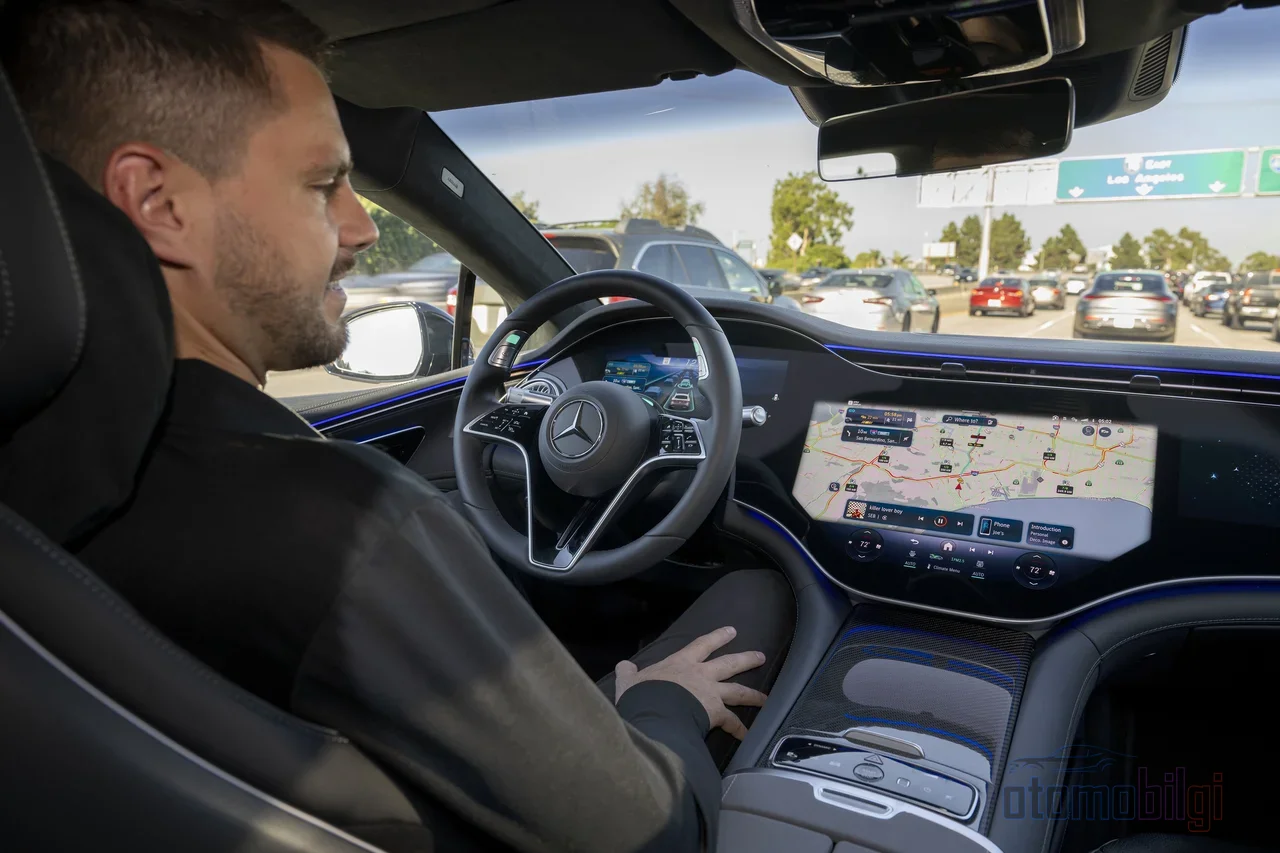
The takeover request isn't just a single "beep"; systems usually warn in stages. First a visual icon appears on the instrument panel, then the audible warning kicks in, and in some vehicles the steering wheel or seat vibrates. If necessary, the system can even brake or intervene with steering itself. In other words, the vehicle calls out to you through three different senses at once; this is not a gentle reminder - the system is declaring an emergency.
Attention monitoring is also active. With the new rules, the system looks not only at your hands but also at your eyes: if you take your eyes off the road for too long, you'll get a warning again. Some systems also make it clear when they are in "hands-free" mode with a visual indicator; for example, in GM Super Cruise, when the green light bar on the steering wheel lights up, you know the system is holding the steering. Not knowing which mode you're in is one of the most common mistakes - and a risky one for everyone around you.
What Happens If You Miss the Deadline?
At the end of the warning escalation, the system doesn't give up - on the contrary, it plays it safe. If the driver still hasn't responded when the time runs out, the vehicle activates its risk mitigation function, slowing down and coming to a safe stop within its own lane; user accounts often mention the hazard lights turning on automatically. In official terminology, this is called a system-initiated safe stop. So even in the worst-case scenario, the vehicle doesn't try to drive forever with an absent driver.
But there's a detail here: a safe stop isn't a rescue - it's a last resort. Some safety experts even suggest that a driver who triggers a safe stop should have access to the Level 2 system locked out for the rest of that drive. The logic is this: returning the system immediately to someone who ignored the warnings would reward not learning the lesson.
And there's also the possibility of a sudden need to intervene. Error management simulations show that, especially in hands-free Level 2 driving, sudden steering errors can force the driver into instant, above-all intervention. So sometimes you are not even given 7 seconds; sometimes that "take over" moment turns into a move within a single second. It is hardly possible to win that moment unless your hands are on the wheel and your mind is not on the road.
Where Does the System's Limit Begin? Recognizing the Limits of Competence
What really needs to be learned about the takeover request is this: it is not a fault report, it is a competence limit marker. The system gives up when it reaches a situation it cannot see or resolve safely. A lane keeping assistant, for example, may never engage at all on snow, mud, or very faded lane markings; and it can already be easily overridden by your intervention. That is why knowing in advance the answer to "where does the vehicle get stuck?" is the best antidote to panicking when the warning arrives.
The Overconfidence Trap
There is also a strange paradox: the more smoothly the system runs, the more the driver relaxes. This is exactly what safety researchers call "the irony of automation" - having to set up a camera-based monitoring system to monitor the human supervisor exposes the contradiction built into the design. Agencies that investigate crashes paint a similar picture: overconfidence and ignorance of the system's limits are cited among the possible causes of serious crashes. And this is not a problem of just one brand; as hands-free systems spread across Europe, similar investigations have been conducted into systems from other manufacturers as well.
Meanwhile, confusion is a real problem. Telling the difference between partial automation and conditional automation is almost impossible for an ordinary user; safety advocates say this line needs to be much clearer. My translation: knowing what level your vehicle is at matters as much as memorizing the colors on the instrument cluster.
Who Bears the Responsibility? The Price of Ignoring the Warning
The moment a crash happens, the picture becomes clear: in Level 2, the driver is always considered to be "driving the vehicle." Even if the system physically performed the maneuver, liability for the crash remains with the driver. According to legal circles, ignoring the warnings can additionally weaken a compensation claim or pin responsibility directly on the driver. So the sentence "the vehicle warned me but I didn't listen" is a sentence that works against you at the table.
What about turning off the warning sound? Some drivers find the warnings annoying and completely silence the system or disable it. Experts on the fleet management side emphasize that this is actually a matter of lack of knowledge: drivers who do not know what the systems are doing render them effectively useless by ignoring the warnings. Yes, the warning sound can be irritating - but that sound is the bell of the last insurance protecting you.
Another finding concerns driver behavior: users may ignore the alerts and expect the vehicle to adapt to conditions on its own, and silencing the alerts can often be a deliberate withdrawal driven by annoyance. So the problem is not technical, it's human. And that's why the solution must also be sought in the human.
What You Need to Do at the Moment of Takeover: A Practical Checklist
Theory is nice, but the moment a truck appears in your headlights, theory flies out the window. So rehearse the takeover moment in your head now:
- Notice the alert within 1-2 seconds, don't postpone the sound with an "I'll deal with it later."
- First check the mirrors, then gently feel the steering wheel; don't make sudden moves.
- Set the speed yourself if necessary; the speed the system leaves you with is not always a safe speed.
- Put both hands back on the wheel and don't take your eyes off the road.
- Think later about why you got the alert; that limit will still be there next time.
Remember: the system doesn't give you an authority, it gives you a task. And the duration of that task, while it varies from manufacturer to manufacturer, is in no version long enough for "a sip of coffee." A final thought: seeing partial automation more as a comfort feature than a safety technology is precisely the framework that safety experts themselves prefer. You can let comfort take the wheel out of your hands; never the responsibility.
So what will be the first thing you do when you hear that alert sound? I suggest you rehearse your answer now - those seconds are, truly, just seconds.
Sources
- Risks of hands-off driving and system-initiated lane changes in Level 2 driver assistance systems – ETSC
- Autonomous Driving – Hands on the Wheel or No Wheel at All – Mobileye
- Measuring and Predicting Drivers' Takeover Readiness – AAA Foundation
- Evaluation of simulated Level 2 hands-free driving in real traffic – NHTSA/ESV
- How long can I take my hands off the steering wheel when using Highway Assistant – BMW USA
- Safe Hands-Free Driving Technology – GM
- Automated systems need stronger safeguards to keep drivers focused – IIHS
- Chapter 13: Advanced Driver Assistance Systems (ADAS) – NY DMV
- Advanced Driver Assistance Systems (ADAS) – RSA Ireland
- Lane-Keeping Assist: Everything You Need to Know – KBB
- Systematic review and meta-analysis of take-over time – Sekadakis et al.
- How to overcome driver ADAS impairment – Element Fleet
- ADAS & Accident Liability – Simeone & Miller