Why Do ADAS Systems Malfunction in Foggy and Snowy Weather?
Share This Page
In foggy and snowy weather, ADAS systems get confused because water droplets and airborne particles physically scatter, absorb, and block the signals sent by the camera, radar, and LiDAR; detection range can be cut by 50 to 90 percent in bad weather, and the systems either respond late or shut themselves down as a safety precaution. In other words, that "sensor blocked" warning on the screen shows that the car has realized it cannot see the truth, not that it has malfunctioned. So whose job is driving in that case? Yours, of course! Let's understand this in a fun but seriously thorough way.
Highlights
- In dense fog, camera range can drop to 10-20% of its normal value.
- At 110 km/h, the system needs to see roughly 100-120 m ahead for emergency braking; fog makes this impossible.
- Radar is the most robust sensor, maintaining 70-80% of its clear-weather performance even in heavy rain.
- Rain caused lane-keeping assist to fail 69% of the time in tests.
- The system shutting down is not a malfunction; it is the engineering name for the car saying "I can't see."
Why Do Sensors Go 'Blind' in Bad Weather?
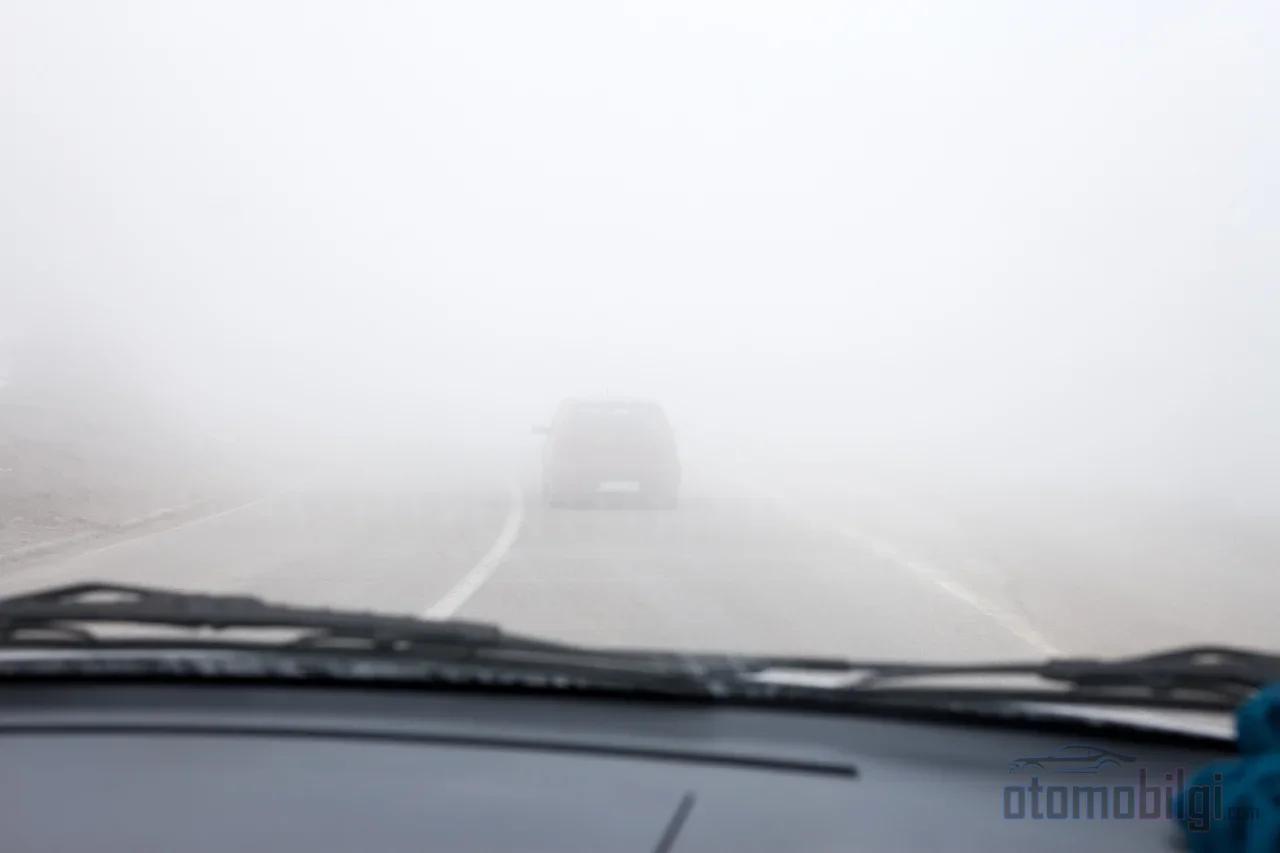
Let's start with a simple analogy: On a foggy day, you can't see your friend in the distance, right? Your car's sensors face exactly the same bottleneck. The camera works with visible light of 400-700 nanometers, LiDAR typically uses near-infrared at 905 or 1550 nanometers, and radar operates at a frequency of 77 GHz, which corresponds to a wavelength of about 4 millimeters. Here's the strange part: Fog droplets are 10-100 micrometers in size, which is nearly the ideal scattering size for visible light. Light hits these tiny droplets and scatters in every direction; in physics, this is called Mie scattering. The camera's lens becomes essentially covered like frosted glass.
Let's look at the numbers: Dense fog can produce attenuation of 50-100 dB per kilometer in visible light. In practice, this means detection effectively ends beyond 20-30 meters. LiDAR's story is not comforting at all: A LiDAR that sees 200 meters in clear weather can drop to 40-60 meters in moderate rain and 15-20 meters in heavy downpours. Heavy rain reduces LiDAR's maximum detection range by about 30% and can cut point cloud density by as much as 45%.
So why does radar hold up better?
Radar's trump card is its wavelength: A 4-millimeter wave remains electrically small compared to raindrops, so the droplets cannot scatter the signal as strongly. That's why automotive radar maintains 80-90% of its clear-weather performance even in heavy rain, dropping from about 200 meters to roughly 160 meters. Bosch too Radar Gen 7 emphasizes that the technology works in rain, snow, and darkness, adding an extra layer of environmental awareness to ADAS. But radar isn't innocent either! Wet asphalt can act like a mirror, producing 'ghost targets' reflected from the ground; lateral position errors, false alarms, and loss of tracking can occur. Heavy wet snow is radar's worst nightmare: 77 GHz signals suffer 5-8 dB attenuation per kilometer, shrinking range by 50-60%. Even a 2-3 millimeter layer of wet snow on the radome is enough to cause signal loss.
Range Loss: How Many Meters Can Each Sensor See?
Controlled tests reveal a picture showing that weather conditions affect each sensor to a different degree. Here is that famous comparison:
| Condition | Camera | LiDAR | Radar |
|---|---|---|---|
| Light rain (2.5 mm/hour) | 85-90% range | 75-80% range | 90-95% range |
| Heavy rain (50 mm/hour) | 40-50% range | 20-30% range | 70-80% range |
| Dense fog (50 m visibility) | 10-20% range | 15-25% range | 60-75% range |
| Heavy wet snow | 30-40% range | 20-30% range | 50-60% range |
Reading the table reveals a clear hierarchy: radar is the most reliable in snow and fog, while LiDAR is the most fragile. Snow has an extra cruelty for optical sensors: wet snowflakes maximize both scattering and absorption at the same time, and the LiDAR beam reflects off these flakes, registering them as obstacles. In other words, even when the road is empty, a ghost point cloud appears before the system. In sensor fusion, weather also causes simultaneous (correlated) failures across all sensors, so the algorithm cannot find high-quality input; the typical increase in false alarms can reach 2-10 times, and up to 10 times for in-vehicle cameras.
Braking Math: Why Isn't 30 Meters Enough?
Now comes the most critical part. You're traveling at 110 km/h and the car ahead suddenly stops. For automatic emergency braking (AEB) to save you, the system must detect the obstacle from about 100-120 meters away. Where does this figure come from? Detection and processing time accounts for 15-31 meters, brake actuation delay 6-12 meters, and braking distance at 0.8g deceleration 62 meters; with a safety margin, a total of 100-135 meters. On wet surfaces, deceleration drops to 0.5-0.6g, so the required range climbs to as much as 110-145 meters.
When fog reduces sensor range to 30 meters, the math collapses: the system must either deactivate itself or accept the risk of collision. Engineers, of course, don't choose the latter. So if you think 'the system lied to you,' what you're actually seeing is the vehicle being honest with you. Braking distance is written by the laws of physics, not by sensor range.
System by System: Adaptive Cruise Control, Lane Keeping, and AEB
Adaptive cruise control (ACC)
Ford's official owner's manual explicitly states that adaptive cruise should not be used in conditions of poor visibility, especially fog, rain, spray, and snow. GM manuals similarly note that these conditions can limit ACC performance. The logic is simple: If the system detects the vehicle ahead late, it unnecessarily closes the following distance, or conversely, if it loses the target, it mismanages its speed. User forums also describe hours of repeating 'sensor blocked' warnings and cruise shutdowns while driving in snow.
Lane Keeping Assist
This part is very clear: When snow covers the lane markings, there is nothing left for the system to read as the 'road'. Rain also messes things up; in AAA tests, rain caused lane-keeping features to fail at a rate of 69%. Common triggers include faded or missing lines, snow and rain covering the lines, dense fog, and sharp curves. When the system cannot see the line, it either stays silent without warning or tries to correct the steering based on the wrong 'line'; neither is something you will enjoy.
Automatic Emergency Braking (AEB)
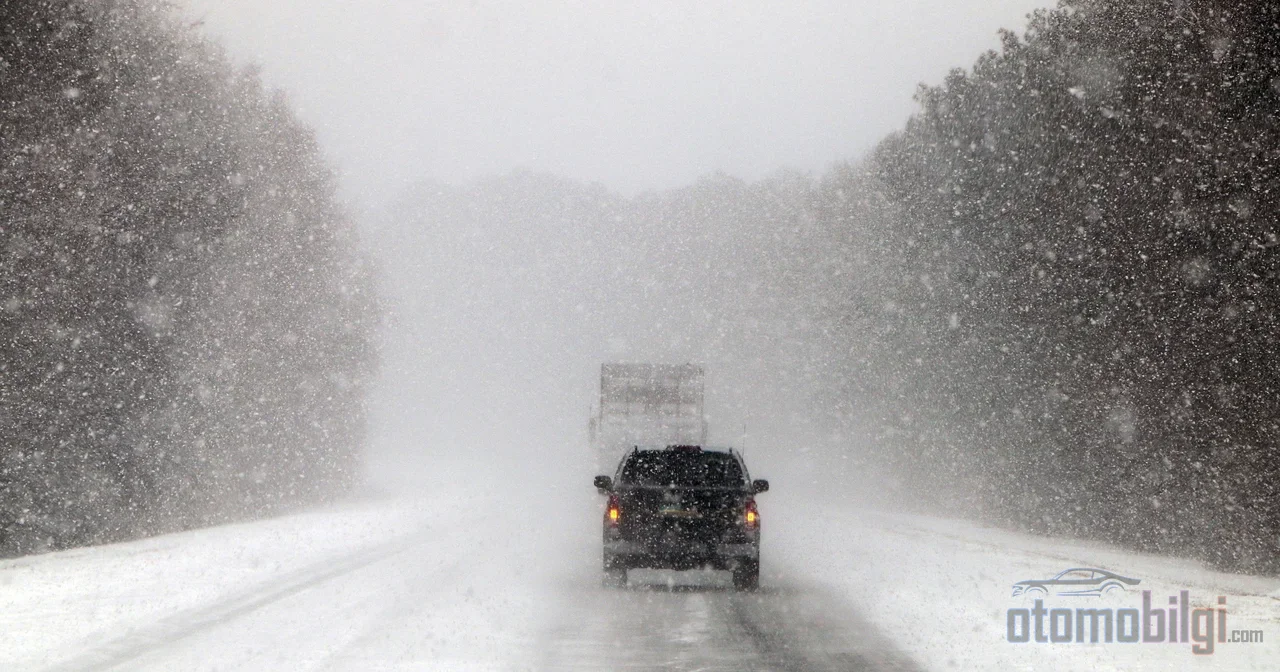
AEB's sensors can be blocked by dirt, ice, or snow; in this case, the system warns the driver. Transport Canada also officially states that the system may not work in every traffic, weather, and road condition, meaning heavy rain and snow, dense fog, strong sunlight, and at night. The more annoying scenario is this: Sensors can mistake rain or snow particles for solid objects and brake unnecessarily (classic phantom braking), and there are documented cases where pedestrian classifiers produced 'uncertain' output for 80% of real pedestrians in heavy rain. If the system treats everything as a threat, unnecessary interventions push you toward turning the system off; this is the part that makes you say 'what am I supposed to do with this' after a few false braking incidents.
What does the 'sensor blocked' warning mean?
When the front radar is covered by snow, mud, ice, or heavy rain, warnings like 'forward driving aids temporarily disabled' appear, and usually cleaning the sensor or washing the car solves the problem. The Kia EV6 manual also gives an important detail: If the vehicle is turned off and restarted with the front radar cover or bumper closed, Forward Collision-Avoidance Assist may not work normally. Some manufacturers have automated the process: The system degrades gradually. First, the following distance increases and warnings are given earlier; then lane keeping shuts off and the ACC speed limit drops; then ACC is completely disabled and AEB intervenes only in near collisions; in the final step, only basic warnings remain and the driver takes full control. Seeing this as a malfunction is like assuming the fire exit is locked: The door exists, so you are not trapped in the room.
Can Sensor Fusion Be a Lifesaver?
Theoretically, fusion is wonderful: if the camera can't see, the radar does; if the LiDAR stumbles, the others compensate. But weather creates simultaneous failures across all sensors, leaving the algorithm with no good input. There are characteristic signs of collapse: track fragmentation, two vehicles merging into a single ghost object (track coalescence), and divergence of the Kalman filter. In other words, redundancy works if failures are independent of each other; if the weather strikes everyone at once, fusion's advantage evaporates.
New solutions are promising, but their limits must be understood. Thermal cameras see better in fog; however, their low resolution (640×480), their inability to read lane markings and signs, and their 5-10x cost make them complementary. Imaging radar raises angular resolution from 2-4 degrees to 0.5-1 degrees, allowing it to distinguish a stationary vehicle from a barrier in rain and fog, where the camera and LiDAR fail. Vehicle-to-vehicle (V2V) communication works like this: a vehicle that can see only 40 meters in fog can receive obstacle data from vehicles ahead about something 150 meters away. But this isn't a magic wand either; there is a latency requirement of under 100 milliseconds, and if everyone's systems are degraded at the same time, whom are you going to query? In short, the technology is advancing, but physics still has the final say.
What Should a Driver Do in Bad Weather? When Does Control Wait for You?
Here's the part that concerns you. The legal picture is very clear: in weather-related accidents, the weather cannot be blamed; drivers can be found at fault if they fail to adapt to weather conditions. Even if a faulty ADAS feature contributes to an accident, the driver can be held responsible for failing to maintain control of the vehicle. In other words, the "the car did it itself" defense doesn't hold up in court, my friends.
The to-do list is actually short and sensible:
- Keep the sensors, cameras, and radar cover clean against snow, dirt, and ice; but if the bad weather persists, cleaning alone is not a lasting solution.
- Avoid cruise control and ADAS features in bad weather, slow down, and increase your following distance.
- Read the "sensor blocked" warning not as a malfunction, but as an honest report the system is giving you, and take control immediately.
- If the lane markings are under snow, don't rely on the lane-keeping assistant; the steering wheel is in your hands.
So how much should you trust ADAS? The short answer: as your assistant in light and moderate conditions, and only as an emergency safety net in dense fog. New systems are better than older generations, yes; but the limits of physics apply equally to every generation in heavy precipitation. The system's degradation (gradual shutdown) is proof that it is working correctly; the real mistake would have been to see that warning and keep your foot on the gas. Remember, the word "Automatic" doesn't contain "maintain"; the real artificial intelligence at the wheel is still your brain!
Sources
- Why ADAS Fails in Fog, Rain, and Snow Explained Through Sensor Physics
- Vehicle Safety Systems Struggle to "See" in Bad Weather - AAA Newsroom
- Will Your Driver Assistance Systems Fail in the Rain or Snow? - AAA Via
- Automatic emergency braking - Transports Canada
- Using Adaptive Cruise Control - Ford Owner Manual
- Forward Collision-Avoidance Assist malfunction - Kia EV6 Manual
- Automatic Emergency Braking - MyCarDoesWhat
- 3D Radar vs Camera vs LiDAR for All-Weather ADAS - ZLY Tech
- How Weather Really Affects LiDAR Performance - YellowScan
- Which Detection Technology Works Best in Snow and Fog? - Western Systems
- Radar Gen 7 - Bosch USA
- Types of ADAS Sensors in Use Today - Dewesoft
- Lane-Keep Assist Failures - Clean Fleet Report
- ADAS and Bad Weather Liability - Kendall Injury Law
- How Weather Conditions Affect Fault In Car Accidents - MacRae Whitley
- Overcoming ADAS Limits - EasyRain