Radar or Camera? The Difference in Sensor Technologies in ADAS Systems
Share This Page
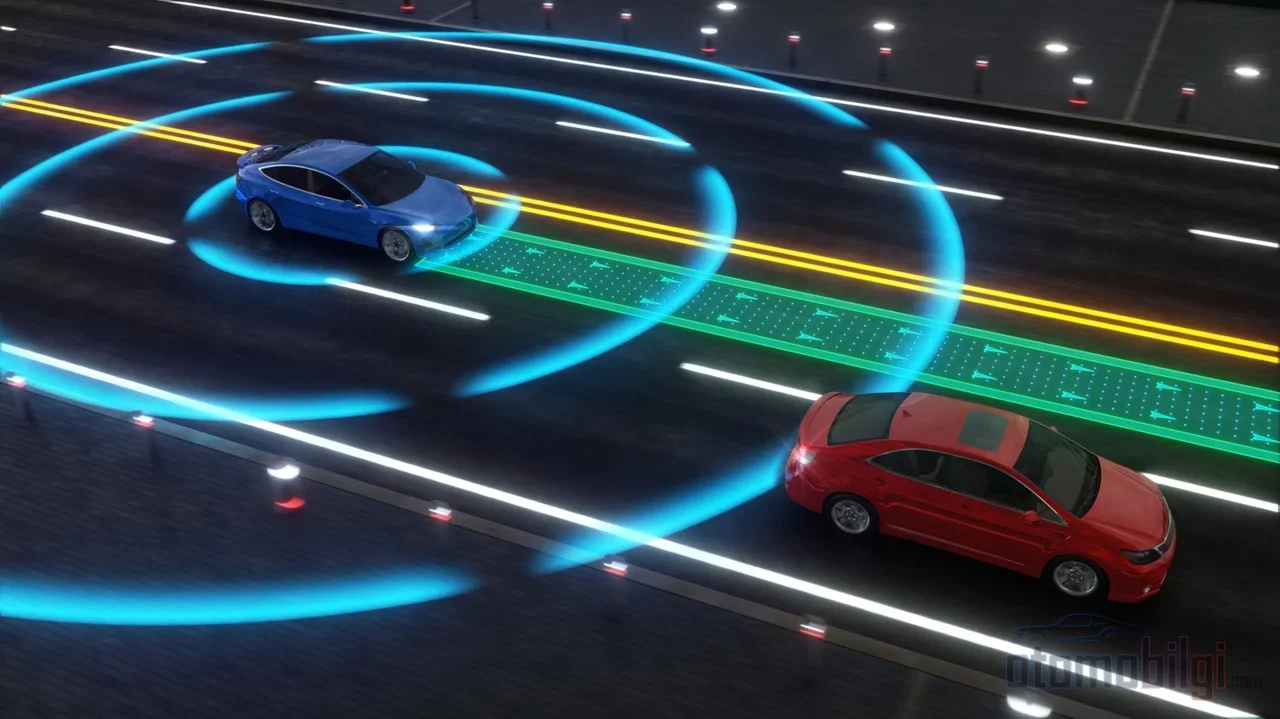
In ADAS systems, radar measures distance and speed using radio waves, cameras process images to recognize lane markings, traffic signs, and pedestrians; ultrasonic sensors assist with parking at close range, while lidar uses lasers to create 3D maps with centimeter-level precision. Knowing which system works with which sensor is the most important clue that also tells you how reliable those features will be in everyday use when buying a vehicle.
Highlights
- Radar, in front of the vehicle, up to 300 meters is the longest-range sensor of ADAS.
- Ultrasonic sensors work only within 2.5–4.5 meters which is why the parking job falls to them.
- Lidar up to 300 meters scans and offers centimeter-level accuracy but cannot see colors.
- In adaptive cruise control, using radar is the most sensible choice for distance; lane keeping is almost always the camera's job.
- As of 2026, at least 15 automotive brands have launched lidar-equipped series-production vehicles.
Radar Sensor: The Silent Champion of Long Range
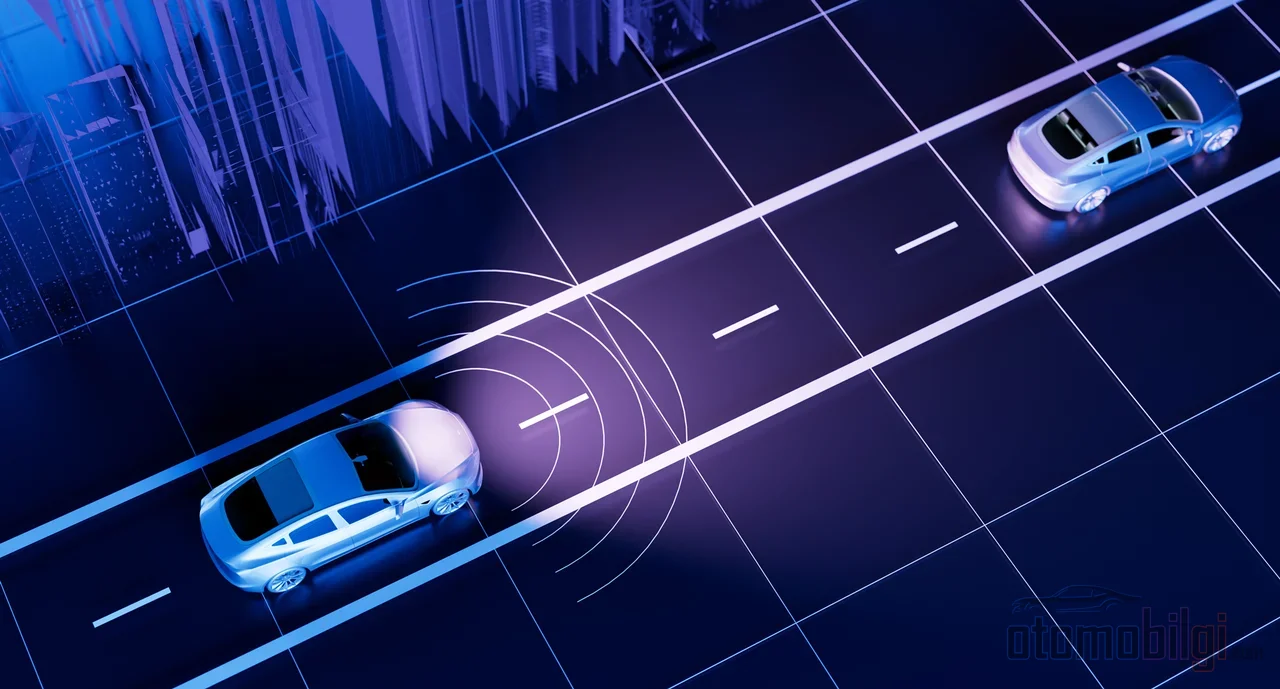
Radar sends radio waves toward the front of the vehicle; when these waves hit an object and return, it calculates the object's distance and relative speed from the returning signal. A simple analogy: it is like shouting in a dark room and listening for the echo, but with radio waves instead of sound. In automotive applications, the 76.5 GHz band is commonly used, with frequencies ranging from 24 to 79 GHz in total.
Radar's biggest trump card is its range. Signals can reach up to 300 meters in front of the vehicle; while traveling at highway speed, the system can see a car hundreds of meters ahead. Moreover, night, rain, fog, and dust barely disturb these waves. It is also genuinely good at detecting metal objects (cars, trucks, buses). In return, radar cannot produce as detailed an "image" as a camera; it tends to miss small objects. In other words, radar says "there is something there and it is approaching us" but cannot say "it is a pedestrian." It is usually mounted behind the front grille or inside the rear bumper.
Camera: The System's Literate Eye
The camera feeds a live video of the road to the ADAS computer, and the software recognizes pedestrians, traffic signs, lane markings, and other vehicles from this image. This is exactly what radar cannot see: is the light red or green? Where is the lane marking? What does the sign say? The camera "reads" these. It is the primary sensor for lane centering, parking assist, and automatic headlight control. Technically, CMOS and CCD sensors are used; CCD offers better dynamic range while CMOS consumes less power and is cheaper.
But the camera has an Achilles' heel: it needs to see. Night darkness, fog, rain, snow, and the most classic scenario of all, a dirty lens, degrade the camera's capability the moment visibility drops. On a perfectly sunny day, the camera is the smartest student in the room; in a fog-covered dawn, it has forgotten its notebook.
Ultrasonic and Lidar: Close-Range Thorn or Laser Eye?
Ultrasonic sensors, at approximately 48 kHz produces high-frequency sound waves and detects nearby objects by listening to echoes. Like bat navigation. Their range is limited: they only 2.5–4.5 meters work within. They cannot see objects smaller than 3 cm, are affected by wind noise, and do not perform well at high speeds. But they are cheap; that is why almost all parking sensors consist of ultrasonic sensors embedded in bumpers.
Lidar, on the other hand, plays in a different league. It performs "time of flight" measurement with laser light; it calculates distance from the time it takes light to travel to an object and back. The result is a high-resolution 3D model called a "point cloud": it maps the vehicle's surroundings with centimeter precision (about 1 inch), some units 128 lasers can include, and up to 300 meters can scan. The best part is that it generates its own light; it is completely unaffected by darkness, shadows, sun glare, and oncoming headlights. Its weakness, however, is color blindness: it cannot distinguish whether a traffic light is green or red. Smoke, dust, and rain also degrade its performance, and it is expensive compared to cameras.
| Sensor | Range | What It Does Best | Weak Point |
|---|---|---|---|
| Radar | Up to 300 m | Distance and speed measurement; bad weather and night | Cannot produce a precise model, misses small objects |
| Camera | Limited to line of sight | Sign, color, lane line, and pedestrian recognition | Night, fog, rain, and dirty lens |
| Ultrasonic | 2.5–4.5 m | Near object detection when parking | Weak at high speed, cannot see small objects |
| Lidar | Up to 300 m | 3D point cloud; works in darkness | Cannot see color; smoke, dust, rain; expensive |
Which System Works With Which Sensor?
Adaptive Cruise Control
This system, which detects the vehicle ahead and maintains distance, mostly uses radar; in some applications, cameras or sensor fusion are employed. Using radar for distance measurement and cameras for lane keeping and sign reading is no coincidence: radar is the most accurate sensor for distance, and the camera for lanes and signs. The radar-based ACC market is also growing; in 2026, 52% of the product segment consists of radar sensors, and sales are expected to increase through 2036.
Lane Keeping Assistant
The camera mounted on the windshield recognizes lane lines, and the system usually engages at speeds above 60 km/h . The camera continuously monitors the vehicle's position in the lane; lane centering continuously applies steering input using the image from the camera. That is why lane tracking is entirely the camera's territory in the world of sensors.
Automatic Emergency Braking (AEB)
While simple sensors are sufficient for low-speed systems, advanced systems use sophisticated sensors that identify distant obstacles. The market is shifting from a basic safety feature to sensor fusion-based advanced systems. The situation in the US is serious: the regulatory agency NHTSA, with FMVSS No. 127, is making AEB mandatory in all new vehicles by September 2029. The systems against the lead vehicle in the lane up to 144 km/h (90 mph) be able to brake automatically. The proposal initially targeted full stops for pedestrians at speeds up to 50 mph. For heavy trucks (Class 8), as of 2026 there is still no completed federal rule mandating AEB.
Blind Spot Monitoring and Park Assist
Blind spot monitoring is classic radar territory: dual radar sensors sit in the rear bumper, with a typical detection range of ~20 meters The detection zone is roughly one lane wide on each side, extending from the side mirrors to about 3 meters behind the vehicle. Some systems detect approaching vehicles from behind even at forward speeds of 10 km/h and above Rear corner radars far exceed the range of ultrasonic sensors and provide longer detection in all weather conditions.
In park assist, the stars of the show are ultrasonic sensors: these small elements in the bumpers send out packets of sound waves and calculate distance by measuring the return time of the reflected signal. Still, winds of change are blowing: mmWave radar is rapidly emerging as an alternative to ultrasonics in automated parking.
Sensor Fusion: Why Isn't a Single Sensor Enough?
Now let's get to the real question: "Which sensor is better?" This question is actually framed incorrectly. The right question is: when conditions get tough, which sensor keeps providing useful information? In rain and fog, radar is generally the most resilient core sensor; cameras and lidar add extra data when visibility allows.
This is exactly where sensor fusion comes into play. The idea is simple: combine each sensor's strengths, reduce blind spots, and provide redundancy. The camera sees the red light, the radar measures distance, lidar draws the 3D shape; together, the three make safety decisions that a single sensor could never achieve. Combining multiple data sources reduces false positives and negatives in object recognition and lowers processing load, enabling smarter processing. The method known as early fusion in radar improves the accuracy and especially the robustness of vehicle detection.
The essence of fusion is this: sensors degrade in different ways. The camera loses its limits when visual clarity drops, lidar struggles when the laser signal scatters, and radar deviates with multipath reflections and low angular resolution. Relying on one and ignoring the other is like setting off on the road trusting a single tire. That's why there are two big camps in the industry: on one side, an approach relying on radar-supported cameras without lidar (Tesla's preference), and on the other, an approach developing cameras and lidar as parallel independent environment models (Mobileye's path). The debate is still hot.
Is Lidar No Longer a Luxury? What Does the Picture Look Like in 2026?
A few years ago, lidar was something "seen only in concept vehicles." Not anymore: By 2026 including Mercedes-Benz, BMW, Lotus, Honda and Toyota, at least 15 automotive brands have launched lidar-equipped series production vehicles. The first lidar-equipped series production vehicle was the Audi A8 was; the traffic jam pilot was technically Level 3. In 2026, more vehicles are integrating lidar with radar and camera sets for better 3D perception and longer range. At CES 2026, a company announced a solid-state lidar whose unit price will drop to 200 dollars by 2029; if the price falls like that, the course of the debate may change.
The market side points the same way: the mechanical lidar segment is projected to lead in 2026 with a 58.88% share, and the mid-range (50-150 m) segment is expected to take a 38.93% share. Features like adaptive cruise control, AEB, lane keeping and pedestrian detection rely on lidar's real-time high precision. Still, it would be wrong to say it has convinced everyone; lidar continues to be criticized for its poor performance in bad weather and its cost. Remember, no sensor is magic: mounting quality, heating, self-diagnosis, cleaning strategy and system redundancy are just as important as the hardware list. Also, application quality matters more than hardware; two vehicles using the same hardware can offer very different ADAS experiences.
When Looking at a Car, How Do These Details Matter to You?
When looking at a car, you will no longer just ask "Is there ACC?"; you will ask "Is the ACC radar-based?". Radar-based ACC offers more consistent distance tracking at night and in the rain. You will ask "Does the lane assist rely on the camera?"; because a dirty windshield effectively disables that feature that day. If there is a blind spot warning, there are most likely two radars in the rear bumper; parking sensors are almost certainly ultrasonic.
And one more truth: none of these systems replaces the driver. Sensors are assistants that extend your perception; the responsibility for steering and braking ultimately lies with the driver. When ice sticks to the sensors, it can block both the radar and vision-based sensors; a muddy snow cover on the radar sensor can even affect adaptive cruise control. So keeping the sensors clean in winter is more useful than the newest ADAS package. And you know what's nice? When reading a feature list in a brochure, you now see the technology behind it; that's a superpower most drivers don't have.
Sources
- 5 Types of ADAS Sensors You Should Know About
- Types of ADAS Sensors in Use Today
- 3D Radar vs Camera vs LiDAR for All-Weather ADAS
- ADAS Cameras: How They Work
- What is ADAS Sensor Fusion?
- Lane Keeping Assist System (LKAS) – Honda Technology
- Lane keeping assist – Bosch Mobility
- Driver Assistance Technologies – NHTSA
- Explore the Global Adaptive Cruise Control System Market
- Blind spot detection – Bosch Mobility
- Blind Spot Monitoring (BSM) – Mazda
- Blind Spot Warning & More
- Ultrasound-based parking aid (PDC) – Hella
- How Radar Outmaneuvers Ultrasonic in Automated Parking – Texas Instruments
- US safety agency to require automatic emergency braking – AP News
- Automatic Emergency Braking for Trucks 2026
- LiDAR Sensor Technology Landscape – PatSnap
- Automotive LiDAR Market Size, Share – Fortune Business Insights
- Automotive LiDAR Market – Persistence Market Research
- Radar and Camera Early Fusion for Vehicle Detection in ADAS