Why Isn't Detecting Motorcycles as Easy as Half of the Emitter?
Share This Page
Car safety systems can now recognize pedestrians, cyclists and even deer; so why is a thin motorcycle still one of the hardest targets? Short answer: to cameras and radars, a motorcycle looks like merely a narrow, single-light, constantly moving object. Systems accustomed to a wide frontal profile, two headlights and a body can mistake a motorcycle's single-point headlight for a flashlight and its narrow silhouette for noise that is hard to distinguish from the background. On this page I explain one by one why AEB and blind spot warning systems detect motorcycles late, which real-world scenarios make the job harder, and how you can make yourself more visible as a motorcycle rider.
Highlights
- Starting from the 2026 model year, motorcycle detection became mandatory for the top safety award; more than 77% of the tested models received an acceptable or good rating.
- In 2023, in motorcycle accidents 6,335 people lost their lives; motorcyclists account for 15% of all traffic deaths.
- The average age of vehicles on the road is 12.6 years; the share of AEB capable of detecting motorcycles in the fleet is currently roughly 4-5%.
- The AEB mandate for new vehicles will come into effect in September 2029; it may take until the 2040s for the technology to reach the majority of vehicles on the road.
- As a motorcycle rider, wide LED lighting and high-visibility clothing significantly help the systems detect you.
Why Is Detecting Motorcycles Harder Than Detecting Pedestrians?
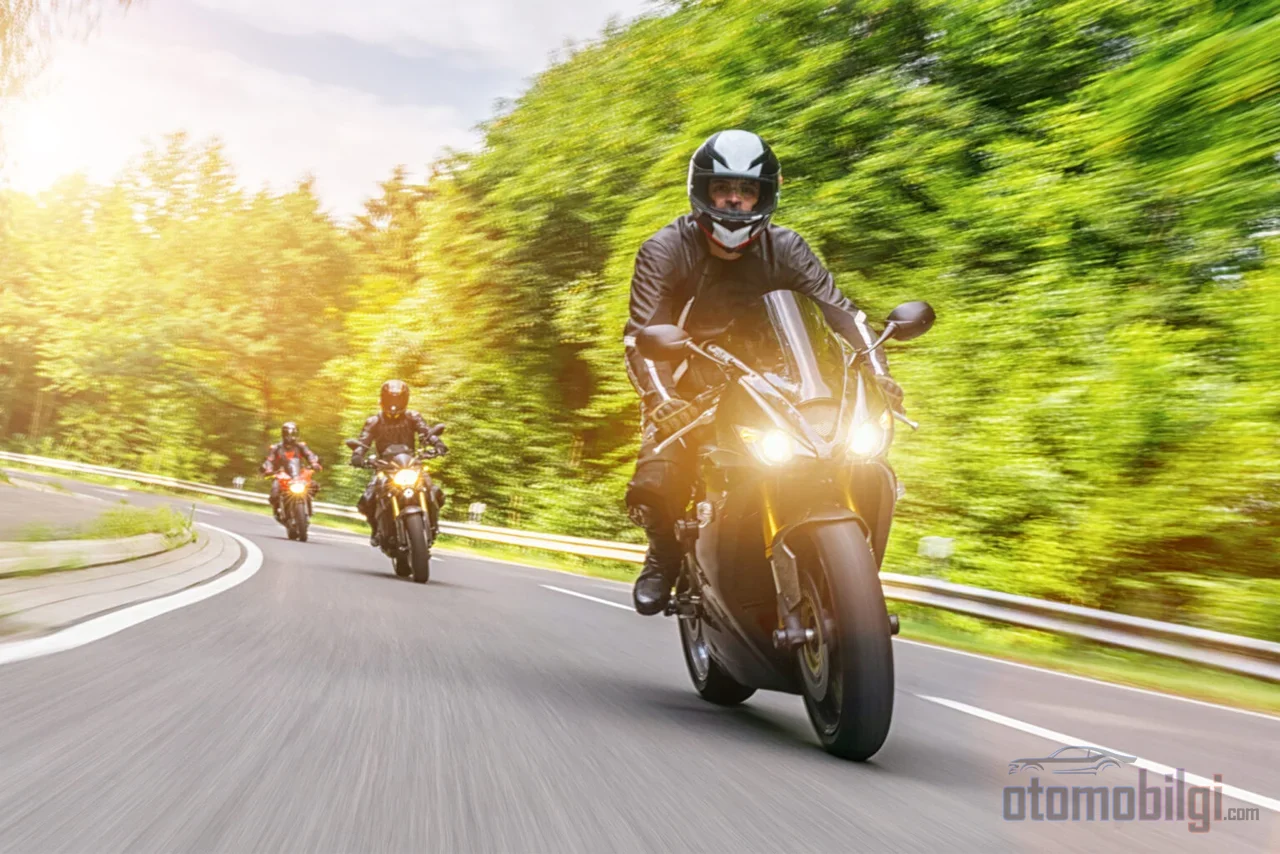
When it comes to pedestrian detection, the systems' biggest helper is the familiar shape of the human body. A distinctive contour made up of head, torso, arms and legs; cameras have been learning this signature for years. With motorcycles, the situation is completely different. A single central headlight reflects to the camera as a small, bright point of light; the narrow body provides none of the wide frontal silhouette that the vehicle classifier is accustomed to. In other words, for the system, a motorcycle does not leave as wide a signature as a real vehicle.
If you want an analogy: think of a security camera trained on facial recognition trying to identify someone whose eyes you have only seen in profile. The less information there is, the more uncertain the guess. This is also why wide lighting is so important in motorcycle detection; the wider the lighting, the more a motorcycle is perceived as a real vehicle and the more easily it stands out from the background.
Detecting is one thing, tracking is another
In ADAS, detecting an object in the first frame is actually not even halfway there. The real challenge is consistently tracking what that object does over time. Radar sees a dot; it has to decide whether that dot is the same vehicle it saw a second ago. And this is where the motorcycle's habit makes things difficult: motorcycles constantly change position within their lane. Tracking a motorcycle that enters from the left, slides to the right, and then returns to the center is many times harder than following a car moving in a straight line. If tracking is lost, the system may treat it as a new object and lose its past speed-prediction data.
Blind spots are a separate headache. Motorcycles are small by design, and their maneuvers often coincide exactly with the blind spots of other vehicles. In a car with poorly adjusted side mirrors, a small motorcycle just behind the driver can become invisible even in the mirror. Even when the systems kick in, this gap between the driver's line of sight and the sensor's angle feeds a significant portion of accidents.
What Kinds of Real-World Scenarios Confuse These Systems?
The most classic scenario is a motorcycle coming from the left at an intersection. Estimating the approaching speed of a car is easy; with motorcycles, the narrow profile makes distance and speed estimates uncertain. Moreover, a motorcycle's closing speed - the rate at which the two vehicles approach each other - can be much higher than in pedestrian scenarios. The time left for the system to make a decision shrinks; the warning and braking window narrows.
The second scenario is even more interesting: two motorcycles riding side by side. Because of their narrow profiles and positions close to each other, the camera and radar can sometimes perceive these two as a single vehicle . If the system sees one object instead of two separate ones, the danger calculation for a car changing lanes is set up incorrectly. Assuming one motorcycle exists and ignoring the other is exactly the type of error that fails in accidents.
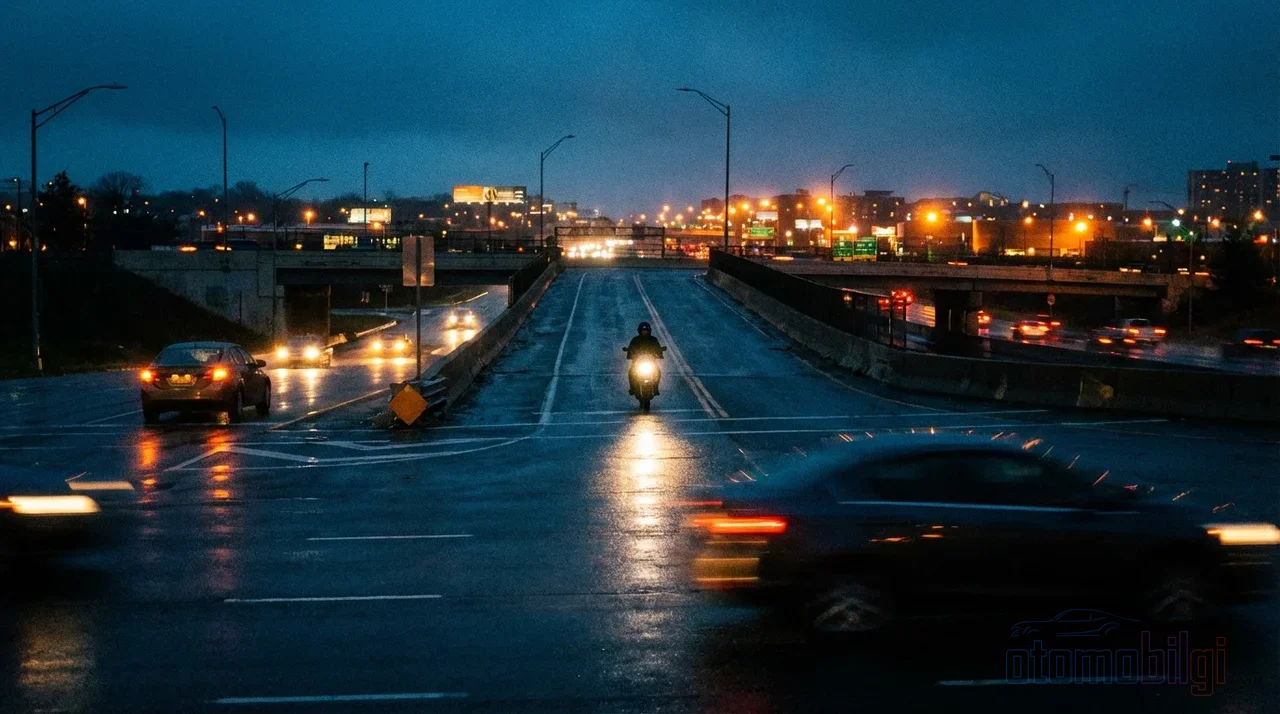
Third, night and single-headlight situations. A motorcycle with a faulty or dimmed headlight means a single point of light for the camera. This dot can look identical to a pedestrian's flashlight, a lamppost, or another distant light source. If the classification engine is not sure that this dot of light is a motorcycle, it may choose not to classify it at all. And when the system stays silent, the driver remains unaware of the danger.
What Does AEB Do When It Sees a Motorcycle, and Why Is It Sometimes Late?
The good news: the engineering problem has largely been solved. In safety tests, when foam targets shaped like motorcycles are placed in front of vehicles and tested at high speeds, most vehicles can stop. The real issue is how quickly this capability translates to the road. Starting from the 2026 model year, motorcycle detection has become mandatory for vehicles to earn the highest safety award, and the tests are conducted at speeds of roughly 50, 60, and 69 km/h. So newly purchased cars will get better and better at this.
The bad news is the reality of the fleet. The average age of vehicles on the road is about 12.6 years. AEB capable of detecting motorcycles currently covers only roughly 4-5% of them exist. Even if the mandate takes effect in September 2029, it could take until the 2040s for this technology to reach the majority of vehicles on the road. Great news for new models; for most older vehicles on the road, nothing changes yet.
How effective is it? Let's be frank
AEB with pedestrian and cyclist detection is estimated to reduce crash risk by roughly 20% (±10%) while effectiveness in motorcycle detection is likely below that figure, because turning conflicts and high closing speeds make the job harder. There is not yet a peer-reviewed study measuring motorcycle-specific effectiveness at scale; this doesn't mean the technology doesn't work, only that the number hasn't become clear yet. Let's also add this: a significant portion of motorcyclist fatalities occur in single-vehicle crashes, and vehicle AEB naturally cannot touch those crashes. Meanwhile, 65% of 2023 fatalities came from crashes involving at least one other vehicle; and that is exactly the group AEB is trying to protect.
Then there is the AEB question on the motorcycle side: fitting automatic braking to a motorcycle is far harder than fitting it to a car. A motorcycle stands on two wheels; involuntary hard braking can upset the balance. That's why adding AEB to a motorcycle requires a complete motorcycle dynamics model covering not just braking but control and dynamics. The system can sometimes have to choose safer options such as accelerating or slowing gently.
Does Blind Spot Warning Reach Motorcycle Riders Too?
Yes, and quickly. In cars, blind spot warning scans the areas the driver cannot see using radar or ultrasonic sensors in the rear bumper. On the motorcycle side, the game is still relatively new: 77 GHz radar-based, retrofittable blind spot detection, lane change assist and rear collision warning systems are becoming widespread. Manufacturers such as Kawasaki have also brought advanced driver assistance to motorcycles; it checks for vehicles in areas where the driver has difficulty seeing and warns the driver if any are present. The motorcycle blind spot detection market is estimated to be worth 1.8 billion dollars in 2025 and could rise to 4.2 billion dollars by 2033.
But the systems are not flawless. Radar sensors can have a short range; rain, wind and road noise can create interference. Dirt, snow, corrosion or bumper damage are among the most common reasons blind spot warning fails in cars. It is also thought that a significant portion of sensor failures actually stem from wiring or calibration issues. So before trusting your system, making sure the sensors are clean and intact should be your first job, whether you ride a motorcycle or drive a car.
As a Motorcycle Rider, How Do You Make Yourself Visible to These Systems?
So far we have talked about the reasons that make the other side's job harder; now let's come to the part that is in our own hands. Because the ways to increase a motorcycle rider's detectability work for both cameras and radar at the same time:
- Wide LED lighting: Rather than a single-point headlight, a widely spread beam of light adds width to the motorcycle's visual profile and makes it easier to stand out from the background. Making the brake light and turn signals more prominent also ensures that systems and other drivers notice you sooner.
- High-visibility clothing: Color matters as much as light. Bright, contrasting clothing, instead of a dark jacket, is picked up far more easily by both the human eye and cameras.
- Conscious positioning within the lane: Since constantly changing position makes tracking difficult, following a predictable line when traffic allows reduces the likelihood of systems behind you losing track of you.
- Never trusting blind spots: Because of the sensors' short range and interference issues, consider not only your own blind spot but also other people's blind spots. Don't hesitate to use intermediate tools such as your horn and headlight when passing by.
The cruelty of the numbers speaks for itself: the per-mile fatality rate on motorcycles is many times higher than in cars. Technology alone won't close this gap; insurance laws, licensing oversight, and education are just as important as AEB. But one fact remains: the safest crash is the one that never happens and vehicles that correctly detect motorcycles can save the life of every motorcyclist who happens to be in the wrong place at the wrong time.
New Cars Are Improving, So What Should We Do?
From the 2026 model year onward, motorcycle detection has become mandatory for the highest safety award. This means that vehicles hitting the roads in the coming years will be far more attentive to motorcycles. But while the technology spreads, your contribution is also needed: keep your headlight on, choose bright clothing, be predictable in your lane, and don't trust the blind spots of sensor-equipped vehicles. The same logic applies if you're a car driver: adjust your side mirrors correctly, at intersections estimate the closing speed of a motorcycle as faster than it appears, and never forget that your car isn't looking out for you. Systems are great helpers, but none of them replaces the driver.
Isn't it fascinating? Cars are now learning the shape of motorcycles, yet the motorcycle's slim single-headlight silhouette still leaves engineers with one of the most enjoyable problems.
Sources
- 77% of New Cars Can Detect Motorcycles. The Other 270 Million Vehicles Can't.
- Automatic emergency braking - Bosch Mobility
- Autonomous BRAking for Motorcycles (ABRAM) - CORDIS
- Effects of automatic emergency braking systems to reduce crash risk - TSR
- Automated-driving technology is starting to show up wherever there's wheels - Vox
- New testing shows car safety systems still can't see motorcycles - RevZilla Common Tread
- Motorcycle Visibility in the ADAS Era: LED Lighting - Eagle Lights
- How Motorcycle Blind Spot Detection Works - Chigee
- Why is My Blind Spot Detection Not Working? - CarADAS