What Does a Lane Keeping System Mistake for a Lane During Road Works?
Share This Page
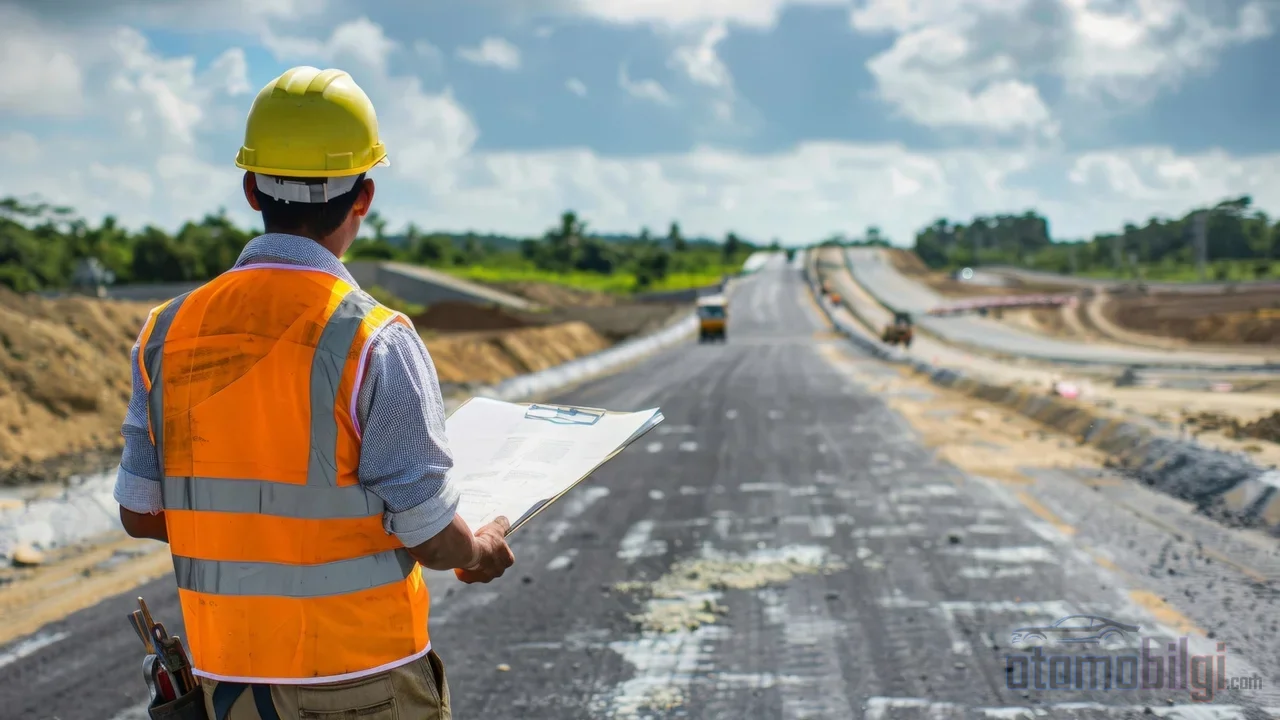
In roadworks, a lane tracking system's camera looks for painted lines; in situations like temporary yellow lines, old lines that weren't removed, cones, and unpainted fresh asphalt, no one can guarantee what the system will mistake for a lane. That's why lane assist easily falls into error in places with road excavation, milled pavement zones, and lane narrowing - and the driver's hands must stay on the wheel at all times.
Key Takeaways
- In vehicles of the 2023 model year, 86.3% offer lane keeping assist as standard or optional.
- Run-off-road crashes account for about 37% of accidents in the US; LKA provides a 24% reduction in these crashes.
- 73% of reported driver assistance system issues involve lane assist.
- Systems can deviate by up to 1.2 meters on sharp curves.
- Roadworks zones are among the most common triggers of lane assist errors.
What Does the Camera Actually See? What Is Mistaken for a Lane?
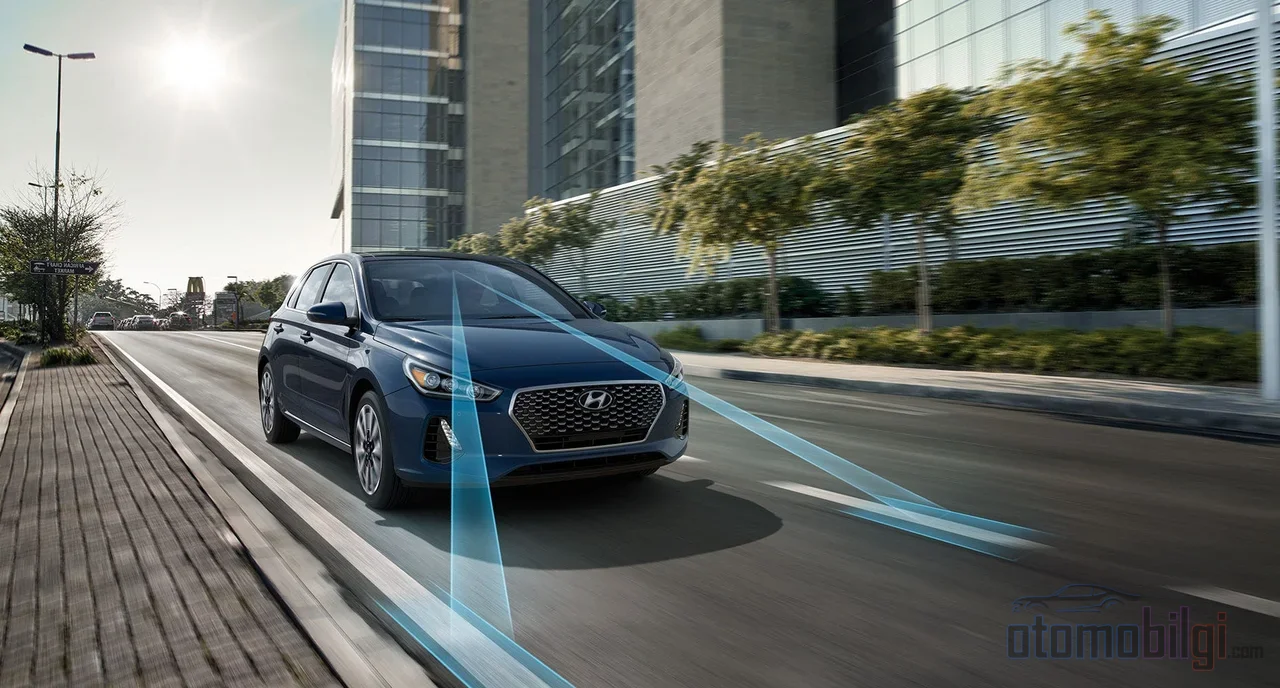
Let's clarify one thing first: a lane keeping assistant doesn't arrive at the middle of the road and declare "this is the lane." A camera hidden behind the windshield searches for high-contrast patterns of painted lines on the ground. When it captures the color difference between white or yellow paint and the asphalt, it decides "the lane is here" and applies tiny steering corrections accordingly. You can compare this to following a line on the wall with a flashlight in a dark room: the flashlight locks onto only what glows; it doesn't know the wall's reality.
There are two different system types, and they shouldn't be confused. Lane Keeping Assist (LKA) is reactive: it warns you or makes a slight correction when the vehicle starts to drift out of its lane. Lane centering, on the other hand, is proactive: it continuously applies steering input to keep the vehicle in the exact middle of the lane and usually requires adaptive cruise control to be active. This distinction is critical in roadworks, because if a centering system locks onto the wrong line, it means drifting toward the wrong place second by second.
So why can it be fooled so easily? Because the camera actually works like a photo camera: it looks at gradients, colors, and patterns. It has no intelligence that knows whether a line is actually "valid" or "cancelled." It believes whatever it sees. And roadworks zones are a scene of chaos standing in direct opposition to this simple belief system.
Why Does Lane Assist Get Fooled in Roadworks?
Now let's move on to the fun yet equally frustrating part of the matter. A road excavation zone is practically a guessing contest for a lane tracking system. Why? Because old and new markings coexist at the same time, there are cones, and temporary arrangements are all mixed together. Extensive field tests conducted with production vehicles classify lane assist errors into three categories: perception, planning, and control. Roadworks produce errors in all three at once.
Temporary yellow lines and old lines that weren't removed
When road work is finished, previously painted lines are not erased immediately; they wear away and fade over time. During this period, the camera faces two options: is it the old line or the new line? The system is forced to "make a choice" between these two, and this choice is not always correct. Some state highway administrations even use methods such as spraying water and sand to deactivate invalid markings; but those masking marks, in other words the "scars" on the road surface, can sometimes be mistaken for lines and misinterpreted. Moreover, historical studies have shown that the detection of temporary yellow lines in work zones drops to very low effectiveness rates - so the problem is not new.
Cones and rumble strip areas
So let me ask you: a cone is orange, bright and easily visible; so why does the system not call the cone a lane? The answer is simple but maddening: cameras rely on painted lines. If only the cone were detected as a physical obstacle - but lane centering software does not interpret cones as lane edges. So while traffic in a work zone is directed using cones and freshly painted lanes, the system is floating between the old painted lines and the newly painted lanes. This produces a dangerous outcome for the driver: the system may steer you not toward the cone, but toward the wrong painted line. Did that come across as confusing? In short: the cone is neither a lane nor an obstacle; it is an invisible object to the system.
Unpainted new asphalt
New asphalt means unpainted asphalt. On a dark, smooth surface with no lines at all, the camera cannot see any lines; detection confidence drops, and the system may shut down without warning. Think of it like the page of the book you are trying to read being blank: even the best reader cannot find a word on a blank page. The same logic applies to worn and faded lines; low contrast confuses the system. In some regions, black contrast road paint has started to be used to increase line visibility - when a black stripe is painted along the edge of the line, the camera sees the white-to-black transition much more clearly.
Risk of Locking Onto the Wrong Lane: Does It Really Happen?
Yes, it happens. It is not just a theoretical scenario. In field tests, some vehicles were observed failing to find the correct line and detecting the wrong lane line in merge and ramp zones. One model drifted 0.4 meters to the left in a merge zone and disconnected from the system entirely; another model locked to the left and tried to stay in its lane despite changing road markings. This kind of lock-on happens because the system stays loyal to the line it thinks it sees - it does not realize that the road is actually a road work zone.
There are also control limits. The torque and angle limits the system can apply to the steering wheel are not enough in sharp turns. In tests, one vehicle drifted 1.2 meters to the right in a sharp left turn - and that means: more than half the lane. Moreover, lane centering systems follow a straight strategy in turns; deviation increases proportionally with the curve's bend and the vehicle drifts toward the outside of the curve. Human drivers naturally prevent this error by drifting slightly inward when entering a curve (apexing); the software, however, simply tries to keep perfectly straight. In the studies, deviations above 0.25 meters are classified as "anomaly" and above 0.65 meters or a complete breakaway as "critical failure" - meaning that what happens in roadwork zones often exceeds these thresholds.
The System's Strong Side: Does It Actually Work?
Now let's be fair: lane assist is not a completely useless toy. It first appeared in a Honda Inspire in 2003, and today it is available in 86.3% of 2023 model year vehicles in the US. It has been mandatory in all new vehicles in the European Union since July 2024. Its effect on accidents is not an abstract claim either: vehicles with LKA are involved in 24% fewer accidents caused by unintentional lane departure. Lane departure accidents already account for about 37% of all accidents, so the improvement achieved means a serious difference. Even the warning system version, lane departure warning, reduces related accidents by 11% to 21%. The European Commission estimates that safety systems, including LKA, will prevent more than 25,000 deaths by 2038.
But the other side of the coin is also real: 73% of driver assistance system problems are related to lane assist systems. Drivers experience a negative encounter on average every 8 miles. So it would not be an exaggeration to use the summary "it works when it works, but it doesn't work all the time." False warnings, unnecessary steering corrections, and confusing shutdowns make up a significant portion of this rate. Many drivers therefore turn the system off completely; in some models, LKA and centering are tied to a single button, so they have to turn both off at once.
What Should a Driver Do in a Roadwork Zone?
Now comes the most important part: what are you going to do? The short answer - the usual answer - is hands on the wheel. But this time even more strictly. Lane assist is not autonomous driving; it is an assistant designed for an awake, sober, and attentive driver. The driver is always responsible for full control of the vehicle, and in Level 2 systems, the legally responsible operator is also the driver.
- When you see a roadwork sign, consider turning the system off; in most vehicles it shuts off with a single button.
- Never take your hands off the wheel; jerking the wheel sharply makes things much worse.
- Do not react suddenly to warnings or unnecessary steering corrections; yanking the steering wheel only makes things worse.
- Slow down and follow the lane with your own eyes; trust your own vision, not the system's.
- Follow the real traffic following the cone arrangement instead of the painted lines.
At the point where the road should adapt to you rather than the system adapting the road to you, your hands should be on the wheel and the decision should be yours. Because when the system malfunctions, the responsibility is yours. If the system malfunctions and causes an accident, and the defect can be proven, the manufacturer can be sued under product liability; but if a driver fiddling with their phone, ignoring the warnings, or driving under the influence gets into an accident, the responsibility lies entirely with the driver. At this point, even the manufacturers are clear: the system only provides gentle steering input and never replaces the driver's full attention.
Are Road Markings Falling Behind, or Are Vehicles Too Far Ahead?
Here's the interesting part: vehicles are developing so fast that the road infrastructure can't keep up. International regulations focused on vehicle functionality have left road marking standards behind. Researchers are calling for high-contrast, retro-reflective markings and road geometry standards compatible with lane-keeping systems. So for a while longer, whenever you encounter roadworks, your lane assist will ask you "which lane?" And it will be you, not the system, who answers that question.
Isn't it a bit ironic, don't you think? In a car packed with the latest technology, a box of cones driving the lane-keeping system to a standstill. If you've ever tried your car's lane assist in a roadworks zone, I'm curious how it behaved - did it quietly give up, or did it drag you into the wrong lane? Share your experience in the comments, I'm reading with great interest.
Sources
- Empirical Performance Evaluation of Lane Keeping Assist on Modern Production Vehicles (arXiv)
- Lane-Keep Assist Failures: Understanding Driver and Manufacturer Responsibility (Clean Fleet Report)
- Lane Keeping Assist (mycardoeswhat.org)
- Estimating Effectiveness of Lane Keeping Assist Systems (NHTSA / crashstats)
- Leftover lane markings can lead to confusion (Star Tribune)
- Lane Marking Technology Review (ROSAP / FHWA)
- Are the lane lines half white and half black purposeful? (Denver7)
- Lane Centering - why can't it be done reliably? (SunnyPilot Community)
- Help with Lane keep assist (Subaru Ascent Forums)