How Do Attention Monitoring Systems Detect Driver Fatigue?

Share This Page
A small camera placed facing the driver continuously monitors blink rate, the duration of eye closure, and head position to determine whether the driver is tired or inattentive. These systems are called driver monitoring systems, or DMS; when they detect a fatigue signal, they invite the driver to take a break with gradual warnings. So alongside the systems that watch the lanes and traffic, there is now also an eye watching the person behind the wheel.
Highlights
- Thanks to infrared cameras, DMS can also work at night and in low light as well.
- PERCLOS is the ratio of time the eyes remain 80% closed; it is the classic indicator of fatigue measurement.
- From July 2026 onward, driver distraction warning systems are becoming mandatory for newly registered vehicles in the EU.
- If the driver gives no response, some systems can slow the vehicle down and stop it in its lane.
- Sunglasses and a poor seating position can seriously hinder the camera's job.
What Exactly Does a Driver Attention Monitoring System Track?
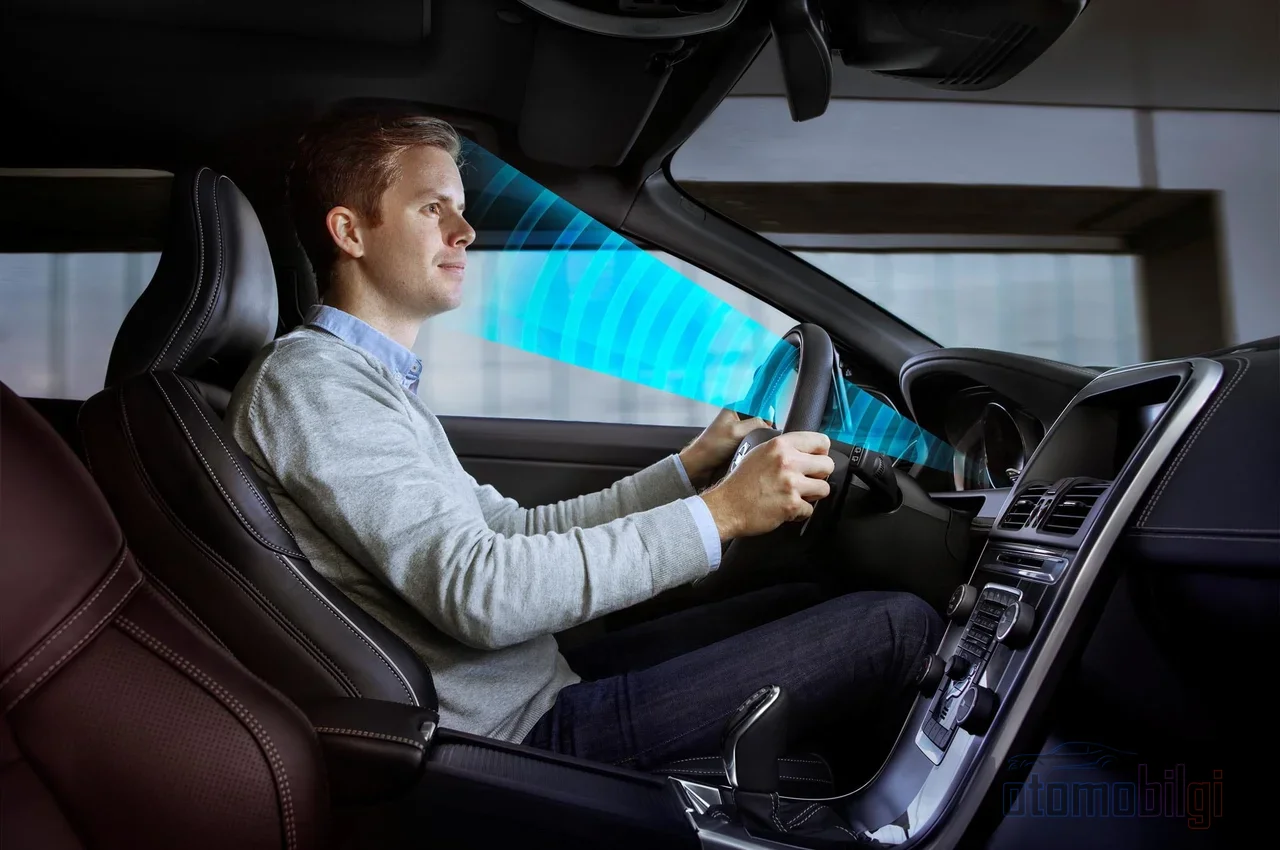
Just think about it: You are on a long journey, the music is on, the road is straight, but your eyelids are starting to feel heavy. This is exactly the moment when this system is supposed to kick in. A small camera hidden in the steering column or the dashboard continuously tracks your face and eyes. So what does it look at? First of all, the frequency and duration of blinking. In a tired person, blinks lengthen; the eyes stay closed longer than normal. This "slow blinking" is one of the strongest signals of fatigue.
The second important signal is gaze direction. It watches whether your eyes drift away from the road for extended periods; gaze direction alone can be enough to notice a driver focused on their phone, a passenger, or the console. Third is head position: a head that tilts forward, leans to the side, or suddenly drops is a harbinger of sleep. Systems track points on the face (called facial landmark estimation) to calculate head angle in real time.
There is also a solid scientific foundation: PERCLOS is a measure that calculates for what percentage of a given period the eyes remain 80% closed. As sleep deprivation increases, this ratio rises, and it has become the most widely used alertness measure in fatigue monitoring technologies. So it is not a made-up indicator; it is a method that has been tested for years.
How Does It See in the Dark?
Now I can guess what is on your mind: "My phone camera can't even read my fingerprint at night, how is this camera going to see me?" The answer lies in infrared light. These systems generally work with infrared cameras; thanks to this invisible light, they can clearly capture facial details even in complete darkness. For example, one manufacturer's system images the driver's eyes at 60 frames per second, and an artificial neural network analyzes eye movement, blink rate, and gaze direction from these frames. The system is also pre-trained on yawning, phone use, and other degraded driving signals.
Sometimes even changes in pupil diameter are monitored. In short, the camera isn't just checking "are the eyes open or closed"; it interprets attention level by combining several different signals. Just like a friend understanding you're tired from your tone of voice - it's not a single sign, but the whole picture that matters.
Are There Systems That Don't Need a Camera at All?
Yes, and they're actually older. Indirect methods that monitor steering movements have been used for many years. One manufacturer's attention tracker counts the corrective steering movements the driver makes and scores attention on a scale from 1 to 4. When the level drops, a break suggestion appears on the instrument panel, and if things get worse, audible and visual warnings escalate. Another major supplier's fatigue detection system works on the same logic, catching the first signs of fatigue from steering corrections.
The logic is this: A drowsy or distracted driver makes more frequent and sharper corrective movements to keep the vehicle in its lane. So the steering wheel itself provides clues about the driver's condition even without a camera. But this is exactly where a debate begins - because the steering wheel doesn't always tell the truth. So where did this debate evolve to?
Why Are Euro NCAP and the EU Pushing for Cameras?
The organization, a respected reference for safety testing, added driver interaction and interior monitoring requirements to its 2026 scoring; driver monitoring can affect up to 25 points in tests. The critical point is this: It is emphasized that indirect monitoring relying solely on steering sensors is no longer sufficient, and a shift to camera-based direct monitoring is needed. Additionally, if a subsystem becomes completely unusable, the vehicle is considered "degraded" in the assessment - meaning systems earn points not just by existing, but by actually working.
On the EU side, an official mandate is in effect: Systems providing advanced driver distraction warning (ADDW) will monitor driver attention with cameras and will be mandatory in newly registered vehicles from July 2026 onward. In short, an eye watching the steering wheel is becoming standard equipment in new vehicles purchased in the coming years.
What Do the System and Driver Do When a Warning Comes?
Most systems issue warnings gradually. Let's look at a concrete example: One manufacturer's attention assistant monitors yawning, long or frequent eye blinks, and extended periods of looking away from the road. At the first stage, a yellow coffee cup icon appears along with a chime sound (or the vibration of the seat belt). At the second stage, the icon turns red, warnings come one after another, and the system offers options such as taking a break, calling someone, or navigation to a nearby café, hotel, or gas station. A nice touch, isn't it? Saying "You're tired, have a coffee here" is far more humane than just beeping.
So what happens if the driver does not respond to any warning? This is where things get serious: The system marks the driver as "not responding" and automatically engages emergency braking, forward collision warning, and lane keeping assist. The driver is given a chance to take back control - gripping the steering wheel firmly or pressing the gas or brake pedal overrides the warning. If there is still no response, the vehicle slows down and stops in its own lane, the hazard lights come on, and emergency services are called. This is the most striking example of what the DMS can achieve not on its own, but when combined with the vehicle's other safety systems.
What You Should Do When You See the Warning
There is no need for lengthy talk here: Pull over and take a break at a safe place as soon as possible. Official user manuals say exactly this. In some vehicles, the warning on the dashboard can be dismissed with the OK button and the system can be configured from the menu - but dismissing the warning does not dismiss fatigue, remember. Another manufacturer's system monitors eye activity and calculates two stages, "tired" and "very tired"; meaning it is your job to rest before the system warns you twice.
What Happens When DMS and ADAS Combine?
Perhaps the most exciting development is this: the merging of the driver monitoring system and the vehicle's other driver assistance systems (ADAS) on the same chip. One technology company's system matches the driver's gaze with road conditions detected by exterior cameras. This makes it possible to detect even a situation that classic systems cannot catch: a driver whose eyes are open but who is not scanning for danger. In other words, you were looking at the road but actually not looking at anything - and the system can notice this.
When attention decreases, the system can also adapt vehicle behavior: such as increasing following distance, limiting lane changes, or asking you to check the side mirror before changing lanes. There is a similar combination on the truck side: the combination of an inward-facing eye-tracking camera and a forward-facing camera monitoring lane position creates a combined warning system for long-haul drivers. Fatigue monitoring is no longer a standalone feature; it is becoming a sensor connected to the brain of ADAS. So is this camera flawless in every condition? Unfortunately, no.
The Camera's Limits: Sunglasses, Night, and Bad Posture
Let's be honest: these systems are not superheroes. The best-known problem is sunglasses. In classic cameras, glasses block face point detection and blink measurement; there are even user complaints that polarized glasses trigger unnecessary warnings. Some drivers have reported that the system becomes disabled when the steering wheel is at the 12 o'clock position. In other words, the system has to actually see your face in order to monitor you - anything covering your face (glasses, a hat, reflections) reduces performance.
Next-generation systems are looking for solutions to this problem: Some claim that with low-light cameras they can perform detection behind sunglasses and in complete darkness; on the research side, methods have also been developed that achieve high accuracy with drivers wearing glasses. But night still carries its own challenge: If artificial intelligence cannot see the pupil, eye tracking can fail. Poor lighting and glare likewise make the job harder. If the camera cannot get a proper image, even the smartest software cannot make a correct interpretation.
There is also the false alarm issue: Some drivers who hold the steering wheel in unusual ways or wear polarized glasses have reported being bothered by unnecessary warnings - even though there is no official verification, this feedback shows why designers need to fine-tune the thin line between sensitivity and annoyance. In addition, processing in-cabin images naturally raises data privacy questions; keeping the camera always on also means a considerable burden in terms of processing power and cost for real-time video analysis.
So, Can This System Drive For Me?
No. Attention monitoring systems watch you, alert you, and some even bring the vehicle to a safe stop if the driver does not respond - but none of them takes the responsibility at the wheel away from you. The manufacturers themselves state this openly: Driver assistance functions have limited recognition and control capability, none of them should be exaggerated, and the driver must always drive attentively. The effectiveness of ADAS depends largely on your behavior; if your attention drifts, the risk of an accident continues to rise even when all systems are working.
In my view, the best analogy is this: DMS is like an attentive companion sitting in the passenger seat. When you squint your eyes, it says "let's take a break," and if necessary, it nudges your foot toward the brake. But no one can hold the wheel on its behalf. When the warning light comes on, having a coffee, opening the window, or taking a 20-minute nap in a safe place is still the most effective solution - machines cannot do this on your behalf, they can only remind you.
Looking at the future side, the picture is clear: Camera-based direct monitoring is becoming standard, systems are integrating more deeply with ADAS, and alerts are no longer just sounds; they produce intelligent responses at the level of speed, lane, and navigation. That little camera across from your steering wheel is a technology we watched in futuristic films a few years ago, now entered into daily life. Just don't forget: That camera does not sleep in your place, it wakes you when you get sleepy. The rest is up to you.
Sources
- About Driver Attention Assist - Chevrolet
- How Vision AI powers driver attention monitoring systems
- Presenting the Mobileye Driver Monitoring System - Mobileye Blog
- Driver Attention Monitor|Honda Technology
- Driver drowsiness detection - Bosch Mobility
- PERCLOS-based technologies for detecting drowsiness - PMC
- Safe Driving Driver Engagement protocol v11 - Euro NCAP
- Driver Monitoring 2.0: How Euro NCAP is Raising the Bar - Smart Eye
- New EU ADDW safety system becomes mandatory from July 2026 - Autonext
- Driver fatigue warning - user manual - Dacia
- Fatigue Alert settings - BMW USA FAQ
- How do I use the Driver Alert System? - Ford
- Driver Monitoring System Driver Focus - Subaru
- Technologies for detecting and monitoring drivers' states - ScienceDirect
- Real-time driver monitoring system with facial landmark - Nature
- Fatigue Driving Detection Methods Based on Drivers Wearing Sunglasses - ResearchGate
- Video Telematics: Spotting Drowsy Driving Through Sunglasses - LightMetrics
- Understanding fatigue in driving and how eye tracking can help - EyeLogic