What Does Lane Keeping Assist Do When It Loses the Lane Marking?
Share This Page
When the lane keeping assistant loses the line, it first warns the driver, then cuts steering support and hands over full control to the driver; the absence of lines, snow, rain, or sharp curves can render the system useless. In other words, the moment the camera cannot see the white line in front of it, the system doesn't take your place - it just goes quiet and leaves you alone. In this article, I'll explain exactly what happens in those moments, why the system suddenly shuts down, and what you need to do as the driver.
Highlights
- The system relies on what the camera on the windshield reads: painted lane markings ; if it cannot see the line, it cannot provide support
- When you take your hands off the wheel, the system warns you; it can deactivate itself in a period of about 15 seconds it can disable itself within a time of around
- Of reported driver assistance system issues, 73% involve lane assistant systems
- In curves, the system shows an outward drift tendency that increases with the road's curvature; sharp curves are among the leading causes of failure
- The lane assistant is not autonomous driving; control is with the driver at all times
Let's Clarify One Thing First: What Does the Lane Assistant Actually Do?
This family has three members, and while the siblings resemble each other, their jobs differ. Lane Departure Warning (LDW) is the shyest one: as the vehicle leaves the lane, it warns you with a beep, a flashing indicator, or even vibration of the steering wheel or seat, but it doesn't touch the steering. Lane Keeping Assist (LKA) goes one step further; if you start crossing the lane line without signaling, it applies a small and gentle torque to the electric power steering system, pushing you back into the lane. Lane Centering Assist (LCA) is the most ambitious of the family: it tries to keep the vehicle in the middle of the lane, but when it encounters challenging conditions, it asks you back for the steering.
The critical word here is "camera". The system works by seeing the painted lines on the road. Radar does nothing in this job; a lane line is not something radar can see. And when the camera cannot see the line... that's when the subject of this article begins. Also, a note: the system generally tries to stay exactly in the middle of the lane. If you're used to driving along one edge of the lane, you may feel like you're "conflicting" with the system - this is not a malfunction, it's the system's working logic.
Why and When Does the Camera Lose the Line?
The lane assistant's world consists of that small camera behind your windshield. On a good day, that camera does a great job; but when its view is blocked, as you can guess, it just goes quiet. If we make a list of the conditions that cause the line to be lost, a very familiar picture emerges:
- No lines on the road at all: On faded, worn, or never-painted roads, there is nothing for the system to see.
- Snow and rain: When the lane line is buried under snow, or heavy rain reflects off the glass like a mirror, the camera cannot detect the line. Radar cannot see the line anyway; the camera looking through the rain can't see it either.
- Dense fog and bright sun: Fog blocks the sensor's view, and direct sunlight narrows or confuses the camera. A surprise, isn't it? Even the sun can become your enemy.
- Well-marked but complex roads: Some drivers even report that on very well-marked roads, the system can see the center line but not the edge line. In other words, the camera can't always choose which line to follow the way you would.
- Sharp curves and uneven surfaces: These systems are optimized for highway driving; as road geometry becomes more complex, their performance drops.
One study showed that rainy weather measurably affects the performance of safety systems such as lane keeping assist and automatic emergency braking. And the irony here is extra rich: you can't rely on the system at the very moment of bad weather when you need help the most. Not only that - it stops working at exactly the moment you need it.
What Exactly Does the System Do When the Lane Markings Disappear?
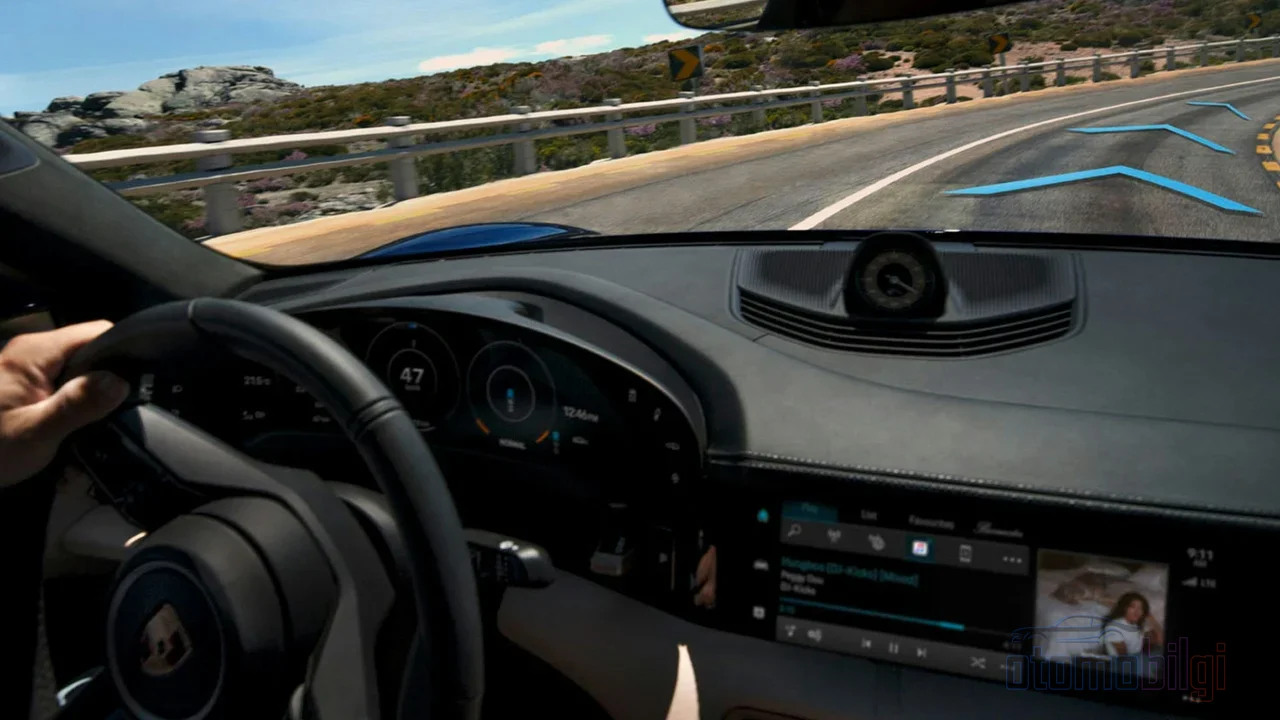
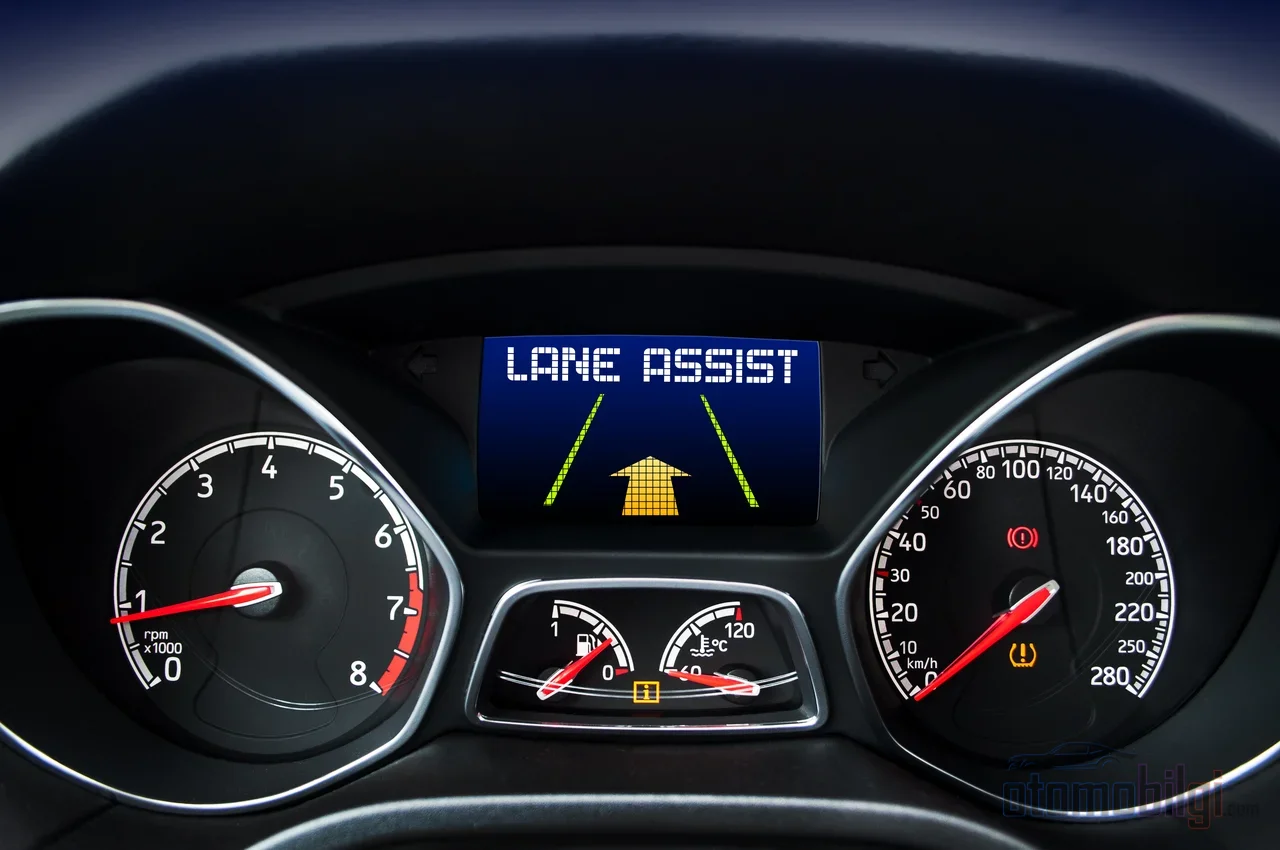
When the system loses the lane markings, one of three behaviors occurs. Sometimes it informs you with a message on the instrument cluster - for example, on some brands you'll see a warning like "Steering Assist Not Active," which means "I will no longer make automatic corrections even if the vehicle starts to drift out of its lane." Sometimes it silently stops providing support. And most annoyingly: on some vehicles, the system can shut down without any warning at all. Drivers report that lane keeping shuts off without warning, especially when entering a curve at high speed or in places the system interprets as "curves." The same complaint is voiced about highway driving assist in some electric cars - whether a warning should be given at the moment of shutdown is still being debated.
There's also a technical detail about curves: a peer-reviewed study showed that lane keeping systems follow a fixed "center the lane" strategy, and this leads to an outward drift that increases linearly with the road's curvature. In other words, the system may not make sufficient corrections in a curve, and when it realizes this, it can pull its hands off and leave the job to you. That's why it's a good habit to check whether that green light on the system is still on before entering a curve.
What Happens When You Let Go of the Wheel? Hand Detection and the Warning Chain
There are sensors on the steering wheel that detect your hands. If you let go for too long, you'll first get a driver warning, then the system deactivates itself. Many drivers experience this period as roughly 15 seconds. So there's a reason the system is calling out to you to "put your hands back": those sensors are there to make sure you're still on duty.
Here's the funny part: wearing gloves or holding the steering wheel too lightly can prevent the system from detecting your hands. Manufacturer manuals state this explicitly; if your hands can't be detected on the wheel, a hands-off warning appears. So some cases that seem like the system "fighting you" may actually stem from the sensor not being able to see your hands. Instead of gripping the wheel too tightly, holding it gently, at a weight the sensors can feel, is enough.
There is also the system's self-protection mechanism: If you keep pushing it too hard, it can shut itself down at any moment when you try to activate it. This is a driver assistant, not an autopilot. Some people find that lane keeping stops working after an accident; this usually doesn't mean the system is broken - it means the vehicle temporarily disabled the feature because it couldn't verify lane accuracy. The system automatically deactivating every time the ignition is turned off is part of the same logic - it's your job to turn it back on every drive, and some drivers prefer to keep it completely off rather than press the button every time.
The System's Limits: Not Autonomous, an Assistant
Remember this: LKA is not an autonomous driving function, it's an assistant. The driver must remain fully attentive and keep control of the vehicle at all times. This isn't wordplay; it becomes evidence every moment the system loses the camera's view of the lane lines. The fact that 73% of reported driver assistance system problems involve lane assistant systems shows how widespread this reality is. Keeping it on can be safe, but trusting it is not - never forget this sentence: A system that reads lane lines on the road with a camera shouldn't be trusted by you either, if you can't see them.
What Should the Driver Do When the Line Disappears?
At this point, I'm leaving you a concrete, useful list of advice:
- Before bad weather, snow and rain, check the system's indicator icon; if it's not green, there is no support.
- Reduce your speed before entering a curve; the system is optimized for highways, sharp curves are your job.
- Don't panic when the system shuts off; already remember that you have full control.
- Avoid taking your hands off the steering wheel; the system shuts itself down if it constantly feels you are not in control.
- If the road is unmarked or the lines are faded, trust your own eyes instead of trusting the system.
Some drivers describe the system as "constantly fighting" and prefer to turn it off. That's your choice; but whichever path you choose, keep in mind that the system is not constantly acting as your backup pilot.
Frequently Asked Questions
Why does the system warn when I let go of my hands?
The sensors on the steering wheel must constantly detect your hands. If you let go for a long time, a warning comes first, then the system deactivates. Gloves or a very light grip can disrupt this detection.
Can I trust the lane assistant in rain or snow?
Keeping it on can be safe but trusting it is not. Rain, snow and fog obscure the lines; at those very moments, the system is blind.
Why does it sometimes not work even on a well-marked road?
The camera's line detection depends on conditions and line type. Light, windshield dirt, and which line is being followed directly affect the system's success.
Why does it suddenly shut off in a curve?
In curves entered at high speed, the system may not be able to make sufficient corrections and shuts itself down. Since systems are optimized for highways, this is expected behavior.
The bottom line is this: a lane-keeping assistant is a good road companion, but it is never a substitute for the driver. A driver who knows its limits uses both the system and themselves more safely. Isn't it a good thing to know that even such a smart assistant has moments when it is completely in the dark?
Sources
- Lane-Keeping Assist: Everything You Need to Know
- Driver Assistance Technologies - NHTSA
- Guide to Lane Departure Warning & Lane Keeping Assist
- Will Your Driver Assistance Systems Fail in the Rain or Snow?
- Lane-Keep Assist Failures: Understanding Driver and Manufacturer Responsibility
- Empirical Performance Evaluation of Lane Keeping Assist
- Hands-off warning - Kia Owners Manual (2026)
- Lane Keep Assist Safety Feature - Chevrolet
- Chapter 13: Advanced Driver Assistance Systems - New York DMV
- How To Disable/Activate Lane Departure Steering Assist - Toyota of Deerfield Beach