What Is the Follow Distance Second Setting of Adaptive Cruise Control?
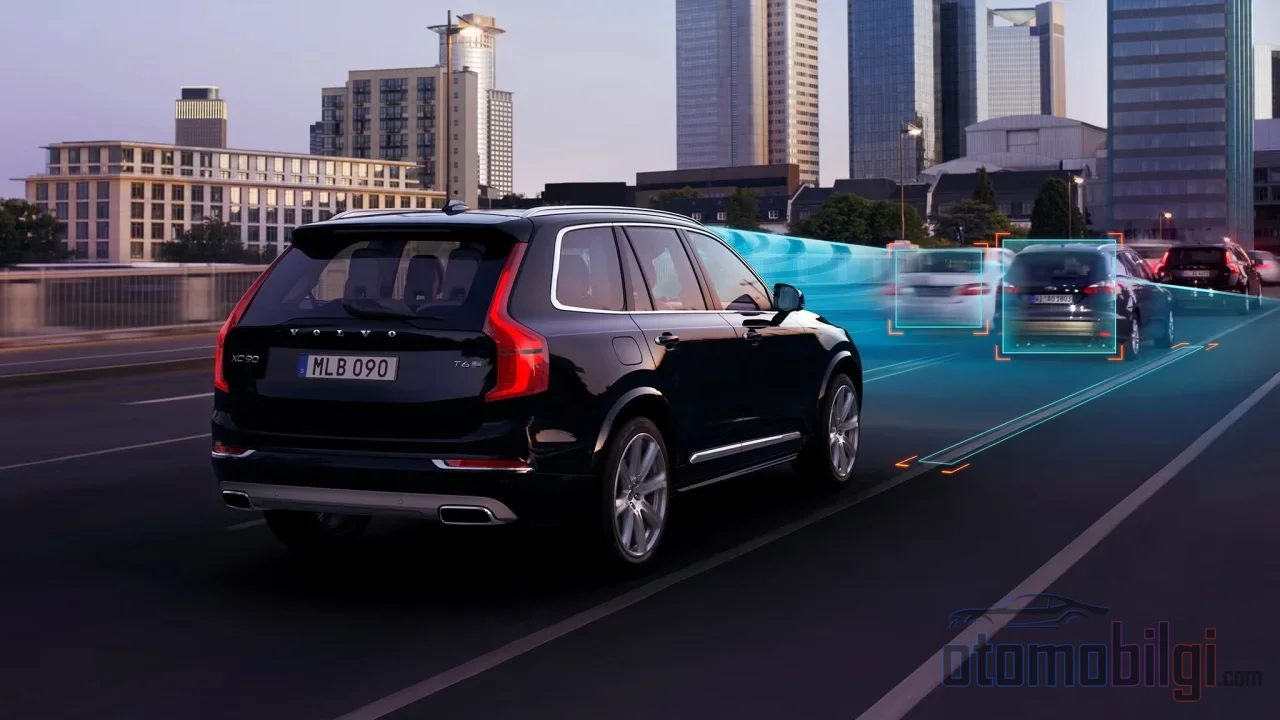
There you were at the wheel, the car doing the driving while you leaned back and enjoyed the road, when your eye caught a small icon on the column: two vehicles side by side with one, two, or three lines beneath them. Have you ever wondered whether those lines are actually counting seconds, not meters? Yes, you read that right: The following distance setting in Adaptive Cruise Control isn't a fixed measurement scale as you might think - it works on time-based logic. And this detail can go beyond dry technical trivia and become a direct safety matter. Because where you turn that setting knob touches many things, from the risk of hitting the car ahead to the flow of highway traffic.
So let's sharpen the question: what exactly do those 1, 1.5, 2, and 3 second levels control, why does the gap widen by itself as speed increases, and which level makes sense in real traffic? If you're ready, let's begin, because this topic is far more cleverly designed than it looks.
What Is the Second Setting, and How Is It Seconds Instead of Meters?
Think of it this way: you're walking with a friend behind you and you say, "stay two seconds behind me." If you walk slowly the physical distance between you shrinks, if you speed up it grows, but the time stays constant. Adaptive Cruise Control thinks exactly like this. The Close, Medium, Far settings on the screen, or the 1-2-3 lines, are actually a selection of a time gap, technically known as headway. When you pick a level, the system locks in a fixed second value and calculates the required physical distance based on your current speed.
That's why the distance to the car ahead automatically grows as your speed increases. The logic is simple: the distance needed to stop at 120 km/h is far longer than at 60 km/h. By keeping the time constant, the system widens the gap for you as braking distance grows. So those levels are never a command like "stay roughly 30 meters behind," but a command like "leave me that many seconds of margin at every speed."
For the system to maintain this gap, it must continuously monitor the vehicle ahead. Forward-facing cameras and radar sensors do this job; if the car ahead slows down the system cuts the throttle, brakes when necessary, and speeds back up to your chosen target speed when the car ahead accelerates. Classic Cruise Control only holds a constant speed; Adaptive Cruise Control, on the other hand, tries to maintain both your speed and the time gap you selected.
Key Takeaways
- The following distance levels are not fixed meters, but a speed-independent time gap (headway) setting.
- The lowest setting reported on commercial level 2 vehicles is 1 second; cautious drivers use the 2.5-4 second range.
- The recommended safe following time is 3-4 seconds under normal conditions, and more in bad weather and with heavy vehicles.
- Adaptive Cruise Control's braking capacity is limited and the system does not steer; responsibility lies with the driver.
Which Second Do Drivers Choose: Aggressive or Cautious?
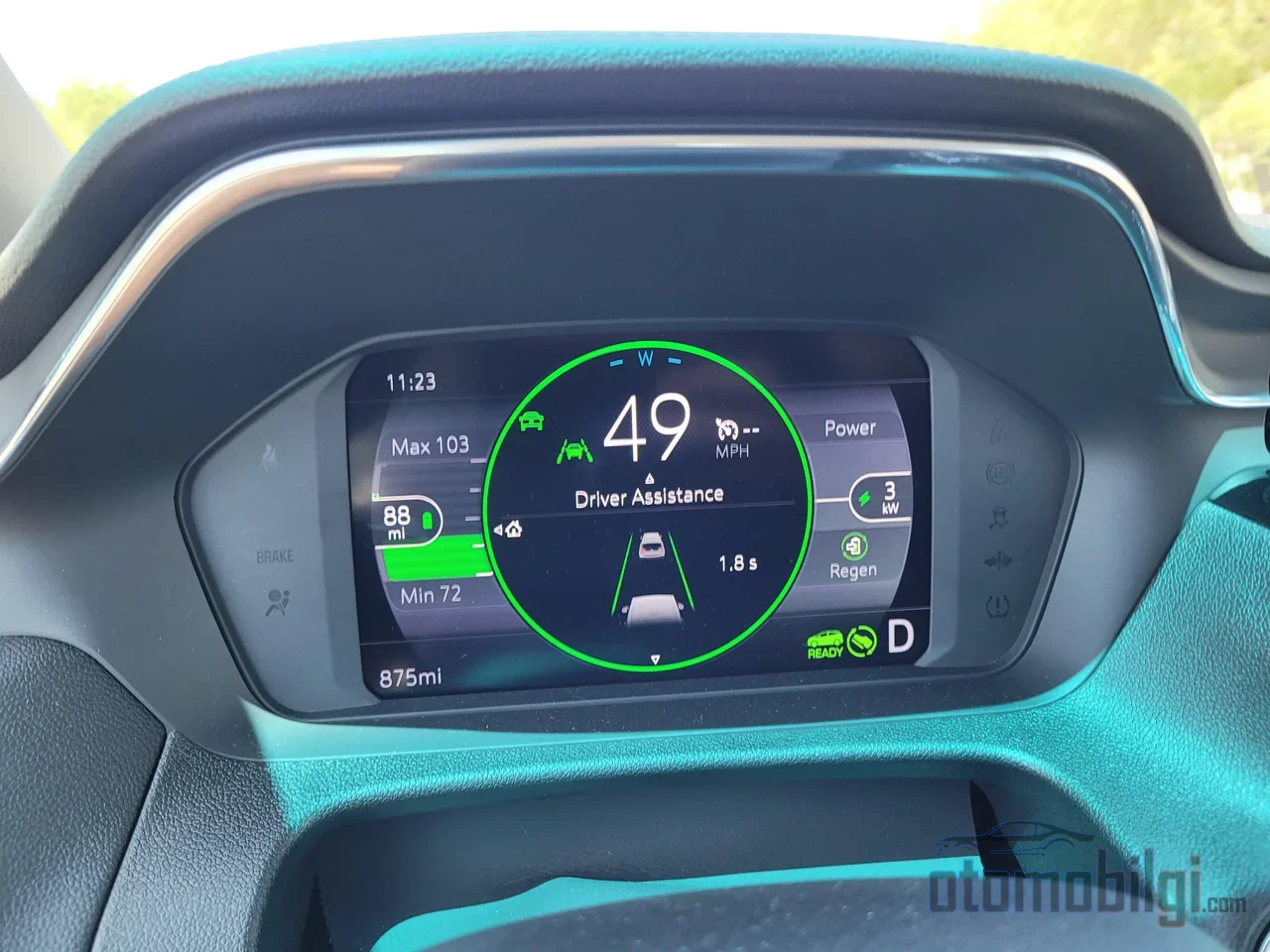
So how do people actually use this setting in real life? This is where things get interesting. Studies measuring real drivers' Adaptive Cruise Control headway preferences split users into three distinct classes: aggressive drivers choose an average gap of 0.70 seconds, normal drivers an average of 1.87 seconds, and cautious drivers an average of 3.20 seconds. In other words, there is nearly a fivefold difference between the most cautious and the most aggressive group.
The options in the owner's manuals of commercial level 2 vehicles also match this picture: typically 2 seconds is offered for normal driving, 1 or 1.5 seconds for aggressive, and settings between 2.5 and 4 seconds for cautious driving. The lowest reported value is 1 second. Short and sweet: manufacturers can offer a 1-second option, but that doesn't mean it's a wise choice in every condition.
Which Following Distance Level Should You Choose in Which Situation?
Here is the heart of the page, because the right answer isn't a single number, it's a decision that changes depending on your situation. The table below will serve you as a practical summary:
| Situation | Recommended following time |
|---|---|
| Normal, dry weather, moderate traffic | 3-4 seconds |
| Heavy, slow city traffic | Drivers generally choose shorter |
| Rain, snow, ice, fog, night | 4 seconds and above |
| Heavy load, towing or large vehicle use | Up to 6 seconds and above |
| Behind large trucks | 4-5 seconds and above |
You've surely heard of the "3-second rule" from classic driver training: pick a fixed reference point, start counting when the vehicle ahead passes it, and if you can complete three counts before you reach that point, the distance is safe. Adaptive Cruise Control applies this rule automatically for you, but the level selection is still in your hands. In normal conditions, aiming for a 3-4 second gap is a smart starting point.
In rain, in the dark, and behind heavy vehicles
As conditions get tougher, you need to increase the time. In rain, snow, ice, fog and darkness, it's recommended to raise the following time above 4 seconds, and when carrying heavy loads or driving a large vehicle to go up to 6 seconds and above. Remember that heavy vehicles take longer to stop, and driving too close behind trucks blocks both your view and your escape chances. The distance rules applied to heavy vehicles also work with the same logic: as speed decreases, longer seconds are prescribed depending on vehicle length; for a typical truck-trailer, this means a very generous gap.
Its relation to the distance warning
Some vehicles have a distance warning function alongside the following distance setting. Its job is different: it exists not to maintain the system's gap, but to warn you when you get too close to the vehicle ahead while driving manually. In other words, one serves as an automation task, the other as a warning task. When considered together, these form both active and passive layers of the safety net.
The System's Intervention Limits: What If Those Seconds Don't Protect You?
Now here's a hard but necessary truth: Adaptive Cruise Control is not a superhero; it is an assistant with clearly drawn limits. The most critical limit is this: the system can only apply a certain amount of braking. If the vehicle ahead stops very suddenly, the system warns you and pressing the brake is left to you. It may not always be able to prevent a collision with a vehicle that stops abruptly; some systems may not react at all to slow-moving or stationary vehicles.
The list does not end here. Adaptive Cruise Control does not steer; so keeping the lane is entirely your job. Winding and hilly roads, highway entry and exit ramps, use while carrying a load, and traffic lights or traffic signs are areas this system is not familiar with. Bad weather, glare, dust, hills, and poor lane markings can degrade the performance of both the radar and the camera; even detecting stationary vehicles at high speed is difficult for some systems. Also, the moment you press the accelerator pedal, automatic braking is temporarily deactivated and returns when you release the pedal. One more detail: if the driver disables the system for a long time, more than 60 seconds in some vehicles, Adaptive Cruise Control shuts down completely.
User experiences also complete the picture: when a vehicle from the neighboring lane cuts in front of you, the system may fail to anticipate it and accelerate harshly once the gap opens up; its responses in stop-and-go traffic are not always considered smooth. There is a single principle standing above all of this: the system does not replace the driver, and responsibility for safe driving, including choosing an appropriate following distance, always lies with the driver. Having Adaptive Cruise Control does not cancel the task of driving attentively; it only makes part of it easier.
How Does the Large Gap Affect Traffic Flow?
There is also a side of this that looks at traffic as a whole, and a nice tension is hidden here. Individually, choosing a larger following gap keeps you safer. But what happens if everyone chooses a large gap? A microsimulation study published in 2026 tested this: as the proportion of level 2 autonomous vehicles on the road increases, travel times get longer, while speed and flow rate drop. Even more striking, the results get worse when drivers continuously change the gap setting along the road: travel time increases by about 55%, speed decreases by about 30%, and flow rate decreases by about 25%.
The threshold in the literature is also interesting: time gaps below 1.2 seconds significantly increase traffic efficiency, while gaps above this value do not contribute to capacity. Theoretical calculations show that fully autonomous vehicles could increase capacity by up to seven percent, while commercial systems, on the contrary, can reduce capacity by up to 35%. So there is a real balance between safety and flow efficiency: the setting that is safest for you may not be the most efficient setting for the overall rhythm of traffic. In heavy low-speed city traffic, drivers choosing shorter gaps than on the highway is also a reflection of this psychology.
The Clear Answer: What Should That Setting Be?
Let's wrap this up, because the answer to the question at the start is now completely clear. The second setting in Adaptive Cruise Control is a time-based, speed-independent setting that determines how many seconds of time gap the vehicle will maintain from the car ahead; as speed increases, the physical distance automatically grows. The golden rule for choosing is this: close to 3-4 seconds in normal conditions, higher in rain and at night, and gaps of up to 6 seconds behind heavy vehicles. Adjusting the setting according to the traffic you are in, your speed, and weather conditions is part of the system's proper use, not a detail to be neglected.
And most importantly: whether you choose 1 second or 4 seconds, keep your eyes on the road and your hand near the brake. That setting does not take over your responsibility in the driver's seat; it only makes your job easier if used well. The next time you look at that striped icon on the steering column, you will know what it is telling you: the system is not selling you meters, it is selling you time. And time is the most valuable currency in this business.
Sources
- How to Use Adaptive Cruise Control | Vehicle Support
- Comparative Analysis of Fixed and Dynamic Adaptive Cruise Control Settings
- A variable time gap strategy for Adaptive Cruise Control
- Response Time and Time Headway of an Adaptive Cruise Control Vehicle
- Adaptive Cruise Control User Manual
- Adaptive Cruise Control - My Car Does What