Do Lane Keeping Assist Systems Mistake Guardrails for Lane Markings?
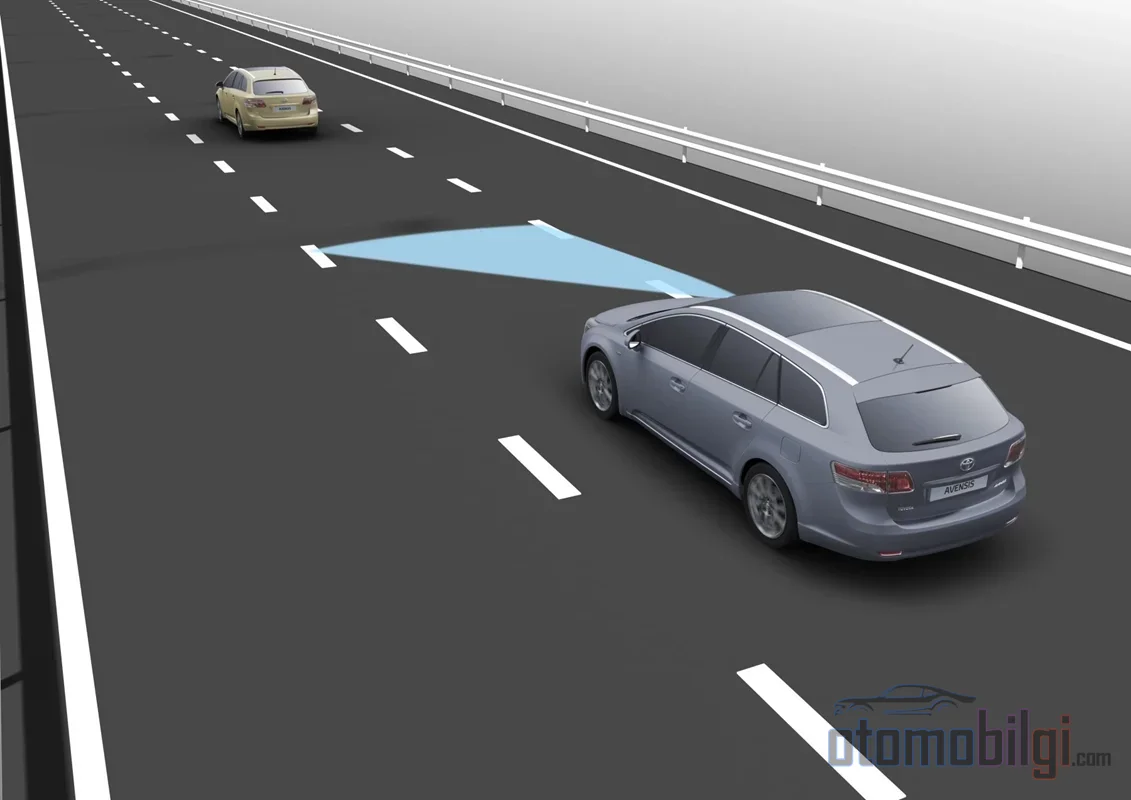
You enter a bridge, the steering wheel is gently pulled to the right, and you did nothing. A terrifying feeling, isn't it? A driver who knows what just happened doesn't panic; a driver who doesn't loses trust in the system and never turns it on again. In this article, we will talk about why the lane keeping assistant sometimes mistakes roadside guardrails, concrete barriers, and toll booth queue lines for real lane markings. The short answer: yes, it can happen, but there is both a technical explanation for it and a clear solution in your hands.
How Does the Lane Keeping Assistant Find the Line?
First, let's understand how the system "sees", because this is exactly where the error begins. The lane keeping assistant (LKA) searches for contrast change points in the image coming from the camera at windshield level. The brightness difference between the asphalt and the painted line is exactly the clue the system is after. Once these points are found, a mathematical transformation estimates which ones are the real lines, and the vehicle applies light torque through the electric power steering to stay inside the detected lane.
So the system doesn't actually recognize an object called a "line"; it just says "there is a sharp edge here". Just like the classmate who mimics the writing on the blackboard with an eraser: the shape is right, but it doesn't know what it says. When a wall, a guardrail, or a concrete barrier enters the camera's view, the patterns and rough edges on them can also be flagged as sharp edges.
Why Does a Guardrail Look Like a Line?
The top edge of a guardrail forms a continuous, straight, and high-contrast line against the dark surface of the asphalt. All the physical characteristics of a lane marking are, technically speaking, right there: long, straight, parallel. If the system mistakes this line for a lane marking, the lane position is estimated incorrectly, and the vehicle is kept not where it should be, but closer to the roadside. In radar-assisted solutions, the position of fixed objects along the roadside is also measured; if the width between the edge structure and the estimated line is physically narrower than possible for a valid lane, the system evaluates it as "likely to be a guardrail" and shifts the target position away from the lane center.
Key Highlights
- Guardrails, concrete barriers, and toll booth queue lines can be mistaken for lane markings by the camera.
- Manufacturer manuals officially document the possibility of malfunction under conditions such as guardrail shadows, medians, and noise barriers.
- The false warning rate drops to as low as 1.18% in modern prototype systems; 73% of reported ADAS issues involved lane support systems.
- If it squeezes the vehicle toward the edge and you apply a clearly opposing torque to the steering wheel, the system releases control.
- No Level 2 system takes over the driver's responsibility; hands on the wheel, eyes on the road.
On Which Road Types Is It More Common?
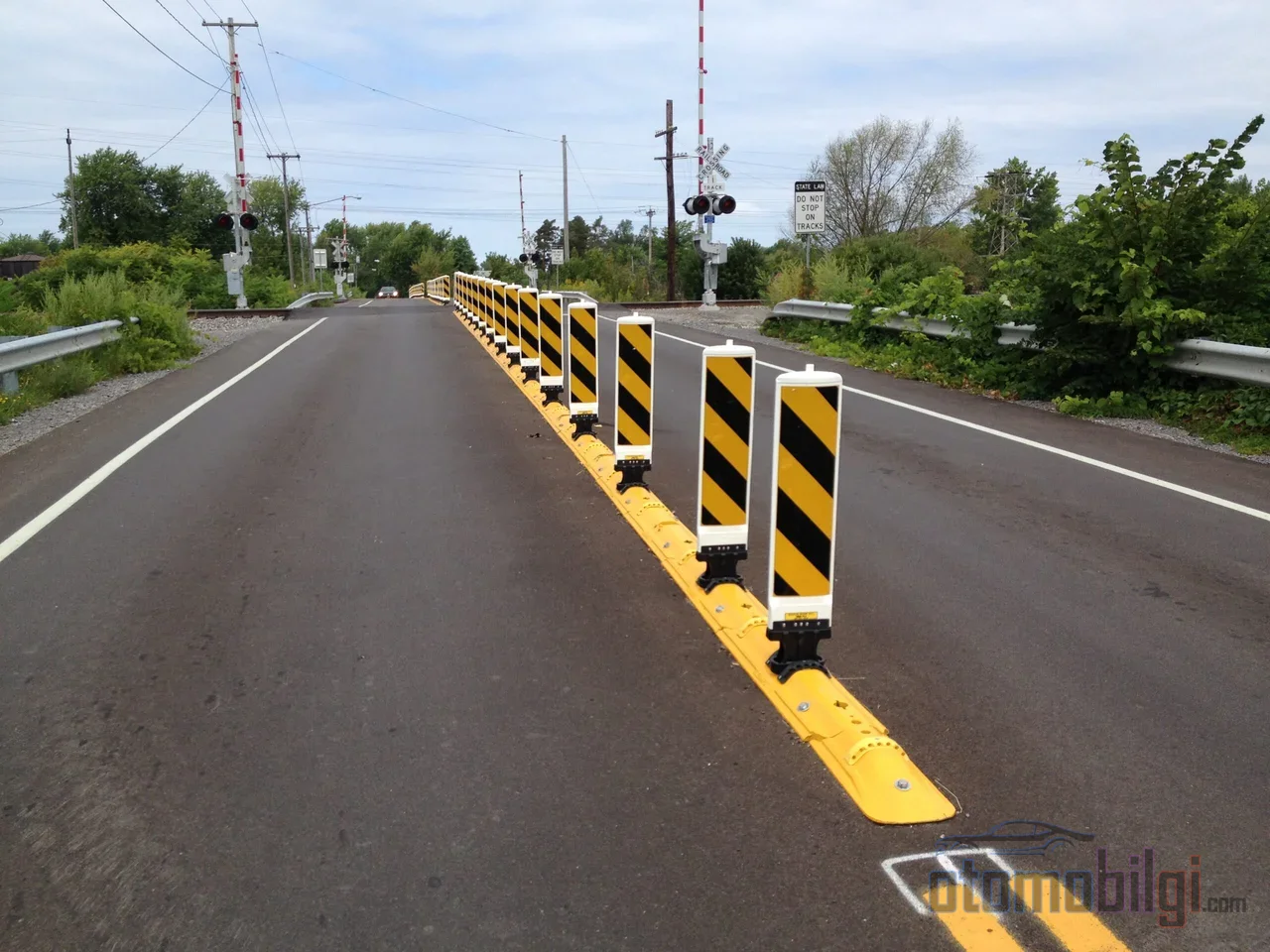
This problem does not occur with the same frequency everywhere; some road types are like a maze where the system constantly gets confused. User experiences and official manuals converge on a few classic spots.
- Bridges: Bridge railings and barriers can be used as a reference when the lane marking is faded or missing. User forums have shared experiences of bridge barriers being taken as a lane reference.
- Toll booths: The guidance lines in toll booth queues are dense and complex; official guides explicitly state that the system may not work as expected where boundary structures such as toll booths, sidewalks and curbs are present on the road. Some users report that the driver assistance system shuts down completely at toll booths.
- Narrowing and unmarked lanes: On narrow roads, the system's lane departure warnings can become almost constant. When there is no line, the system searches for the visible edges of the asphalt; which creates the risk of selecting the wrong edge.
- Narrow sections with median barriers: Applying a median barrier to narrow road sections reduces accidents in these sections significantly (a 63% reduction in fatal and serious injuries, and 28% in injuries) - which is great news for drivers, but it increases the frequency of the LKA cameras encountering barriers.
And there are shadows too. On summer afternoons, the shadow cast on the asphalt by a row of trees or a noise barrier easily becomes a second "line" in the camera's eye. Official guides list situations where shadows from medians, trees, railings and noise barriers fall on the line as system limitations.
What Should You Do If the System Pushes You Toward the Edge?
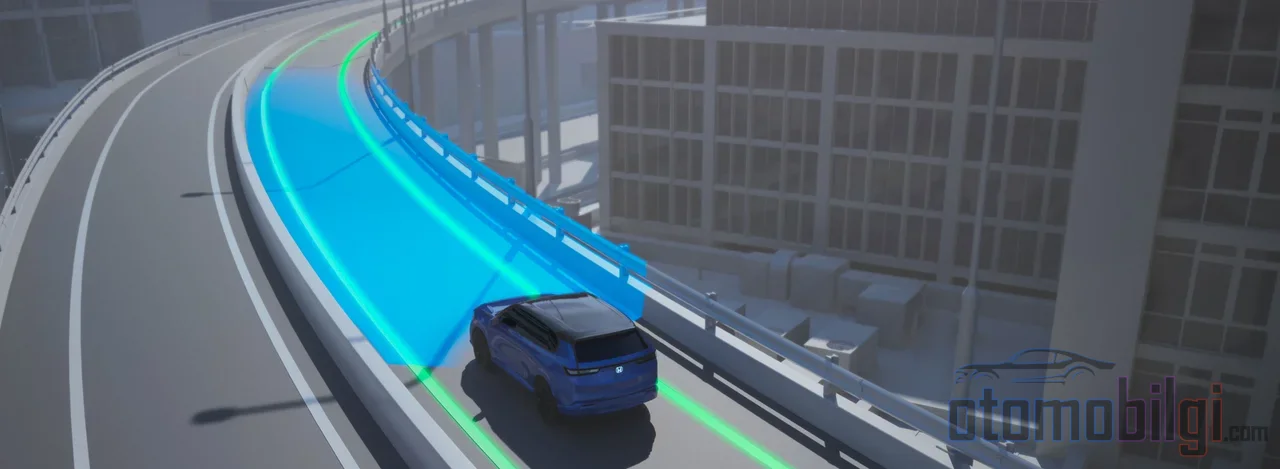
Now the most important part: what do you do at that moment? No panic, just logic. When the system makes an incorrect lane estimate and keeps the vehicle in an unsuitable position, it is enough for the driver to turn the steering wheel toward the actual lane center. When the change in torque on the steering motor exceeds a certain threshold, the system cancels LKA control on its own. In other words, your muscles are stronger than the software; but only if you are decisive.
- Turn the steering wheel in the direction you want clearly and decisively; light touches can be corrected by the system.
- At a safe moment, check why the system got stuck: was it a railing, a toll booth line, or a shadow?
- If you are towing a trailer, the guides recommend turning off LKA for safety.
- Be careful not to put things on the steering wheel such as hanging objects or a necklace; it may prevent the assist from working correctly.
Also remember that you may not be able to hear the warning sound in a noisy environment; developing the habit of following visual warnings will save you.
How Common Is the Problem and What Are Manufacturers Doing?
Let's look at the numbers, because the story has two sides. On one hand, there is data showing that 73% of reported ADAS performance issues involve lane assist systems; this is a sign of a systematic problem. On the other hand, an improved prototype lane departure warning system has reached a level where approximately 92% of the warnings issued to drivers are valid, with a false warning rate of only 1.18% (47 out of 4,000 warnings). These two figures do not contradict each other; they reflect different system generations and conditions. So the technology is improving rapidly, but by nature camera-based detection has not reached zero error. Due to the natural limitations of image recognition technology, the occasional failure to detect lane markings or misinterpret them is officially acknowledged even in service bulletins.
The technical side's direction of solution is clear: radar integration and geometric confidence calibration. A camera alone is weak on "context"; even high-contrast tar patch cracks can be mistaken for official lane lines, and this is more a context error than a vision error. When radar comes into play, the actual distance of fixed objects at the edge is measured, width thresholds are activated, and wrong target selection is prevented. Current academic studies also aim to reduce false positives with metrics that measure detection reliability.
Does the System Mistake Guardrails for Lane Lines? Clear Answer
Yes, the lane keeping assistant can mistakenly perceive roadside guardrails, concrete barriers, and toll booth queue lines as lane markings and make slight steering corrections. This is not a malfunction, but a known limitation of camera-based image recognition; manufacturer manuals explicitly list these conditions. Your task as the driver is not to approve the system's every decision, but to be ready to take over at any moment.
Let's pause here and clarify one fact: These systems, which we call Level 2 automation, are partial driving systems, whether they operate through lane keeping or Adaptive Cruise Control. On all commercial Level 2 platforms, the driver is one hundred percent legally and physically responsible; hands being free does not mean driverless. Manufacturer manuals also say that one should not drive dangerously by relying solely on the lane keeping assistant. If you do not react when the system makes a correction, an erroneous estimate can turn into a real lateral drift.
Should I Turn the System Off, or Use It with Understanding?
Some drivers are inclined to turn the system off completely after experiencing oddities. But in my view, that's like hating exercise and setting fire to the ball: it doesn't solve the problem, it doesn't even delay it. The right approach is to get to know the system's character. When you want to drift slightly from the middle of the lane, the system's insistence on "staying dead center" may make you feel too close to the edge; this is a built-in behavior that most drivers complain about. Also, performance drops on lines covered by rain, snow, dirt, and oil, on faded or damaged markings, and on surfaces where the line color cannot be distinguished from the road.
The practical summary is this: if the camera view is clear, the lines are distinct, and the weather is good, the system is a great road companion. If you are approaching a bridge, entering a toll booth queue, or there is a long concrete barrier at the edge, hold the steering wheel a bit more firmly and make sure not to be surprised by the system. Manage it not as a road companion, but as a trainee who sometimes gets distracted; it is capable, but it demands supervision. The hand on the steering wheel is always your hand, and the responsibility is always yours.
Sources
- DE112017004456B4 - Driving Assistance Device
- Limitations of Lane Keeping Assist - Kia EV9 Manual
- Lane Keeping Assist malfunction and limitations - Hyundai Owners Manual
- Lane Keeping Assist - Renault User Manual
- VW Lane Assist TSB - NHTSA MC-10158729-0001
- LDW TSB - NHTSA MC-10208816-0001
- ITS KRS - US Department of Transportation
- Traffic Safety Potential and Effectiveness of Lane Keeping - Chalmers University
- Advanced Driver Assistance Systems - NTSB
- Why Your Car's ADAS Fails in Construction Zones and Bad Weather - Car-News.ca