How Does ADAS Know You've Taken Your Hands Off the Steering Wheel?

Share This Page
It's been a few seconds since you took your hands off the wheel, and a warning suddenly popping up on the screen startles you: put your hands back on. But you've been firmly holding the wheel! Wasn't the car watching you? Wasn't it seeing your hands? This is exactly where a fact most people don't know comes into play: the car doesn't actually see your hands, it senses or estimates them. So how? In this article, I'll explain how ADAS systems watch you like a hawk yet check your hands using rather ordinary methods. If you're ready, let's begin, because inside this system there are sensors you've never even noticed.
How does ADAS know you've taken your hands off the wheel?
The naming starts right here: In the industry, this is called Hands-Off Detection, in other words, detecting when you let go. Its job is very clear - is the driver's hand really on the wheel, or not? The car has to answer this question within seconds, because in today's lane-keeping assist and adaptive cruise control systems, the driving task still rests entirely with the driver. The car isn't holding the wheel for you; it only provides support as long as you're on the wheel.
The nice part is this: This detection works so fast that modern capacitive systems can notice you pulling your hand off the wheel in less than half a second. Having been used in more than a million vehicles, these types of sensors are no longer an exotic technology, but ordinary hardware. So what method do they work with? There are three different ways, and each has its own genius, and its own weakness.
Highlights
- Capacitive sensors can detect you pulling your hand off the wheel in less than half a second
- In torque-based systems, if no input is detected, the warning is usually triggered after 10-15 seconds
- Infrared attention cameras capture the driver's eyes at 60 frames per second
- Thick gloves, steering wheel covers, and wet hands are among the most common causes of false warnings
- As of July 7, 2026, a driver monitoring camera will be mandatory in every new vehicle sold in the EU
Method 1: The invisible touchscreen inside the steering wheel - capacitive sensors
What happens when you touch your phone's screen with your finger? The screen measures the tiny electrical change your finger brings and responds accordingly. A capacitive steering sensor does exactly the same thing - the only difference is that this sensor is not a screen but the steering wheel ring. A flexible sensor mat integrated into the rim of the steering wheel continuously measures changes in capacitance, that is, the electrical charge-holding capacity, on the grip surface. If your hand is there, the capacitance changes; and the system reads it in a single frame.
The sweetest thing about this method is its precision: Even a light touch on the wheel is considered enough to signal that you're an attentive driver. What's more, the system doesn't require active steering support; meaning it can monitor your hands even while the car is following the lane, no matter what the traffic conditions are. It also works in harmony with the steering wheel heater and is unaffected by water or moisture - good news for hands that get cold in winter.
But there is a weakness here, and it behaves exactly as if you were wearing gloves: When you wear gloves, the capacitance of your hand does not reach the steering wheel. In the next section, you will see just how frustrating this trap can be.
Method 2: A system that senses force, not hands - torque measurement
Some vehicles take a cleverer route instead of placing a touch sensor in the steering wheel: They measure your force. The electric power assist motor inside the steering wheel already knows how much force you are applying; by monitoring this torque data, the system decides whether your hands are on the wheel. The logic is this: If your hand is on the wheel, you apply at least a light turning pressure to it. If this pressure disappears, the system has lost you.
It looks simple but is actually quite a deceptive measurement. The torque applied to the steering wheel depends not only on your force, but also on loads such as the curve of the lane and the slope of the road. That is why engineers try to separate your true driver torque from the effects coming from the road using model-based estimation methods. Almost like a detective: Which part of the force on the wheel is you, and which part is the road?
So how does it work in practice? In torque-based systems, if no steering input is detected for approximately 10-12 seconds, a hands-off warning, meaning hands are not on the wheel, is triggered. In some heavy vehicles, this period can extend up to 15 seconds, and at that point a third stage begins. That is, it shows quite a lot of calm compared to the capacitive system's half second; these systems wait like a patient teacher, and then warn.
Method 3: The cabin camera that watches your eyes
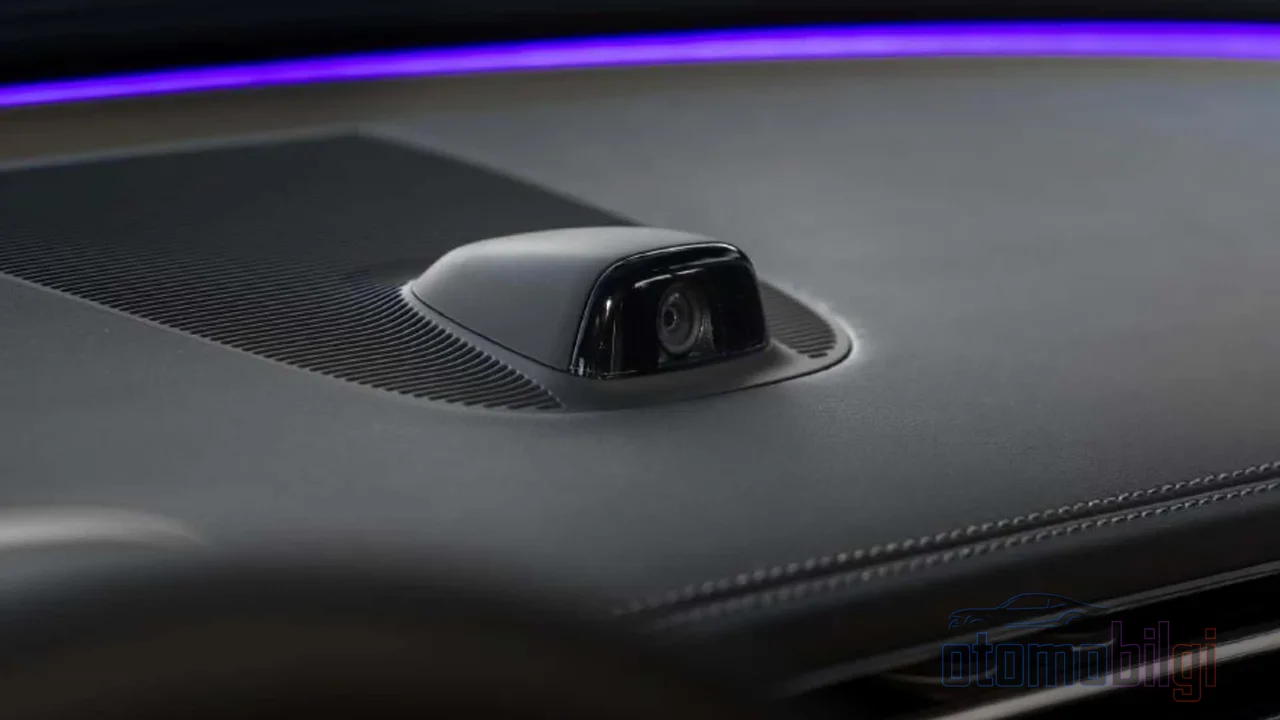
Now things are turning a bit into a science fiction movie. Some vehicles do not bother with your hands at all; instead, they watch your eyes. An infrared camera placed inside the cabin images the driver's eyes at a rate of 60 frames per second. This AI-powered driver monitoring system reads your facial geometry, head position and gaze direction in real time to understand whether you are actually looking at the road.
The best-known example of this approach is Cadillac's Super Cruise system: It allows you to take your hands completely off the wheel, but in return you must keep your eyes on the road. That is, the system trusts you with eye contact. As creepy as it may sound, the operation is very clear: Even in hands-free mode, if the driver is not looking at the road, the system gives a warning and refuses to hand over control.
If we sum up the comparison of the methods in a table, the picture becomes clear:
| Method | What does it sense? | Typical response time | Weak point |
|---|---|---|---|
| Capacitive sensor | Electrical trace of hand contact | Less than half a second | Gloves, steering wheel cover |
| Torque measurement | Force applied to the steering wheel | Approximately 10-15 seconds | Wet hands, light grip |
| Infrared camera | Eye and head position | Continuous, frame by frame | Glasses, arm position |
So why do they always tell you to put your hands back? The real reasons behind false warnings
The most annoying scenario is this: You put on your gloves, turned on the lane assistant, and three minutes later the system says your hands are not on the steering wheel. Kia's official manual even states this clearly; when gloves are worn, the system may not detect your hands and a hands-off warning may be displayed. For a capacitive system, this is an inevitable consequence: The glove cuts off your hand's electrical signature from the steering wheel. Similar trouble occurs when a steering wheel cover is fitted - some users describe applying a grip so strong it's like pleading with the system, that famous death grip.
In torque-based systems, the situation is a bit different. Gloves are not a problem, but because the system senses your torque rather than your hands, you can still get a warning if you hold the wheel without applying any turning pressure. Wet or sweaty hands can also complicate things; one user describes the system not detecting him until he dried his hands. One-handed driving is also a risky zone: Your hand does not provide capacitance on the other side, and the system may not be convinced.
Camera-based systems have their own troubles too. Certain glasses that block infrared light, or an arm or elbow blocking the camera, can trigger the alarm. If you get warnings frequently, it usually does not mean the system thinks you are lazy, but that the camera cannot properly detect your face and eyes. One user received the "eyes open" warning a full six times on a single trip - probably sunglasses or seating position to blame. Attention monitors like Honda's Driver Attention Monitor system also kick in gradually if your attention level deteriorates: First a visual warning, then an audible warning, and finally steering wheel vibration. So the system offers you a warning ladder from gentle to harsh.
But are all these situations really your fault? Actually, no. Manufacturers do not always clearly document which detection method they use, and some users cannot determine the method for certain even in a newly purchased vehicle. This uncertainty makes false warnings even harder to understand and undermines trust in the system. If false alarms are too frequent, the driver stops listening to the system - which is the real danger in terms of safety.
The rules are getting tighter and tighter: Legal requirements
These systems are not just a good idea; in most places they are now the law. The United Nations' UN R79 regulation makes hands-off detection warnings mandatory in lane keeping systems. The more advanced UN R157 treats hands-on detection as a fundamental condition for the transition from automated to manual driving in automatic lane keeping systems. So the vehicle must prove that your hands are actually on the steering wheel before handing control back to you.
The camera front is moving even faster: As of July 7, 2026, a driver monitoring system that watches the driver's face has become mandatory in every new vehicle sold in the EU. These systems must monitor gaze, head position, and behavioral patterns, and issue timely warnings. On the US side, making driver monitoring mandatory in new vehicles by 2027 is under discussion; privacy concerns and false-positive warnings are the most commonly cited drawbacks. NHTSA's March 2026 report to Congress also summarizes the official line of the process: Driver monitoring performs behavior-based driver state inference; it combines camera data with vehicle inputs, such as lane position.
The system does not drive for you: That's the real boundary
Now we come to the most important sentence of this article. Today, nearly all vehicles on the road operate at Level 2 according to the SAE level definitions; meaning support, not automation. As the driver, you are responsible for driving the vehicle: You turn the steering wheel, you apply the brakes, and all features are merely assistive. Taking your hands off the wheel carries serious risk in Level 2 systems, because it means completely disengaging from your task.
The situation is also clear on the automation ladder: At Level 0 there is no automation at all; the vehicle offers you aids like blind spot warning and forward vehicle detection, but it never takes over the steering. The problem often arises not in the technology, but in the human factor: Drivers forget that full attention is required at all times. In fact, these systems can usually detect hazards faster than a human driver and initiate corrective action; but the condition for that is not breaking your connection with the system. If the vehicle is watching you, you must also watch the road - it's a trade-off, a partnership.
There is also an interesting detail about the future: Patent literature shows that hand position data can be used not only for issuing warnings, but also for consistency checks in steer-by-wire systems, driver identification, post-crash hand position recording, and even estimating driver reaction time. With sensor segments smaller than a finger's width, the left and right hands, and even the thumb, can be distinguished. So the system that today tells you to put your hands back on the wheel could tomorrow even know who you are and how tired you are.
In summary: A system that doesn't just see your hands, but senses them
Detecting when you let go of the wheel is done using three basic methods: Capacitive sensors read the electrical signature of your touch, torque measurement monitors the force you apply to the wheel, and infrared cameras track your eyes and head. Everyday details like gloves, the steering wheel cover, wet hands, and glasses can fool these systems - which is why you may receive a warning even while holding the wheel. But the key thing to keep in mind is this: These mechanisms do not drive for you; they merely verify a layer of safety confirming that you are on task at all times. The car trusts you, so trust the road. That's the deal, and the only party signing it isn't the sensors - it's you.
Sources
- Hands Off Detection (HOD) - IEE Sensing
- Automobile Hands-Off Detection, Part 4: Capacitive solutions - MicroControllerTips
- Automobile Hands-Off Detection, Part 3: Torque solutions - MicroControllerTips
- Hands On/Off Detection Based on EPS Sensors - JTEKT Engineering Journal
- Lane Keeping Assist & Torque-Assisted Steering - Peterbilt
- Presenting the Mobileye Driver Monitoring System - Mobileye
- CR Rates Active Driving Assistance Systems - Consumer Reports
- Hands-off warning - Kia EV9 Manual
- Driver Attention Monitor - 2026 Honda CR-V (Honda Info Center)
- Automated Vehicle Safety - NHTSA
- Report to Congress: Advanced Impaired Driving Prevention Technology - NHTSA (March 2026)
- Risks of hands-off driving in Level 2 driver assistance systems - ETSC
- 2026 Deadline: EU Driver Monitoring Mandate - Neonode
- All Cars Sold in the EU Now Require a Driver Monitoring Camera - All About Cookies
- ADAS Safety Limits and Driver Responsibility - Clean Fleet Report
- Disuse of advanced driver assistance systems (ADAS) - ScienceDirect (Kim, 2025)
- Method for detecting the position of hands on a steering wheel - US Patent US7019623B2
- How Driver Monitoring Systems Reduce Distracted Driving - SureCam
- The magic in the hands or eyes? - Michigan Tech dissertation